How to Grow Peanuts: A Fun Underground Crop That Buries Its Own Pods
A practical guide to growing peanuts under warmth, from spring sowing to autumn lifting, and the extraordinary trick where the flowers bend down and push the pods into the soil.
When to sow & harvest
A rough guide for a temperate climate - shift it to your own zone and last-frost date. Greenhouse growing stretches both windows earlier and later.
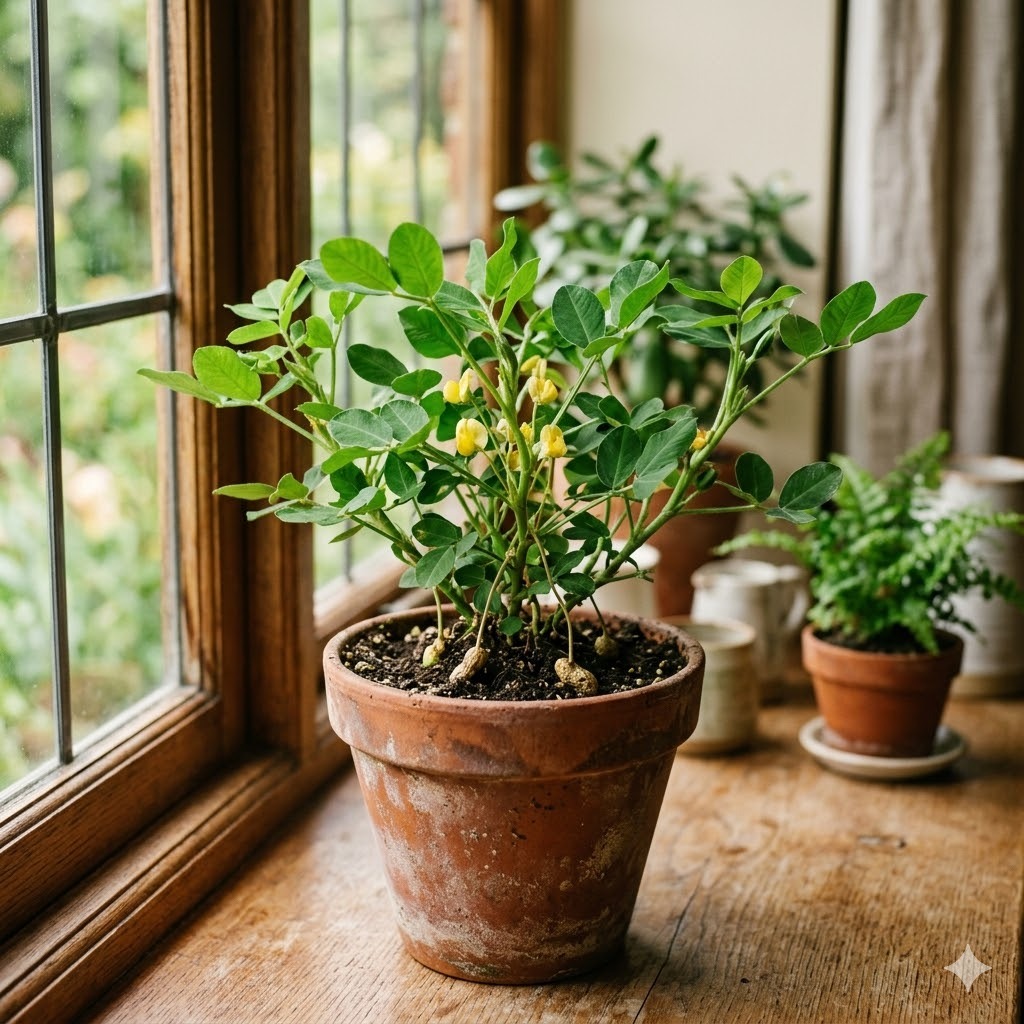
Peanuts are one of the most entertaining crops you can grow, and the first surprise is that they are not really nuts at all. A peanut, or groundnut, is a tender legume, a cousin of peas and beans, and it does something no other crop in the garden does: after it flowers, it buries its own pods in the soil, where the peanuts actually form underground. Watching that happen is genuinely fun, and it makes peanuts a brilliant crop for anyone who likes a bit of novelty and has children to amaze.
Being a tender, warmth-loving legume, the peanut needs heat to do well, so in cool climates it is a crop for a greenhouse, a polytunnel, or a sunny pot in the warmest spot you have, in loose, free-draining soil. It is not a difficult plant, but it does have that one non-negotiable requirement of warmth, plus one golden rule: once the flower stalks start burying themselves, you leave the plant well alone. This is an intermediate crop rather than a beginner's, mostly because of the warmth it demands. You sow in spring under cover, let it do its strange underground work through summer, and lift the whole plant in autumn before the frosts.
Why grow peanuts
The first reason is simply that it is fascinating. Most crops flower and then set their fruit up in the air where you can see it. Peanuts flower, and then the flower stalks bend right down, drive into the soil, and form the pods underground. Growing peanuts turns your garden into a small science lesson, and lifting the whole plant in autumn to find clusters of pods hanging off the roots is a real moment of delight. For sheer fun and curiosity value, few crops beat it.
There is also the pleasure of freshly harvested peanuts, which taste noticeably better than you might expect, especially roasted straight from your own plants. Home-grown peanuts are a talking point and a treat, and there is satisfaction in growing something most people assume only comes from a packet.
Finally, as a legume, the peanut is an interesting and undemanding plant to have around once it is warm enough. It is bushy, cheerful, and covered in small yellow pea-like flowers through summer. If you already run a greenhouse or polytunnel, or you have a hot sunny corner going spare, peanuts slot in as a novelty crop that rewards a bit of warmth with a genuinely fun harvest.
Choosing a variety
Peanuts come in a few broad types, and the main practical distinction for a home grower is between the bushy, upright kinds and the more spreading, running kinds. The upright, clump-forming types are generally the more convenient choice for a garden, a large pot or a greenhouse bed, because they keep their pods gathered close to the base of the plant, which makes lifting the whole crop in one go much tidier.
You will also see peanuts grouped by their familiar market names, some producing several small kernels in a pod and others fewer, larger kernels. For a home grower in a cool climate, the more important thing than the exact type is to look for a variety that matures reasonably quickly, because your warm season is limited and you want the pods to fill before autumn closes in. An earlier-maturing kind gives you the best chance of a good crop under cover.
If you are buying seed peanuts to sow, use raw, unroasted peanuts still in their skins or shells that are sold or supplied for growing, since roasted or salted snacking peanuts will not germinate. When in doubt, choose a variety described as suitable for growing in cooler climates or under glass, and favour the bushy, quicker-maturing kinds for the easiest experience.
Sowing and starting off
Because peanuts need warmth, you start them in spring under cover rather than sowing straight into cold outdoor soil. Sow the seeds in spring once you can give them warmth, either on a windowsill, in a heated propagator, or in the warmth of a greenhouse. Sow them into pots or modules of loose, free-draining compost, planting each raw kernel a few centimetres deep, and keep them warm and moist while they germinate. Warmth at this stage is the key to a good start.
Grow the young plants on under cover until they are sturdy and the weather and soil have genuinely warmed up, since a check from cold will set them back badly. When conditions are reliably warm, plant them out into their final home: a greenhouse or polytunnel bed, or a large pot in the sunniest, warmest spot outdoors in mild summers. The soil they go into matters a great deal, because those flower stalks will later need to push down into it, so make it loose, light and free-draining. Heavy, compacted or crusted soil makes it hard for the pods to bury themselves, so work in some sand or grit if your soil or compost is at all heavy, and keep the surface loose rather than firmed hard.
Give each plant a little room to develop into a low, spreading bush. Once they are in and growing, the plants will flower through summer, and that is when the real magic begins. From that point on, your job is largely to keep them warm, keep the soil workable and loose around them, and then, crucially, to stop interfering once the burying starts.
Where to grow
In a cool climate, peanuts are firmly a crop for protected or sheltered warmth. A greenhouse or polytunnel is ideal, giving the steady heat they crave through the whole season and reliably ripening the crop. Failing that, a large pot or container in the hottest, most sheltered, sun-drenched corner of the garden can work in a good summer, and containers have the advantage that you can start them under cover and move them to catch every scrap of sun.
Wherever you grow them, full sun and warmth are essential. Peanuts are heat-lovers through and through, and a cool, shady spot will simply not ripen a crop. Think of the warmest place you have and put them there.
The soil or compost is just as important as the warmth, because of that underground pod habit. It needs to be loose, light and free-draining so the flower stalks can push down into it easily and the developing pods are not sitting in cold, wet ground. A sandy, open, well-drained mix is perfect. Avoid heavy, wet, or compacted soil, which both chills the roots and blocks the pods from burying properly. If you are growing in a pot, use a large one with a free-draining compost, because peanuts need room below the surface for their pods to form. Get the warmth and the loose soil right, and you have given peanuts almost everything they ask for.
Day-to-day care
Peanuts are fairly easy-going once they are warm and growing, and their care revolves around water, warmth and, above all, not disturbing them at the critical stage.
Keep the plants watered so the soil stays lightly moist while they grow and flower, since they need moisture to develop, but avoid waterlogging, which peanuts hate. Aim for steady, moderate watering rather than either drought or a bog. As legumes, peanuts are not heavy feeders and can make some of their own nitrogen, so go easy on rich feeding; too much nitrogen encourages leaf at the expense of pods. Loose, reasonably fertile soil is enough.
The single most important thing to understand is what happens after flowering. Once the yellow flowers fade, the plant sends down slender flower stalks called pegs. These pegs bend downward, reach the soil surface, and push into the ground, and it is at the tip of each buried peg, underground, that a peanut pod forms and swells. This is the plant's whole strategy, and it is remarkable to watch.
Your job at this point is to let it happen undisturbed. Do not hoe, dig, or poke around the base of the plant once the pegs start heading for the soil, because disturbing them will break the pegs and cost you pods. Some growers gently draw a little loose soil up around the base, or earth up lightly, to make it easy for the pegs to enter the ground, but beyond that, leave the soil around the plant alone. Keep the surface loose and unbaked, keep the plant warm and watered, and otherwise simply be patient while the pods form and fill out of sight below.
Common problems and pests
The most common problem with peanuts in a cool climate is not a pest at all but a lack of heat. Without enough warmth and a long enough season, the plants grow slowly, flower late, and the pods fail to fill properly, leaving you lifting shrivelled or half-empty shells. This is why a greenhouse or polytunnel is such a help, and why choosing an earlier-maturing variety and getting an early, warm start matters so much. Cold, dull summers are the peanut grower's real enemy.
The second common problem is heavy or wet soil. If the ground is compacted, crusted or waterlogged, the pegs cannot bury themselves and the pods rot or fail to form, so loose, free-draining soil really is essential rather than optional.
Under cover, peanuts can attract the usual greenhouse pests such as aphids and red spider mite, especially in hot, dry, still conditions, so keep an eye on the plants and deal with infestations early by improving airflow and, if needed, gentle intervention. Slugs may nibble young plants when they first go out. Because the pods form underground, they are largely safe from birds, though in the open soil-dwelling creatures or rodents can occasionally take an interest. On the whole, though, if you give peanuts warmth, loose soil, and the peace to bury their pegs undisturbed, they are a healthy and rewarding crop with few serious troubles.
Harvesting
Harvest comes in autumn, and the timing matters because you must lift the crop before the first frost, since peanuts are tender and frost will damage both the plant and the pods. Watch the plant for signs that the crop is maturing: the foliage typically begins to yellow and fade as the pods ripen underground, which is your cue that harvest time is near.
The harvest itself is one of the great pleasures of the crop, because you lift the entire plant to get at the peanuts. Loosen the soil around and beneath the plant, then gently ease the whole thing up by the base, roots and all. Turn it over and you will find the peanut pods clustered on the pegs among the roots, hidden underground until this moment. Shake or brush off the loose soil so you can see what you have grown. Lifting a peanut plant to reveal its buried crop is a genuinely satisfying, slightly magical moment, and well worth the wait.
Once lifted, you can pick the pods off the plant, or leave them attached for the first stage of drying. Do this while the weather is still frost-free, and do not leave the crop in the ground hoping for a little more, since a frost can undo the whole season. Better to lift a touch early than to lose the crop to cold.
Storing and preserving
Freshly lifted peanuts are full of moisture and need curing, or drying, before they will store, so this drying stage is important. After lifting, let the pods dry out thoroughly in a warm, airy, sheltered place out of direct wet. Many growers hang the whole plant up to dry first, then remove the pods, while others pick the pods off and spread them out to dry. Either way, give them a good couple of weeks or more until the shells are dry and papery and the kernels inside rattle slightly and feel firm and crisp rather than soft.
Properly dried peanuts, kept in their shells, will store for a good while in a cool, dry, airy place. Because they are rich in oil, they keep best somewhere cool, and damp is their enemy, so make sure they are fully dry before you store them or they may go mouldy. In their shells they hold better than shelled kernels.
Raw dried peanuts can also be kept longer in the fridge or freezer if you want to hold on to a big harvest. When you want to eat them, home-grown peanuts are at their best roasted, which brings out their flavour and is part of the fun of growing your own. Roast them in their shells or shelled, in a moderate oven, until fragrant and golden. Roasted peanuts are best eaten within a reasonable time, as their oils will eventually stale, so roast in batches as you want them rather than all at once.
Is it worth it?
Yes, provided you go in for the fun of it as much as the food. Peanuts are not a heavy-yielding staple crop for a cool climate, and they do demand warmth, a greenhouse or polytunnel or a hot sunny pot, and loose soil, plus the discipline to leave the plant undisturbed while it buries its pods. If you are after maximum calories from your space, there are easier choices.
But as a novelty crop, peanuts are hard to beat. The way the flowers bend down and push their pods into the soil is one of the most extraordinary things you can watch happen in a garden, and lifting the whole plant in autumn to uncover the hidden peanuts is pure delight, especially for children. Add in the genuine treat of roasting your own home-grown peanuts, and it becomes a crop worth growing for the sheer pleasure and surprise of it. Give it warmth and loose soil, resist the urge to poke about once the pegs go down, lift before the frost, and you will have grown one of the most fun and memorable crops in the whole garden.