How to Grow Pine Nuts: A Beautiful Tree and the Ultimate Patience Crop
A realistic guide to growing pine nuts from the stone pine, planted in winter or spring, why it is a decades-long project, and how to enjoy it as an ornamental with nuts as a slow bonus.
When to sow & harvest
A rough guide for a temperate climate - shift it to your own zone and last-frost date. Greenhouse growing stretches both windows earlier and later.
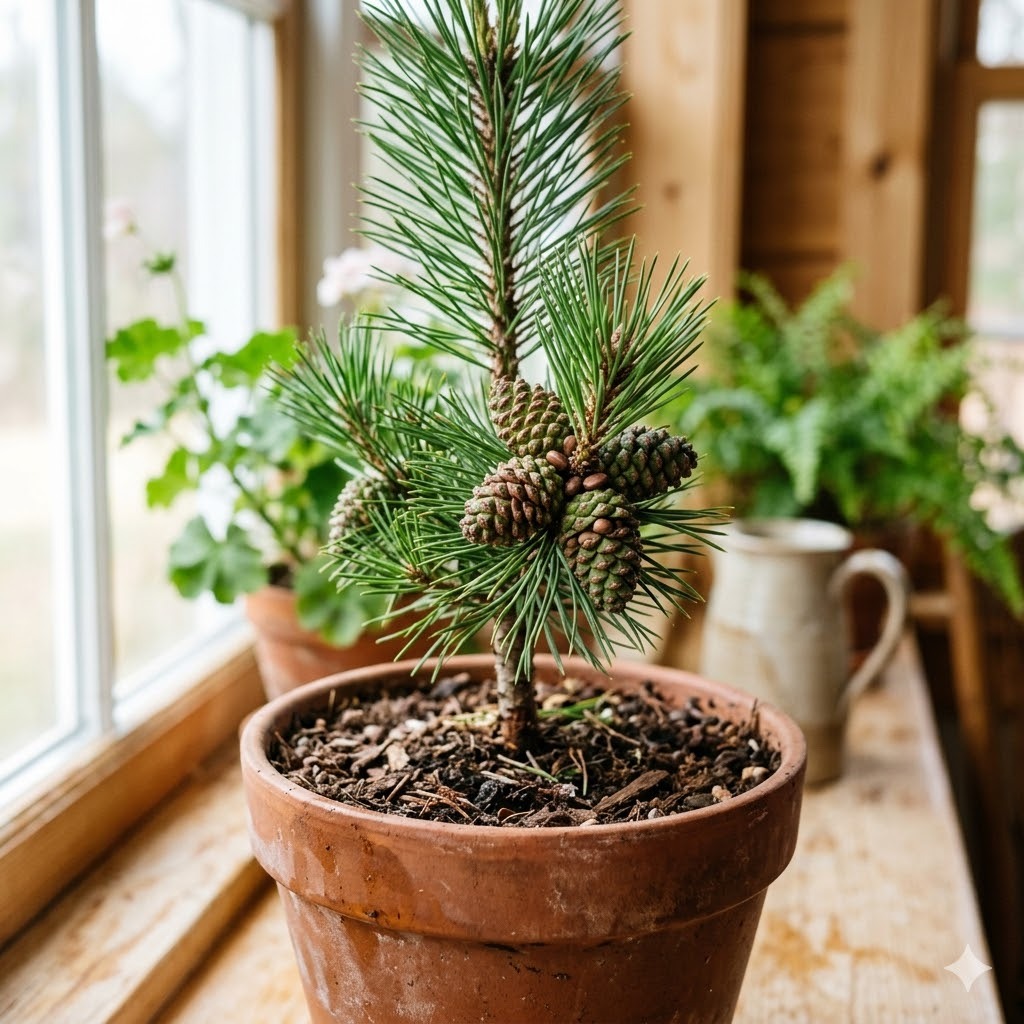
Pine nuts are the ultimate test of a gardener's patience, and it is only fair to say so plainly before you plant one. They come from the cones of the stone pine, sometimes called the umbrella pine, a beautiful Mediterranean evergreen with a broad, rounded, umbrella-shaped crown. The tree itself is a joy: handsome, tough, evergreen, and elegant for decades. The nuts, though, are a very long-term proposition. A stone pine takes many years even to begin producing cones, each cone then takes around three years to ripen on the tree, and prising the small kernels out of them is a fiddly, laborious job.
So this guide sets your expectations at the door. Grow a stone pine mainly as a magnificent ornamental evergreen, one that gives structure and character to a garden for a lifetime, and treat any pine nuts it eventually yields as a slow, satisfying bonus rather than a harvest you can count on. This is an advanced, decades-long project. You plant a young tree in winter or spring, and the cones, if they come, arrive many years down the line. Nobody plants a stone pine for a quick supper of pine nuts.
Why grow pine nuts
The most honest reason to grow a stone pine is the tree. It is one of the most characterful evergreens you can plant, with a distinctive flat-topped, umbrella-like crown, rich green needles and a rugged, warm-toned trunk that ages beautifully. It brings a real touch of the Mediterranean to a garden, gives year-round structure and greenery, and makes a superb specimen tree where there is room for it. Even if it never produced a single edible kernel, it would earn its place.
The nuts are the romance of it. Home-grown pine nuts, freshly shelled, are richer and more aromatic than anything from a packet, and there is genuine pleasure in eating something you raised from a young tree over many years. If your climate is warm enough and you are patient enough, harvesting your own pine nuts is a quiet triumph. But this is very much the long game, and it helps to fall in love with the tree first and the nuts second.
There is also the appeal of planting for the future. A stone pine is a tree you plant for the decades ahead, one that may well outlive you and reach its cone-bearing prime long after it is first set in the ground. If you like the idea of planting something enduring and slightly heroic, and you are not in a hurry for a crop, a stone pine is a wonderful choice.
Choosing a variety
With pine nuts the choice is really about the species rather than a menu of varieties. The classic edible pine nut of the kitchen comes from the stone pine, and that is the tree to plant if you want the familiar large, soft kernels. It is the species grown across the Mediterranean for its nuts and its beauty, and it is the sensible, well-proven choice for a home grower.
There are other pines around the world whose seeds are edible, and some are hardier or faster in certain climates, but their kernels are often smaller and more awkward to extract, and they are less commonly grown for the purpose. For most gardeners, the stone pine remains the best all-round option: a handsome tree that gives the recognised pine nut, tolerates poor and dry soils, and copes well with heat and coastal conditions.
When buying, you are usually choosing a young tree rather than a named cultivar. Look for a healthy, well-rooted young stone pine with fresh green needles and a sound leading shoot. Because these trees are slow and long-lived, it is worth starting with a good, vigorous specimen. If you have a warm, sunny, free-draining site, the stone pine will feel at home; if your garden is cold, wet and heavy, no variety will make pine nuts an easy prospect, and you may be better off enjoying the tree purely for its looks where it can be kept happy.
Sowing and starting off
You can begin a stone pine either by buying a young tree or by raising one from seed, and both routes demand patience from the very start. The simplest approach is to plant a young containerised tree, and this is best done in the dormant or cooler part of the year: winter into early spring suits it well, giving the roots time to settle before the growing season. Plant it at the same depth it was in its pot, in a well-prepared hole, firm it gently, water it in, and stake it if the spot is windy.
Raising one from seed is deeply satisfying but even slower. If you sow, use fresh pine nuts still in their shells rather than the ready-to-eat kernels from the kitchen, since shelled culinary nuts will not grow. Give the seed a period of cool, moist conditions to break its dormancy, then sow in spring into deep pots of free-draining compost, because young pines quickly send down a strong root and dislike being cramped. Keep them warm and bright, be patient through slow, grassy early growth, and grow them on in deep containers before planting out.
Whichever way you start, the young tree resents root disturbance, so pot on carefully and plant into its final position while still fairly young rather than moving a larger tree later. And set your clock accordingly: from planting to the first cones is a matter of many years, not seasons. The whole enterprise begins with getting a healthy young tree established in winter or spring, and then simply letting time do its work.
Where to grow
Stone pines are creatures of sun and warmth, so give yours the hottest, brightest, most sheltered position you have. Full sun is essential, and a warm, sunny aspect helps the tree thrive and gives cones their best chance of ripening in the years to come. These trees love Mediterranean conditions, cope admirably with heat, drought and coastal salt winds, and are far happier baking in the sun than sitting in cool shade.
Soil should be free-draining above all. Stone pines are well suited to light, sandy, even poor soils and dislike heavy, wet ground that stays waterlogged in winter, which can rot their roots. If your soil is heavy, improve its drainage or choose the driest, most raised spot you can. Good drainage matters more to a stone pine than rich fertility, as this is a tree adapted to lean, sunny ground.
Give it plenty of room, because a mature stone pine is a large tree with a wide, spreading, umbrella-shaped crown. Plant it well clear of buildings, boundaries and other trees, and imagine the broad canopy of the mature tree rather than the modest young plant you set in the ground. This is an outdoor, in-the-ground tree for the long term, not a container plant, so choose the final position with its eventual size firmly in mind.
Day-to-day care
An established stone pine is a remarkably low-maintenance tree, which is a mercy given how long you will be living with it. Most of the attention it needs comes in the early years.
While it is young, water it through dry spells to help it establish, and keep the base clear of competing grass and weeds with a loose mulch, kept away from the trunk itself. A stake in an exposed site will steady the young tree until its roots take firm hold. Once established, a stone pine is notably drought-tolerant and rarely needs watering, being adapted to dry Mediterranean summers.
Feeding should be light. These trees are used to lean soils, so heavy feeding is unnecessary and can even do more harm than good by encouraging soft growth. On poor ground a modest mulch of compost is plenty; on reasonable soil the tree will look after itself.
Pruning is minimal. In the early years you can remove any competing leaders to encourage a single strong stem and let the natural umbrella shape develop, but mature stone pines need very little pruning beyond taking out dead, damaged or awkward branches, ideally in the cooler months. Beyond that, the day-to-day care of a stone pine is mostly a matter of standing back and letting it grow, year after year, toward its slow maturity.
Common problems and pests
The chief obstacle with pine nuts is not really a pest or disease at all: it is time and climate. A stone pine simply will not produce cones until it is well into maturity, and in a cool climate it may struggle to ripen those cones properly even then, since the two-year ripening needs warmth and sun. This is the honest heart of the matter, and it is exactly why it is wiser to plant the tree for its beauty and regard any nuts as a bonus. No amount of care hurries a young pine into cropping.
The trees themselves are tough and generally trouble-free once established, coping with heat, drought and poor soil where many trees would sulk. In cold, wet gardens the main risk is not insects but waterlogged roots, which they dislike, so drainage is your best defence.
Where cones do form, wildlife such as squirrels and birds are keen on the nutritious kernels and will happily raid ripening cones, which can be frustrating after such a long wait. There is little to be done beyond gathering cones promptly once they begin to open. Various pests and diseases can affect pines in general, but a well-sited, well-drained stone pine in a warm spot is a robust, long-lived tree that gives its owner very little to worry about. The real challenge, once again, is simply patience.
Harvesting
Harvesting pine nuts is a slow, two-stage affair, and it only begins once the tree is mature enough to bear cones, which is many years after planting. Do not expect any harvest from a young tree, and in a marginal climate be prepared for cones that ripen slowly, sparsely, or not at all.
The cones themselves take around three years to develop and ripen on the tree, so at any time a bearing pine may carry cones at different stages. When a cone is ripe it turns woody and brown and its scales begin to open, releasing the seeds. You gather ripe cones from the tree or collect them once they fall, then let them dry and open fully in a warm, dry place so the scales spread and the nuts can be shaken or picked out from between them.
Each seed is enclosed in a hard shell, and this is where the real labour lies. To reach the soft edible kernel you must crack that shell, and doing so without crushing the kernel takes a gentle touch and a good deal of patience across a whole batch. A light tap with a nutcracker or a firm press usually does it. It is undeniably fiddly work, and a mature tree can yield a fair number of cones, so shelling a harvest is an afternoon's occupation rather than a quick job. That fiddliness is part of why pine nuts are prized, and part of the honest reality of growing your own.
Storing and preserving
Once you have extracted the kernels, storage is straightforward but does need a little care, because pine nuts are rich in oil and can turn rancid if kept warm for too long. As soon as they are shelled, they are best kept somewhere cool.
For short-term keeping, a sealed container in a cool, dark cupboard is fine for a while, but for anything longer the fridge is much better and will hold the kernels fresh for a good many weeks. For real longevity, pine nuts freeze extremely well: sealed in a container or bag, frozen kernels stay fresh and sweet for many months, far beyond what a cupboard allows. Because they are so oily, this cool or frozen storage genuinely matters if you want to keep a hard-won harvest at its best.
Whole cones or unshelled nuts can be kept for longer than shelled kernels, since the shells offer some protection, so if you are not shelling straight away you can store the dried cones or in-shell nuts and crack them as needed. However you keep them, given how long the tree takes to yield and how fiddly shelling is, it is worth storing your pine nuts carefully so that none of that patient effort goes to waste.
Is it worth it?
If you are asking whether a stone pine is worth growing for a reliable crop of pine nuts, the honest answer for most gardens is no, at least not on any timescale that suits impatience. The tree takes many years to bear, the cones take about three more to ripen, the harvest depends on real warmth, and the shelling is fiddly. As a food crop measured against effort and time, it is one of the most demanding things you could plant.
But that is the wrong way to weigh it. Judged as a tree, the stone pine is emphatically worth growing: a beautiful, tough, characterful evergreen that brings the feel of the Mediterranean to a garden and stands handsome for a lifetime. Plant it for that, give it sun and sharp drainage, enjoy its umbrella crown for decades, and if the years eventually bring you a bowl of your own freshly shelled pine nuts, treat that as the wonderful, hard-won bonus it is. For the patient gardener who plants for beauty and the long future, a stone pine is a lovely thing to grow. Just do not plant it hungry.