How to Grow Plums: The Easiest Tree Fruit for a First-Time Grower
A beginner's guide to growing plums, gages and damsons at home, from choosing a self-fertile tree on a small rootstock to the one pruning rule that keeps disease away.
When to sow & harvest
A rough guide for a temperate climate - shift it to your own zone and last-frost date. Greenhouse growing stretches both windows earlier and later.
If you want to grow tree fruit and you have never done it before, start with a plum. Plums are among the most forgiving and generous fruit trees you can plant, and many of them will crop heavily on a single small tree with almost no help from you. They ask for very little: a sunny spot, a bit of thinning in a good year, and one important rule about when to prune. Get those right and you can be picking bowls of your own plums within a few years.
This is genuinely a beginner's tree. There are one or two things worth knowing, but none of them are difficult, and a plum is far more likely to reward a first attempt than a pear or a cherry.
Why grow plums
The first reason is simply that home-grown plums taste of something. A ripe plum picked warm off the tree, soft and dripping, is a different fruit from the firm, under-ripe plums sold in shops, which are harvested early to survive transport and never quite catch up. Grow your own and you get to pick them at the exact moment they are best, which is a moment shops can never sell you.
The second reason is that plums are wonderfully undemanding. Unlike pears and cherries, many popular plum varieties are self-fertile, which means a single tree will set fruit on its own without needing a partner nearby. That makes a plum the obvious choice where you only have room for one tree, and it removes the most common cause of failure with other fruit trees at a stroke.
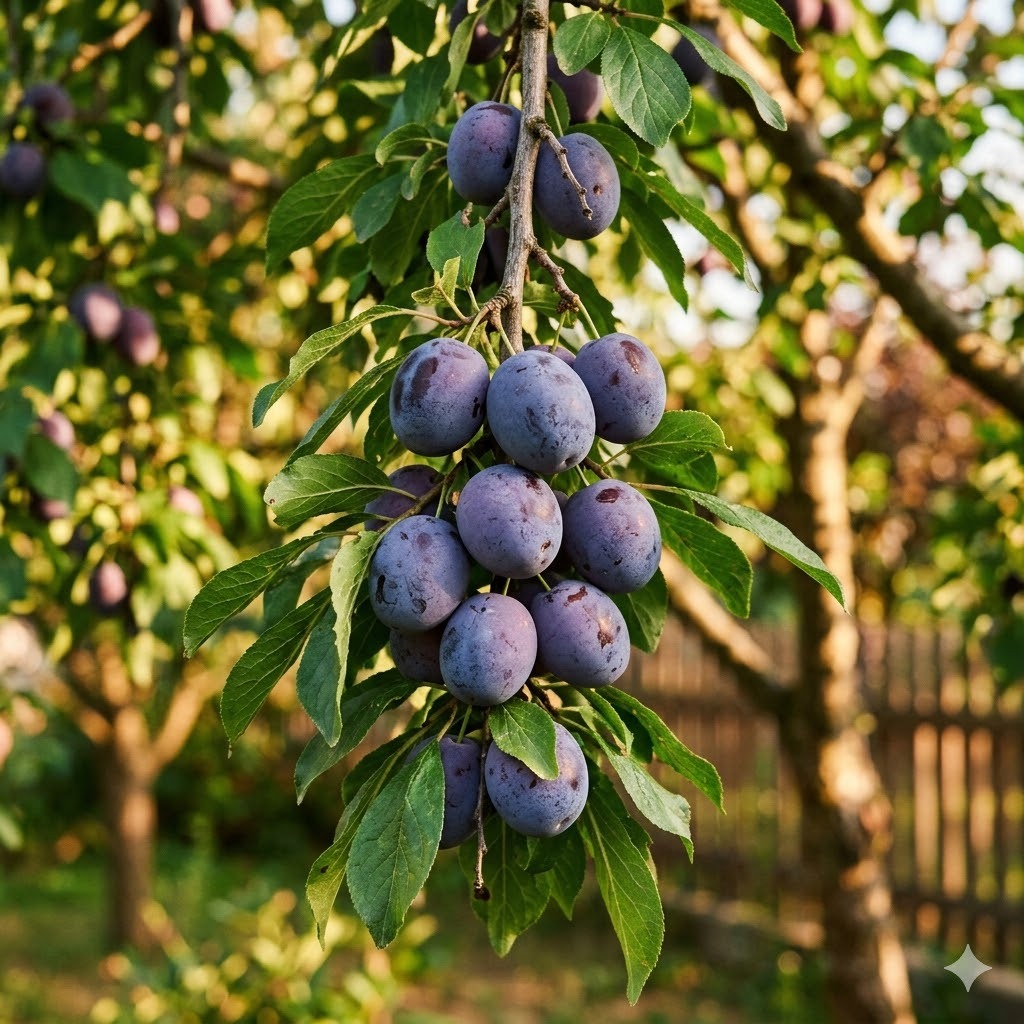
The third reason is generosity. A healthy plum in a good year can crop so heavily that the branches strain under the weight - so heavily, in fact, that thinning the fruit becomes a job in itself. A single well-placed tree can give you far more than you can eat fresh, with plenty left over for the freezer, for jam and for giving away. Under the plum umbrella you also get gages, which are sweeter and richer, and damsons, the small tart plums that are unbeatable for cooking and preserving.
Choosing a variety
As with all tree fruit, you choose two things: the variety and the rootstock underneath it.
The rootstock sets the tree's size. For a garden you want a dwarfing or semi-dwarfing rootstock so the tree stays small and pickable rather than growing into something you need a ladder for. Pixy makes the smallest trees and suits pots and tiny gardens; St Julien A makes a slightly larger, very reliable garden tree. Either keeps a plum to a manageable size.
For the variety, self-fertility is the thing to look for if you want a single tree:
- Victoria - the classic English plum and the natural first choice. It is self-fertile, hugely reliable, and crops so heavily it often needs thinning. If you grow one plum, grow this.
- Czar - a hardy, self-fertile cooking plum that blossoms late, which helps it dodge frost in colder gardens.
- Greengages - sweeter and richer than ordinary plums, wonderful eaten fresh; some are self-fertile, others need a partner, so check when you buy.
- Damsons - small, tart and intensely flavoured, brilliant for jam, cheeses and cooking, and mostly self-fertile and very tough.
Beginners rarely go wrong with a self-fertile Victoria on St Julien A, then branch out into a gage or damson once they have the knack.
Planting and starting off
Plant a plum during the dormant season, from late autumn to early spring, while the tree is bare of leaves. Bare-root trees planted then are cheaper and settle in well; container-grown trees can go in at other times but need more careful watering.
Dig a hole wider than the roots but no deeper, so the tree sits at the same depth it grew at in the nursery - you should be able to see the old soil mark on the stem sitting level with the surface. Planting too deep is a classic beginner's mistake that holds a tree back. Firm the soil around the roots, water it in, and stake the young tree if it is on a dwarfing rootstock, as those small roots need support against wind for the first few years.
Water the tree well through its first summer while it establishes. After that a plum on a decent soil largely looks after itself, needing extra water only in long dry spells or while a heavy crop is swelling.
Where to grow
Plums like a sunny, sheltered spot. They flower early in spring, which makes their blossom vulnerable to late frosts, so a position out of the worst of the cold - away from frost pockets at the bottom of a slope - gives you more reliable crops. A sunny wall or a warm corner is ideal, but plums are tougher than pears and will crop in an ordinary open garden spot too.
The soil wants to be reasonably fertile and moisture-retentive but not waterlogged. Plums cope with a heavier soil better than pears do, but they still dislike sitting in cold, standing water all winter. If your ground is poor, dig in some compost or well-rotted manure before planting to give the tree a good start.
Full sun brings out the sweetness in the fruit, so give a plum the sunniest reasonable spot you have. Damsons are the toughest of the family and will tolerate more exposure and a colder, less pampered position than a dessert plum.
Day-to-day care
A plum needs less fussing than most fruit trees, but two seasonal jobs make a real difference.
The first is feeding and mulching. A generous mulch of compost or well-rotted manure over the root area in spring feeds the tree slowly and helps hold moisture, which matters when a heavy crop is swelling in summer. Keep the mulch off the trunk itself.
The second, and the one beginners often skip, is thinning a heavy crop. Plums have a habit of setting far more fruit than the tree can carry, and the weight of an unthinned crop can literally snap branches. In early summer, once the fruitlets have set, thin them out so the remaining plums sit a couple of inches apart. It feels wasteful, but it protects the tree from broken limbs, gives you larger, better fruit, and reduces the disease that follows torn wood. If a laden branch is bowing dangerously, prop it up with a forked stake as well.
Common problems and pests
Plums are healthy trees on the whole, but there is one golden rule that prevents most serious disease: never prune a plum in winter.
The reason is silver leaf and bacterial canker, two serious diseases whose spores are most active in the cold, wet months and enter through fresh pruning cuts. Prune a plum in winter and you are opening wounds at exactly the wrong time. So prune only in summer, in warm dry weather when the tree is in full growth and the wounds heal fast and the disease is least active. Keep pruning light in any case - plums need far less cutting than apples or pears, mostly just removing dead, damaged or crossing branches.
Beyond that, the pests are mostly minor. Aphids curl the new leaves in spring and can be sticky, but a healthy tree shrugs them off. Brown rot is the fungus that turns fruit soft, brown and fuzzy on the tree, spreading fast in warm damp weather and especially through skins already broken by birds or wasps; remove and dispose of any rotten fruit promptly rather than leaving it hanging. And as the fruit ripens, wasps arrive in numbers to feast on the sweet, split fruit - there is not much to do but pick promptly and clear windfalls, though it is worth being wasp-aware when harvesting.
Harvesting
Plums are ready when they are soft, fully coloured and come away from the tree with the gentlest twist. Unlike pears, plums do ripen well on the tree, so the aim is to let them reach that soft, sweet, slightly yielding stage and then pick them promptly before the wasps, birds and brown rot get there first.
They rarely ripen all at once, which is a blessing - it means you can go over the tree several times across a couple of weeks, taking the ripe ones each time and leaving the rest to catch up. Handle them gently, as ripe plums bruise easily, and pick with the stalk on where you can if you want them to keep a few days.
If you are picking for cooking or jam rather than eating fresh, you can take the fruit a touch firmer. Damsons in particular are usually picked firm and tart, which is exactly how the cooking wants them.
Storing and preserving
Fresh ripe plums do not keep long - a few days in a cool place is about the limit before they turn. That is fine, because plums are one of the best fruits for preserving, and a heavy crop almost demands it.
The main ways to bank a glut:
- Jam - plums and damsons make superb jam, set easily thanks to their natural pectin, and turn a summer glut into jars that last all year.
- Freezing - stone and halve the plums and freeze them on a tray before bagging, ready for crumbles, pies and compotes through winter.
- Bottling - halved plums bottled in syrup keep for months and are lovely with cream or custard.
- Stewed or as compote - cook them down with a little sugar and freeze in tubs for an instant pudding base.
Damsons deserve a special mention: too sharp for most people to eat raw, they are magnificent cooked, making the richest jam, the deepest fruit cheese, and a filling for pies that no dessert plum can match.
Is it worth it?
For a first fruit tree, few things are more worth it than a plum. A single self-fertile Victoria on a small rootstock, in a sunny sheltered spot, will crop so generously in a good year that your main problem becomes what to do with all the fruit. There is no pollination partner to worry about, very little pruning to do, and the one real rule - prune in summer, never winter - is easy to remember.
Plums are not entirely trouble-free: late frosts can spoil a crop, heavy years need thinning to save the branches, and wasps and brown rot arrive with the ripe fruit. But none of that is difficult to manage, and none of it is likely to defeat a beginner. If you have room for one fruit tree and want the best chance of a rewarding harvest, plant a plum.