How to Grow Radishes: The Fastest Crop in Your Garden
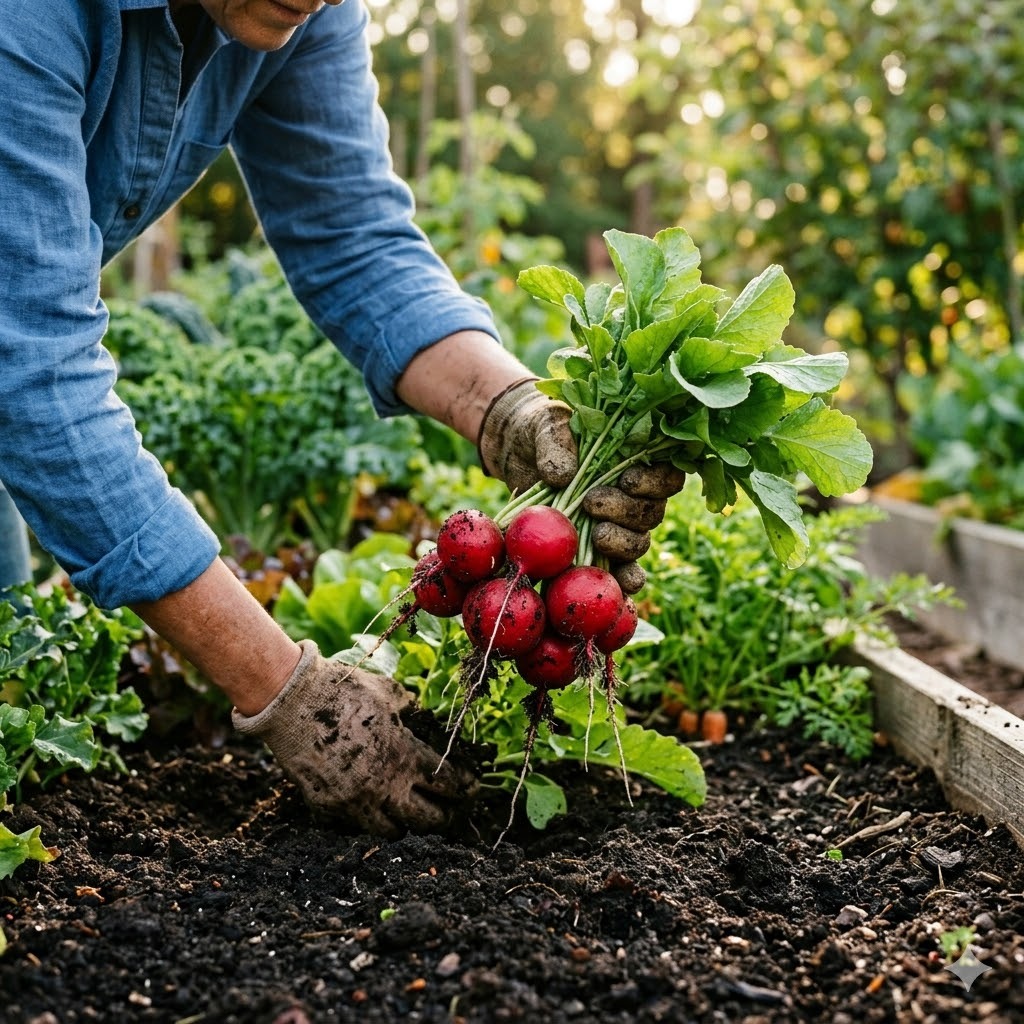
Radishes go from seed to plate in three to four weeks, making them the perfect confidence-builder for beginners in beds or pots.
When to sow & harvest
A rough guide for a temperate climate - shift it to your own zone and last-frost date. Greenhouse growing stretches both windows earlier and later.
Why grow radishes
If you have never grown anything from seed before, start with radishes. They are the fastest crop in the garden - summer types can be ready to pull in just three to four weeks. That speed is a real gift for a beginner, because you get to see the whole story from sowing to harvest before you have had a chance to lose interest or forget which pot is which.
That quick turnaround does more than boost your confidence. It means you can sow radishes in the odd gap that opens up between slower crops, tuck them into a container on the windowsill, or use them as a living marker to show you where you sowed a row of parsnips or carrots that will take weeks to germinate. By the time the slow crop appears, the radishes are gone and eaten.
They also earn their place at the table. A crisp, peppery radish sliced into a salad, eaten with butter and salt, or turned into a quick pickle is genuinely good eating, not just something you grew because it was easy. And there is a surprise waiting if you let one plant run to flower: the young green seed pods that follow are crunchy, peppery and completely edible, so even a radish you forgot about can still feed you.
Choosing a variety
Radishes fall into two broad groups, and it helps to know which you are buying.
The first group is the salad or summer radish. These are the familiar small ones: round red globes, or the pink-and-white French breakfast types with their elegant tapered shape. They grow fast, they are mild to moderately hot depending on how you treat them, and they are what most people picture when they hear the word radish. If you are a beginner, start here.
The second group is the winter radish, and these are a different animal. Mooli (also called daikon) is the long white one you may have seen in Asian cooking, and black Spanish is a rounder, tougher-skinned variety with a stronger flavour. Winter radishes are much bigger than salad types, they take longer to grow, and crucially you sow them in late summer rather than spring. They stand through the cold and can be stored, which makes them useful long after the salad radishes are a distant memory.
For your first year, one packet of a round red salad type and maybe one of French breakfast is plenty. Add a winter radish to the plan if you want something to store, and sow that one later in the year.
Sowing and starting off
Radishes are one of the few crops where the standard advice is simple: sow direct, and do it little and often. There is no need to start them in modules or on a windowsill. They resent being transplanted, and because they grow so fast, you gain nothing by getting a head start indoors.
Prepare a patch of raked, reasonably fine soil, or fill a pot or trough with multipurpose compost. Draw out a shallow drill about a centimetre or so deep. The single most important thing you can do is sow thinly. It is very tempting to shake out the whole packet, but crowded radishes compete with each other, and instead of swelling into round roots they stay thin and leggy and never bulk up. Aim to space the seeds a couple of centimetres apart as you sow. If some clump together anyway, thin the seedlings once they are up so each plant has room to swell.
Cover lightly, water gently, and keep the soil moist. Seedlings usually appear within a week. Then, and this is the key habit, sow another short row a week or two later. A single big sowing gives you a glut of radishes that all mature at once and turn woody before you can eat them. A short row every couple of weeks through spring and early summer gives you a steady supply.
Greenhouse or garden - where to grow
Radishes are happy outdoors and that is where most of them are grown. They do not need heat, they do not need pampering, and an open bed or a container on the patio suits them perfectly. They are also excellent in pots, which makes them a good choice if you have no garden at all - a deep trough or even a window box will give you a crop.
A greenhouse or a cold frame is not essential, but it does have a use. If you want the earliest possible radishes, a sowing under cover in late winter or very early spring will get you pulling roots weeks before the outdoor crop. Later in the season the greenhouse becomes too hot and dry for them, which pushes them to bolt, so use it only at the cool ends of the year.
Wherever you grow them, give them an open, reasonably sunny spot. Deep shade slows them down and makes them sulk. A little light shade in the height of summer is actually helpful, because it keeps the soil cooler and stops the plants running to seed too quickly.
Day-to-day care
Radishes ask for almost nothing, but the one thing they truly need is steady moisture. This is the whole secret to a good radish, and it is worth understanding why.
A radish that grows fast and without a check is crisp, juicy and mild. A radish that gets stressed - usually by hot, dry soil - turns nasty. Checked plants become woody and tough, they can go hollow or split, they may bolt straight to flower without bothering to swell a root, and the flavour turns fierce and unpleasantly peppery. Almost every radish problem you will ever have comes back to this: the plant was allowed to grow slowly or unevenly.
So the day-to-day job is simply to keep them watered. In dry spells, and especially for radishes in pots which dry out fast, water regularly and generously enough that the soil never bakes hard. You do not need to feed them - a fast crop in decent soil or fresh compost has all it needs. If you sowed too thickly and skipped thinning, thin now, because crowded plants stay small no matter how well you water. Keep on top of weeds so they are not competing for that moisture either.
Common problems and pests
The classic radish pest is the flea beetle. You will know it by the effect rather than the insect: the leaves become peppered with tiny round holes, as if someone fired a shotgun of pinpricks at them. Flea beetles are tiny and jump when disturbed. A light attack on established plants is cosmetic and the roots are fine, but a heavy attack on young seedlings can set them back. The best defence is to cover the row with fine insect mesh from the moment you sow, which keeps the beetles off entirely. Keeping the plants watered and growing fast also helps them shrug off the damage.
Slugs are the other regular visitor, and they will happily graze young seedlings to the ground overnight in wet weather. The usual slug defences apply: clear their hiding places, go out with a torch on damp evenings, and protect vulnerable young sowings.
Beyond pests, the problems are mostly self-inflicted and all trace back to stress and timing. Radishes that bolt, split, go hollow or turn woody and peppery have almost always been left too long, sown too thickly, or allowed to dry out. Fix the watering, sow thinly, and pull them young, and most of these troubles simply never appear.
Harvesting
The great temptation with radishes is to leave them just a little longer to get bigger. Resist it. A radish is at its best pulled young, when it is crisp and mild. Left in the ground past its peak it keeps growing, but it grows tough, woody and hot, and eventually splits or bolts.
Salad radishes are usually ready three to four weeks after sowing. Check them by gently scraping the soil away from the top of a root to see how big it has swelled, and pull a test one. If it is a good mouthful and firm, start harvesting, and do not dawdle - a row can go from perfect to woody in a matter of days in warm weather. Pull them as you need them and eat them fresh.
Winter radishes are different. They take longer, they get much larger, and they are meant to stand into the cooler months, so there is no rush. Lift them as needed through autumn, or leave them in the ground where the soil does not freeze hard.
And if a few plants get away from you and bolt, do not pull them all up in disgust. Let one or two flower and set those green seed pods, then pick the pods young and crunchy for the salad bowl. A bolted radish is not a failure, just a different crop.
Storing and preserving
Here is the honest truth about salad radishes: they do not store. They are a fresh, of-the-moment crop, best eaten within a day or two of pulling. Once you accept that, the answer is not a clever storage trick but simply to sow another short row. Little and often is your storage plan.
Winter radishes are the ones built to keep. Mooli, daikon and black Spanish can be stored for weeks or months. Lift them, twist off the tops, and pack the roots in boxes of just-damp sand in a cool shed or garage, or in many mild areas simply leave them in the ground and dig them as you want them.
The classic way to preserve a radish, though, is to pickle it, and this is where daikon really comes into its own. A quick pickle of sliced radish in a vinegar, salt and sugar brine transforms a glut into something you will reach for all winter - crunchy, tangy and bright pink or white on the plate. Salad radishes pickle well too, and it is a good use for any that have grown a touch too big and peppery to eat raw.
Is it worth it?
Yes, without hesitation, and especially if you are new to growing. Radishes give you the fastest possible reward for the least possible effort. In the time it takes many crops to germinate, you can have sown, grown and eaten a whole row of radishes and be starting your second sowing.
They will not fill your larder or feed the household for the winter on their own - a salad radish is a small crop with a short life. But that is not really the point of them. They earn their place by being quick, easy and genuinely useful: a confidence-builder for the beginner, a filler for empty ground, a marker for slow seeds, a container crop for people with no garden, and the makings of a proper pickle when you grow the winter types.
Sow them thinly, keep them moist, pull them young, and keep sowing little and often. Do that and radishes will reward you all season - and that is about as much return for as little trouble as growing gets.