How to Grow Raspberries: One Row of Canes That Crops for Years
A beginner's guide to growing raspberries, from choosing summer or autumn canes to the pruning trick that decides everything, plus freezing and jam.
When to sow & harvest
A rough guide for a temperate climate - shift it to your own zone and last-frost date. Greenhouse growing stretches both windows earlier and later.
Raspberries are one of the most rewarding fruits a beginner can plant, because a single row of canes will crop heavily every summer for years with very little fuss. Plant them once, give them some support, learn one key pruning rule, and they largely look after themselves. A handful of warm, ripe raspberries picked straight off the cane is soft, sweet and fragrant in a way the firm supermarket punnets never manage, and the plants keep on giving long after the initial effort is done.
Why grow raspberries
The honest reason is that raspberries are both expensive to buy and disappointing when bought. They are among the priciest berries in the shops, and because they are so soft and perishable they are picked underripe and often arrive squashed or already going mouldy. A raspberry ripened fully on your own cane and eaten the same day is a different fruit altogether, and once you have grown your own you will find the shop ones hard to justify.
They are also unusually generous for the effort involved. Unlike a fruit tree, a row of raspberry canes gives you a proper crop within a year or two and then keeps producing for a decade or more from the same planting. You are buying many years of fruit for one afternoon's work, which makes raspberries one of the best-value crops in the whole garden.
And they suit a small space surprisingly well. Grown as a neat row against a fence or up a few support wires, raspberries take up little ground for the amount of fruit they return, and they crop in a part of summer when there is little else to pick.
Choosing a variety
The most important choice you make with raspberries is not the flavour or the colour but the type, because it decides how you prune and when you pick. Raspberries come in two kinds, and knowing which you have is genuinely crucial.
- Summer-fruiting raspberries - these crop in early to mid summer, and they fruit on canes that grew the year before. That means the plant is always working a year ahead: this year's new canes will carry next year's fruit. They give a big, concentrated harvest, but they need a little more care with pruning and tying in.
- Autumn-fruiting raspberries - these crop from late summer into autumn, and they fruit on canes that grew the same year. This makes them far easier to manage, because you simply cut the whole lot to the ground in late winter and let a fresh set of canes grow up and fruit. For a beginner, autumn-fruiting types are the simpler, more forgiving choice.
There are red, yellow and even purple varieties, and yellow raspberries in particular tend to be very sweet. But whatever the colour, always check the label for summer or autumn fruiting, because that single fact changes everything about how you look after the plant.
Planting and starting off
Raspberries are almost always started from bare-rooted canes, which are dormant, leafless young plants sold cheaply in bundles over the dormant season. The best time to plant them is from late autumn to early spring, while they are asleep and before growth begins.
Plant the canes in a row, spacing them roughly a hand's span or so apart, so a bundle makes a productive little hedge. Set each cane so the roots are just covered and the old soil mark on the stem sits at ground level - they do not want to be planted deeply. Firm them in, water them, and then cut the canes down to about knee height after planting to encourage strong new growth from the base.
Do not expect much in the first year, especially from summer types, which need that first season to grow the canes that will fruit the year after. Autumn types will often give you a small crop in their first autumn.
Where to grow
Raspberries like a sunny or lightly dappled spot with soil that holds moisture but does not sit waterlogged. They dislike heavy, soggy ground and they dislike drying out, so a rich soil improved with plenty of compost, in a position that gets good light, keeps them happiest.
They do need support. Raspberry canes grow tall and would flop over under the weight of fruit and wind if left to their own devices, so plan for a simple system of posts and horizontal wires to tie them to. A row of two sturdy end posts with two or three wires strung between them is all it takes, and the canes are tied in as they grow. A fence with wires fixed to it works just as well and saves space.
Give them a spot where you do not mind them spreading a little, because they will.
Day-to-day care
Once established, raspberries are low-maintenance, but a few seasonal habits keep them cropping well.
Water them in dry spells, particularly while the fruit is forming and swelling, as this is when a lack of moisture most reduces your crop. A mulch of compost or well-rotted manure spread around the base in spring helps hold moisture in the soil and feeds the plants at the same time, which is often all the feeding they need.
Tying in is the other regular job, and it depends on your type. With summer-fruiting canes, tie the new green canes onto the wires through the growing season so they are supported and spaced out. With autumn types, the canes are lower and often self-supporting, though a wire or two still helps keep them tidy.
The pruning is the part that matters most, and it is simple once you know your type. For autumn-fruiting raspberries, cut every cane right down to ground level in late winter, and let the plant send up a fresh set to fruit that same year - that is genuinely all there is to it. For summer-fruiting raspberries, after they have finished cropping, cut out the old canes that carried the fruit right down to the ground, then keep and tie in the new green canes, because those will fruit next summer. Cut out the wrong canes and you cut off next year's harvest, so it is worth being sure which is which.
Common problems and pests
Raspberries are generally healthy and trouble-free, but a few things are worth watching.
Birds will take ripe fruit given the chance, just as they do with strawberries, so netting or a fruit cage protects the crop as it colours if birds are a problem where you are.
Suckers are less a pest than a habit of the plant, but worth knowing about. Raspberries spread underground and throw up new canes, sometimes well away from the row and into paths or borders. Simply dig or pull out any that stray where you do not want them, and you can even use the strong ones to start a new row for free.
Raspberry beetle can cause dried-up patches on the fruit and the occasional small grub inside a berry, which is unpleasant to find but rarely ruins a whole crop. Keeping the plants healthy and picking regularly limits the damage. In damp summers, keep an eye out for grey mould on the fruit, and pick off anything rotting so it does not spread.
Harvesting
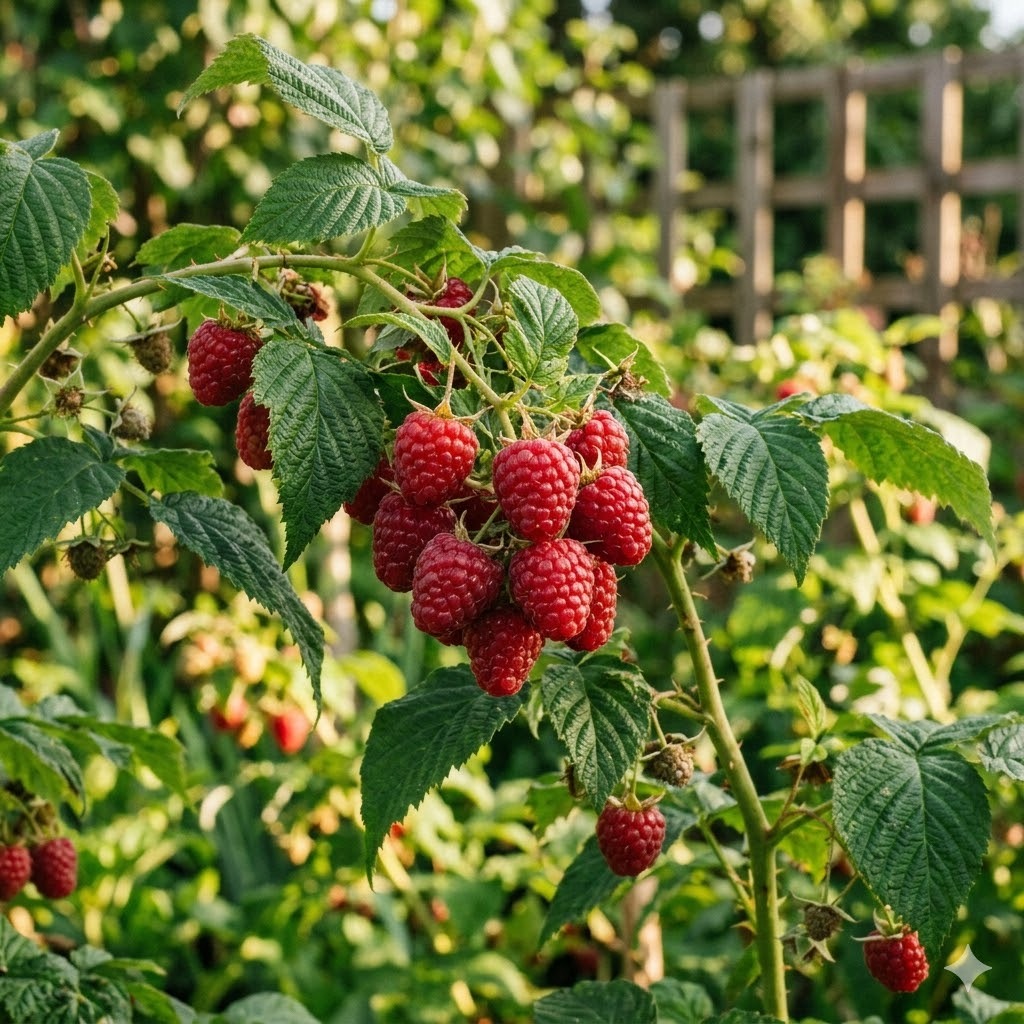
Raspberries are ready when they have coloured fully and come away from the plant with the gentlest pull, leaving the little white core behind on the cane. If a berry resists, it is not ripe yet, so leave it a day and try again. A ripe raspberry is soft and lets go easily, which is exactly why they do not travel well and why home-grown ones are such a treat.
Pick often, ideally every couple of days through the cropping season, because ripe raspberries spoil fast and a few days of neglect leads to overripe, mouldy fruit. Handle them gently and put them straight into a shallow container so they do not crush under their own weight, and try to pick in dry weather, as wet berries go off much quicker.
Storing and preserving
Fresh raspberries barely keep at all. Even in the fridge they last only a day or two before softening and moulding, so they are a fruit to eat quickly or preserve straight away. Do not wash them until you are about to use them.
When you have more than you can eat fresh, they preserve very well:
- Freezing - raspberries freeze beautifully and are one of the easiest fruits to store this way. Spread them on a tray to freeze individually, then tip them into bags, and you have loose berries to scoop out through the winter for puddings, porridge and baking. They go soft when thawed but keep their flavour well.
- Jam - raspberries make excellent jam, and because they are naturally full of flavour it is a fine way to turn a summer glut into jars that last all year.
You can also cook a surplus down into a quick sauce or coulis to freeze, ready to pour over ice cream and desserts. Between the freezer and the jam pan, no raspberry harvest need be wasted.
Is it worth it?
Very much so. For one afternoon spent planting a bundle of cheap canes, you get many years of one of the most expensive fruits in the shops, cropping reliably each summer or autumn with only a little watering, mulching and a once-a-year prune. The plants are tough, healthy and forgiving, and they suit a small garden grown against a fence on a few wires.
The only thing a beginner really needs to get right is knowing whether the canes are summer or autumn fruiting, because that decides the pruning. Choose an autumn type if you want the simplest possible life - cut it all down in winter and let it grow again - and you have a fruit that gives a great deal in return for very little. Raspberries earn their place easily.