How to Grow Redcurrants: The Easy Long-Lived Bush Hung With Red Jewels
A beginner's guide to growing tart, translucent redcurrants on a hardy, forgiving bush, from planting and open-goblet pruning to turning the crop into jelly.
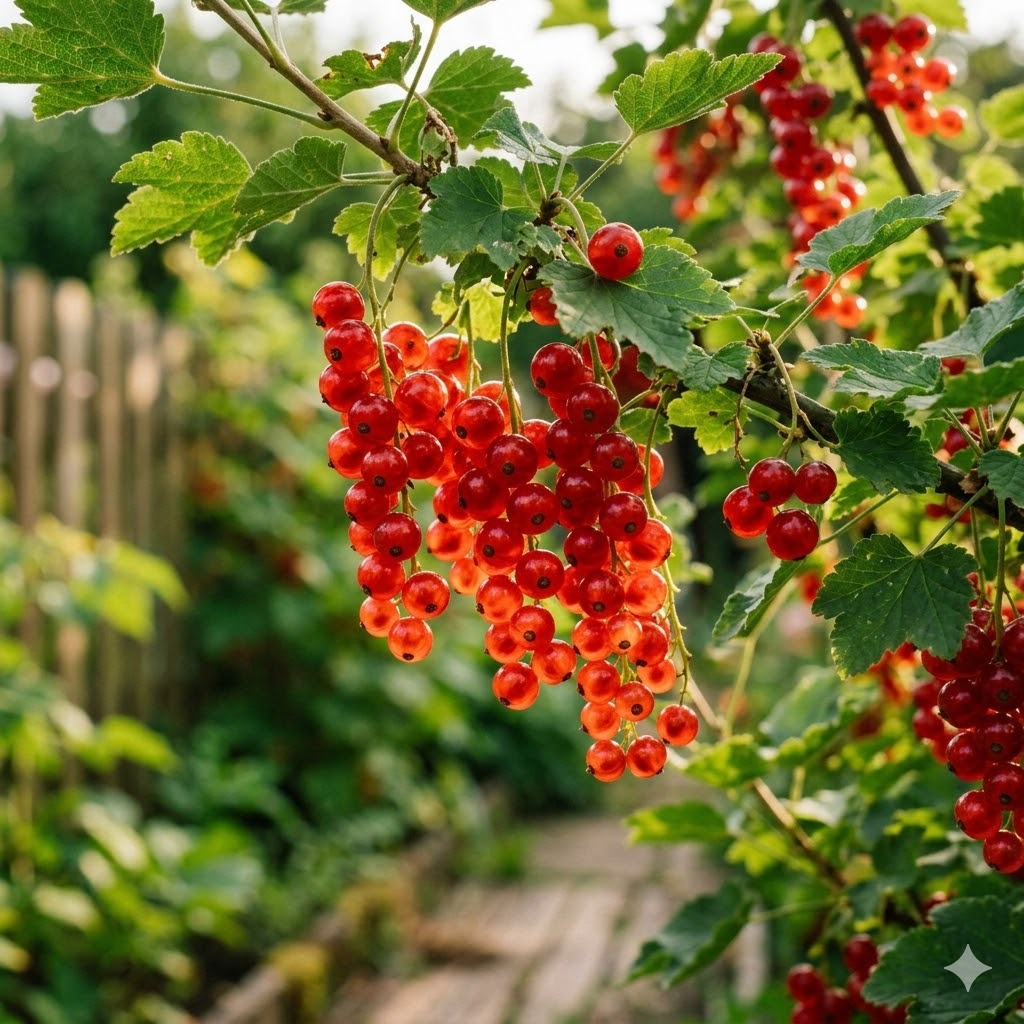
Redcurrants are one of the most generous fruits a beginner can grow. A single established bush hangs heavy in midsummer with long strings of translucent, jewel-red berries, catching the light like something far more difficult to grow than it actually is. In truth this is one of the easiest and longest-lived fruit bushes there is, shrugging off cold, tolerating some shade, and cropping reliably year after year with very little from you.
The berries themselves are sharp and tart eaten raw, which puts some people off at first bite. But that tartness is exactly what makes them so good cooked - in jellies, sauces and summer puddings, redcurrants come into their own, and few fruits give so much for so little effort.
Why grow redcurrants
The honest reason is that redcurrants are hard to buy and easy to grow. You rarely see them in shops, and when you do they are expensive and often past their best, because the delicate strings do not travel or store well. Grow your own and you have as many as you can use, picked at their peak, for years on end from a single bush.
They are also about as forgiving as fruit gets. Redcurrants are very hardy, standing up to cold winters without complaint, and unlike many fruits they will tolerate a spot that gets some shade rather than demanding full sun all day. For a beginner nervous about killing a plant, this is a reassuring thing to grow - it takes real neglect to lose one.
And they are beautiful. When the strings of berries ripen and hang glowing among the leaves, a redcurrant bush is one of the prettiest sights in the summer garden. The fruit looks like strings of little red beads, which is exactly what makes them so lovely draped over a summer pudding or set in a clear jelly.
Choosing a variety
Redcurrants are all fairly similar in the ways that matter, so you do not need to agonise over the choice. Named varieties differ mainly in when they ripen and how heavily they crop, and any reputable one will give you a good harvest. If you can, pick a well-regarded reliable cropper and you will not go far wrong.
If you want to spread the picking, you can choose an earlier and a later variety so the harvest is not all at once. Otherwise a single dependable bush is plenty for most households, given how much one plant produces.
White currants are worth knowing about too. They are essentially redcurrants without the red - a paler, slightly sweeter, more translucent berry - and they are grown and cared for in exactly the same way. If you fancy something a little different, a white currant bush needs no new knowledge at all.
Planting and starting off
Redcurrants are usually bought as young bushes, either bare-rooted in the dormant season or growing in a pot. Bare-root plants, set out in autumn or winter while they are dormant, are cheap and establish well; potted plants can go in at almost any time as long as you keep them watered.
Dig a hole wider than the roots, work in some compost or well-rotted organic matter, and plant the bush at the same depth it was growing before, firming the soil around the roots and watering it in well. Redcurrants are not fussy about soil, but they appreciate ground that does not dry out badly or sit waterlogged, and a mulch after planting helps hold moisture and keep the roots happy.
Aim from the start for the classic shape: an open goblet or cup, with a short clear stem and a ring of branches around an open centre. If your young bush has stems crowding the middle, take them out early so it grows up open in the heart. This shape, which you will maintain by pruning, is the key to easy pest control and good cropping later on.
Where to grow
Redcurrants are relaxed about position. They crop best in a sunny spot, but unusually for a fruit bush they will also do perfectly well in part shade, making them ideal for that awkward corner where sun-lovers would sulk. A bush against a shadier fence or under the light shade of a wall will still give you a decent crop.
They are also very hardy, so cold sites and exposed gardens hold no fear for them. This combination - tolerant of shade, tough in cold - makes redcurrants one of the most adaptable fruits to place, and a good choice for gardens where the sunniest spots are already spoken for.
The main thing to avoid is ground that stays cold and waterlogged all winter, or a hot, dry position where the shallow roots parch in summer. Give them reasonable soil that holds a little moisture, and they will settle almost anywhere you put them.
Day-to-day care
Day-to-day, redcurrants ask very little. Keep young bushes watered through dry spells while they establish, and water established bushes in prolonged drought, especially as the fruit is swelling, but otherwise they largely look after themselves. A yearly mulch of compost or well-rotted manure in spring feeds them and helps the soil hold moisture, which is about all the feeding most bushes need.
The one job that genuinely matters is pruning, and here the important thing to understand is that redcurrants fruit on older wood. The berries come from spurs on the established, permanent framework of branches, not on this year's new shoots. That single fact tells you how to prune: you keep and build up the older framework, rather than cutting it away.
In winter, prune to maintain that open goblet shape. Take out any dead, weak, crossing or crowded branches, keep the centre open for light and air, and simply tip back the new growth on the main branches to a few buds. You are not hacking the bush down each year - you are tidying and shaping a permanent framework, and just shortening the new shoots. Done this way, pruning is quick and the bush stays productive for many years.
Common problems and pests
Redcurrants are largely trouble-free, but two things are worth watching for. The first is sawfly. The larvae of the gooseberry sawfly attack currants too, small green caterpillar-like grubs that appear on the leaves and can eat their way through the foliage surprisingly fast, sometimes stripping a bush almost bare if they go unnoticed. Check the leaves regularly, especially the centre of the bush, and pick off any grubs you find before they build up - an open, airy bush makes them far easier to spot.
The second is birds, which are as fond of the ripe berries as you are and will help themselves the moment the fruit colours. If birds are a problem in your garden, net the bush as the currants ripen, keeping the netting clear of the fruit so they cannot reach through. Birds may also peck at the fat buds in winter, another reason a net can be worthwhile.
Beyond those two, there is little to trouble a redcurrant. Keeping the centre of the bush open, as your pruning does, keeps air moving through it and helps head off most of the leaf and mildew problems that can affect crowded, congested bushes.
Harvesting
Redcurrants ripen in midsummer, and the berries in each string do not all colour at exactly the same moment, so wait until a whole string is fully red before picking it. Ripe currants are bright, translucent and glossy, and they taste sharp even when perfectly ripe, so do not wait for them to sweeten - once the colour is full, they are ready.
The neatest way to pick is to take whole strings rather than individual berries. Hold the top of the string and pull the entire cluster gently from the bush, or snip it off with scissors. Picking by the string keeps the fruit intact and is far quicker than plucking berry by berry, and you can strip the currants off the stalks later, in the kitchen, with a fork.
Storing and preserving
Fresh redcurrants keep for a few days in the fridge, but they are really a fruit to process rather than store, and they preserve beautifully. Because they are naturally high in the setting agent that helps jams and jellies firm up, they are one of the easiest fruits to turn into a good, clear preserve.
The classic ways to keep a crop are:
- As jelly - redcurrant jelly is the traditional destination for the crop, a clear, glowing preserve that sets easily and is superb with meats as well as on toast. Their natural setting quality makes it almost foolproof.
- As sauce or in summer pudding - cooked down with a little sugar, redcurrants make a sharp, bright sauce, and they are one of the essential fruits in a proper summer pudding.
- Frozen - redcurrants freeze well. Open-freeze the stripped berries on a tray, then bag them up, ready to cook straight from frozen through the winter.
Freezing is the simplest way to bank a glut, and frozen currants cook down just as well as fresh for jellies and sauces later in the year.
Is it worth it?
Yes, comfortably. Redcurrants are one of the best fruits a beginner can plant: cheap to buy as a young bush, hardy, shade-tolerant, and long-lived, cropping heavily for years with only a quick winter prune and the odd check for sawfly and birds. For the effort involved, few fruits give back so much.
The one honest caveat is that you have to like them cooked. Straight off the bush they are sharp, and if you were hoping for a sweet dessert berry to eat by the handful you may be disappointed. But if you enjoy jellies, sauces and summer puddings, a redcurrant bush is a small planting that will quietly reward you every single summer.