How to Grow Rhubarb: One Tough Crown That Feeds You for a Decade
A practical guide to growing rhubarb from a crown, from planting and the crucial no-crop first year to twisting off tender stalks each spring and forcing early pink stems under cover.
When to sow & harvest
A rough guide for a temperate climate - shift it to your own zone and last-frost date. Greenhouse growing stretches both windows earlier and later.
Rhubarb is about as close to a plant-it-and-forget-it crop as the garden gets. Put in a single crown, give it a year to settle, and it will come back bigger and stronger every spring for a decade or more, throwing up armfuls of tart red stalks with barely any effort from you. For a beginner who wants a big reward for very little work, rhubarb is hard to beat.
It is a tough, hardy perennial that shrugs off cold, resents almost nothing, and asks only for a good spot and a bit of patience in its first year. There is really just one hard rule and one bit of restraint to learn, and once you have those, rhubarb quietly gets on with the job for years. It is a genuinely beginner-friendly crop that happens to keep giving long after you planted it.
Why grow rhubarb
The main appeal is the sheer return for the effort. One crown, planted once, gives you a generous harvest every single spring for ten years or more, and it demands almost nothing in return. There is no annual sowing, no fiddly care, and no real skill required beyond getting the planting right. Few crops give so much for so little ongoing work.
Rhubarb is also one of the earliest things ready in the garden, cropping in spring when little else is going, which makes it especially welcome. Home-grown stalks tend to be more tender and better flavoured than the tired bunches in the shops, and if you force a crown you can have sweet, pink early stems weeks ahead of anyone else.
The one honest note is that rhubarb takes up a permanent, fairly large patch of ground and does nothing useful in its first year, since you must not harvest it then. If your space is tiny, that is worth weighing. But for most gardens with a spare corner, it is an easy yes.
Choosing a variety
Rhubarb is grown from a crown, which is a dormant root and bud section of an established plant. You can grow it from seed, but the results are variable and slow, so buying a named crown is the sensible route and what most gardeners do.
Varieties differ mainly in colour, tenderness and timing. Some are prized for their deep red stalks, which look and cook beautifully, while others are greener but often heavier cropping. There are early varieties, which are the ones to choose if you want to force them for the earliest stems, and later ones that extend the season. For a first plant, a reliable well-known variety with a good reputation for flavour and colour is all you need.
When you buy a crown, look for a healthy, firm section with one or more strong buds, sometimes called eyes. A good crown gets you off to a strong start, and since the plant will be with you for years, it is worth choosing a decent one.
Planting and starting off
Rhubarb is planted as a dormant crown, ideally in the cooler part of the year while it is not in active growth. Because it stays put for a decade, choose the spot with the long term in mind: an open, sunny or lightly shaded position with rich, well-drained soil that does not sit wet in winter.
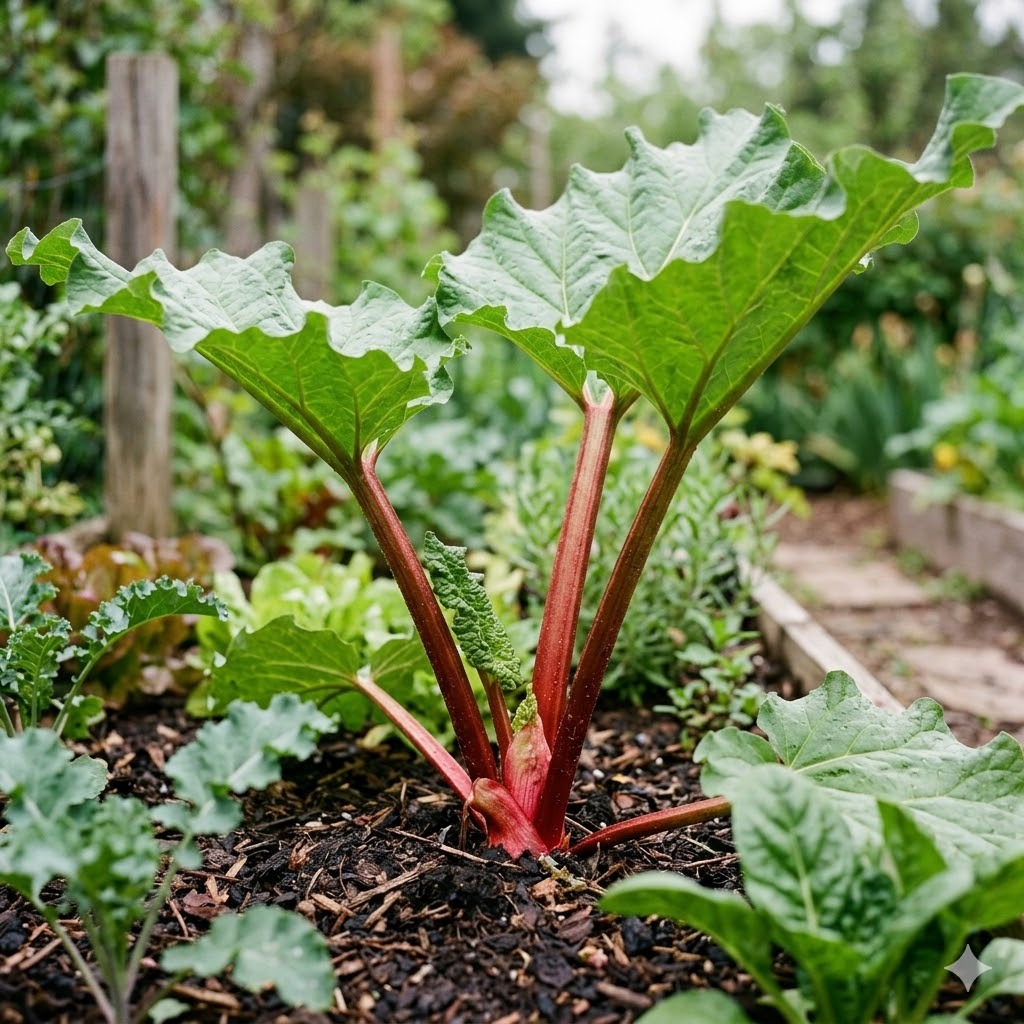
Prepare the ground generously by digging in plenty of well-rotted organic matter, as rhubarb is a hungry plant that appreciates a rich, fertile root run. Plant the crown so that the top buds sit at or just above soil level - burying the crown too deep can cause it to rot, so err on the side of keeping the growing tips just visible. Firm it in, water it, and give it space, because an established plant becomes broad and leafy.
Now the crucial rule of the first year: do not harvest any stalks at all. As tempting as those first stems are, the plant needs its whole first season to build up a strong root system, and pulling stalks early robs it of that. Let all the leaves grow and feed the crown, and simply admire it. Your patience in year one is repaid many times over in the years that follow.
Where to grow
Rhubarb is an outdoor, in-the-ground perennial that wants a permanent home, and it is not really a crop for pots in the long term - the crowns grow large and need consistent ground to thrive for years. A dedicated corner of the garden is what suits it best.
It is remarkably hardy and copes well with cold winters; in fact it benefits from a cold spell, which helps trigger strong spring growth. It tolerates a bit of shade, so it is a good candidate for a spot that is too dim for sun-loving vegetables, though it crops best with a fair share of light. Good drainage matters more than anything, as a crown standing in waterlogged soil over winter is the most likely thing to rot and fail.
Because it takes up space and stays put for years, place it somewhere it will not be in the way of crops you rotate, ideally at the edge of a plot or in a permanent bed where it can spread and settle undisturbed.
Day-to-day care
Rhubarb is refreshingly undemanding, and its care comes down to a few simple seasonal habits. It is a hungry, thirsty plant, so it appreciates a generous mulch of well-rotted organic matter around the crown each year, applied so that it feeds the roots without smothering the central buds. That yearly feed keeps the crown vigorous and the stalks coming.
Water during dry spells, particularly in summer, since a rhubarb plant carries a lot of large leaves and loses moisture fast, and a dry, stressed plant produces fewer and thinner stalks. Beyond feeding and watering, keep the surrounding area weeded so the plant is not competing for moisture and nutrients.
In summer the plant may send up a tall flowering stem, which is often a sign of stress or simply age. It is usually best to cut this flower spike out at the base as soon as you see it, because letting the plant flower and set seed diverts energy away from producing the stalks you actually want. Otherwise, rhubarb genuinely looks after itself, and after several years you may choose to lift and divide a large, congested crown in winter to keep it productive.
Common problems and pests
Rhubarb is one of the most trouble-free crops you can grow, and serious pests and diseases are uncommon. Its bold leaves are unappealing to most nibbling pests, which is part of why it is such an easy plant.
The most frequent issue is crown rot, caused by the crown sitting in wet, poorly drained soil, which turns the base soft and brown and can kill the plant. Prevention is entirely about the site and planting: choose free-draining ground, avoid planting the crown too deep, and never let it stand in winter waterlogging. Getting these right at planting time avoids the problem almost entirely.
The other common thing is bolting, when the plant throws up a flower spike, usually in hot dry weather or as a plant ages. This is not really a disease - simply cut the flower stem out at the base to redirect the plant's energy back into stalks. Slugs may nibble young emerging growth in spring but rarely cause lasting harm. On the whole, a well-sited rhubarb plant will give you years of easy cropping with very few problems to manage.
Harvesting
Harvesting rhubarb is simple and, done correctly, actually good for the plant. From the second year onward, pick the stalks when they are a decent length and still firm and glossy. The right technique is to grip a stalk low down near the base and pull it away with a gentle twisting motion, so it comes cleanly away from the crown. Do not cut the stalks with a knife - a cut stub left behind can rot back into the crown, whereas a clean twist-and-pull leaves the plant tidy and healthy.
Only ever use the stalks. The large leaves at the top of each stalk are not for eating and should be trimmed off and discarded or composted; the edible part is the stalk alone. This is standard practice with rhubarb and nothing to worry about once you know it - simply snap or trim the leaf off and keep the stem.
Harvest steadily through spring and into early summer, but stop pulling once the season moves on, leaving several stalks in place. As with the first-year rule, this ongoing restraint lets the plant recover and build strength for the following year. Never strip a plant completely bare - always leave a good few stalks to keep it growing.
Storing and preserving
Fresh rhubarb stalks keep for a week or so in the fridge, and they freeze exceptionally well, which makes managing a glut easy. To freeze, simply trim and wash the stalks, chop them into short lengths, and freeze them raw - unlike many vegetables, rhubarb does not need blanching, and it thaws down beautifully for cooking. Frozen this way it keeps for months and behaves just like fresh in the pot.
Rhubarb also comes into its own in the kitchen for preserving. It cooks down readily and is a classic for jams, compotes and chutneys, so a big harvest can be turned into jars that last the year. Stewed and sweetened, it stores well in the freezer in usable portions ready for puddings and crumbles.
Because a healthy crown often gives more than you can eat fresh in its short season, freezing and preserving are the natural way to spread the harvest across the year rather than letting stalks go to waste in a busy few weeks.
Forcing for early stems
One of the nicest tricks with rhubarb is forcing, which gives you the earliest, sweetest and most tender stems of all. Forcing simply means excluding light from a crown in late winter so that it produces pale, pink, elongated stalks weeks ahead of the normal crop. Traditionally this is done by covering a dormant crown with a tall bucket, bin or a proper terracotta forcing pot, blocking out the light while the plant grows.
Deprived of light, the crown pushes up slender, blanched stems that are notably tender and less sharp than open-grown stalks, and they arrive earlier in the year when little else is ready. It is an easy bit of magic that costs nothing but a cover.
The one caution is that forcing takes a lot out of a plant. A forced crown should be given a season or two to recover afterward before it is forced again, so it is best to force a different crown each year, or the same one only occasionally. Force sparingly and your plants stay strong.
Is it worth it?
Rhubarb asks very little and gives a great deal. Aside from committing a permanent patch of ground and being patient in its first year, there is almost nothing to it, and no real skill required. That makes it one of the best crops for a beginner who wants a big, reliable harvest without fuss.
For the one-off effort of planting a good crown in well-drained ground, you get tender spring stalks every year for a decade or more, early cropping when little else is ready, the option of forcing for the earliest sweet stems, and a plant that essentially looks after itself. If you have a spare corner and can wait one season, rhubarb is about as rewarding and low-maintenance as home growing gets.