How to Grow Rocket: A Fast, Peppery Salad Leaf in Weeks
A practical guide to growing rocket from spring to autumn, sowing little and often for a steady supply of peppery leaves while dodging summer heat and flea beetle.
When to sow & harvest
A rough guide for a temperate climate - shift it to your own zone and last-frost date. Greenhouse growing stretches both windows earlier and later.
Rocket is about as close to instant gratification as salad growing gets. You scatter a pinch of seed one weekend, and a few weeks later you are cutting handfuls of peppery green leaves for the bowl. It grows so quickly, and so willingly, that it makes a superb first crop for anyone who has never grown anything from seed before. There is very little that can go wrong, and the reward comes fast.
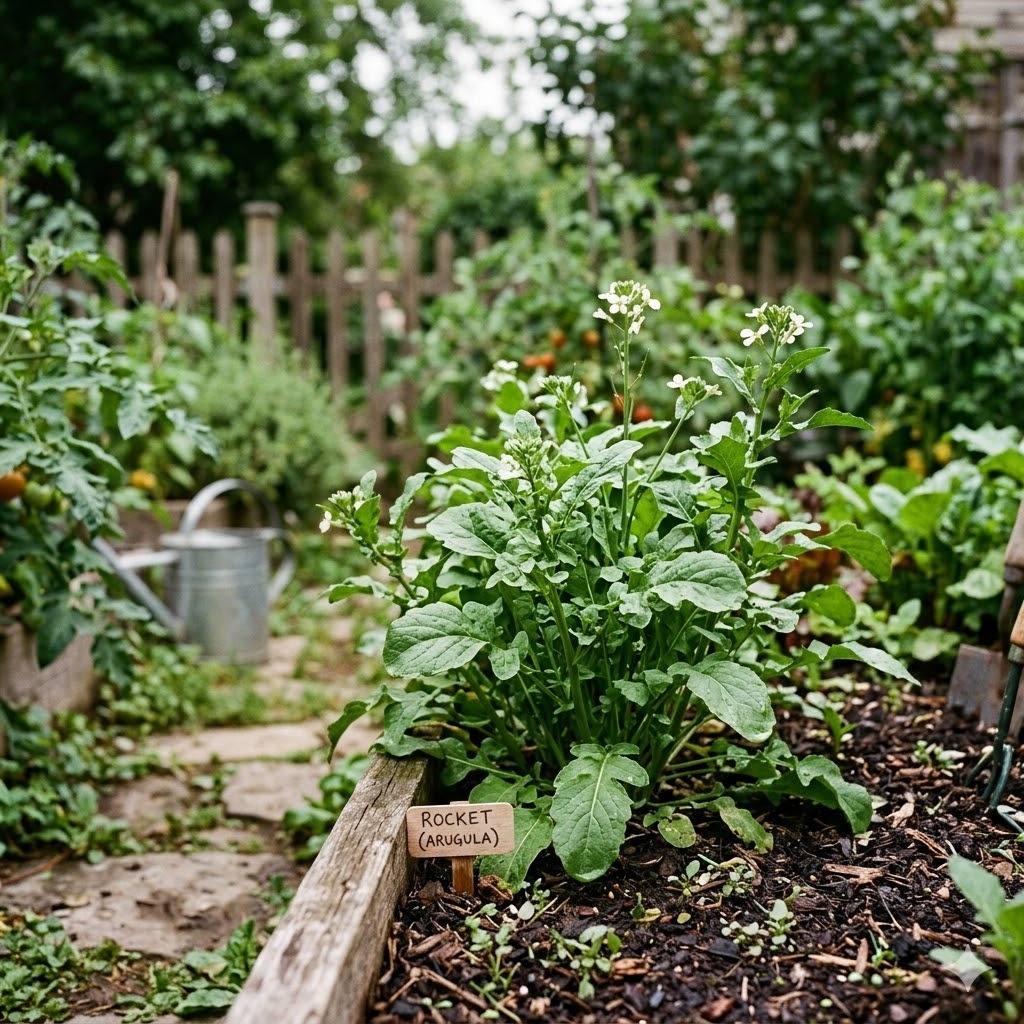
That speed comes with one important quirk, though. Rocket is a cool-season leaf at heart. Sown in the mild weeks of spring or autumn it is generous and well behaved, but throw it into the heat of high summer and it races to flower, turning fierce and bitter almost overnight. Once you understand that rhythm, the crop is easy. This guide walks through the whole thing, from that first quick sowing to keeping leaves coming for months.
Why grow rocket
The first reason is sheer speed. From sowing to first cut is often just three to four weeks, sometimes less in warm soil. Almost nothing else edible turns around that quickly, which makes rocket brilliant for filling gaps, for growing in containers, and for keeping impatient beginners interested.
The second reason is that it is a cut-and-come-again crop. You do not pull up the whole plant. Instead you snip the outer leaves and let the centre keep pushing out more, so a single short row can give you several harvests over a few weeks before it tires. That is remarkably good value from a cheap packet of seed.
Finally, there is the flavour. Home-grown rocket has a warm, nutty, peppery bite that shop bags rarely match, and you can pick it minutes before eating so it never has that limp, tired look. Grown in cool weather it is punchy but pleasant. It lifts a plain salad, works stirred through pasta at the last moment, and makes a peppery pesto.
Choosing a variety
There are two main kinds of rocket, and they behave slightly differently.
Salad rocket, sometimes called annual or garden rocket, is the familiar one. It has rounded, lobed leaves, grows fast, and gives you leaves in a matter of weeks. This is the type most people mean, and it is the best choice for quick sowings.
Wild rocket is a different, more perennial-natured plant with narrower, more deeply cut leaves and a stronger, hotter flavour. It is slower to get going and slower to bolt, which can make it a better bet for early summer sowings, but it never turns around as fast as salad rocket.
For a first attempt, start with plain salad rocket. Once you have the knack, adding wild rocket gives you a leaf that stands a little longer into warm weather and packs more of a peppery punch. You do not need anything fancy - a basic packet of either type is all it takes.
Sowing and starting off
Rocket is sown direct where it is to grow, which suits its fast, throwaway nature. There is little point raising it in modules and transplanting, because by the time you have fussed over pots it could already be nearly ready outdoors.
Sow from early spring right through to autumn. Rake the soil to a fine tilth, then draw out a shallow drill about a centimetre deep. Sow the seed thinly along the row, cover it lightly, and water gently. Rows about 15cm apart give the plants room, though for cut-and-come-again leaves you can grow them closer and simply keep cutting. Seedlings usually appear within a week.
The single most useful habit with rocket is to sow little and often. Rather than sowing a whole packet at once and facing a glut that all bolts together, sow a short row every two or three weeks. That way you always have young, tender leaves coming on to replace the ones that are running to seed. A small pinch each fortnight keeps a household in salad.
In the heat of midsummer, ease off. Rocket sown in June and July bolts almost as fast as it germinates, so it is usually better to pause and pick the crop back up in late summer, when cooler nights return and it grows sweetly again. An optional cover such as a cloche or fleece at either end of the season lets you sow a little earlier in spring and carry on a little later into autumn.
Where to grow
Rocket is an easy-going, outdoor crop that thrives in cool, moist conditions. In spring and autumn it is happy in an open, sunny spot, but as the year warms up it much prefers a little shade. A position that gets some cover from the fiercest midday sun helps enormously, because heat and drought are exactly what trigger bolting.
It grows perfectly well in the open ground, in raised beds, and in containers or window boxes, which makes it ideal for small spaces and even a sunny doorstep. Any reasonable soil suits it, ideally one that holds moisture without waterlogging, since dry roots send it straight to flower.
There is no need for a greenhouse, though a cold frame, cloche or tunnel is genuinely useful for extending the season. Under cover you can pick fresh leaves well into autumn and get an early start in spring, when the open garden is still too cold and slow.
Day-to-day care
The great appeal of rocket is how little it asks. Keep the soil consistently moist and you have done most of the job. Dry spells are the enemy: a plant that is checked by drought becomes stressed, turns hotter and more bitter, and bolts early. Regular watering in warm, dry weather keeps the leaves tender and mild, so water in the evening during hot spells rather than letting the bed bake dry.
Keep the row weeded while the seedlings are small, since young rocket does not appreciate competition. Once it is up and growing it shades the ground and largely looks after itself.
It needs no feeding to speak of in decent soil. Rocket is grown fast and picked young, so it rarely stays in the ground long enough to need a boost. Rich, fresh soil actually pushes soft, sappy growth that flea beetle loves, so restraint is no bad thing.
The main ongoing job is simply to keep cutting. Regular harvesting encourages fresh leaves and delays flowering, so the more you pick, the longer the plant stays productive. When it does eventually throw up a flower stalk, that plant is done - pull it out, and let your next succession sowing take over.
Common problems and pests
Rocket is largely trouble-free, but a few things are worth watching.
The most common nuisance by far is flea beetle. These tiny black beetles pepper the leaves with a scatter of small round holes, leaving them looking as though they have been hit with fine shot. On established plants it is mostly cosmetic and the crop grows on, but on young seedlings a heavy attack can check growth badly. The beetles love warm, dry weather. The best defences are to keep the soil moist, cover the crop with fine insect mesh from sowing so the beetles cannot reach it, and sow in the cooler weeks of spring and autumn when the pest is less active.
Slugs and snails will graze rocket seedlings, especially in damp weather, so the usual measures - clearing hiding places, going out at dusk to pick them off, or using barriers - help protect a new row.
The other issue is not a pest but the plant's own nature: bolting. In heat, or when stressed by dry soil, rocket runs to flower and the leaves turn savagely hot and bitter. There is no cure once it starts, so prevention is everything: cool timing, steady moisture, a little shade, and picking young. Treat bolting as a signal to move on to your next sowing rather than a failure.
Harvesting
You can start picking rocket remarkably soon, often within three to four weeks of sowing, once the leaves are a usable size. There is no need to wait for the plants to mature - young leaves are the tenderest and mildest anyway.
For a continuous supply, treat it as cut-and-come-again. Snip or pinch the outer leaves from each plant, taking a few from each and leaving the small central leaves to grow on. Within days the plant pushes out more, and a single sowing will keep giving for two or three cuts before it starts to tire or bolt. Alternatively, for a quick clean harvest, you can shear the whole row an inch or so above the ground and it will often regrow once more.
Pick in the cool of the morning when the leaves are crisp and full of moisture, and eat them as fresh as you can. Older, larger leaves are still edible but grow steadily hotter and coarser, so it pays to harvest young and often.
Storing and preserving
Rocket is a leaf to eat fresh rather than store, and it does not keep for long, so the honest advice is to grow it in small, regular sowings and pick as you need it rather than trying to stockpile it.
That said, freshly cut rocket will hold for a few days in the fridge. Wash it gently, spin or pat it dry, and keep it loosely in a bag or box lined with a piece of kitchen paper to absorb excess moisture. Kept cool and slightly damp it stays crisp for the best part of a week, though the peppery bite softens over time.
For anything longer, do not think in terms of freezing whole leaves - they collapse to mush once thawed. The one genuinely useful way to preserve a glut is to turn it into pesto, blitzing the leaves with oil, nuts, hard cheese and garlic, then keeping it in the fridge under a film of oil or freezing it in small portions. That captures the peppery flavour in a form you can actually use through the year.
Is it worth it?
Absolutely, and especially so if you are new to growing or short on space. Few crops give so much, so quickly, for so little effort. From a cheap packet of seed and a small patch of soil you get fresh, peppery leaves in a matter of weeks, and by sowing little and often you can keep them coming from spring right through to autumn.
The only real catch is that rocket dislikes summer heat, bolting and turning fierce when it gets hot and dry. But that is easy to work around: sow in the cooler halves of the year, give it moisture and a little shade, pick it young, and keep a fresh sowing waiting in the wings. Do that, and rocket rewards you out of all proportion to the trouble it takes.