How to Grow Runner Beans: Weeks of Heavy Pickings From One Wigwam
A practical guide to growing runner beans from late-spring sowing to autumn picking, including building a wigwam of supports and keeping the plants cropping for weeks by picking young.
When to sow & harvest
A rough guide for a temperate climate - shift it to your own zone and last-frost date. Greenhouse growing stretches both windows earlier and later.
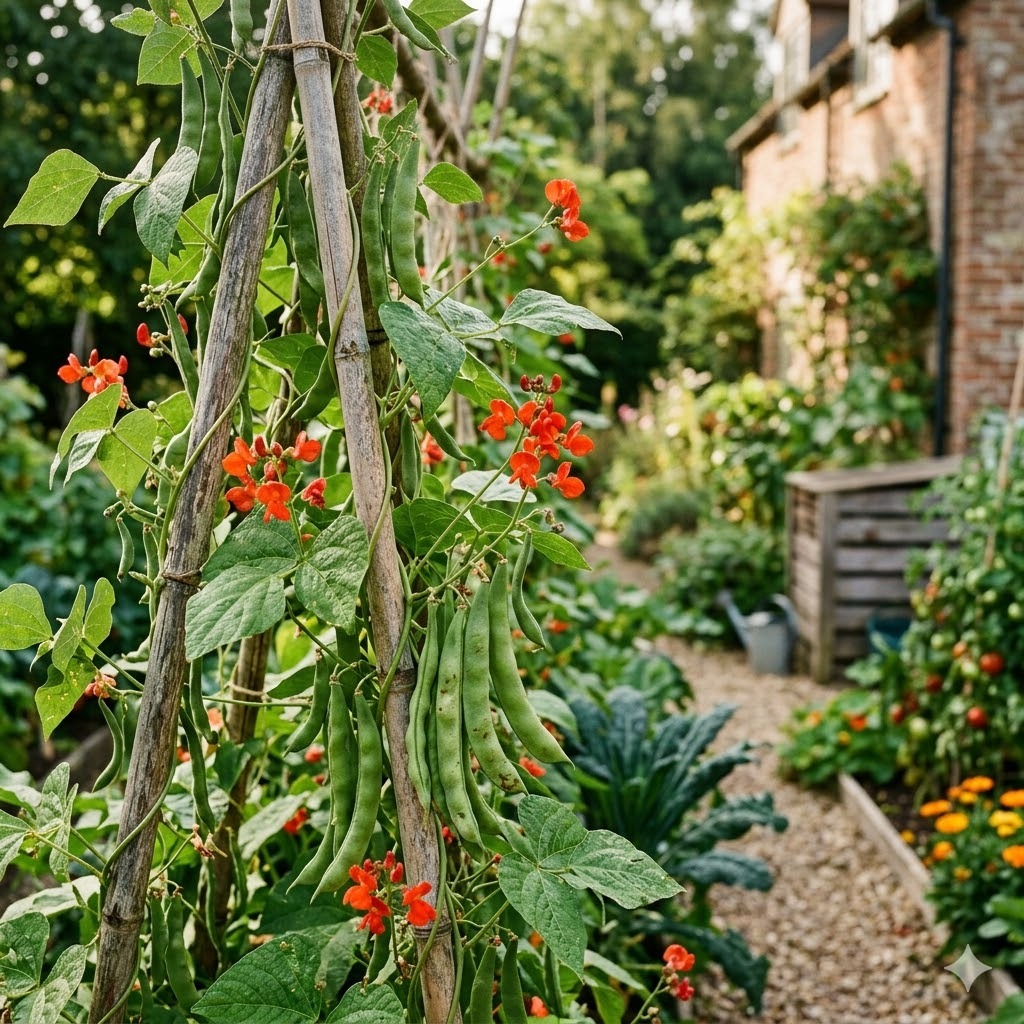
Runner beans are the crop that turns a small patch of ground into a green wall of food. Give them a wigwam of canes to climb and a warm summer, and a handful of plants will pour out beans for weeks on end, from midsummer right through to the first frosts. Few vegetables are as productive for the space they take, and few are as satisfying to watch racing skyward through July.
They are also genuinely easy, which makes them a fine choice for a first-year grower. The seeds are big and simple to sow, the plants are vigorous and forgiving, and the main jobs - putting up a support and keeping the crop picked - are straightforward. The one thing runner beans truly need is warmth, so this is a crop you sow late, after the frosts have gone. This guide covers the whole season, from building that support to squeezing the longest possible harvest out of your row.
Why grow runner beans
The headline reason is sheer productivity. Once runner beans get going, they crop heavily and keep cropping. A short row or a single wigwam can feed a household through late summer, and the plants just keep flowering and setting new pods as fast as you pick the old ones. Pound for pound of ground used, little else in the vegetable garden matches them.
The second reason is that they grow up rather than out. By climbing, runner beans make brilliant use of vertical space, which is a gift in a small garden. A wigwam of canes in a border, or a row along a fence, gives you a big crop from a modest footprint, and the flowers - usually scarlet, sometimes white or pink - are handsome enough that plenty of people grow them as much for looks as for eating.
The third reason is flavour and freshness. Home-grown runner beans, picked young and cooked the same day, are tender and full of flavour in a way that shop-bought and shipped beans rarely are. And because they are legumes, like all beans they fix some of their own nitrogen, so they are not greedy feeders and leave the soil a little richer behind them.
Choosing a variety
Most runner beans are tall climbers, but there are a few useful distinctions worth knowing before you buy.
Standard climbing varieties are the traditional scarlet-flowered types that reach two metres or more and give the classic long, heavy crop. These are what most people grow, and there are many good ones. Some are bred to produce smoother, straighter, less stringy pods, which is well worth looking for.
Self-setting or stringless varieties have been bred to set pods more reliably in hot or dry spells, when older sorts can drop their flowers, and to stay tender without the tough string down the pod. If your summers are hot or your beans have failed to set in the past, these are a sensible choice.
Dwarf runner beans are a compact option that stays under half a metre and needs little or no support, which suits containers, windy sites and small spaces. They crop less heavily than the climbers but avoid all the fuss of staking.
White-flowered varieties are sometimes said to set better in heat and are less attractive to birds that peck at red flowers, so they are worth a try in a hot garden. Otherwise, growing one dependable heavy cropper is all most people need.
Sowing and starting off
Runner beans are tender - frost kills them outright - so the golden rule is to sow late, only once the danger of frost has passed and the soil has warmed. That usually means from late spring, around mid to late May in much of the country, though a week or two earlier under cover.
There are two ways to start them. The first is to sow the seeds indoors or in a cold frame in pots or root trainers a few weeks before your last frost, about 5cm deep, one bean per pot. This gives you sturdy young plants ready to go straight out, and it protects the seed from cold, wet soil and from mice. Harden the plants off before planting them out once all frost has gone.
The second is to sow directly where they are to grow, once the soil has warmed, planting the seeds around 5cm deep at the foot of each support. It is common to sow two seeds per station and remove the weaker seedling, or keep a few spares to fill any gaps.
Either way, plant one strong seedling at the base of each cane, spaced roughly 15 to 20cm apart along the support. A late direct sowing and an earlier module-raised batch will often catch up with one another, so unless you are chasing the earliest possible crop, direct sowing once it is warm enough is perfectly good.
Where to grow
Runner beans are an outdoor summer crop that wants a warm, sheltered, sunny spot and rich, moisture-retentive soil. They are thirsty, hungry plants at full stretch, so it pays to prepare the ground well, digging in plenty of garden compost or well-rotted manure before planting. Traditionally, gardeners fill a trench with such material to hold moisture at the roots, which is exactly what these plants like.
Shelter matters more than with most crops, because a tall, leafy wigwam in full growth catches the wind like a sail. A sheltered position also brings in more pollinating insects, which you need for the flowers to set into pods. If your garden is very exposed, a dwarf variety avoids the problem.
Cover has only a minor role: raising early plants in a greenhouse or cold frame to get a head start before it is warm enough outside. The crop itself belongs in the open ground, where the pollinators can reach it, so there is no reason to grow the plants on under glass.
Day-to-day care
The single most important job with runner beans, and one to do before you sow or plant, is putting up a strong support, because the plants grow fast and heavy. The classic is a wigwam or a double row of canes: push tall canes firmly into the ground, at least 2.4m long since a good part goes below soil, and tie them together at the top. A wigwam is a circle of canes drawn into a point; a double row is two lines of canes leaning in and crossed near the top with a horizontal cane laid along the join. Whatever the shape, make it robust - a collapsed row of runner beans in an August gale is a miserable sight. Guide each young plant to its cane; once it finds the support, it twines up on its own.
After that, the two big needs are water and picking. Runner beans are thirsty, and they will drop their flowers and stop setting pods if they run dry at the roots, so water generously and regularly through summer, especially once they start to flower. A mulch over the moist soil helps hold that water in.
When the plants reach the top of their supports, pinch out the growing tips to stop them waving about and to push energy into cropping lower down. A feed is rarely needed on well-prepared ground, though a liquid feed does no harm once the pods are coming thick and fast.
Common problems and pests
The most common frustration is flowers that fail to set into pods, leaving the plant covered in blooms but no beans. This is usually down to dry soil at the roots, hot weather, or a lack of pollinating insects. The cures are to keep the roots reliably moist, to grow in a sheltered spot that insects visit, and, if it is a recurring problem in a hot garden, to grow a self-setting or white-flowered variety.
Blackfly can cluster on the growing tips, much as they do on broad beans, especially early on. Pinching out affected tips, blasting them off with water, or simply waiting for ladybirds usually keeps them in check.
Slugs and snails will shred young seedlings the moment they emerge, which is one of the best arguments for starting plants in pots and setting out sturdy specimens rather than tender seedlings. Protect new plantings until they are growing away strongly.
In dry spells, red spider mite can trouble plants, showing as fine mottling and webbing on the leaves; keeping the plants well watered and the air around them from getting too hot and dry is the main defence. Halo blight, a bacterial disease that spots the leaves, is best avoided by not saving seed from affected plants.
Harvesting
Harvesting runner beans is the whole point, and the golden rule is to pick young and pick often. A runner bean pod is at its best while it is still slim, smooth and tender, before the beans inside swell and the pod turns tough and stringy. Run your fingers down a pod: if it snaps cleanly and feels flexible, it is ready.
Start picking as soon as the first pods reach a usable length, and then keep going every few days. This is where the long harvest comes from. The plant's aim is to make ripe seed, so if you let pods mature and go leathery, it takes that as a signal that its work is done and slows right down. Keep stripping off the young pods and the plant keeps flowering and setting more, week after week, often right up to the first autumn frost. A row that is picked over regularly will out-crop a neglected one many times over.
Pick with a gentle pull or a snip, taking care not to yank whole trusses of flower off with the pod.
Storing and preserving
Runner beans are at their finest eaten fresh, within a day or two of picking, when they are still crisp and sweet. In the fridge, in a loosely closed bag, they will hold for a few days before going limp.
The realistic problem, though, is a glut - runner beans have a habit of producing far more than you can eat at their peak. Freezing is the standard answer and works well. Top, tail and slice the beans, blanch them briefly in boiling water, cool them quickly, drain thoroughly and freeze in bags. Frozen this way they keep for months and are good in cooked dishes, though they soften and lose the snap of a fresh bean.
Salting is the old-fashioned method that some growers still swear by, layering sliced beans with a lot of salt in a jar; soaked and rinsed well before cooking, they come out surprisingly fresh-tasting, though it is a technique that has largely fallen out of fashion.
If a few pods slip past you and grow large and tough, do not fret - leave them to mature fully on the plant, then shell out the beans, dry them thoroughly and store them in a jar to use like any dried bean through winter, or to sow next year.
Is it worth it?
Very much so. Runner beans are one of the most rewarding crops in the garden for the effort involved, and a natural choice for a beginner. Once the support is up and the plants are climbing, the work is little more than watering and picking, and the return is weeks of heavy cropping from a small patch of ground.
The honest catch is the glut: at their peak they can overwhelm you, and if you go on holiday and stop picking, the plants sulk and slow down. But the answer to a glut is a freezer, and the answer to slowing down is simply to keep picking. For a big, generous, vertical crop that turns a wigwam of canes into a wall of beans all summer, runner beans are hard to beat.