How to Grow Spinach: Fast, Cool-Season Leaves for Spring and Autumn
A beginner's guide to growing tender spinach in beds and pots, timing sowings to dodge summer bolting, and switching to heat-tolerant stand-ins when the weather turns.
When to sow & harvest
A rough guide for a temperate climate - shift it to your own zone and last-frost date. Greenhouse growing stretches both windows earlier and later.
Why grow spinach
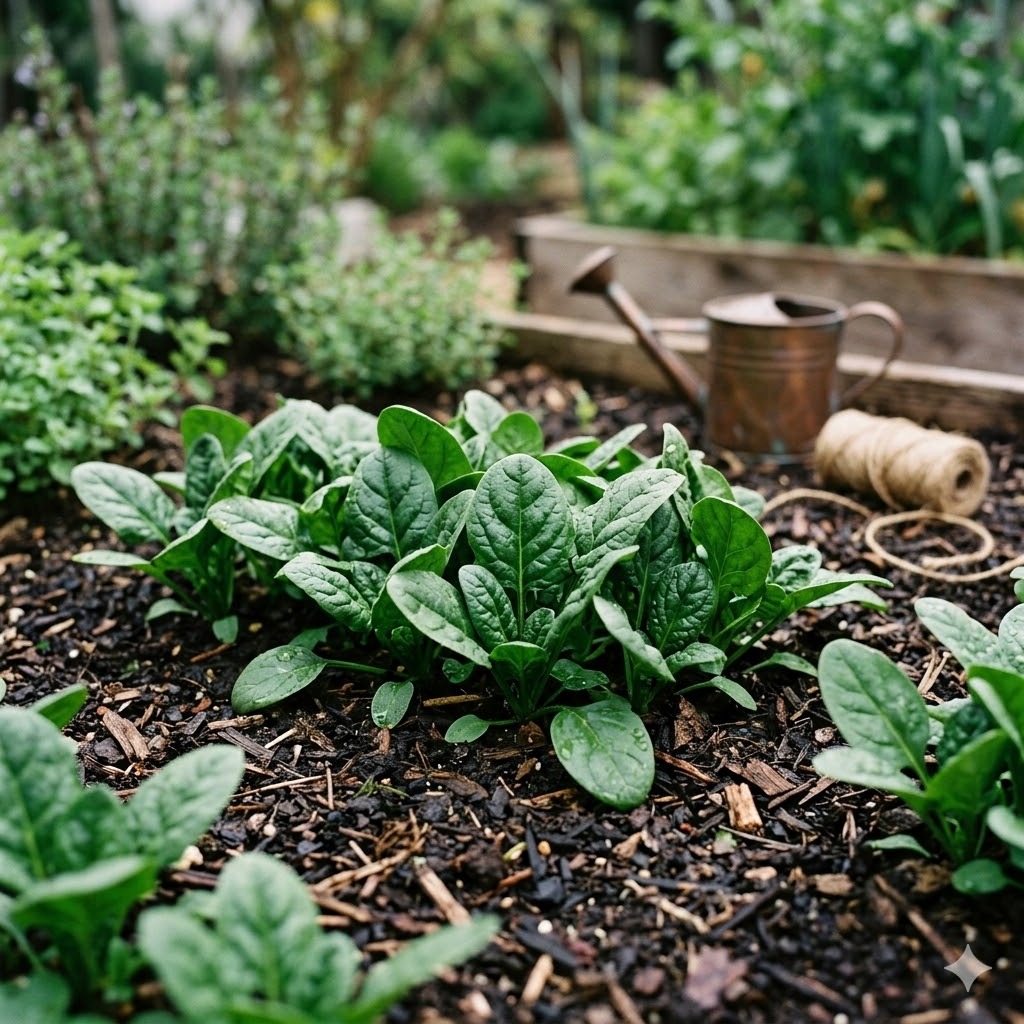
Spinach is one of the quickest, most rewarding leafy crops a beginner can start with. From sowing to your first pickable leaves is often just five to seven weeks, and a single row keeps giving if you harvest it gently. The leaves are genuinely nutritious - iron, folate, vitamin K and a good hit of vitamin C - and the flavour of a leaf picked minutes before it hits the pan is nothing like the tired, slimy bags from the supermarket.
Here is the honest catch, and you should know it before you sow a single seed: true spinach hates hot weather. It is a cool-season plant, and once days get long and warm it bolts - shoots up a flower stalk, stops making tender leaves, and turns bitter. That single fact shapes everything about how you grow it. Once you work with the seasons rather than against them, spinach is close to foolproof.
It grows happily in the ground or in a decent-sized pot, so you do not need a big plot. A window box or a couple of containers by the back door will keep a household in salad leaves through spring and autumn.
Choosing a variety
Spinach varieties split roughly into two camps, and the labels can be confusing, so it helps to know what you are looking at.
Smooth-leaved types (sometimes called flat-leaf) grow fast and are easy to wash - good for salads and quick cooking. Savoy and semi-savoy types have crinkled leaves that hold up better in cold weather and tend to be more robust in the garden, though the crinkles trap grit and need more rinsing.
More useful than leaf shape is the plant's tendency to bolt. Look for varieties described as "slow to bolt" or "bolt-resistant" if you are sowing in spring, because those buy you a few extra weeks before the heat shuts things down. For autumn and overwintering, look for cold-hardy varieties bred to sit through frost.
One important note on names. "Perpetual spinach" is not true spinach at all - it is a type of leaf beet, closely related to chard. It does not bolt anywhere near as readily, tolerates heat and drought far better, and crops through a long season from one sowing. "New Zealand spinach" is another different plant entirely, unrelated to spinach botanically, but it thrives in summer heat when real spinach would have long since bolted. Both are worth growing precisely because they cover the gap true spinach cannot. More on that below.
Sowing and starting off
Spinach resents root disturbance, so the simplest approach is to sow it straight where it is going to grow rather than raising transplants.
Sow seed thinly about 1 to 2 cm deep in rows 30 cm apart, or scatter it across a patch or a wide pot. Water the drill before sowing if the soil is dry. Germination takes one to two weeks and is faster in warm-but-not-hot soil; spinach seed actually germinates poorly once the soil climbs above roughly 25 C, which is another reason mid-summer sowings tend to fail.
When the seedlings are a few centimetres tall, thin them out so plants stand about 7 to 15 cm apart - closer for cut-and-come-again baby leaves, wider if you want larger plants. Do not waste the thinnings; the little leaves you pull are the first, sweetest harvest of the crop.
The two windows that work are spring and autumn:
- Spring: sow from early spring as soon as the soil is workable, and sow a small amount every two to three weeks until early summer. Successional sowing like this gives you a steady supply instead of one glut that all bolts at once.
- Autumn: sow again from late summer into early autumn for a crop through the cooler months. Cold-hardy varieties sown this way can sit over winter under a cloche or in a greenhouse and give you very early leaves the following spring.
Skip the height of summer for true spinach. If you sow in June or July in most temperate climates, you are fighting the plant's nature and it will usually bolt before it gives you much.
Greenhouse or garden - where to grow
A greenhouse is optional for spinach, not essential, but it earns its place at the shoulders of the year.
In the open garden, spring and autumn sowings do fine outdoors. The one thing worth adding is a cloche or a sheet of fleece for the earliest spring sowings and for autumn crops heading into cold - it takes the edge off frost and speeds growth noticeably at both ends of the season.
A greenhouse or polytunnel lets you push both ways. Sow in late winter under cover for very early spring leaves, and sow in autumn to crop right through winter when outdoor plants have stalled. Spinach does not need heat under glass - it just needs shelter from the worst cold and wind.
For summer, the honest answer is that no amount of glass helps; a greenhouse gets hotter, which is the opposite of what spinach wants. If you want leaves in July and August, that is the moment to grow one of the heat-tolerant stand-ins - New Zealand spinach, chard, or perpetual spinach - outdoors, ideally with some afternoon shade. Think of them as your summer spinach substitute rather than a lesser option.
Pots work well anywhere. Use a container at least 15 to 20 cm deep, fill it with a good multipurpose compost, and site it where it gets morning sun but a little shade in the hottest part of the afternoon during the warmer months.
Day-to-day care
Spinach wants two things above all: rich soil and steady moisture. Get those right and there is very little else to do.
Before sowing, work some well-rotted compost or manure into the bed. Spinach is a leafy crop, so it responds to nitrogen - a fertile soil that holds moisture gives you lush, tender leaves. Poor, thin soil gives you small, tough plants that bolt early.
Watering is the single most important daily job, and it is where beginners most often go wrong. Dry soil is one of the main triggers for bolting - a plant that runs short of water reads it as stress and rushes to flower. Keep the ground consistently moist, especially in warm or windy spells and for anything in pots, which dry out fast. A mulch of compost around the plants helps hold moisture and keeps roots cool.
In late spring and summer, a bit of shade genuinely helps. Growing spinach in the partial shade of taller crops, or on a slightly shadier side of the garden, keeps the soil cooler and delays bolting. Full blazing sun is fine in early spring and autumn but works against you as the days lengthen.
Beyond that, keep the bed weeded so the spinach is not competing for water and nutrients, and that is more or less the whole care routine.
Common problems and pests
Spinach is not especially troublesome, but three problems come up often enough to plan for.
Downy mildew is the most common disease. It shows as yellow patches on the upper leaf surface with a greyish-purple furry mould underneath, and it thrives in cool, damp, crowded conditions. The best defences are prevention: sow thinly so air moves through the plants, avoid watering the foliage late in the day, and choose mildew-resistant varieties where you can. Remove and bin affected leaves promptly.
Leaf miner is the larva of a small fly that tunnels inside the leaf, leaving pale, winding trails or dried brown blotches. The damage is cosmetic on a leaf-by-leaf basis - just pick off and destroy affected leaves as you see them. A physical barrier of fine insect mesh over the crop stops the adult fly laying eggs in the first place, which is the cleanest solution.
Slugs and snails love young spinach and can shred seedlings overnight. Check plants in the evening, especially in damp weather, clear away hiding spots like debris and upturned pots nearby, and use whatever control you prefer - barriers, traps, or hand-picking after dark.
And the one that is not a pest at all: bolting. If your spinach suddenly shoots up a central stalk and the leaves turn narrow and bitter, that is the plant flowering in response to heat, long days, or drought. There is no cure once it starts. Harvest what you can quickly, pull the plant, and take it as a signal to switch to your summer stand-ins.
Harvesting
You can start picking as soon as leaves are big enough to bother with, which is often just a few weeks after sowing.
There are two approaches. For baby leaves, pick the outer leaves individually while they are young and tender, working from the outside of each plant inwards. Take a few from each plant and leave the growing centre intact, and the plant keeps producing over several weeks - true cut-and-come-again.
Alternatively, cut the whole plant. Slice it off about 2 to 3 cm above the crown with scissors and, if the roots are healthy and the weather is still cool, it will often resprout a second flush of leaves.
Pick regularly and pick young. Overgrown leaves get tougher and less sweet, and letting a plant sit too long makes it more likely to bolt. Harvesting in the cool of the morning gives you the crispest leaves. If your plants start showing any sign of running to seed, strip them of usable leaves straight away rather than waiting.
Storing and preserving
Fresh spinach does not keep long - a few days in the fridge in a loose bag is about the limit before it goes limp. That is really an argument for the growing strategy rather than a storage problem: keep sowing small batches every couple of weeks and you have a rolling fresh supply instead of a preservation headache.
When you do get a glut - and autumn sowings especially can pile up - the reliable method is to blanch and freeze. Wash the leaves, drop them into boiling water for around a minute, then plunge them straight into iced water to stop the cooking. Squeeze out as much water as you can, pack the leaves into portions or bags, and freeze. Blanched frozen spinach keeps for several months and drops straight into soups, curries, pasta and pies. Frozen spinach collapses to a fraction of its raw volume, so a big picking becomes a few tidy handfuls.
You can also cook a surplus down into dishes and freeze those, which is often more useful than freezing the raw leaf on its own.
Is it worth it?
Yes, with one condition: grow it in its season.
Spinach rewards a beginner more quickly than almost any other crop. It is cheap to start, forgiving of small mistakes, happy in a pot, and it gives you nutritious leaves within weeks. The learning curve is really just one lesson - it is a cool-season plant, so sow in spring and autumn, keep it watered, and do not fight it through the heat of summer.
Treat that as the rule rather than a limitation and spinach becomes one of the most productive things on the plot. Fill the summer gap with New Zealand spinach or perpetual spinach, keep a little seed going every few weeks, and you can pick tender leaves for the better part of the year. For the effort involved, few crops give back as much this fast.