How to Grow Spring Onions: The Quickest Allium You Can Sow
A practical guide to growing spring onions at home, from sowing a pinch of seed every few weeks for a constant supply to thinning as you pull and cropping in around eight weeks.
When to sow & harvest
A rough guide for a temperate climate - shift it to your own zone and last-frost date. Greenhouse growing stretches both windows earlier and later.
Spring onions are the fast food of the allium world. Where a bulb onion keeps you waiting most of the year, spring onions can be ready to pull in roughly eight weeks from sowing, and they are as easy as scattering a pinch of seed and keeping it watered. For a beginner who wants a quick, useful crop with almost no learning curve, they are close to ideal.
The real trick with spring onions is not how to grow them - that part is genuinely simple - but how to keep a steady supply coming. Because they are ready so fast and get eaten so quickly, the sensible approach is little and often: sow a small pinch every few weeks rather than a whole packet at once. Do that and you can have fresh spring onions on hand from spring right through into autumn, from a bed or even a pot on a windowsill.
Why grow spring onions
The headline is speed. Spring onions are one of the quickest crops you can grow from seed, ready in around two months, which makes them wonderfully satisfying and a great confidence-builder for a new gardener. You are not waiting a whole season for a result.
They are also useful out of all proportion to the space they take. A short row or a pot gives you a steady supply of a kitchen staple that is used in all sorts of dishes, and freshly pulled spring onions are crisper and more sharply flavoured than shop bunches that have been sitting around. Because they are small and shallow-rooted, they slot into odd corners, fit between slower crops, and grow happily in containers, so they suit even the smallest growing space.
There is really no meaningful downside. They are cheap to grow, quick, forgiving, and endlessly useful, which is why they earn a place in almost any home garden or windowsill.
Choosing a variety
Spring onions are simpler to choose than most crops, and for a first attempt almost any variety will serve you well. That said, a couple of distinctions are worth knowing.
Most spring onions are the familiar white-stemmed types, quick and mild, and these are the standard, dependable choice for spring and summer sowing. There are also red-stemmed varieties, which add a bit of colour to a salad and are just as easy to grow, differing mainly in appearance.
The one genuinely useful category is the hardier, over-wintering varieties, which are bred to be sown in late summer or autumn and stand through the cold to give you an early crop the following spring. If you want spring onions almost year-round, keeping a hardy variety alongside a standard one lets you sow across more of the year. For a first go, though, a reliable standard white variety is all you need to get started.
Sowing and starting off
Spring onions are grown from seed sown direct where they are to crop, which keeps things simple - there is no need for modules, transplanting or fuss. You simply sow into prepared soil or a pot and thin as you go.
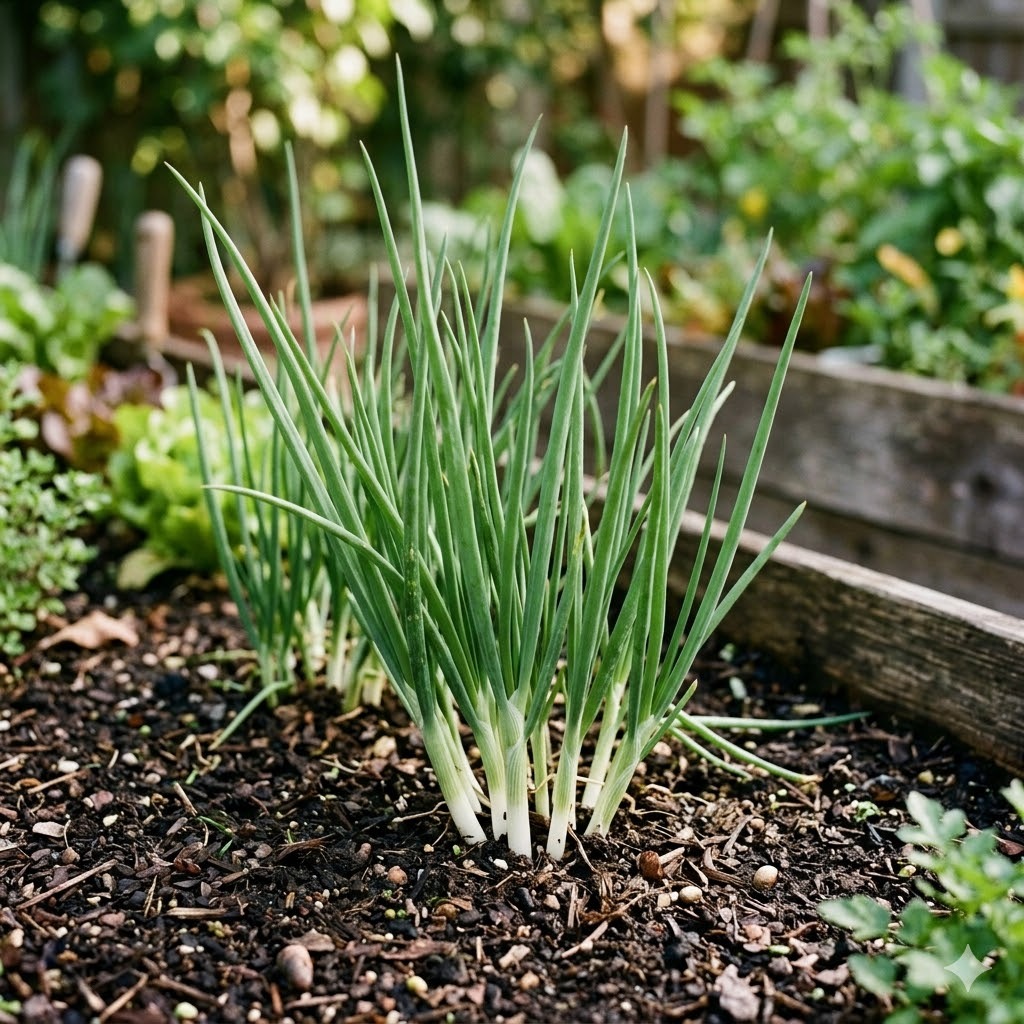
Prepare a patch of reasonably fertile, well-worked soil, rake it to a fine crumbly texture, and sow the seed thinly along a shallow drill, then cover lightly and water in. Because you eat spring onions young and whole, you do not need much spacing between plants, and you can grow them quite closely, thinning as you harvest. Sow thinly enough that the seedlings are not a solid mat, and they will come up as a neat row of slim little onions.
Here is the key habit that makes spring onions work: sow a small pinch of seed every two to three weeks through the growing season rather than the whole packet in one go. Because each sowing matures fast and gets used quickly, successional sowing like this gives you a continuous fresh supply instead of a brief glut followed by nothing. This little-and-often rhythm is the single most important thing to get right with this crop, and it turns an easy vegetable into a genuinely constant kitchen resource.
Where to grow
Spring onions are happy grown outdoors in the open ground for most of the year, and they are hardy enough to cope with cool weather, especially the over-wintering types. An open, sunny or lightly shaded spot with decent soil is all they ask, and they slot neatly into gaps between larger, slower crops.
They are also one of the best crops for containers and windowsills, which is a real advantage for anyone short on space. A pot of reasonable depth filled with ordinary compost, sown with a pinch of seed and kept on a bright windowsill or a doorstep, will give you fresh spring onions within reach of the kitchen. Because they are shallow-rooted and small, they do not need a large or deep container to do well.
This flexibility means you can grow spring onions almost anywhere you have a bit of light and something to hold soil, from a full vegetable bed to a single pot on a sill, which is a big part of their appeal.
Day-to-day care
Spring onions need very little looking after, and their care comes down mainly to keeping them watered and keeping weeds at bay. Because they are shallow-rooted and grown fairly closely, they do not compete well with weeds, so keep the row or pot clear so the young onions are not crowded or starved.
Watering is the main ongoing job. Spring onions like steady, even moisture and will grow best if the soil never dries out hard, which is especially important in pots and on windowsills where compost dries quickly. Keep them consistently moist and they grow fast and stay tender; let them go dry and they can become tough or check their growth. They rarely need feeding if the soil is reasonable, as they are a quick crop that is harvested young before it needs much.
As they grow you will naturally thin them by pulling, which doubles as harvesting - see below - so there is little separate thinning work to do. Beyond water and weeding, they largely look after themselves and are ready before most problems have a chance to develop.
Common problems and pests
One of the joys of spring onions is that, being such a quick crop, they usually outrun most of the troubles that plague slower alliums. They are harvested young, so many pests and diseases simply do not have time to take hold.
The main things to watch are the general allium concerns and the usual seedling pests. Onion fly can affect them, its larvae attacking the roots and base, though the fast turnover of spring onions limits the damage; if it is a known problem in your area, a fine insect mesh over the crop keeps the fly off. Damp, crowded conditions can encourage fungal problems such as downy mildew, so avoid sowing too thickly and keep the plants from sitting sodden. Slugs may nibble young seedlings, particularly in wet weather, so keep an eye on new sowings.
On the whole, though, spring onions are among the least troublesome things you can grow. Sow thinly, keep them watered but not waterlogged, and harvest them promptly, and problems are rare. Because you sow little and often, even a failed sowing is quickly replaced by the next one.
Harvesting
Harvesting spring onions is as easy as it gets, and there is no precise moment you have to hit. You simply pull them once they have reached a usable size, typically around eight weeks from sowing, when the little white bulb and green tops are big enough to be worth eating. You can start pulling them small and slim, or leave them a little longer for a bigger onion - it is entirely up to your taste.
The neat thing is that harvesting doubles as thinning. Pull the largest plants first, easing them out of the soil, which gives the ones left behind more room to grow on. This way a single sowing can be cropped over a period as you take the biggest and let the rest size up, stretching the useful life of each row.
To lift them cleanly, loosen the soil alongside if it is dry and firm, and pull steadily by the base so the roots come away whole. Then trim the roots and any tired outer leaves, and they are ready for the kitchen. Because they are used whole and fresh, you pull only what you need at a time, straight from the bed or pot.
Storing and preserving
Spring onions are best eaten fresh, and the honest truth is that they do not store for long - they are a crop you grow to pull as needed rather than to lay down. Their crispness and sharp flavour fade fairly quickly once lifted, so the ideal is to harvest them shortly before you use them.
Once pulled, they will keep for several days in the fridge, ideally wrapped or stood in a little water to stop them going limp, but they are always at their best straight from the ground. This is exactly why successional sowing matters so much: rather than storing a glut, you keep a living supply growing so you can pull fresh onions whenever you need them.
If you do end up with more than you can use, chopped spring onions freeze reasonably well for adding to cooked dishes, though they lose their crispness and are no longer suited to salads. For the most part, though, the best way to keep spring onions is simply to leave them growing in the soil and pull them as required.
Is it worth it?
Spring onions are one of the easiest, quickest and most reliable crops a home gardener can grow, and for a beginner they are close to foolproof. They need very little space, cope happily in a pot or on a windowsill, ask only for water and a bit of weeding, and reward you in around eight weeks - a fast turnaround that keeps growing satisfying.
The only thing to get right is the rhythm: sow a small pinch every few weeks rather than everything at once, and you will have a steady supply of fresh, crisp spring onions from spring into autumn. For the tiny effort involved and the constant usefulness in the kitchen, spring onions comfortably earn their place, whether you have a full plot or just a sunny sill.