How to Grow Strawberries: The Perfect First Fruit for Any Sunny Spot
A beginner's guide to growing sweet, sun-warmed strawberries in a bed, a pot or a hanging basket, from planting through picking to freezing the glut.
When to sow & harvest
A rough guide for a temperate climate - shift it to your own zone and last-frost date. Greenhouse growing stretches both windows earlier and later.
If you grow one fruit, grow strawberries. They are quick to reward, happy almost anywhere with a bit of sun, and a warm berry eaten straight off the plant is a different thing entirely from the firm, pale, watery ones in a supermarket punnet. Get a few plants going in spring and you can be picking your own by early summer, which is about the fastest, most cheering result a new fruit grower can have.
Why grow strawberries
The honest reason is flavour. Shop strawberries are bred to travel and to look uniform, not to taste of much, and they are picked before they are truly ripe so they survive the journey. A berry left on your own plant until it is fully red and warm from the sun is sweet, soft and fragrant in a way the punnet version never manages. Pick one, eat it there and then, and you will understand the whole point of growing your own.
They are also wonderfully forgiving of space. Strawberries are shallow-rooted and undemanding, so they are just as happy in a pot, a windowbox or a hanging basket as they are in a bed. That makes them one of the few fruits you can grow with no garden at all, on a balcony or a sunny doorstep, which is exactly why they are the fruit so many people start with.
And the reward comes fast. Unlike tree fruit that makes you wait years, a young strawberry plant put in during spring will usually crop the same summer. Quick success is a great encouragement for a beginner, and few crops deliver it as reliably as this one.
Choosing a variety
Strawberries fall into a few clear groups, and it is worth knowing which you are buying, because they behave differently.
- Summer-fruiting (June-bearers) - the classic strawberry. These give one big flush of large, well-flavoured fruit over a few weeks in early to mid summer, then stop. If you want a proper glut all at once, for eating fresh and making jam, these are the ones.
- Perpetual or everbearing - these crop in smaller amounts on and off through the season rather than in one rush. You get fewer berries at any one moment, but a longer picking window, which suits people who want a handful for breakfast over many weeks rather than a single big harvest.
- Alpine strawberries - tiny, intensely flavoured berries on neat little plants. They crop lightly but the fruit is aromatic and delicious, and the plants make a pretty, low edging. Grown for quality, not quantity.
Beginners rarely go wrong starting with a well-known summer-fruiting variety and adding a perpetual type later to stretch the season. You can also mix the two so that as one flush ends, another keeps you in berries.
Planting and starting off
Most people start from young plants rather than seed, and that is by far the easier route. You can buy them as potted plants in spring or as bare-rooted runners, which look like little rooted crowns and are cheap to buy in bundles. Either will settle in quickly if planted at the right time and depth.
Spring and early autumn are the two good planting windows. The one thing to get right is planting depth. The crown - the point where the leaves meet the roots - must sit right at soil level, not buried and not left high and dry. Plant it too deep and the crown rots; plant it too shallow and the roots dry out. Set it so the crown just kisses the surface, firm the plant in, and water it well.
Give each plant room to spread, roughly a hand's width or more between them in a bed, and they will soon fill the space. In pots and baskets, one to three plants per container is plenty.
Where to grow
Strawberries want sun. A spot that gets plenty of light through the day gives you the sweetest, most abundant fruit, while a shady corner gives you leaves and little else. They are not fussy about soil as long as it drains freely, since they hate sitting in cold, wet ground over winter.
The great strength of strawberries is how well they take to containers. A pot on a sunny patio, a windowbox on a warm sill, or a hanging basket by the door will all crop happily, and growing them up off the ground has a real bonus: it keeps the fruit away from slugs and out of the mud. Purpose-made strawberry planters with pockets up the sides let you fit a lot of plants into a small footprint.
Wherever you grow them, aim for sun, shelter and good drainage. Those three things do most of the work.
Day-to-day care
Strawberries are low-maintenance, but a few small habits make a big difference to the crop.
Water steadily, especially once the plants are flowering and the fruit is swelling, as this is when they need moisture most. Try to water the soil rather than the fruit and leaves, since wet berries are more prone to rot and mould. In pots and baskets, which dry out fast, keep a close eye and water regularly through the warm months.
Feed once the flowers appear. A high-potash liquid feed, the sort sold for tomatoes, every week or two through flowering and fruiting encourages plenty of good berries rather than lush leaf. Do not overdo the general feeding early on or you will get a jungle of leaves and disappointing fruit.
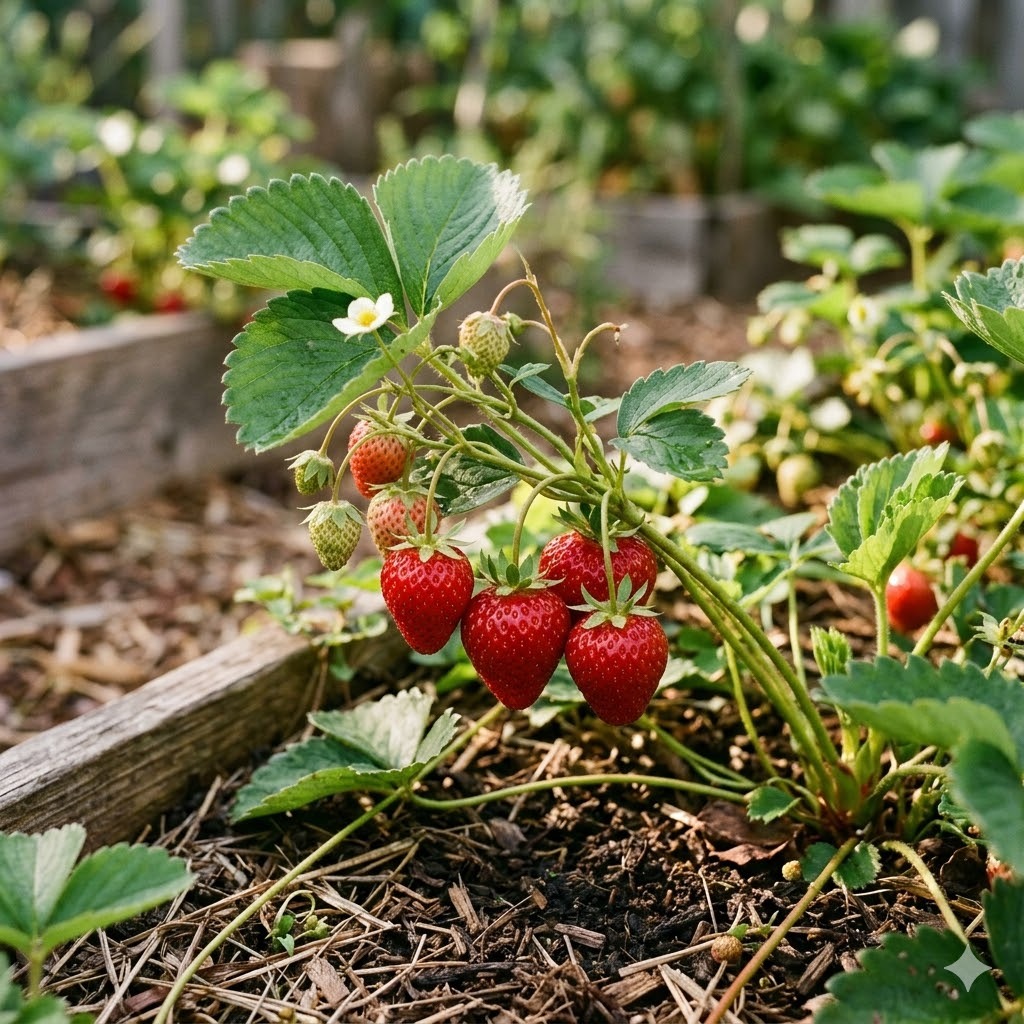
As the berries form and start to weigh the plant down, tuck a little clean straw or a purpose-made strawberry mat under each cluster. This lifts the ripening fruit off the wet soil, keeps it clean, and cuts down on rot and slug damage. It is a small job that noticeably improves how many berries you actually get to eat.
Strawberries also send out runners - long stems that root where they touch the ground and make new plantlets. If you want more plants for free, peg a few runners down into small pots of compost, let them root, then snip them from the parent. If you would rather the plant put its energy into fruit, simply cut the runners off as they appear.
One last habit: plan to replace your plants roughly every three years. Strawberries crop most heavily when young and gradually tail off, so raising a few new plants from runners each year keeps the bed productive.
Common problems and pests
The single biggest thief of home-grown strawberries is birds. Left unguarded, blackbirds and others will take the ripest berries the day before you meant to. Netting over the plants as the fruit starts to colour is the simple, reliable answer - just make sure the net is held clear of the fruit and tucked in at the edges so birds cannot get under it.
Slugs and snails are the next problem, especially in a wet summer and on fruit lying on the soil. Keeping the berries lifted on straw or mats, and growing in pots and baskets off the ground, does a lot to defeat them.
Grey mould shows up as a fuzzy grey rot on the fruit, and it thrives in damp, crowded, still conditions. Space the plants so air moves through them, water the soil rather than the leaves, and pick off any rotting berries promptly so it does not spread.
Old, tired plants can also fall prey to viruses that leave them stunted and unproductive. This is another reason to raise fresh plants regularly rather than nursing the same clump along forever.
Harvesting
Pick strawberries when they are fully red all over, including around the shoulders near the stalk, because unlike some fruit they do not ripen or sweeten once picked. A berry that still has a pale, white patch will only ever taste sharp, so patience for that last day or two is well rewarded.
Harvest with the little green cap still on, pinching or snipping the stalk rather than tugging the berry off, which bruises it. Pick in the warmth of the day if you can, as sun-warmed fruit is at its sweetest and most fragrant. Go over the plants every couple of days through the fruiting season, since ripe berries do not wait and will spoil quickly if left.
Storing and preserving
Fresh strawberries do not keep. Even in the fridge they soften and spot within a day or two, so they are a fruit to eat quickly or preserve promptly rather than store. Do not wash them until just before you use them, as wet berries deteriorate faster.
When there are more than you can eat, you have good options:
- Freezing - hull the berries, spread them in a single layer on a tray to freeze, then tip them into bags once solid so they do not clump. Frozen strawberries go soft when thawed, so they are best kept for smoothies, sauces and cooking rather than eating raw.
- Jam - strawberries make classic, well-loved jam, and a summer glut turned into jars is one of the great pleasures of growing your own. It is a good way to bank a big June flush for the rest of the year.
You can also cook a surplus down into a simple compote or coulis to freeze, ready to pour over puddings and porridge. Between freezing and jam, no summer harvest need go to waste.
Is it worth it?
Absolutely, and more than almost any other fruit for a beginner. Strawberries ask very little - a sunny spot, a pot or a patch of soil, steady watering, a bit of straw under the fruit and a net against the birds - and they pay you back the same summer with fruit that puts the shop version to shame. You do not need a garden, you do not need patience for years, and the plants keep giving for several seasons before they need replacing.
If you have never grown fruit before, this is the one to start with. Get a few plants in this spring, keep the birds off, and pick your first warm, ripe berry off the plant. It is very likely to be the start of a habit.