How to Grow Sunflowers for Seeds: Cheerful, Fast and Easy to Harvest
A practical guide to growing sunflowers for an edible seed crop, from spring sowing to harvesting the big brown heads in late summer, and how to beat the birds to your seeds.
When to sow & harvest
A rough guide for a temperate climate - shift it to your own zone and last-frost date. Greenhouse growing stretches both windows earlier and later.
Sunflowers are about as cheerful and rewarding as a crop gets, and growing them for their seeds turns a summer favourite into something you can actually eat. They are fast, easy and generous: sow a seed in spring and by late summer you can have a plant taller than yourself, topped by a great golden face that slowly fills with edible seeds. For anyone starting out, or anyone who just wants a crop that delivers a lot of joy for very little effort, sunflowers are hard to beat.
The one thing to get right is your choice of plant. If you want a real crop of seeds to roast and eat, you need to grow a large, seed-bearing type rather than one of the small, purely ornamental sorts, because those big heads are what produce a proper handful of plump seeds. Do that, sow in spring, and you are away. This is a genuine beginner's crop, quick and forgiving, and its only real complication is that birds love the ripening seeds every bit as much as you do. You harvest in late summer or early autumn, when the back of the seed head turns brown.
Why grow sunflowers
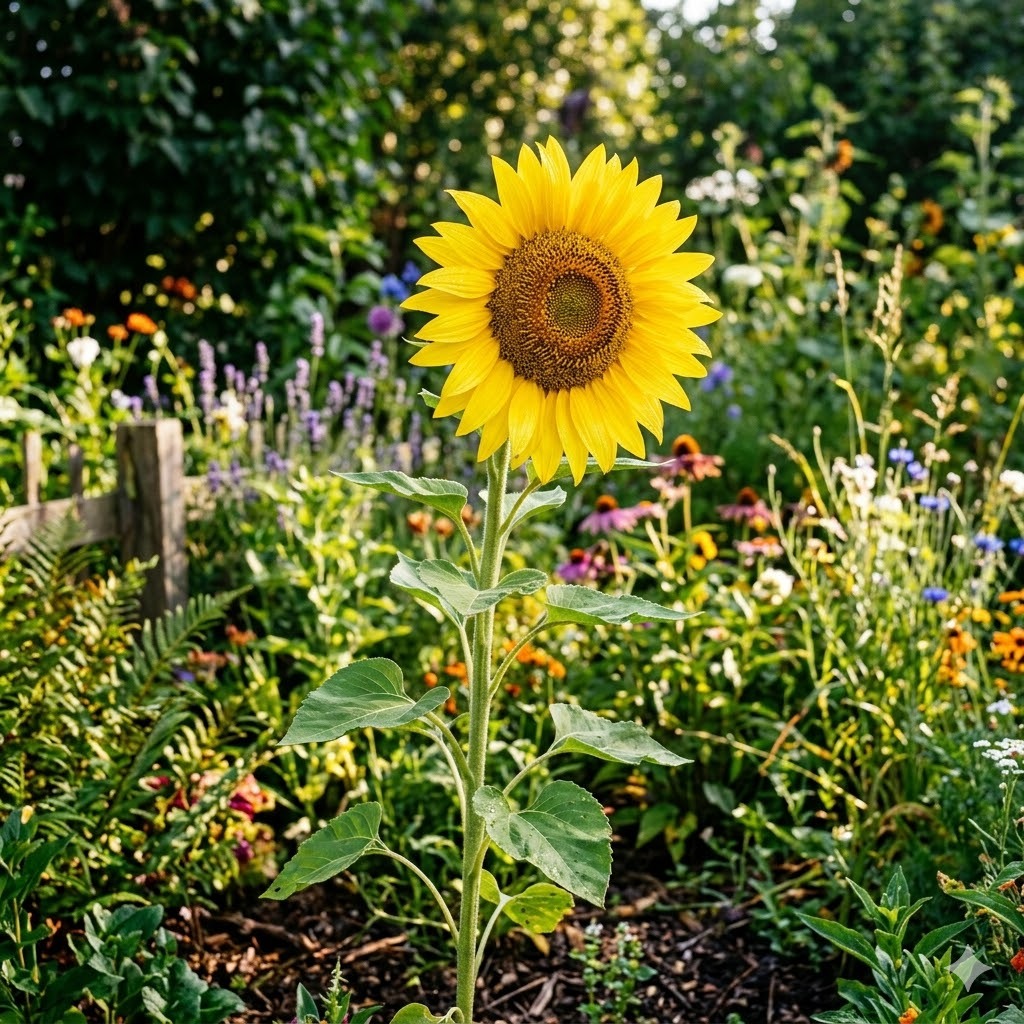
The first reason is pure cheer. A row of tall sunflowers turning their bright faces to follow the sun is one of the happiest sights in any garden, and they bring colour, height and life to a plot while the crop develops. Even before you get a single seed, the plants themselves are a delight, drawing in bees and other pollinators all summer long.
The second reason is the seeds. Grow a proper seed-bearing variety and each big head fills with edible sunflower seeds that you can dry and roast for a tasty, home-grown snack. They are the same seeds you buy in packets, only fresher and grown by your own hand, and there is real satisfaction in roasting a batch you raised from a single sown seed months before.
The third reason is how easy and fast they are. Sunflowers are one of the quickest, most forgiving crops you can grow, going from seed to towering flower in a single season with very little fuss. They ask for sun, a bit of space, and some support if they grow tall, and they get on with the rest themselves. For a beginner, a family with children, or anyone who wants a big, satisfying result without a lot of work, sunflowers grown for seed tick every box.
Choosing a variety
The single most important decision here is to choose the right type for your goal, because sunflowers fall broadly into two camps. There are the small, branching, purely ornamental sorts grown for masses of pretty flowers, and there are the large, single-stemmed, big-headed sorts grown for a real crop of seeds. If seeds are what you are after, you must grow one of the large seed-bearing kinds, not a dwarf or ornamental variety, because only the big heads produce a worthwhile quantity of plump, edible seed.
Look for the traditional tall varieties bred to make one enormous flower head packed with seeds. These are the giants of the sunflower world, often reaching well above head height, and their heavy heads are exactly what you want for a harvest. Some are grown specifically for large, striped, easy-to-shell eating seeds, and these are the ideal choice if snacking on the seeds is your main aim.
There is nothing wrong with also growing a few smaller, branching types for cut flowers and to feed the bees, but keep them separate in your mind from your seed crop. For seeds, go big and go single-headed. When buying, a variety described as a giant sunflower, or one sold specifically for edible or confectionery seeds, will serve you well. Pick one of those, give it sun and space, and you have the foundation of a proper seed harvest.
Sowing and starting off
Sunflowers are wonderfully simple to start, which is a big part of their charm. Sow the seeds in spring, once the worst of the cold has passed and the soil is beginning to warm, because sunflowers are warmth-lovers and cold, wet soil can rot the seed. There are two easy approaches, and both work well.
The first is to sow directly where the plants are to grow. Once the risk of hard frost is over and the soil has warmed, push the large seeds a couple of centimetres deep straight into well-prepared ground in their final sunny position, spacing them out so each has room to develop into a big plant. Water them in, and they will usually be up within a couple of weeks. Direct sowing suits sunflowers well because their big seeds are easy to handle and they grow away strongly.
The second is to start them off in pots. Sow individual seeds into small pots of compost in spring, keep them somewhere warm and bright such as a windowsill or greenhouse, and grow the young plants on until they are sturdy and the weather has settled, then plant them out into their sunny spot. This route gives you a head start and lets you protect the vulnerable young seedlings from slugs and cold, which is handy in a cool spring.
A common enemy at this stage is slugs, which relish tender young sunflower seedlings, so protect them however you usually do, especially with direct-sown plants. Whichever method you choose, the aim is the same: get strong young plants growing away in a warm, sunny position in spring, spaced with enough room for those big heads to develop, and the plants will race upward as summer arrives.
Where to grow
The clue is in the name: sunflowers want sun, and plenty of it. Choose the sunniest, most open position you have, because full sun is what powers those big plants and fills those heads with seed. A spot that bakes in the sun all day is ideal, and shade will only give you weaker plants and poorer heads. This is an outdoor crop through and through, needing nothing more than open ground and sunshine.
Give them space and think about height. Seed-bearing sunflowers grow tall and heavy, so space the plants generously so each has room, and picture the eventual size when you sow. A sheltered spot, or one where you can offer support, is worth seeking out, because tall sunflowers with heavy heads can be caught by wind and may need staking or tying to something solid to stop them toppling in a summer storm. A fence, wall or row of stout canes can serve as both shelter and support.
The soil need not be anything special. Sunflowers are not fussy and will grow in most reasonable garden soil, though they do best in ground that is fertile and free-draining rather than waterlogged. They are deep-rooted and fairly drought-tolerant once established, so heavy, sodden soil suits them less than an open, well-drained spot. Give them sun, room, a little shelter or support for their height, and ordinary decent soil, and sunflowers will thrive.
Day-to-day care
Sunflowers are refreshingly low-maintenance, and their day-to-day care is straightforward. The main things they want are water while young, support if they grow tall, and protection of the ripening seeds from birds later on.
Keep young plants watered so they establish and grow away strongly, especially in dry spells, as a good root system builds a stronger plant and a fuller head. Once well established, sunflowers are fairly drought-tolerant thanks to their deep roots, but a big plant filling a heavy head still appreciates a drink in a prolonged dry spell. They are not heavy feeders, and on reasonable soil they need little or no extra feeding; overly rich feeding can produce lush leaf and floppy, top-heavy growth.
The care that most repays attention is support. As the plants shoot up and the heads swell and grow heavy, tall varieties can be vulnerable to wind, so tie them to a stout cane, a fence or another firm support before they get too big, and check the ties as they grow. This simple step can save a magnificent plant from being snapped or blown over just as the seeds are forming.
Later, as the seeds start to ripen, your key task becomes protecting them from birds, which is covered below. Beyond watering the young plants, supporting the tall ones, and guarding the seeds, sunflowers largely look after themselves and get on with the cheerful business of growing.
Common problems and pests
The number-one challenge with sunflowers grown for seed is birds. Once the seeds begin to ripen in the heads, birds will flock to them and can strip a head bare in short order, so this is the main competition you face for your crop. The classic defence is to cover the ripening heads with a light, breathable material such as a mesh or fabric bag, or a piece of netting, tied loosely over each head once the petals fade and the seeds start to fill. This lets the head continue to ripen while keeping the birds off, and it is well worth the small effort, because otherwise you may find you have grown a magnificent crop only to lose it to the local sparrows just before harvest.
Slugs and snails are the other common nuisance, but chiefly at the seedling stage, when they can quickly demolish young plants. Protect the seedlings until they are large and tough enough to shrug off a nibble, after which slugs are rarely a serious problem for such big plants.
Wind can be a problem for tall varieties, as already mentioned, which is why staking or a sheltered spot matters. Beyond these, sunflowers are robust and largely trouble-free. In damp seasons the big heads can occasionally suffer from mould or rot if they stay wet, so good air movement and a sunny site help, and lifting the heads to dry them indoors if the weather turns wet at harvest can save the crop. On the whole, though, if you protect the seedlings from slugs, support the tall plants against wind, and cover the ripening heads against birds, sunflowers give you very little trouble.
Harvesting
Harvesting sunflower seeds is simple, and the trick is reading the head correctly so you catch it at the right moment, in late summer or early autumn. The clearest sign of ripeness is at the back of the flower head: as the seeds mature, the bright petals fade and drop, the front of the head dries, and the back of the head turns from green to yellow and then to brown. When the back of the head has turned brown and the seeds look plump and firm in their shells, the crop is ready.
At that point you cut the head off the plant, leaving a length of stalk to hold on to, and bring it in to finish drying and to harvest the seeds. If the weather is still warm and dry and the birds are kept off, you can let the head ripen a little further on the plant, but if wet weather threatens or the birds are relentless, it is better to cut the heads and finish them under cover. Cutting a touch early and drying indoors is safer than losing seeds to damp or birds.
To get the seeds out, once the head is dry, simply rub your hand or thumb firmly across the face of the head and the seeds will loosen and fall away easily. Working over a bowl or tray, you can strip a whole head of its seeds in a few minutes, which is one of the most satisfying parts of the whole crop. A single big head yields a good handful of seeds, ready to be cleaned, dried a little more if needed, and then roasted.
Storing and preserving
Once you have rubbed the seeds free of the head, make sure they are properly dry before storing, because any dampness can cause them to go mouldy. If the seeds still feel at all soft or the head was cut a little early, spread them out in a single layer somewhere warm and airy for a few days until they are thoroughly dry and hard. Give them a quick sort at the same time to remove bits of chaff and any empty or shrivelled seeds.
Fully dried sunflower seeds keep well for months in an airtight container in a cool, dry place, so you can store a harvest and enjoy it gradually. Keeping them dry and cool is the whole secret to good storage. If you have a large quantity and want to hold it for a long time, the fridge or freezer keeps the seeds fresh for even longer.
The nicest way to enjoy your harvest is roasted. Home-grown sunflower seeds roast beautifully into a tasty snack, either in their shells or shelled, in a moderate oven until fragrant and lightly golden, and you can toss them with a little salt if you like. Roasted seeds are best eaten within a reasonable time, so it is worth storing most of your crop raw and roasting batches as you want them, keeping them at their freshest. Do save a few of the best, plumpest seeds unroasted, though, because those are next year's crop, ready to sow again in spring and start the cheerful cycle all over.
Is it worth it?
Yes, wholeheartedly. Sunflowers grown for seed are one of the most rewarding crops a beginner can grow, giving an enormous amount of pleasure for very little effort. They are fast, easy and forgiving, they light up the garden all summer, they feed the bees, and then they hand you a crop of edible seeds to roast and enjoy, all from a single seed sown in spring.
There is one honest caveat: the seed yield is a treat rather than a staple. A big head gives you a satisfying handful of seeds, not a sackful, and you will spend a little effort keeping the birds off at the crucial moment. But nobody grows sunflowers purely for the calories. You grow them for the sheer cheer of the towering golden plants, the fun of watching the heads fill, and the small delight of roasting your own seeds at the end. Choose a big seed-bearing variety, give it sun and a bit of support, guard the ripening heads from birds, and you have one of the happiest, easiest and most satisfying crops in the whole garden.