How to Grow Swede: A Hardy Winter Root That Sweetens in the Cold
A practical guide to growing swede from an early-summer sowing to autumn and winter lifting, including thinning to the right spacing, keeping clubroot and flea beetle at bay and why the frost makes them taste better.
When to sow & harvest
A rough guide for a temperate climate - shift it to your own zone and last-frost date. Greenhouse growing stretches both windows earlier and later.
Swede is the sort of crop that quietly gets you through winter. Big, dense and hardy, these brassica roots sit out in the garden through the coldest months, actually growing sweeter as the frost gets into them, and wait patiently to be lifted whenever you want one. Sow them thinly in early summer, keep them weeded and watered, and by autumn you have a store of solid, sustaining roots that will feed you well into the new year.
They are an easy, undemanding crop that suits a beginner, with just a couple of things to watch for because they are members of the cabbage family. Like all brassicas, swedes can fall foul of clubroot in the soil and flea beetle on the young leaves, so it pays to know how to sidestep both. Get past the seedling stage and give them room, though, and they largely look after themselves. This guide runs through the whole season, from that early-summer sowing to lifting frost-sweetened roots in the depths of winter.
Why grow swede
The first reason is hardiness and winter value. Swedes are among the toughest roots you can grow, standing out through hard frost and snow without harm. That means the garden itself becomes your store: you leave them in the ground and lift as needed right through autumn and winter, exactly when fresh home-grown vegetables are scarce and most welcome.
The second reason is flavour, and here the cold is your friend. Frost prompts the roots to convert some of their starches to sugars as a kind of antifreeze, so a swede lifted after a few sharp frosts is noticeably sweeter and nuttier than one pulled in mild autumn weather. Home-grown swedes, cooked fresh, are far removed from the tired, waxed specimens that often turn up in shops.
The third reason is how little they ask. Swedes are a long, slow, steady crop that, once thinned and past the vulnerable seedling stage, mostly wants to be left alone to swell. They store in the ground for free, need no special equipment, and give a lot of solid food from a modest patch. For hearty winter cooking - soups, stews, mashes and roasts - they are a genuine staple.
Choosing a variety
Swedes do not offer a huge range, but there are a few useful distinctions.
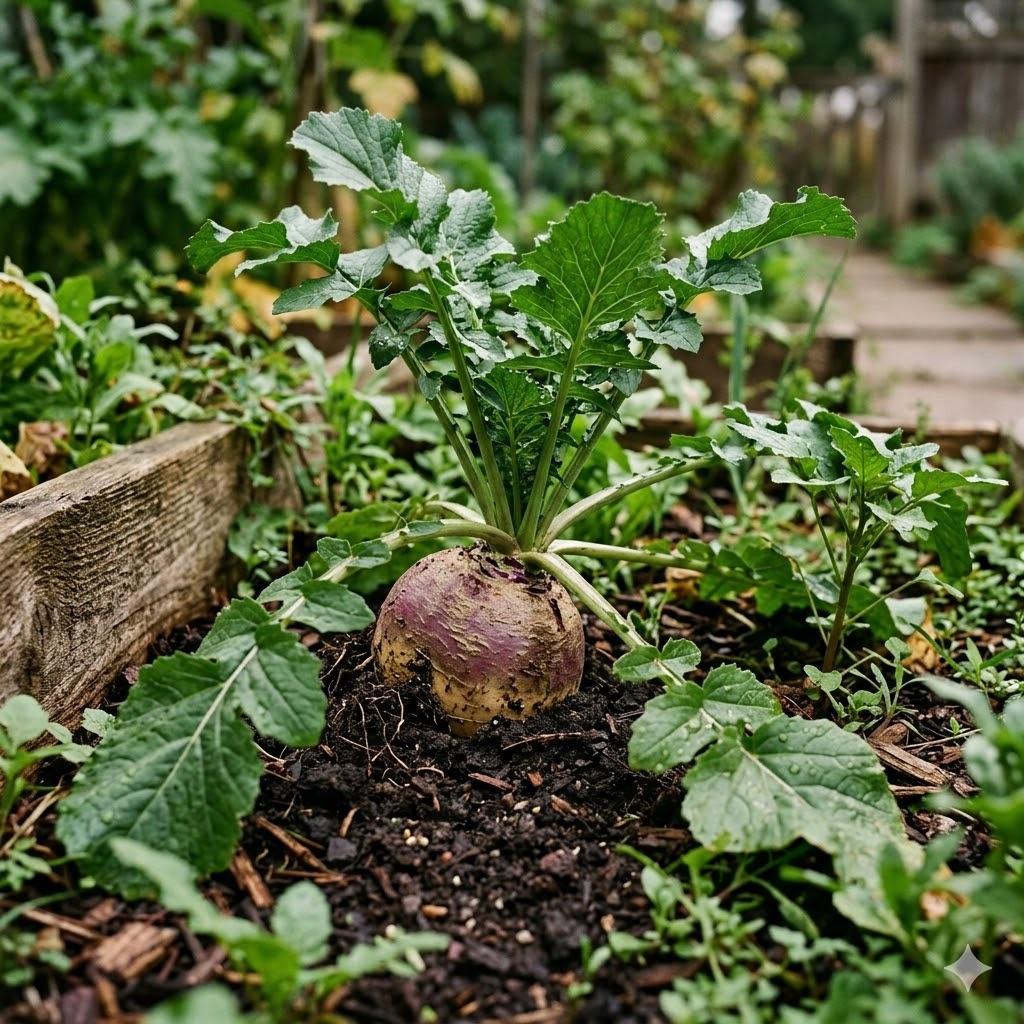
Purple-topped varieties are the traditional standard, with roots that are creamy or yellow below the soil line and flushed purple where the shoulders push up into the light. They give the classic yellow-fleshed swede that cooks down sweet and golden, and they are reliable and hardy.
Improved and modern varieties have been bred for better disease resistance, smoother skin, more uniform roots and, in some cases, resistance to powdery mildew, which can trouble the crop in late summer. If mildew has been a problem for you, these are worth choosing.
Clubroot-resistant varieties are the single most useful thing to look for if clubroot is present in your soil, as this disease is otherwise very hard to deal with. Growing a resistant sort can be the difference between a crop and a failure on infected ground.
Beyond that, the choice is largely about hardiness and eating quality, both of which are good across most named varieties. Pick a dependable purple-top for general use, and reach for a clubroot-resistant or mildew-resistant sort if those problems apply to your garden.
Sowing and starting off
Swedes have a long growing season and are sown directly into the ground where they are to grow, as they dislike being transplanted. The main sowing window is early summer, from around late spring into early summer, which gives the roots the long run of growth they need to reach a good size by autumn without bolting.
Sow thinly, which is the key phrase with swedes. Draw out a shallow drill about 1.5cm deep, water the base of the drill if the soil is dry, and sow the seed sparingly along it, then cover lightly and firm. Space rows around 40cm apart. Sowing thinly saves a great deal of thinning later and avoids the crowding that leads to small, misshapen roots.
Germination is usually quick and reliable in the warm early-summer soil. The one job you must not skip is thinning, done in stages as the seedlings grow. Once they are large enough to handle, thin them out, and continue until the plants stand about a hand's width apart - roughly 20 to 25cm between plants along the row. This spacing is essential: crowded swedes stay small and never develop into the big, solid roots you want, whereas well-spaced plants have the room to swell properly. Thin on a still day and clear away the thinnings, as their scent can attract pests.
Where to grow
Swedes are an outdoor crop from start to finish, needing no protection at any stage. They want an open, sunny position and, above all, soil that stays reliably moist, because a swede that dries out and then gets a sudden drink tends to grow unevenly, split, or turn woody and strong-flavoured. A deep, firm soil that holds moisture well is ideal, and one that has not been freshly manured, which can cause forking of the roots.
Firm ground matters more than rich ground. Swedes do best on soil that is settled rather than freshly dug and fluffy, so if you are working ground that has recently been turned over, tread it down and let it settle before sowing.
Because they are brassicas, swedes should sit in the brassica section of your crop rotation, kept away from ground where cabbages, turnips or other members of the family grew recently, both to spread the demand on the soil and to reduce the build-up of clubroot. On soil known to be limey rather than acidic, clubroot is less of a threat, which is one reason gardeners sometimes lime the brassica bed - though only where a soil test shows it is needed.
Day-to-day care
Once thinned to a hand's width apart, swedes are a fairly low-maintenance crop, but two things repay attention.
The first is water. Steady, consistent moisture is the secret to good swedes. If the plants are allowed to dry out and then soaked, the roots can crack or grow in fits and starts and end up tough and hot-tasting rather than sweet and mild. In dry spells, give the bed a good, regular soaking rather than occasional splashes, and a mulch over moist soil helps hold that moisture in and keeps the roots developing smoothly.
The second is weeding, particularly while the plants are young and easily swamped. Keep the bed clean so the seedlings are not competing for light, water and nutrients, hoeing carefully so as not to damage the swelling roots or their shoulders. Once the plants are large and their leaves meet across the row, they shade out most weeds themselves.
Feeding is rarely necessary on decent soil; swedes are not greedy, and too much nitrogen encourages leaf at the expense of root. Beyond watering and weeding, the crop simply gets on with slowly building those solid roots through late summer and autumn.
Common problems and pests
Being brassicas, swedes share the family's troubles, and two in particular are worth guarding against.
Clubroot is the most serious. This soil-borne disease attacks the roots, causing them to swell into distorted, gnarled masses while the plants above wilt and stunt, and its spores persist in the ground for many years. There is no cure once it is in the soil, so management is everything: rotate your brassicas widely, improve drainage, keep the soil from being too acidic where a test shows liming is warranted, and, most usefully, grow a clubroot-resistant variety on affected ground.
Flea beetle is the other classic problem, chiefly of the seedling stage. These tiny beetles pepper the young leaves with small round holes and, in a bad attack, can check or even kill emerging seedlings. Keeping the plants growing strongly with steady moisture helps them outgrow the damage, and covering the crop with fine insect mesh from sowing keeps the beetles off altogether, which is the surest defence early on.
Other brassica pests can appear too: cabbage root fly, whose larvae attack the roots and which a mesh cover or protective collars will deter; caterpillars of the cabbage white butterflies, again excluded by mesh; and powdery mildew in late summer, a whitish coating on the leaves best avoided by keeping the soil moist and choosing resistant varieties. Slugs may nibble the roots in wet conditions. A cover of insect mesh over the crop from the start deals with most of the pests in one stroke.
Harvesting
Swedes are ready to lift from autumn onwards, once the roots have swollen to a useful size - anything from around the size of a cricket ball upwards, according to how big you like them. You do not need to lift them all at once, which is one of their best qualities.
Because they are so hardy, you can leave swedes standing in the ground and lift them as you want them right through autumn and winter. Indeed, it is worth leaving them out precisely so the frost can sweeten them, as roots lifted after a cold snap taste noticeably better. Ease each root out with a fork, loosening the soil alongside, then twist or cut off the leafy top.
In very hard, prolonged freezes the ground can lock solid, making lifting difficult, so in a severe winter it is worth pulling a few roots in advance during a milder spell so you always have some to hand. Otherwise, treat the bed as your larder and take them as needed. Try to use them all before spring, when any left in the ground will start to send up flower shoots and turn woody in the centre.
Storing and preserving
The simplest and best storage for swedes is to leave them exactly where they grew. Standing out in the winter garden, they hold in fine condition for months, so most people treat the bed itself as the store and lift roots as they need them. This keeps them at their freshest and saves any effort.
If you need to clear the ground, or a very hard winter threatens to freeze the soil solid for weeks, you can lift the roots and store them under cover. Twist off the tops, brush off loose soil, and pack the sound roots in boxes of just-damp sand or old compost in a cool, frost-free shed or store, where they will keep for a good while. Layered so they are not touching, they stay firm and fresh. Discard any damaged or soft roots, as they will not keep.
For longer storage, swede also freezes well once cooked. Peel and dice the roots, blanch or boil until just tender, cool, and freeze, or cook and mash before freezing, ready to drop into winter soups, stews and mashes. Frozen swede softens, so it is best used cooked rather than expecting it to stay firm.
Is it worth it?
Yes, particularly if you value fresh vegetables through the leanest months. Swedes are hardy, undemanding and generous, giving a lot of solid, sustaining food from a patch of ground that then stores that food for free right where it grew. The only real commitment is time, as they occupy their bed for much of the year, and the only real jobs are thinning them properly and keeping them watered.
The brassica pests and diseases - clubroot and flea beetle chief among them - are worth respecting, but a mesh cover, a decent rotation and, if need be, a resistant variety see off most of the trouble. In return you get big, frost-sweetened roots for winter cooking, ready whenever you want them. For a low-effort, high-value winter staple, swede thoroughly earns its place.