How to Grow Sweet Peppers: Sweet Fruit From a Long, Warm Season
A practical guide to growing bell and bull's horn sweet peppers, from an early indoor sowing through to ripening, harvesting and freezing the crop.
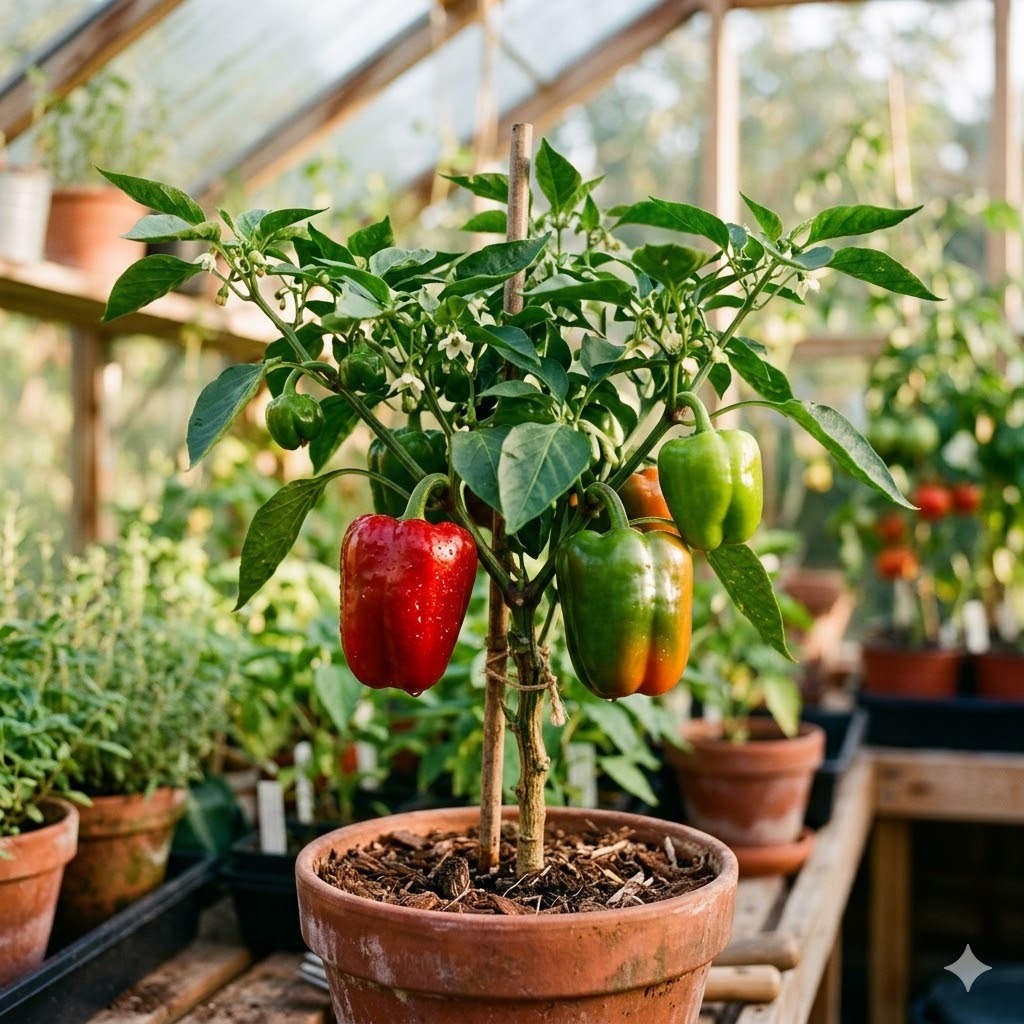
Why grow sweet peppers
Sweet peppers are one of those crops where home-grown genuinely beats the supermarket. A ripe pepper picked warm off the plant is crunchy, juicy and properly sweet, in a way the pale, gassed-in-transit versions never quite manage. They are also generous once they get going: a healthy plant can carry a dozen or more fruit over a long season.
Let's be honest up front though - peppers are rated intermediate here for a reason. They are not hard to grow, but they are slow and they are fussy about warmth. You sow early and you crop late, and in between there is a stretch where the plants seem to do very little. If you have the patience and a bit of shelter, they reward you. If you want fast, forgiving results, start with courgettes or beans and come to peppers next year.
The good news is that nothing about pepper growing is complicated. It is mostly about heat, steady watering and not rushing the plants outside before the weather is ready.
Choosing a variety
Sweet peppers split into two broad camps, and it helps to know which you are buying.
Bell types are the blocky, four-lobed peppers most people picture - the classic green, red and yellow supermarket shape. They look great, but they are the slower and more demanding of the two. Bells want a long season and real warmth to size up and ripen, so they are the better bet if you have a greenhouse or polytunnel.
Bull's horn types (sometimes sold as Corno or ramiro-style) are the long, tapering, pointed peppers. These tend to be sweeter, quicker to ripen and more forgiving, which makes them the smarter choice for outdoor growing or a first attempt. If you only try one type this year, make it a bull's horn.
A few practical pointers when choosing:
- Look for varieties described as early or quick-maturing if your summers are short or unreliable.
- Check the days-to-maturity figure. Anything under about 70 days from transplant to ripe fruit is a safer bet in a cool climate.
- Do not confuse sweet peppers with chillies. They are close cousins and grown almost identically, but seed packets are clear about which is which. Check for the word sweet or the absence of any heat rating.
Sowing and starting off
Peppers need a long warm season, so the single most important thing is to sow early - late winter to early spring, well before the last frost. In a cool-temperate climate that often means sowing indoors as early as February, roughly 8 to 10 weeks before you expect to plant out.
The catch is that pepper seed needs real warmth to germinate. Aim for a soil temperature of around 21 to 28C. On a chilly windowsill the seed will just sit there and sulk, or rot, so a heated propagator or a warm spot such as the top of a fridge makes a genuine difference. This is the one piece of kit worth having for peppers.
To sow:
- Fill small pots or trays with fresh seed compost, firm gently and water.
- Sow seed thinly, about 1cm deep, and cover lightly.
- Keep the compost warm and just moist, not soggy. Germination at the right temperature usually takes one to two weeks, though it can be slower.
- Once seedlings appear, get them into good light immediately so they do not stretch. A bright windowsill is fine, but turn the pots daily so they grow straight.
When the seedlings have their first pair of true leaves, prick them out into individual 7 to 9cm pots. Keep them warm - ideally not below about 15C at night - and pot on again into larger pots as the roots fill out. Do not be tempted to plant them out until the nights are reliably warm and all frost risk has passed. Peppers hate cold, and a chilled young plant will stall for weeks.
Greenhouse or garden - where to grow
This is the decision that most affects your crop, so it is worth thinking through honestly.
Under cover (greenhouse, polytunnel or conservatory) is where peppers really want to be. The crop data says it plainly - peppers love a greenhouse. The extra warmth speeds everything up: earlier flowering, better fruit set, faster ripening and a longer, more productive season. Fruit is far more likely to ripen fully to red or yellow rather than being caught green by autumn. If you have any covered space at all, put your peppers in it. They also do well in large pots or growbags on a sunny, sheltered patio, which behaves a little like a greenhouse in a good summer.
Outdoors in the open garden can work, but it is the harder path and depends heavily on your climate. In a warm, sheltered, sunny spot with a good summer you can get a decent crop, especially from the quicker bull's horn types. In a cool or exposed garden, outdoor peppers often stay green, ripen slowly and yield poorly. If you must grow outside:
- Choose the warmest, most sheltered, sunniest spot you have - against a south-facing wall is ideal.
- Harden the plants off carefully over a week or two before planting out.
- Consider starting them under a cloche or fleece to hold in early warmth.
- Stick to early, sweet, pointed varieties rather than big slow bells.
In short: greenhouse if you can, outdoors only if your summer and your site are genuinely warm.
Day-to-day care
Once your peppers are in their final pots or beds, the routine is steady and simple.
Warmth. Keep them as warm as you sensibly can. In a greenhouse, ventilate on hot days so it does not cook past about 30C, but otherwise err towards warm. Growth and fruiting both stall in the cold.
Watering. Water evenly and regularly. The aim is compost that stays consistently moist but never waterlogged. Erratic watering - drought then flood - is a common cause of flower drop and of blossom end rot (a sunken dark patch at the base of the fruit). In hot greenhouse conditions or in pots, that may mean watering daily.
Feeding. Once the first flowers appear, start feeding with a high-potash tomato feed, following the dilution on the bottle, usually once a week. Potash drives flowering and fruiting rather than leafy growth, which is exactly what you want. Keep feeding through the cropping season.
Support. A plant heavy with fruit can easily topple or snap at a branch. Push a cane in early and tie the main stem loosely as it grows. Bull's horn types especially, with their long dangling fruit, appreciate support.
Encouraging fruit. Some growers pinch out the very first flower or the growing tip once plants reach about 20cm to encourage bushier, more productive plants, but this is optional. Gently tapping or shaking flowering plants in a still greenhouse helps pollination, since there is no breeze or many insects to do the job indoors.
Common problems and pests
Peppers are not especially disease-prone, but a few things crop up reliably.
Aphids are the number one nuisance, clustering on soft growing tips and the undersides of leaves. They weaken plants and spread virus. Catch them early: squash colonies by hand, blast them off with water, or use an insecticidal soap. In a greenhouse, encouraging or introducing natural predators works well.
Whitefly are the other classic greenhouse pest - tiny white insects that flutter up in a cloud when you disturb the plant. They are persistent. Yellow sticky traps help you monitor and knock back numbers, and biological controls are effective under cover.
Blossom end rot shows as a sunken brown patch on the base of the fruit. It is not a disease but a calcium-uptake problem driven by uneven watering. The fix is steady, consistent moisture rather than any spray.
Flower or fruit drop usually points to stress - too cold, too hot, or irregular watering. Steady conditions solve most of it.
Slugs and snails will nibble young transplants, particularly outdoors. Protect small plants until they are established.
Most problems here trace back to the same roots: keep plants warm, watered evenly and fed, and you avoid the majority of them.
Harvesting
Here is the part that catches out beginners: peppers ripen from green through to red, yellow or orange, and a green pepper is simply an unripe one. It is perfectly edible - just milder and slightly grassy. As it ripens it gets noticeably sweeter and its colour deepens.
That gives you a genuine choice:
- Pick green for a bigger overall yield. Removing fruit while green signals the plant to keep setting more, so you get more peppers in total across the season.
- Leave to ripen for sweeter, more colourful fruit. The trade-off is that ripening ties up the plant's energy, so you get fewer peppers overall, and it takes patience - full ripening can add several weeks.
A sensible approach is to leave the first fruit or two to ripen fully so you get colour early, then start picking some green to keep the plant productive.
To harvest, cut the fruit off with secateurs or a sharp knife rather than tugging, which can tear the stem or break a branch. Peppers are ready whenever they have reached full size for the variety, at whatever colour stage you want them.
Storing and preserving
Fresh peppers keep for a week or two in the fridge, but the real value comes at the end of the season when a covered plant may hand you a glut all at once. The good news is that peppers preserve very well.
Freezing raw is the easiest and best method. Unlike many vegetables, peppers do not need blanching. Simply wash, deseed, slice or dice, spread on a tray to freeze loose, then tip into bags. They lose their crunch on thawing but are perfect for cooking - straight into stir-fries, sauces, stews and omelettes from frozen.
Roasting then freezing is worth the extra step for flavour. Roast or grill the peppers until the skins blister and blacken, let them steam in a covered bowl, peel off the skins, then pack the sweet soft flesh into containers or bags to freeze. This gives you ready-made roasted peppers all winter.
Drying works too, especially for thinner-walled bull's horn types. Slice them and use a dehydrator or a very low oven until crisp, then store airtight. Dried peppers rehydrate for cooking or can be ground into a mild paprika-style powder.
Between freezing raw, roasting-and-freezing and drying, a big pepper harvest need never go to waste.
Is it worth it?
Honestly - it depends on your setup. If you have a greenhouse, polytunnel or a genuinely warm, sunny spot, sweet peppers are absolutely worth growing. The flavour of a fully ripe, home-grown pepper is a real step up, the plants are productive once established, and they freeze so well that a good year can stock your kitchen for months.
If you are gardening in a cool, exposed, open plot with no cover, be more realistic. You can get a crop, but it will lean towards green fruit and modest yields, and you may find the long, slow season more frustrating than rewarding. In that case, stick to the quick, sweet bull's horn types and treat any ripe red fruit as a bonus.
The two things that make or break the crop are warmth and patience - sow early, keep them cosy, water steadily, and let them take their long, slow time. Get that right, and peppers are one of the most satisfying crops in the garden.