How to Grow Sweet Potatoes: A Warm-Season Treat From Rooted Slips
A practical guide to growing sweet potatoes from slips planted after frost to lifting in autumn, including why they need real heat, how to manage the sprawling vines and how to cure the tubers for sweet keeping.
When to sow & harvest
A rough guide for a temperate climate - shift it to your own zone and last-frost date. Greenhouse growing stretches both windows earlier and later.
Sweet potatoes are a crop that rewards a little ambition. They are not a true potato at all, but a warm-season root from the same family as morning glory and bindweed, grown from rooted cuttings called slips rather than from seed or tubers. Get the warmth they crave and they will hand you sweet, dense, orange-fleshed roots that keep for months and taste far better than most of what reaches the shops. In a cool climate they are more of a challenge than a staple, but a thoroughly satisfying one.
The catch is exactly that need for warmth. Sweet potatoes come from the tropics, and they will sit and sulk in cold soil, doing nothing until real heat arrives. That is why they suit a greenhouse, a polytunnel or a genuinely hot, sheltered spot outdoors, and why they go in late and come out before the cold returns. This puts them a notch above a beginner crop - not difficult, exactly, but you have to give them what they want. This guide covers the whole season, from planting slips to curing the roots for storage.
Why grow sweet potatoes
The first reason is flavour and quality. A home-grown sweet potato, freshly cured, is sweeter, denser and more interesting than the often watery imports on the supermarket shelf. Roasted until the edges caramelise, it is a genuinely different vegetable, and having grown your own you can choose varieties for taste rather than for surviving long-distance transport.
The second reason is how well they keep. Once properly cured, sweet potatoes store for months in a warm, dry place, actually improving in sweetness for the first few weeks as their starches turn to sugar. Few home-grown crops give you months of eating from a single autumn lifting the way a good batch of sweet potatoes can.
The third reason is simply the pleasure of pulling it off. Growing a tropical crop in a cool climate feels like a small triumph, and the sprawling vines are handsome and vigorous, greening over a greenhouse bed or a warm border through summer. For anyone who likes to push what their garden can do, sweet potatoes are a brilliant thing to try.
Choosing a variety
Since sweet potatoes are grown from slips rather than seed, your choice is really about which slips you buy, and for cooler climates the key thing is to pick varieties bred or selected to crop in a shorter, cooler season.
Orange-fleshed varieties are the familiar ones, giving the classic sweet, moist, deep-orange roots most people picture. Look among these for sorts specifically recommended for cool-climate or short-season growing, as they are the most likely to give you a worthwhile crop.
Paler and white-fleshed varieties exist too, tending to be drier and less sweet, more like a floury potato in texture. They are worth trying if you prefer that style, though the orange types are generally the more reliable and rewarding here.
The practical advice is to buy slips or young plants from a supplier who offers cool-climate selections, rather than trying to grow from a supermarket tuber, which may be a variety quite unsuited to your conditions and may have been treated to stop it sprouting. Buying named, cool-adapted slips gives you much the best chance.
Sowing and starting off
Sweet potatoes are not sown from seed. They are grown from slips - rooted shoots that sprout from a mature tuber. You can buy slips or ready-rooted young plants delivered in spring, which is by far the easiest route, or you can raise your own by suspending a sweet potato in water or laying it in damp compost in a warm place, letting it throw up shoots, then snapping those shoots off and rooting them.
However you get them, the slips are tender and must not go out until all danger of frost has passed and the soil has genuinely warmed, which usually means late spring at the earliest. Rushing them into cold ground is the commonest way to fail with this crop; they simply stall.
When your slips arrive or are ready, pot them up individually and grow them on somewhere warm and bright until they are established and the weather has turned, then harden them off before planting. Plant them fairly deep, burying the lower part of the stem so that roots form along it, and space the plants around 30cm apart, with something like 75cm between rows to give the vines room to run. Water them in well. A black plastic mulch laid over the bed before planting, with the slips set through slits, is a classic trick in cooler areas: it warms the soil, suppresses weeds and keeps the roots cosy.
Where to grow
Warmth is everything with sweet potatoes, so where you grow them decides whether you get a crop worth having. In most cool climates the surest results come under cover, in a greenhouse or polytunnel, where the extra heat and long season let the roots bulk up properly. Grown in a warm bed under glass, they can crop reliably even in a poor summer.
Outdoors, they need the hottest, most sheltered, sunniest spot you can offer, ideally against a warm wall, on light, free-draining soil that heats up quickly, and preferably with that black mulch to boost soil temperature. In a good hot summer an outdoor crop can do well; in a cold, wet one it may barely bulk up at all. Growing them in large containers or grow bags in a greenhouse is another good option and keeps the wandering vines contained.
The message is simple: give sweet potatoes the warmest home you have. Do not treat them as an ordinary outdoor root and expect much, unless you garden somewhere genuinely hot.
Day-to-day care
Once established in warm conditions, sweet potatoes grow fast and need fairly little fuss, but a few things matter.
Water regularly through the growing season, keeping the soil steadily moist as the plants make their leafy growth and the roots swell, but ease off as harvest approaches so the tubers are not sitting in wet soil, which can cause them to rot or split. In a greenhouse bed, keep an eye on moisture, as the heat that suits them also dries things out.
The vines are vigorous sprawlers and will run for a couple of metres or more, romping across the ground and rooting where the stems touch soil. Those secondary rootings can divert energy into lots of small tubers rather than a few good ones, so it is common practice to lift and reposition the wandering stems now and then, a job sometimes called vine-lifting, to discourage them from rooting away from the main plant. In a greenhouse you can train the vines along the ground or let them scramble, as space allows.
Feeding should be light. Too much nitrogen gives you a jungle of lush leaves and disappointing roots, so if you feed at all, choose something that favours root development rather than leaf, and go easy. Keep the bed weeded until the vines cover the ground and smother competition themselves.
Common problems and pests
The biggest problem with sweet potatoes in a cool climate is not a pest at all but simply a lack of heat. Plants that go into cold soil, or endure a cold, dull summer, will grow slowly and yield little, producing thin, straggly roots. Cover, warmth and a hot sheltered site are the whole answer, and there is no substitute for them.
Slugs can be a real nuisance, both nibbling the young slips and, later, gnawing holes in the developing tubers where they sit near the surface. Keeping the surroundings tidy and protecting young plants helps, and lifting the crop before the roots have sat too long reduces the damage.
Under glass, the usual greenhouse pests can appear - aphids, whitefly and red spider mite in hot dry conditions - and are managed as with any greenhouse crop, chiefly by keeping the growing conditions right and encouraging or introducing natural predators.
Rotting is the main storage-linked problem, and it usually starts with roots that were damaged when lifting, that were not cured properly, or that were kept somewhere cold and damp. Careful lifting, thorough curing and warm dry storage prevent most of it. Handle the tubers gently at every stage, as they bruise more easily than they look.
Harvesting
Sweet potatoes are ready to lift in autumn, generally around the time the leaves start to yellow, and always before the first frost, because cold will damage both the vines and the tubers. Unlike ordinary potatoes, you do not want to leave them in the ground once it turns cold, so keep an eye on the forecast and lift in good time.
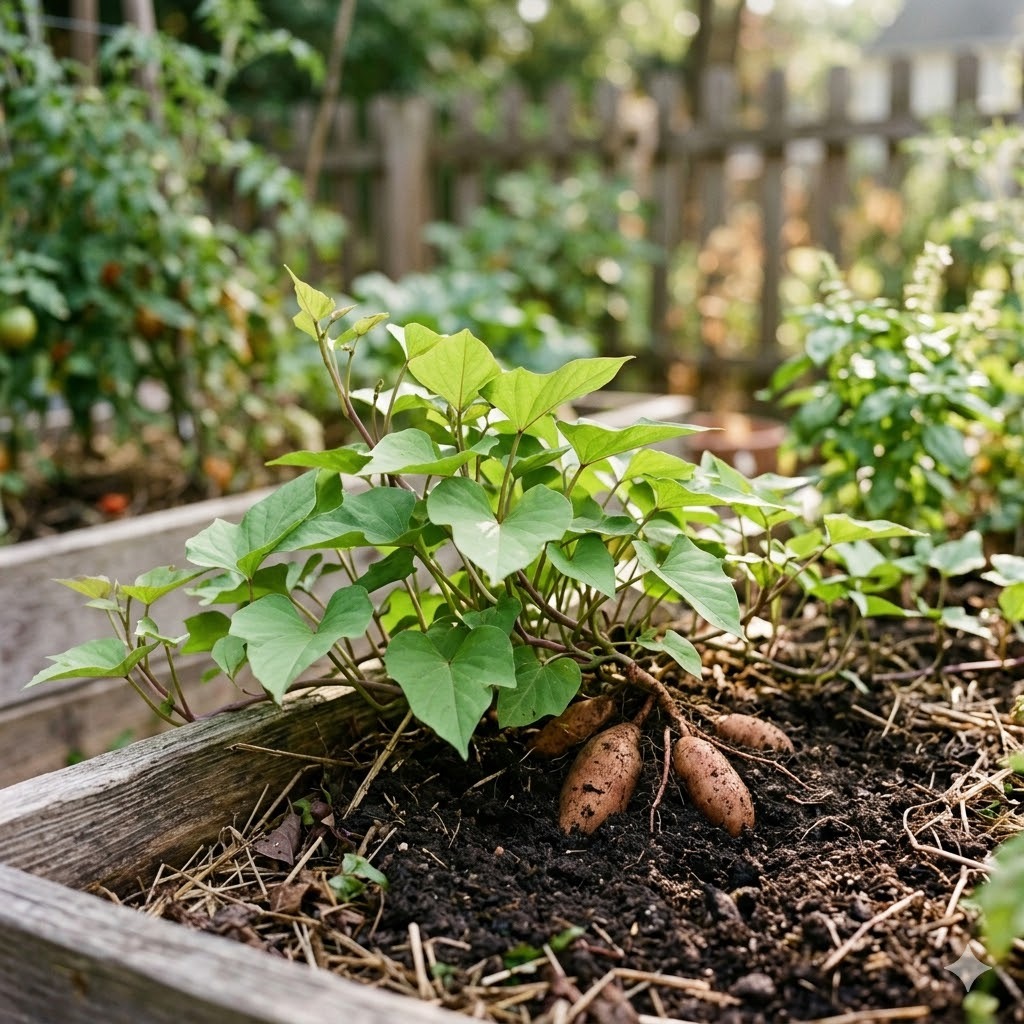
Lifting needs a careful hand. Cut back the vines first to clear the way, then dig around the plant well clear of the crown and ease the roots out gently with a fork, working from the outside in. The tubers cluster around the base of the plant and their skins are thin and easily torn or bruised at this stage, so go slowly and try not to spear or scrape them, as damaged roots will not store.
Once lifted, resist the urge to scrub them. Any clinging soil is best brushed off gently once they have dried, as washing and rubbing at the tender skins does more harm than good before curing.
Storing and preserving
Curing is the step that turns a freshly dug sweet potato into one that keeps for months and tastes sweet, and it is well worth doing properly. After lifting, keep the roots somewhere warm and humid for a week or so - a spot that is genuinely warm, not just room temperature, with reasonable humidity. During this time the skins toughen, minor wounds heal over, and the starches begin converting to sugar, which is why cured sweet potatoes are sweeter than fresh-dug ones.
After curing, move them to a warm, dry, airy place for longer storage. Crucially, sweet potatoes do not like the cold and should never be kept in a fridge or a chilly shed, which spoils their texture and can cause internal damage. Stored somewhere reliably warm and dry, wrapped individually in paper or laid in a single layer so they are not touching, a good batch will keep for many months, sweetening further as it does.
For longer keeping still, cooked sweet potato freezes well - baked or boiled, then mashed or sliced and frozen - ready to use in soups, bakes and mash through the winter.
Is it worth it?
That depends on your setup and your appetite for a challenge. In a cool climate, sweet potatoes are not a dependable staple the way maincrop potatoes are; they need warmth you may have to provide, they take a long season, and a cold summer can leave you with a meagre crop of small roots. If you have no greenhouse and a genuinely cold, exposed garden, they may frustrate you.
But given the warmth they crave - a greenhouse, a polytunnel, or a hot sheltered corner in a good year - they are a delight. The roots are sweeter and better than shop-bought, they store for months and improve in the keeping, and there is real pleasure in coaxing a tropical crop out of a temperate garden. For the adventurous grower with a warm spot to spare, sweet potatoes are absolutely worth the effort.