How to Grow Sweetcorn: Sweet Cobs Worth the Space They Take
A practical guide to growing sweetcorn at home, from sowing after the frosts and planting in a block for good pollination to picking cobs at their sweetest and eating them fast.
When to sow & harvest
A rough guide for a temperate climate - shift it to your own zone and last-frost date. Greenhouse growing stretches both windows earlier and later.
There is a reason gardeners rave about home-grown sweetcorn, and it comes down to one fact: the sugars in a freshly picked cob start turning to starch within hours. Shop corn has often travelled and sat for days, so it never tastes the way a cob does when you pick it, run indoors and cook it straight away. That short window is exactly why supermarkets can never match it, and it is the single best argument for growing your own.
Sweetcorn is also a surprisingly beginner-friendly crop. It is not fussy, it needs no staking, and once it is up and away it mostly looks after itself. The only real quirks are that it needs warmth to get going and it needs to be planted the right way so the wind can pollinate it. Get those two things right and the rest is easy.
Why grow sweetcorn
The taste is the headline. A cob picked at the peak moment and eaten within the hour is sweet, milky and tender in a way that shop corn simply is not. If you have only ever eaten bought corn, the first home-grown cob is a genuine revelation.
Beyond flavour, sweetcorn is low-effort once established. It is a tall, architectural plant that stands on its own, shrugs off most pests and needs no training or pruning. It also brings a bit of drama to a plot, screening a corner or giving height at the back of a bed.
The honest trade-off is space. Sweetcorn takes up a fair amount of ground and each plant gives you only one or two good cobs, so it is not the most efficient crop by area. But for the flavour, most growers decide it earns its place.
Choosing a variety
Modern sweetcorn is bred for sweetness and, more usefully, for holding that sweetness after picking. Look for the words on the packet rather than getting lost in the technical names.
Supersweet types are the sweetest and hold their sugars longest after harvest, which makes them forgiving if you cannot cook them the very minute you pick. The trade-off is that they need warmer soil to germinate, so they suit a slightly later or a warmed-up sowing.
Tendersweet or sugar-enhanced types sit in the middle: very sweet, tender-skinned, and a little easier to germinate than the supersweets. They are a good all-round choice for a first attempt.
One practical rule matters more than variety choice: do not grow different types right next to each other. Sweetcorn cross-pollinates on the wind, and if a supersweet variety is pollinated by an ordinary one, the crop can turn starchy. If you only grow one variety at a time, you never have to think about this. For a first year, pick a single reliable supersweet or tendersweet and keep it simple.
Sowing and starting off
Sweetcorn is a warm-season crop that will not tolerate frost, so timing is everything. The seed rots in cold, wet soil and the young plants are killed by even a light frost. That means you wait until late spring, once the danger of frost has passed and the soil has warmed.
You have two ways in. The simplest is to sow direct into warm soil in late spring, two seeds to a station about a hand's width apart, thinning to the stronger seedling. The alternative, useful in cooler areas or for an earlier start, is to sow indoors a few weeks before the last frost. Sow individually into deep pots or root-trainers, because sweetcorn hates having its roots disturbed and resents a cramped module. Harden the young plants off carefully before planting out once frost is safely gone.
Whichever route you take, the golden rule of sweetcorn is how you arrange the plants, and it is worth its own section below. However you start them, aim to get the plants out and settled by early summer so they have the full warm season to mature.
Where to grow
Sweetcorn is an outdoor crop through and through. It wants full sun, shelter from strong wind, and reasonably fertile, moisture-retentive soil. A warm, sheltered spot in the open garden is ideal, and a greenhouse is only useful for raising early plants, not for growing them on to maturity.
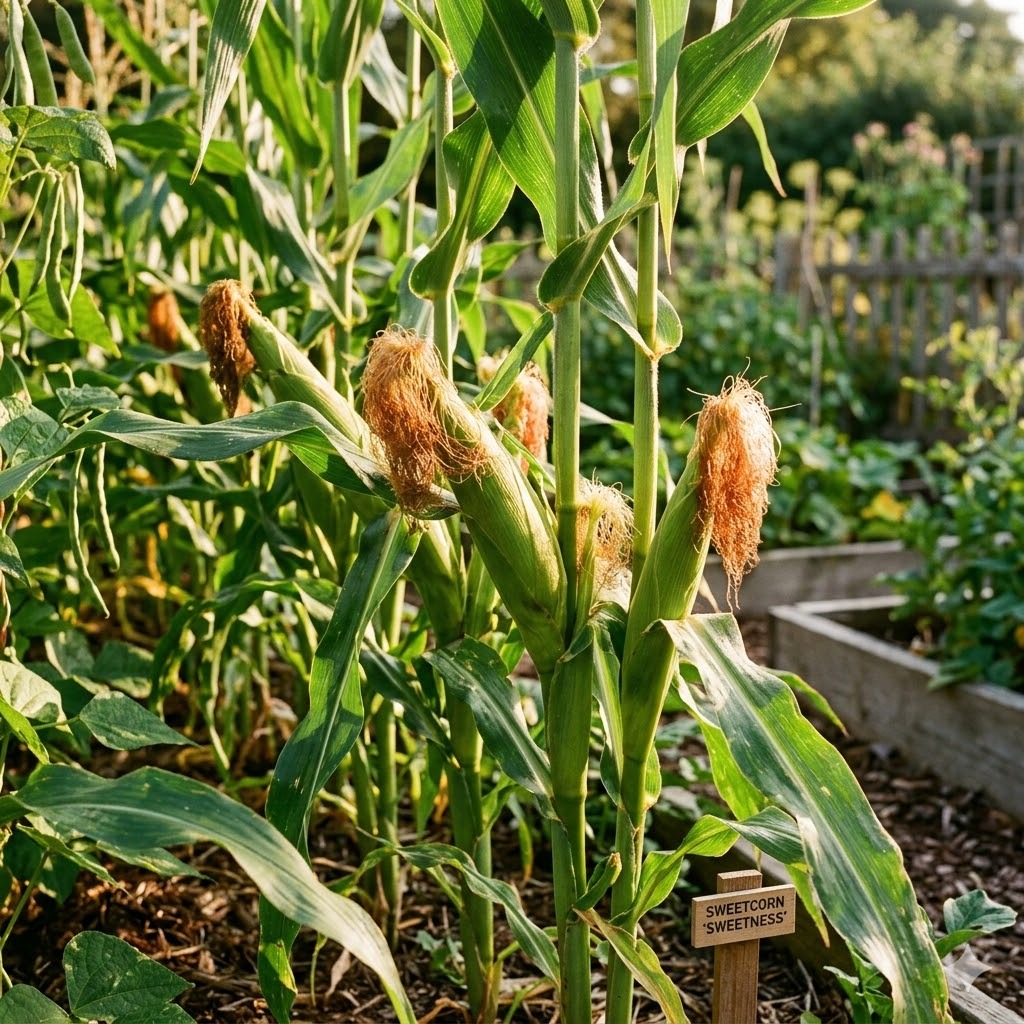
Now the part that makes or breaks the crop: plant in a block, never in a single long row. Sweetcorn is pollinated by wind, which carries pollen from the tassels at the top of each plant down onto the silks below. In a single-file row, much of that pollen simply blows away and misses the silks, and every silk that is not pollinated means a missing kernel. The result is gappy, half-empty cobs. Planted in a square or rectangular block of several short rows, the plants shower pollen across each other and you get full, well-filled cobs. Even a small block of, say, nine or sixteen plants works far better than the same number in a line. If you take one thing from this guide, take that.
Day-to-day care
Once your block is planted and growing, sweetcorn asks for very little. The main jobs are watering, feeding lightly and leaving it well alone at the right moment.
Water matters most at two stages: when the plants are getting established, and again once the cobs are forming and swelling. A dry spell while cobs are filling gives you poorly developed, patchy corn, so keep the soil moist through that period in particular. A mulch around the base helps hold moisture and keeps weeds down.
Sweetcorn is a fairly hungry plant, so a fertile soil or an occasional general feed keeps it growing strongly. You may notice roots pushing out from the base of the stems above soil level; these are natural support roots, and drawing a little soil up around the stems helps anchor tall plants against wind. Otherwise, resist the urge to fuss. In particular, do not remove the side tassels or tidy the plants when they are flowering, as you want all that pollen doing its job across the block.
Common problems and pests
Sweetcorn is refreshingly free of serious diseases in most gardens, so the trouble tends to come from things that want to eat the cobs.
Birds are the most common nuisance, pecking at ripening cobs and pulling back the husks. Netting the block or covering developing cobs as they ripen is the usual answer. In some areas badgers are the bigger problem: they love ripe sweetcorn, can flatten a whole block overnight, and are strong enough to defeat flimsy defences. If badgers are known in your area, a sturdy low fence around the block is the realistic protection, and it is worth setting up before the cobs are ready rather than after the raid.
Mice can dig up freshly sown seed, which is one more reason many gardeners prefer to start plants in pots and set out young plants instead. Slugs may nibble seedlings early on but are rarely a lasting problem once plants are growing strongly.
The most common disappointment, though, is not a pest at all but poor pollination showing up as gappy cobs. Almost always the cause is planting in a row rather than a block, or too few plants for the wind to work with. Plant in a decent block and most of these disappointments simply do not happen.
Harvesting
Timing the harvest is the skill that separates good sweetcorn from ordinary, and it rewards a little attention. Each cob is ready roughly when the silks at the top turn brown and dry and the cob feels plump and filled when you gently squeeze it through the husk.
The reliable test is to peel back a small section of husk and press a thumbnail into a kernel. If the liquid that beads out runs milky, the cob is at its peak and ready to pick. If it is still clear and watery, the cob needs a few more days. If it runs thick and doughy, you have left it slightly too long and the sugars have begun turning to starch. Aim for that milky moment.
Pick by holding the stem and twisting the cob downward until it snaps off. Then move fast. This is the crop where the walk from garden to kitchen genuinely matters, because the sugars begin converting to starch the moment the cob leaves the plant. Ideally you have the water already boiling before you pick.
Storing and preserving
The blunt truth is that sweetcorn is not a storage crop in the way carrots or onions are, and it is at its best eaten the day it is picked. Left in the fridge, even for a day or two, it steadily loses its edge as the sugars fade.
If you have a glut, freezing is the way to keep it. You can freeze whole cobs after blanching them briefly in boiling water and cooling them fast in iced water, or strip the kernels off and freeze those. Blanching first is important, because it stops the enzymes that would otherwise turn frozen corn tough and bland. Frozen this way, sweetcorn keeps its quality for months and is a world away from the fresh-but-fading cob left in the salad drawer.
Because it all tends to ripen over a fairly short window, freezing a surplus is often the sensible plan rather than trying to eat every cob fresh in one busy fortnight.
Is it worth it?
Sweetcorn asks you to give up a decent chunk of ground for a crop that yields only a cob or two per plant, so on pure efficiency it loses to smaller, heavier-cropping vegetables. If space is very tight, that is a fair reason to grow something else.
But almost everyone who grows it decides the flavour settles the argument. A cob picked at the milky stage and cooked within minutes is one of the genuine treats of the growing year, and it is a taste you simply cannot buy. Plant it in a proper block, keep it watered while the cobs fill, guard against birds and badgers, and pick at the right moment - do those few things and sweetcorn is one of the most rewarding easy crops you can grow.