How to Grow Swiss Chard: The Generous Leaf That Just Keeps Giving
A practical guide to growing Swiss chard at home, from sowing a single crop that stands for months to picking outer leaves cut-and-come-again style through heat, cold and often the winter.
When to sow & harvest
A rough guide for a temperate climate - shift it to your own zone and last-frost date. Greenhouse growing stretches both windows earlier and later.
If you want one leafy crop that gives back for months on end with almost no fuss, Swiss chard is hard to beat. Sow it once and it settles into a long, steady rhythm of producing leaf, letting you pick the outer stalks again and again while the plant keeps pushing up new growth from the centre. It is generous in a way that few vegetables are, and it is genuinely easy, which makes it a fine choice for a beginner.
Chard has a real advantage over spinach, the crop it most resembles in the kitchen. Spinach bolts and collapses at the first sign of heat or cold, whereas chard takes both in its stride, standing through hot summers and often right through the winter to give you fresh leaves when little else is going. On top of that, the brightly coloured stems of some varieties look genuinely ornamental, so it earns a place as much for its looks as for the pot.
Why grow Swiss chard
The main reason is the sheer productivity. A cut-and-come-again crop like chard keeps cropping for months from a single sowing, because every time you pick the outer leaves the plant grows more from the middle. A short row of chard can keep a kitchen in greens for a very long stretch, which is remarkable value for the space and effort involved.
It is also tough and forgiving in a way that suits beginners. Chard copes with heat that would send spinach to seed, and it stands the cold well enough that a spring sowing will often carry on providing leaves through the winter and into the following spring. That resilience means fewer failures and a much longer season than most leafy crops manage.
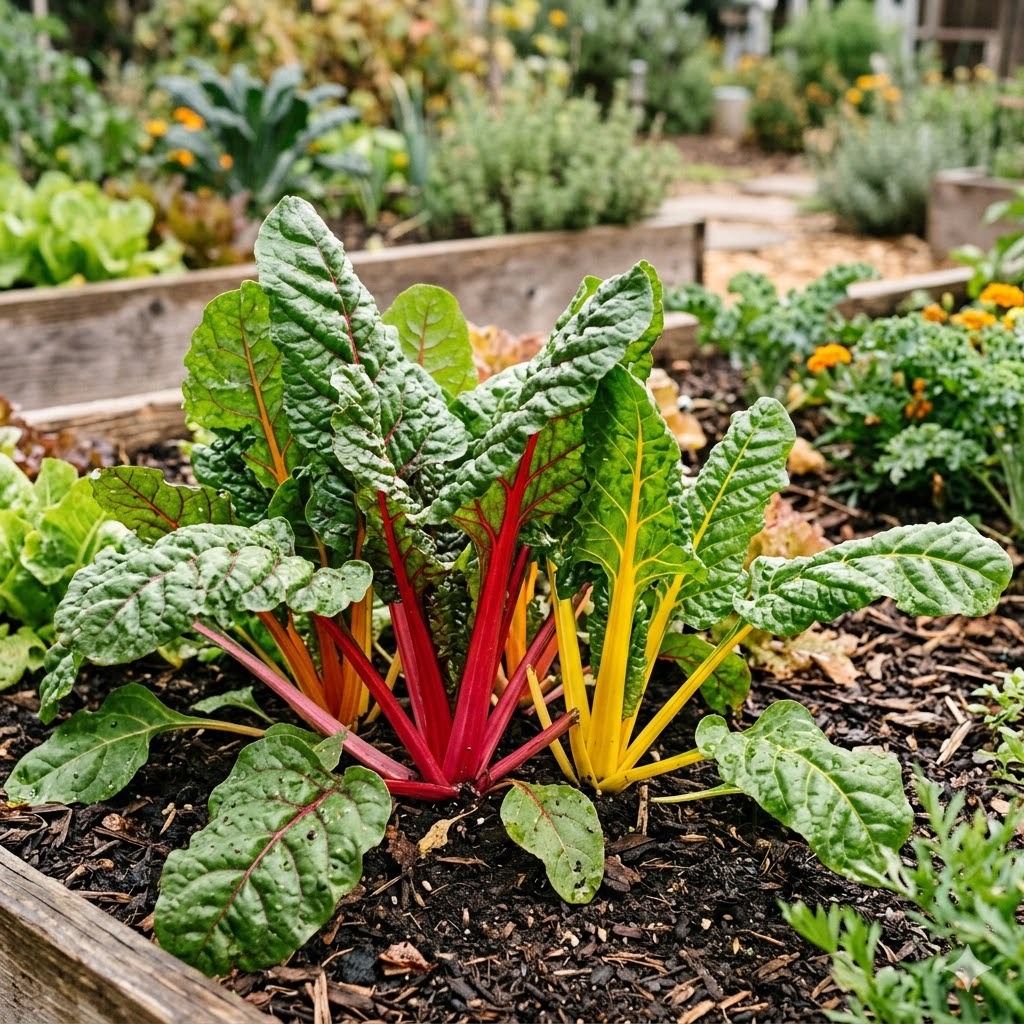
And there is the look of it. The rainbow-stemmed varieties, with their vivid red, yellow, pink and orange stalks, are handsome enough to grow in a flower border, so chard doubles as an edible and an ornamental. Between the long harvest, the toughness and the good looks, it is an easy crop to recommend.
Choosing a variety
Chard varieties differ mainly in the colour of their stems and, a little, in leaf texture, so choosing one is largely a matter of taste and appearance.
The classic is the broad white-stemmed chard, sometimes called Swiss chard or silver chard, which has thick, fleshy white stalks and large dark green leaves. It is vigorous, reliable and heavy-cropping, and it is the workhorse choice if you mainly want plenty of leaf for the kitchen.
Then there are the colourful varieties, often sold as rainbow chard or under names highlighting their bright stems. These give you a mix of red, yellow, pink and orange stalks and are just as edible and productive, with the bonus of looking striking in the garden. Ruby or red-stemmed chard is a particularly vivid single-colour option. There is little practical difference in how you grow any of them, so a first-time grower can simply pick whichever appeals - a dependable white-stemmed type for maximum leaf, or a rainbow mix for colour on the plot.
Sowing and starting off
Chard is easy to raise from seed and can be sown either direct into the ground where it is to grow or started in modules and transplanted, both of which work well. For most gardeners, sowing direct is the simplest route.
Sow into prepared, reasonably fertile soil that has been raked to a decent crumbly texture. Because chard seed is fairly large, it is easy to space out, and you can sow a few seeds at intervals along a shallow drill, then thin the seedlings to leave sturdy plants with room to develop into full, leafy clumps. Chard plants grow to a good size, so give them enough space to bush out rather than crowding them.
Spring is the main sowing time for a crop that will produce through summer, autumn and often into winter, and you can make a further sowing in mid to late summer if you want fresh young plants heading into the colder months. One of the nice things about chard is that a single well-timed sowing often does the whole job, standing for months and saving you the successional sowing that quicker crops demand. Keep the soil moist while the seed germinates and the young plants establish.
Where to grow
Chard is an outdoor crop that grows happily in the open ground and is hardy enough to take cool and cold weather in its stride. An open position with reasonable soil and a fair share of sun suits it well, though it also tolerates a bit of light shade, which can actually help in the height of summer by reducing stress.
It is a very adaptable plant. It copes with heat better than most leafy greens, so it holds up through summer when spinach would bolt, and it is tough enough that a spring-sown crop will frequently stand through the winter, especially in milder areas or with a little protection such as a cloche or fleece in the coldest spells. That winter-standing ability is one of its best features, giving you fresh greens in the lean months.
Chard also grows well in large containers, so it is a good option for a patio or a smaller space, provided the pot is big enough to support a substantial leafy plant and is not allowed to dry out. Whether in a bed, a border or a big pot, it is an accommodating crop.
Day-to-day care
Chard is low-maintenance, and its care comes down mainly to water and a little weeding. Being a leafy crop, it wants steady moisture to keep producing tender leaves, so water in dry spells and try not to let the soil dry out hard, which can stress the plant and encourage it to run to seed. A mulch around the plants helps hold moisture and keeps weeds down.
Keep the area weeded, particularly while the plants are young, so they are not competing for light, water and nutrients. Once chard is established and bushing out, its own large leaves shade the ground and suppress much of the weed growth themselves.
Chard is not a hungry crop in the way some vegetables are, but because it crops over such a long period, an occasional feed or growing it in fertile soil helps keep the leaves coming steadily. Regular picking is itself part of the care, as removing the outer leaves keeps the plant producing fresh growth from the centre. If a plant does eventually try to bolt and send up a flower stem, usually late in its long life, that is a sign it is coming to the end, and you can pull it and sow afresh.
Common problems and pests
Chard is a robust crop with relatively few serious problems, which is part of what makes it so easy. It does not suffer the bolting troubles of spinach in ordinary conditions, and it shrugs off weather that defeats more delicate greens.
The most common nuisances are the general leaf-eaters. Slugs and snails will nibble young seedlings and tender new growth, particularly in damp weather, so protect plants while they are small. Birds can also peck at the leaves in some gardens, and a net will keep them off if it becomes a problem. Leaf miner can tunnel between the layers of a leaf, leaving pale blotches; affected leaves can simply be picked off and discarded, and the plant carries on regardless.
Downy mildew and other fungal problems can appear in damp, crowded conditions, so give plants enough space for air to move around them and avoid overhead watering late in the day. On the whole, though, chard is remarkably trouble-free, and because a plant keeps producing new leaves from the centre, minor damage to a few outer leaves rarely matters much.
Harvesting
Harvesting chard is where its generosity really shows, and the technique is the key to keeping it cropping for months. Rather than pulling up whole plants, you pick the outer leaves individually as you need them, taking the largest from around the outside and leaving the young central leaves to keep growing. This is the cut-and-come-again method, and it is what lets a single plant supply the kitchen over such a long period.
Snap or cut the outer stalks off cleanly at the base, taking a few from each plant so no single plant is stripped bare, and always leaving the growing centre intact. Within days the plant pushes up fresh leaves to replace what you took, and you simply come back and pick again. Done this way, a row of chard keeps producing steadily for months on end.
You can start picking as soon as the leaves are big enough to use, taking baby leaves young for salads or letting them grow larger for cooking. Both the leaf and the fleshy stalk are usable in the kitchen, the leaf cooking much like spinach and the stalk needing a little longer. Keep picking regularly, as frequent harvesting actually encourages the plant to keep producing.
Storing and preserving
Chard is best used fresh, and picked leaves keep for several days in the fridge, ideally in a bag or box to stop them wilting. Because the plant crops continuously, the easiest way to store it is simply to leave it growing and pick fresh leaves as you need them, which is far better than storing a glut.
When you do have a surplus, chard freezes well, though like most leafy greens it benefits from being blanched first. Wash the leaves, blanch them briefly in boiling water, cool them quickly in iced water, drain well and freeze. The stalks, being thicker, take a little longer to blanch than the leaf and can be frozen separately if you prefer. Frozen chard is best kept for cooked dishes rather than fresh use, but it lets you carry the harvest through leaner times.
For the most part, though, chard's long standing season means you rarely need to preserve much of it. Its whole appeal is that it keeps supplying fresh leaf over many months, often including the winter, so the plant itself is the store.
Is it worth it?
Swiss chard is one of the most rewarding easy crops for a home gardener, and it is especially good for beginners. From a single sowing you get months of fresh leaves, picked outer-leaf by outer-leaf, with very little care beyond watering and weeding. It asks for no successional sowing, no fiddly timing and almost no skill, and it forgives the kind of neglect that would finish off more delicate greens.
Add to that its toughness in both heat and cold, its habit of standing through the winter to provide greens when little else does, and the genuine good looks of the rainbow-stemmed varieties, and chard becomes an easy recommendation. For steady, long-lasting productivity from minimal effort, it is one of the best value crops you can put in the ground.