How to Grow Tarragon: The French Herb Worth Buying as a Plant, Not a Packet
A practical guide to growing true French tarragon for its aniseed flavour, why you should never raise it from seed, and how to keep it going through winter.
When to sow & harvest
A rough guide for a temperate climate - shift it to your own zone and last-frost date. Greenhouse growing stretches both windows earlier and later.
Tarragon is the herb that turns a plain roast chicken into something French. It has a warm, faintly aniseed flavour that runs right through classic sauces - bearnaise, tarragon cream, anything with chicken or fish - and there is really nothing else that does the same job. It is a step up in fussiness from something like chives, but not a difficult plant once you understand the one rule that trips everyone up: with tarragon, the variety and how you buy it matter more than anything else you do.
Why grow tarragon
The honest reason to grow tarragon is that good tarragon is hard to buy and easy to grow badly, so having a reliable plant of your own is genuinely worth something. Fresh tarragon rarely turns up in shops, dried tarragon is a limp shadow of the real thing, and the flavour is so distinctive that no other herb stands in for it. If you cook French food at all, a single healthy plant keeps you supplied all summer.
It is also a productive, generous plant once it is happy. A settled clump of French tarragon sends up plenty of soft, slender leaves through the warm months, far more than you are likely to use, and it comes back year after year as a perennial. You are not endlessly re-sowing; you plant it once, look after it, and harvest for seasons.
The catch, and it is a big one, is that tarragon is the herb most often grown wrong - not through bad care but through buying the wrong thing in the first place. Get that right and it is a rewarding, long-lived plant. Get it wrong and you end up nurturing something almost tasteless, which is why the next section matters more here than in any other herb guide.
Choosing a variety
This is the single most important part of growing tarragon, so it is worth being blunt about. You want French tarragon, and only French tarragon. This is the type with the true, warm, aniseed flavour that the classic sauces depend on. Anything else is a disappointment.
The problem is a coarse impostor called Russian tarragon. It looks broadly similar, it grows more vigorously, it is tougher and hardier, and it is almost tasteless - a rough, grassy flavour with none of the aniseed magic. Nobody plants it on purpose, but a great many people end up with it by accident, and here is exactly how.
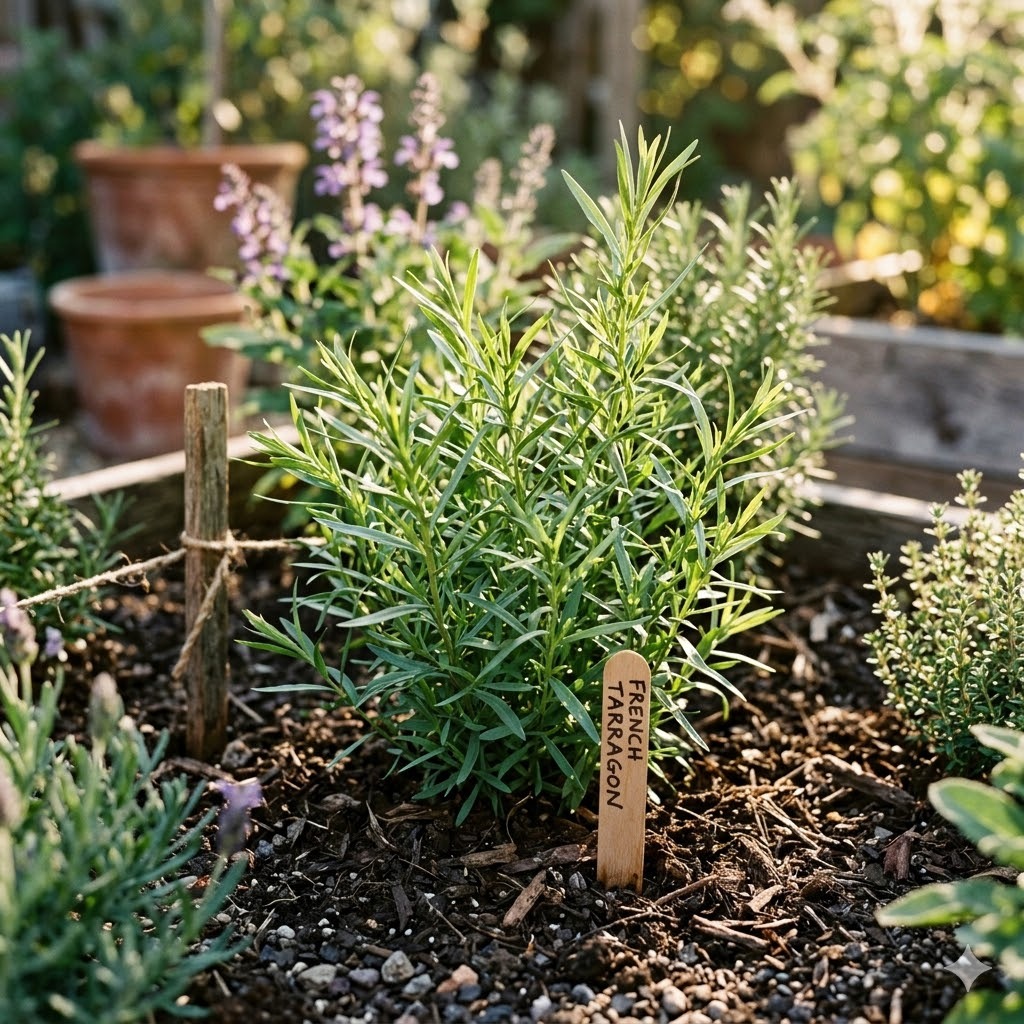
French tarragon does not come true from seed. In fact, it barely sets viable seed at all. So any packet of tarragon seed you see for sale is, without exception, the coarse Russian kind, because that is the only type that can be raised that way. This leads to the one rule that matters most: never grow tarragon from seed, and always buy a named French tarragon plant. Buy it as a living plant from a nursery, ideally one you can smell or that is clearly labelled French tarragon, and you sidestep the whole trap. Spend your money on the right plant and the rest of this guide is easy.
Planting and starting off
Because you are buying a plant rather than sowing seed, starting tarragon off is refreshingly simple. Pick up a healthy French tarragon plant in spring, once the worst of the cold has passed, and give it a week or two to settle before planting out or potting on. A quick sniff or a nibble of a leaf at the garden centre is the best test there is - real French tarragon has an unmistakable warm, aniseed scent.
Plant it into free-draining soil in a warm, sunny, sheltered spot, or pot it on into a container of gritty, well-drained compost. Tarragon hates having wet feet, so if your soil is heavy, dig in some grit or plant it in a raised bed or pot instead. Water it in well to settle the roots, then ease off - once established it prefers things on the drier side.
If you want more plants, the way to multiply French tarragon is not seed but division or cuttings. In spring you can lift and divide an established clump, or take soft cuttings in early summer and root them in gritty compost. Both give you genuine French tarragon, true to the parent, for free - which is the only reliable way to make more.
Where to grow
Tarragon is a warmth-and-drainage plant, and getting both right is most of the battle. It wants a sunny, sheltered spot with soil that drains freely and never stays cold and soggy. A sun-baked border, a raised bed, or a good-sized pot on a warm patio all suit it well. In cooler or wetter gardens, a container is often the safest choice because you control the drainage completely.
Sun matters for flavour as well as growth. A plant baking in a warm, bright position develops far more of that characteristic aniseed intensity than one struggling in shade and damp. Give it the warmest, brightest corner you can spare.
Winter is where the spot you choose really counts, because French tarragon is not fully hardy in cold, wet conditions. It is the combination of cold and wet that kills it, rather than cold alone, so a plant in sharp-draining soil or a pot you can move stands a far better chance than one sitting in heavy, waterlogged ground through a hard winter. Think of it as a warm-spot perennial that needs a little looking after when the cold comes, which the care section covers.
Day-to-day care
Day to day, tarragon is undemanding as long as you remember it prefers the dry side. Water a newly planted tarragon while it establishes, but once it is settled, let the soil dry between waterings and never leave it standing in wet. A plant in a pot will need more regular water than one in the ground, but the rule is the same - moist, then allowed to dry, never sodden.
Go easy on feeding. Tarragon grown too lush and soft on rich soil or heavy feeding tends to have a weaker flavour and flop about, so it does not need pampering. Poor-to-average, well-drained soil suits it better than a rich bed.
Through the growing season, regular harvesting keeps the plant bushy and productive, much as pinching does for other herbs. Snipping the tips encourages it to branch and stay leafy rather than run up leggy. It rarely flowers usefully, so there is little to do there beyond tidying.
The real care task is overwintering, because this is where French tarragon is lost most often. As the plant dies back in autumn, cut the old top growth down. In a mild garden with sharp drainage you can leave it in the ground with a protective mulch of straw, bark or grit over the crown to keep the worst of the wet and cold off. In a colder or wetter spot, the safer bet is to grow it in a pot and move that pot somewhere sheltered - against a warm wall, into a cold greenhouse, or under cover - for the winter, keeping it barely watered until it wakes up again in spring.
Common problems and pests
Tarragon is not especially bothered by pests, and most of its troubles come down to conditions rather than creatures. The recurring theme, as with so much about this herb, is wet.
Rot and winter loss are the big one. A tarragon plant that dies over winter has almost always drowned rather than frozen - cold combined with waterlogged soil rots the crown and roots. The cure is entirely in the growing: sharp drainage, a dry-ish site, and winter protection or a move under cover for pot-grown plants. If you lose a plant, look first at how wet it was sitting.
Weak or tasteless growth is the other common complaint, and it usually traces back to one of two causes: the plant is actually Russian tarragon bought as seed, or a French plant is being grown too soft in shade and rich, damp soil. If a plant that should be French has no aniseed punch, sadly it may be the coarse type; if it is genuinely French, move it somewhere sunnier and drier and cut back on feeding.
Beyond that, the odd aphid may cluster on soft new shoots, and can be rinsed or rubbed off, and slugs may nibble fresh spring growth. Neither is usually serious on an established plant in a well-drained spot.
Harvesting
Harvest tarragon by snipping the soft, leafy tips and upper stems through the growing season. Take the tender new growth rather than the tougher, woodier lower stems, and cutting from the top encourages the plant to branch and stay bushy, so harvesting doubles as shaping. Pick lightly and often once the plant is established and growing strongly, rather than stripping it bare in one go.
The flavour is at its best in the warm months when the plant is growing fast, so make the most of it then. Tarragon is a herb where fresh really matters - the aniseed notes are volatile and fade quickly, so pick it close to when you plan to cook, and add it towards the end of cooking to keep its character.
As with most herbs, do not shear the whole plant to the ground in high summer if you want it to keep cropping; take from the tips and let it recover. Save the harder cut back for autumn tidying rather than mid-season.
Storing and preserving
Fresh tarragon does not last long once picked - the leaves wilt and lose their aroma within days - so it is best used fresh or preserved promptly. For a few days, a sprig will keep wrapped loosely in a damp cloth in the fridge, or stood in a little water like a cut flower.
For longer keeping, two methods hold the flavour better than drying:
- Frozen - chop the leaves and freeze them, loose on a tray or packed into ice-cube trays topped with a little water. Frozen tarragon keeps much more of its character than dried and drops straight into sauces and soups.
- Tarragon vinegar - this is the classic preserve and arguably the best. Steep clean sprigs in a bottle of white wine vinegar for a couple of weeks, then strain or leave the sprig in. It captures the aniseed flavour beautifully and is exactly what you want for dressings and bearnaise.
Drying tarragon is possible but a poor second best, since it loses much of its distinctive aroma and ends up bland - which is a large part of why shop-dried tarragon is so underwhelming. If you have a glut, reach for the freezer or the vinegar bottle rather than the drying rack.
Is it worth it?
Yes, provided you get the one big thing right. Buy a proper French tarragon plant rather than a packet of seed, give it a warm, sunny, sharply drained home, keep it on the dry side, and protect it or move it under cover for winter - do that, and you have a generous, long-lived perennial supplying a flavour you simply cannot buy in decent condition.
It is a touch more demanding than the truly beginner herbs, mostly because of that variety trap and the winter care, so it sits fairly at the intermediate level. But none of it is hard once you know it, and the payoff is real. For anyone who loves French cooking, a good tarragon plant is one of the most rewarding herbs in the garden, and the alternative - sad dried flakes from a jar - makes growing your own look better still.