How to Grow Turnips: Fast, Easy Roots You Pull Young and Sweet
A practical guide to growing turnips, a quick cool-season root ready in six to ten weeks, pulled young before it turns woody, with edible leafy tops as a bonus.
When to sow & harvest
A rough guide for a temperate climate - shift it to your own zone and last-frost date. Greenhouse growing stretches both windows earlier and later.
Turnips have an image problem. A lot of people think of them as tough, peppery, watery things fit only for stews, but that reputation comes almost entirely from turnips grown too big and left too long. Pulled young and small from your own soil, a turnip is a different creature - sweet, crisp, mild and tender, good raw as well as cooked. And they are among the easiest and fastest vegetables you can grow.
For a beginner, turnips are close to ideal. They go from seed to plate in as little as six to ten weeks, they need no staking, blanching or deep soil, and they are quite happy sown straight into the ground. Add in the fact that the leafy tops are edible greens in their own right, and you have a genuinely good-value crop for very little effort. This guide walks through the whole thing, from sowing to storing, with the one habit that makes all the difference: pulling them young.
Why grow turnips
The first reason is speed. Turnips are a fast crop, ready in roughly six to ten weeks from sowing, which makes them perfect for quick results, for filling gaps between slower vegetables, and for keeping a bed busy. Few things give you food this quickly.
The second is ease. Turnips are undemanding. They do not need the firm soil of brussels sprouts, the deep soil of parsnips or the constant water of celery. Reasonable ground, steady moisture and a bit of pest protection are all they ask.
The third is that you get two crops in one. As well as the swollen root, the leafy tops are edible and can be cooked like spring greens, so nothing need be wasted. Home-grown turnips, pulled small and used fresh, are also far nicer than the oversized ones sold in shops, which is exactly the point most people miss about this vegetable.
Choosing a variety
Turnips are grouped mostly by season and by the shape and colour of the root.
Early, fast-maturing varieties are the ones to grow for summer eating, pulled young and small. These include the popular white and white-and-purple types with tender, mild flesh, sown from spring onwards for quick, sweet roots.
Maincrop or later varieties are hardier and better suited to autumn sowing for use into winter. They tend to be larger and tougher, standing longer in the ground in cooler weather.
You will also find golden-fleshed types and small round "salad" turnips prized for eating raw. For most people, the fast early types sown little and often are the most rewarding, giving a steady run of tender young roots.
Whatever you choose, remember these are crops to eat young. Do not pick a variety purely for size unless you specifically want big roots, because the small, young stage is the tender, sweet one.
Sowing and starting off
Turnips are almost always sown direct, straight into the ground where they will grow, because like other root crops they do not take kindly to being transplanted and disturbed.
Sow thinly into shallow drills about a centimetre deep, then thin the seedlings so each plant has room to swell without crowding. Thinning is worth doing promptly, because crowded turnips stay small and struggle. The thinnings, leaves and all, can go into the kitchen as greens.
Turnips prefer the cooler ends of the season. They do well sown in spring for early summer roots and again from mid to late summer for an autumn crop. In the hottest part of high summer they are more inclined to bolt or turn woody, so many growers focus their sowings on spring and late summer.
As with other fast crops, sow little and often. A short row every few weeks keeps you in tender young turnips rather than handing you a glut of oversized ones all at once. Keep the soil moist through germination and early growth for even, steady development.
Where to grow
Turnips are an outdoor crop and need no protected growing to do well. Give them an open position in reasonable, moisture-retentive soil, keep them watered, and they will crop happily in the open ground.
A cloche or fleece has only a small role, mainly to bring an early spring sowing forward by a few weeks or to protect a late autumn crop. Beyond stretching the season slightly at either end, there is no benefit to growing turnips under glass, and the space is better used for tender crops.
Turnips are brassicas, so they belong in your brassica rotation. Avoid sowing them in ground that recently grew cabbages, sprouts, kale or other family members, to help keep soil-borne problems and pests in check.
Day-to-day care
Turnips need little day-to-day attention, but steady moisture is the thing that keeps them tender.
Water regularly in dry spells. Even, consistent moisture is what produces crisp, sweet roots. If turnips dry out and are then soaked, or are checked by drought, the roots can turn woody, tough and unpleasantly hot-flavoured, and may split. So keep the ground evenly damp and do not let it swing between bone dry and drenched.
Keep the bed weeded, especially early on, so the young turnips are not competing for light, water and nutrients. Thin the seedlings while they are small so the roots have room to swell. On decent ground turnips rarely need feeding; on poorer soil a little feed keeps growth moving.
That really is most of it. There is no staking, no earthing up, no blanching. Keep them watered, keep them weeded, thin them, protect them from flea beetle, and pull them young.
Common problems and pests
As a brassica, the turnip's main early pest is flea beetle. These tiny beetles riddle the young leaves with small round holes and can badly check or even kill seedlings, particularly in warm, dry weather. The best defences are to keep the seedlings well watered so they grow through the damage, and to cover them with fine insect mesh from the moment they germinate, which keeps the beetles off altogether.
Other brassica pests can affect turnips too. Cabbage root fly maggots tunnel into the roots; covering with mesh and using collars around the plants helps. Caterpillars from cabbage white butterflies may chew the leaves, which matters especially if you value the tops as greens, so netting helps there as well. In acidic soils, clubroot can distort the roots, so good rotation, improving drainage and, where needed, liming all reduce the risk.
Many turnip problems are really about timing and moisture rather than pests. Woody, hot, split or bolted roots almost always come from growing them too big, too long, too hot or too dry. Because turnips are so fast, the simplest protection is to grow them quickly in cool conditions and eat them young, before troubles have time to build.
Harvesting
The single most important habit with turnips is to pull them young, and this is where most of the flavour and texture is won or lost.
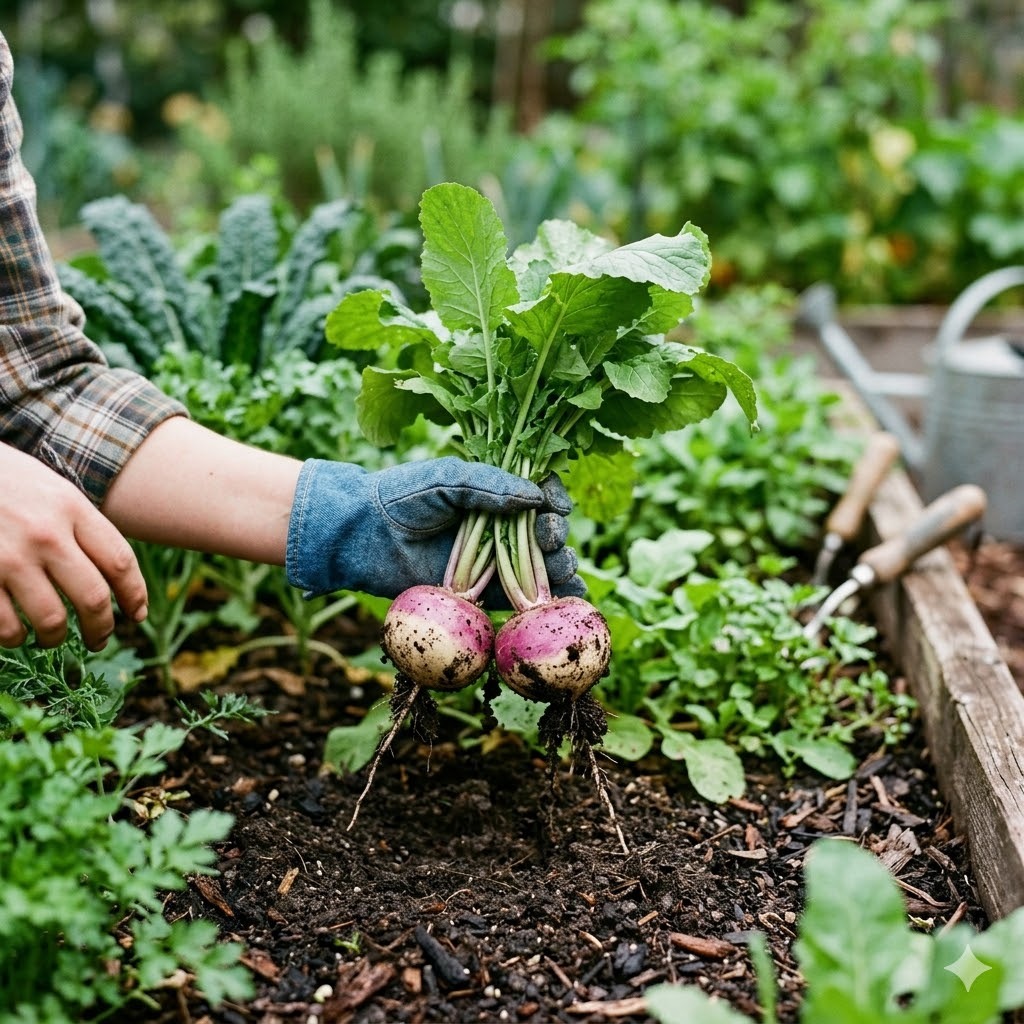
Turnips are at their best somewhere between golf-ball and tennis-ball size. At that young stage they are sweet, crisp and mild, lovely both raw and cooked. Left to grow large and old, they turn woody, coarse and hot-tasting, and no cooking will fully rescue them. So resist the urge to let them bulk up - smaller is better here.
To harvest, simply pull the roots by the base of the leaves, easing them from the soil, or lift with a fork if the ground is firm. Start pulling as soon as they reach a usable young size and keep taking them over the following weeks.
Do not forget the tops. The leafy greens are edible and can be cooked like other brassica greens, so a crop of turnips can give you both roots and greens. Because young turnips are ready more or less together, sowing little and often is what spreads the harvest sensibly across the season.
Storing and preserving
Turnips are best eaten young and fresh, but they store reasonably for a root crop, especially the hardier autumn types.
Pulled turnips keep for a couple of weeks in the fridge if you trim off the leafy tops, which otherwise draw moisture out of the root. Keep them somewhere cool so they stay firm.
For a longer store, maincrop autumn turnips can be lifted and packed in boxes of just-moist sand or dry compost, layered so the roots do not touch, and kept somewhere cool, dark and frost-free, where they will hold for a good while. In milder areas the hardier types can be left in the ground and lifted as needed through autumn, though they are less reliably winter-hardy than parsnips, so lift before hard frost in colder spots.
Turnips also freeze if you have a surplus. Peel and dice them, blanch briefly in boiling water, cool quickly, drain and freeze. Frozen turnips soften and are best used cooked rather than raw. The leafy tops can be blanched and frozen too, or simply cooked fresh as greens.
Is it worth it?
For a beginner, and for anyone wanting quick, easy food, turnips are very much worth growing. They are fast, forgiving and low-maintenance, they need no special soil or supports, and they hand you both a sweet young root and a crop of edible greens for very little effort. In a small garden or a gap in the bed, they earn their place easily.
The one thing that separates a good turnip from the tough, peppery reputation is timing: sow little and often, keep them evenly moist, protect the seedlings from flea beetle, and above all pull them young, at golf-ball to tennis-ball size. Do that, and you will find turnips are nothing like the coarse things you remember - crisp, sweet and genuinely worth having.