How to Grow Watercress: Peppery, Mineral-Rich Sprigs on a Windowsill
A practical guide to growing watercress in a pot stood in water on a shady windowsill, keeping the roots wet and the leaves cool, with honest safety advice on clean water.
When to sow & harvest
A rough guide for a temperate climate - shift it to your own zone and last-frost date. Greenhouse growing stretches both windows earlier and later.
Watercress has a reputation as a difficult, specialist crop that needs a running stream, and that reputation puts a lot of people off before they start. The good news is that it is nonsense. You do not need flowing water, a spring or a fancy setup. A pot of compost stood in a saucer of water on a cool, shady windowsill will keep you in peppery, mineral-rich sprigs for months, and the whole thing costs next to nothing to set up.
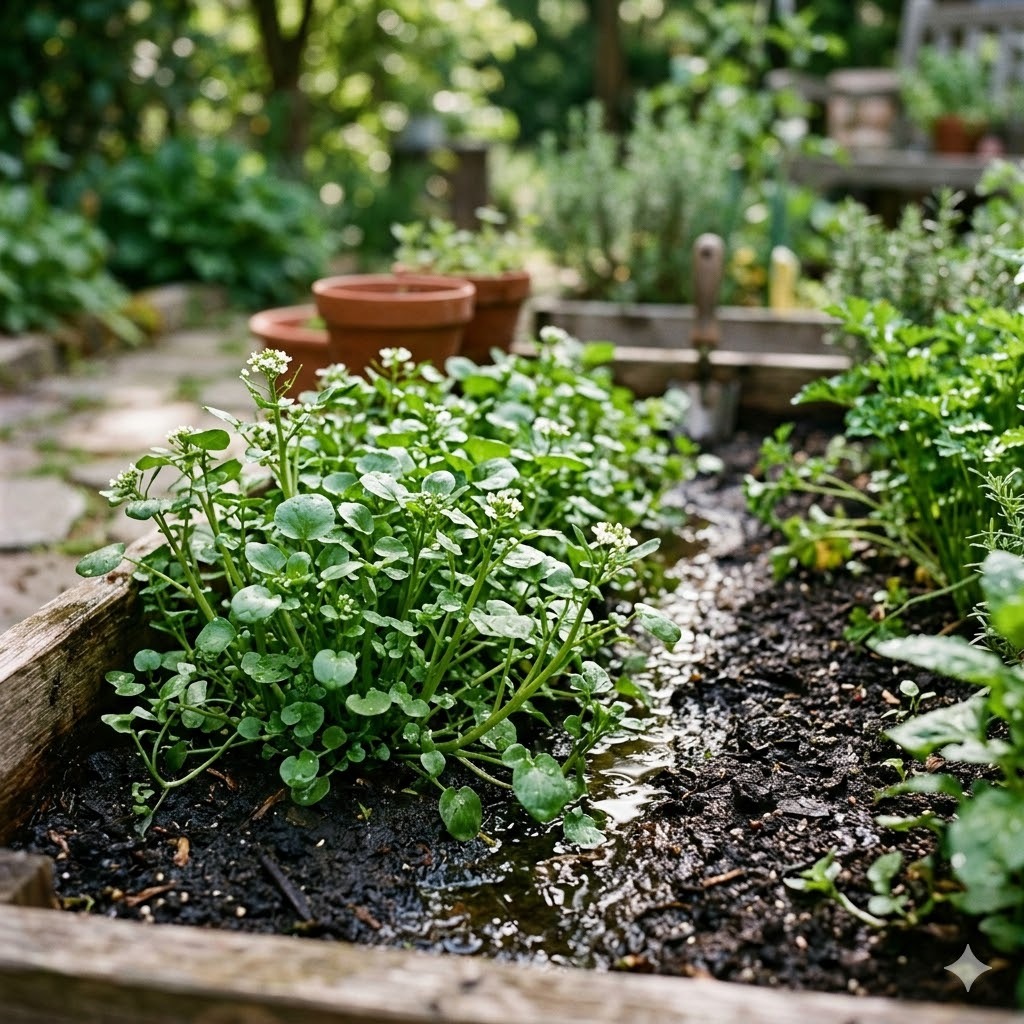
The trick is simply to understand what watercress actually wants, which is not a stream but permanently wet roots, cool conditions and shelter from hot sun. Give it that and it grows with real enthusiasm. It sits at the intermediate end of easy, not because it is fussy but because it needs a slightly different watering routine from anything else on the windowsill. This guide walks through the whole thing, including one important safety point that is too often glossed over.
Why grow watercress
The first reason is flavour and freshness. Watercress has a clean, hot, mustardy bite and a distinctly mineral, almost iron-rich taste that a lot of people love. Cut fresh from your own pot it is far livelier than the tired bags sold in shops, which start to yellow and slump within a day or two. Home-grown, you snip only what you need, moments before eating.
The second reason is how little space it takes. This is a crop you can grow entirely indoors, on a windowsill, in a single pot. That makes it perfect for flats, for people with no garden, and for anyone who wants a fresh green to hand all year round without stepping outside.
Finally, it is productive and long-lived. Once a pot is established it keeps sending up fresh shoots as you cut, and you can easily raise more plants from cuttings, so a single pinch of seed or one bought sprig can supply you for a very long time indeed.
Choosing a variety
Watercress does not come in a bewildering range of named varieties the way something like tomatoes does, so you do not need to agonise over the choice.
The usual route is to buy a packet of watercress seed, which will simply be labelled as watercress and grows readily on a windowsill. This is the cheapest way to get a lot of plants and the best if you want to raise a decent potful from scratch.
Alternatively, and rather cleverly, you can skip seed altogether and start from the supermarket. A fresh, healthy bunch of living watercress, or even a few stems from a salad bag, will often root if you stand the cut ends in a glass of clean water. Within a week or so you should see white roots forming, and those rooted stems can be potted up to become your growing plants. It is the quickest and cheapest possible start.
A close relative, land cress or American land cress, is sometimes offered as an easier, soil-grown substitute with a very similar peppery flavour. It is worth knowing about if you want a hardier outdoor leaf, but for true watercress on a windowsill, seed or cuttings are the way in.
Sowing and starting off
You can start watercress from spring through to autumn, and indoors on a windowsill you have a good deal of flexibility on timing.
To grow from seed, fill a pot with ordinary multipurpose compost, firm it lightly and water it well. Scatter the fine seed thinly over the surface and press it in gently rather than burying it deeply, since it is small and does not need much covering. Then stand the whole pot in a saucer or tray of water so it can drink from below and keep the compost permanently moist. Kept warm and bright but out of scorching sun, the seed usually germinates within a week or two.
To grow from cuttings, take fresh, healthy stems, stand the cut ends in a glass of clean water on a windowsill, and wait for roots to appear over the following days. Once each stem has a small tuft of white roots, pot it up into moist compost and stand the pot in its water tray as above. Rooted cuttings establish very quickly and give you a picking plant sooner than seed.
Either way, the golden rule from day one is that the roots must never dry out. The standing water in the tray is what makes this crop work, so top it up whenever it runs low.
Where to grow
This is where watercress differs from almost everything else, and where the old stream myth needs correcting. It does not need running water. What it needs is roots that are permanently wet and leaves that are kept cool and out of hot, direct sun.
The classic and simplest setup is a pot of compost stood in a saucer or tray that you keep filled with water, placed on a cool, shady or lightly lit windowsill. A north or east-facing sill is ideal, because strong midday sun through glass overheats the plant, scorches the leaves and encourages it to flower. Watercress is a cool-water plant by nature, so shade and steady moisture suit it far better than heat and brightness.
You can grow it outdoors too, in a shady corner, standing the pot in a tray of water or sitting it in the shallow margin of a pond or water feature. But for most people the windowsill method is the easiest to control and lets you crop all year. There is no need for a greenhouse, and in fact greenhouse heat is the last thing this crop wants.
Day-to-day care
The single most important job is keeping the roots wet. Watercress must sit in standing water at all times, so keep that saucer or tray topped up and never let the pot dry out even for a day. If the compost dries, the plant wilts fast and sulks.
Because the water is standing rather than flowing, it needs changing regularly. Tip out the old water and refill with fresh every day or two. This keeps it sweet, stops it turning stagnant and smelly, and discourages algae and mould from taking hold around the roots. Fresh, clean water is central to growing this crop well and to keeping it safe to eat, so do not let it sit stale for long.
Keep the leaves out of hot direct sun. If a bright spell has your windowsill baking, move the pot somewhere cooler and shadier, or the plant will scorch and rush to flower. Cool and shaded is always the aim.
Pinch out any flower shoots as they appear. Given warmth or age, watercress runs up to flower, after which the leaves turn hotter and coarser and growth slows. Nipping out those shoots keeps the plant producing tender leaves for longer. A very light liquid feed occasionally does no harm on a long-lived pot, but clean water and cool shade matter far more than feeding.
Common problems and pests
Grown on a windowsill, watercress is largely free of the pests that plague garden crops, but a few issues are worth knowing.
Stagnant, unchanged water is the commonest cause of trouble. Left standing too long it turns green with algae, can start to smell, and encourages rot around the base of the stems. The fix is simple and preventive: change the standing water every day or two and keep the pot clean.
Aphids can find indoor plants, clustering on soft new shoots. A watercress pot is easy to deal with, though, since you can rinse them off under a tap or simply pinch out and discard a badly infested shoot. Because you eat the leaves, avoid sprays and rely on rinsing and picking instead.
Bolting, or running to flower, is the other main problem, and it is driven by heat and age rather than any pest. Keep the plant cool and shaded and pinch out flower shoots to hold it back.
By far the most important point, though, is not a pest at all but a safety matter, and it deserves plain speaking. Never gather watercress from wild streams, ditches or watercourses. Wild watercress can carry the liver fluke parasite, which is spread through the water and grazing animals nearby, and eating raw wild cress is a genuine health risk. Only ever eat watercress you have grown yourself in clean water, or bought from a reputable source. Your home-grown pot, watered with clean tap water and kept fresh, is safe - a random streamside patch is not.
Harvesting
Watercress is a cut-and-come-again crop, so you harvest by snipping sprigs rather than pulling up whole plants, and it keeps regrowing for you.
Begin cutting once the plants have made a decent tuft of leafy shoots several centimetres tall, usually a few weeks after germinating or sooner from established cuttings. Snip the top few centimetres of the tender stems with scissors, taking what you need and leaving the lower growth to push out fresh shoots. Cutting little and often actually keeps the plant bushy and productive, so regular light harvests are better than one big chop.
Pick the young, tender tips for the best flavour and texture. Older, tougher lower stems are still usable but coarser. Cut in the cool of the morning if you can, and use the sprigs quickly while they are at their crisp, peppery best.
Keep an eye out for flowering as the plant ages or warms up, and use or cut back the crop before it turns hot and woody.
Storing and preserving
Watercress is very much a fresh crop and does not keep for long, so the sensible approach is to grow it on the windowsill and cut sprigs as you want them, treating the living pot as your store.
If you do cut more than you need at once, it will hold for a few days in the fridge. The best method is to stand the stems upright in a glass with a little clean water in the bottom, like a small posy, and keep it cool. Alternatively, wrap the sprigs loosely in damp kitchen paper inside a box or bag. Either way it stays fresh for several days, though the peppery bite fades over time.
Watercress does not freeze well as a salad leaf, since the delicate tissue collapses once thawed. The one good way to preserve a surplus is to cook it, most classically as a soup: a batch of watercress soup freezes perfectly and captures that mineral, peppery flavour in a form you can keep for months. Blitzing it into a green sauce or pesto-style paste and freezing that in small portions works too.
Is it worth it?
Yes, particularly for anyone without a garden. Watercress is one of the few genuinely rewarding edibles you can grow entirely indoors, in a single pot on a windowsill, and once you know it needs wet roots and cool shade rather than a mythical stream, it is not hard at all. A pinch of seed or a few rooted supermarket stems can keep you in fresh, peppery sprigs for months.
The care routine is slightly different from other windowsill crops, since you must keep it standing in water and change that water regularly, and there is the firm rule that you only ever eat clean, home-grown cress and never wild streamside plants. But those are small things to remember. For a fresh, punchy, mineral-rich salad leaf grown in the smallest of spaces, watercress earns its place.