Smart Plant Monitors 2026
Smart plant monitors compared - which ones are accurate, which are gimmicks, what the moisture and light readings actually tell you, and when a £3 stick is enough.
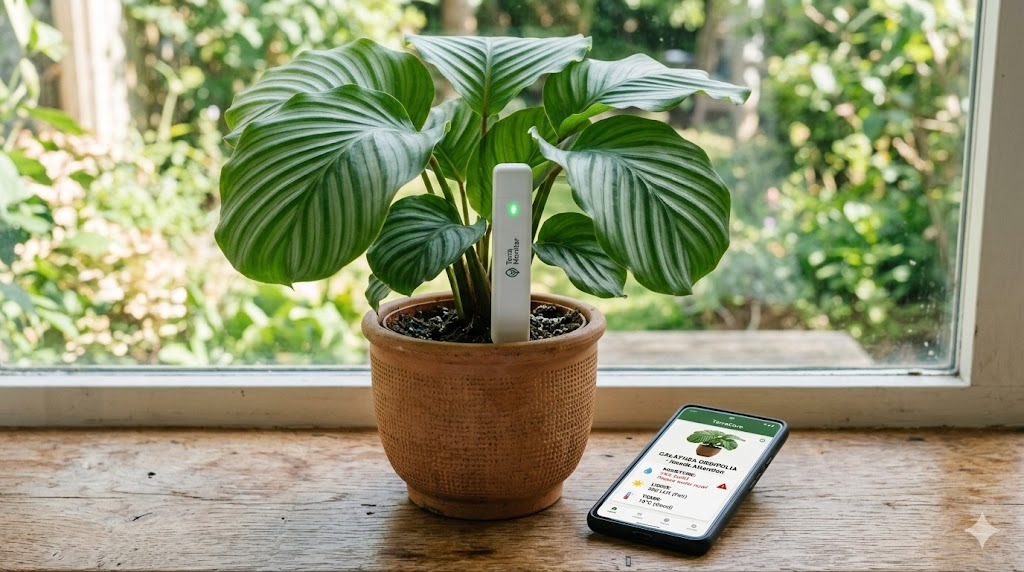
The smart plant monitor category has matured. Five years ago, “plant tech” mostly meant a flimsy Xiaomi stick that fed data to an app for three days before the Bluetooth dropped. Today, you can buy proper sensors that track soil moisture, light intensity, fertility, and temperature for months on a single battery, paired with apps that genuinely help - telling you not just what’s happening but what to do about it.
The catch is that the category is still flooded with junk. Half the products on Amazon are repackaged generic sensors with white-label apps that haven’t been updated since launch. Of the remaining half, only a few are worth the £30-80 price tag for what most plant owners actually need.
This guide compares the main contenders - Xiaomi/MiFlora, Sustainee, Click & Grow Smart Sensors, Parrot Flower Power successors, and a couple of newer entrants - on accuracy, app quality, battery life, and value. It also addresses the unloved question: do you actually need one of these, or is a £3 finger test enough?
What Smart Plant Monitors Measure
Most monitors track four things, with varying accuracy:
- Soil moisture - the most accurate metric on most sensors. Useful.
- Light intensity - measured in mol/m²/day or lux. Useful if your monitor reports actual PPFD or DLI; less useful if it just shows lux.
- Soil fertility / EC - a proxy for nutrient level. Often inaccurate on cheap sensors.
- Temperature - easy to measure accurately; rarely actionable on its own.
The app then ideally cross-references these with a plant species database to tell you whether your specific plant is too wet, too dim, or hungry.
What They Don’t Do Well
- They don’t replace observation. A monitor can tell you the soil is wet, but only you can spot the yellow leaf, the pest, or the leaning stem.
- They don’t measure humidity well. Cheaper monitors don’t include a humidity sensor at all; expensive ones often sit too close to soil for accurate room humidity.
- They don’t handle multiple plants per device. One stick = one pot. Tracking 30 plants means 30 sensors or - more realistically - putting sensors only in your fussiest plants.
The Honest Use Case
A smart plant monitor is most useful for:
- Fussy plants - calathea, ferns, fiddle-leaf fig - where a small miscalculation kills the plant.
- Plants in low-light rooms where you can’t tell by eye whether the light is sufficient.
- People learning - the data over a few months teaches you how soil moisture actually behaves, after which you can often manage by feel.
- People who travel - pair with a plant-sitter and they get instant feedback.
It is mostly not useful for:
- Hardy easy houseplants (snake plant, ZZ, pothos) - they survive almost any sensible care.
- Outdoor garden plants - they’re already exposed to natural cycles and a sensor adds little.
- People with two or three plants and a finger.
The Main Options Compared
1. Xiaomi Mi Flora / Plant Sensor (~£15)
The original cheap-and-cheerful. A small white stick, Bluetooth, no Wi-Fi, paired with the third-party “Flower Care” app (Xiaomi’s own app for it has been discontinued in some regions).
- Pros: Cheap, accurate enough for moisture, decent battery life (~6 months).
- Cons: Bluetooth only (must be within 10 m), app is buggy, the species database is limited.
- Verdict: Best value if your phone is always near the plant.
2. Sustainee Plant Sensor (~£35)
Bluetooth sensor with a more polished app, better species database, monthly fertility tracking.
- Pros: Cleaner UI, more useful recommendations, longer battery life.
- Cons: Still Bluetooth-only on the basic version; Wi-Fi hub costs extra.
- Verdict: A step up if you’re frustrated with Xiaomi’s app.
3. Click & Grow Smart Sensor (~£40)
Designed for Click & Grow ecosystem but works as a standalone with their app. Bluetooth + Wi-Fi via the Click & Grow hub.
- Pros: Integrates with their indoor garden, app polished, accurate.
- Cons: Most valuable if you already own a Click & Grow garden; otherwise overkill.
- Verdict: Buy only as part of the Click & Grow ecosystem.
4. Parrot Flower Power Successors (e.g. Greenma, EcoSense)
Parrot exited the market years ago, but several brands carry the torch with Wi-Fi-enabled monitors that report to cloud apps.
- Pros: Wi-Fi - readings update even when you’re away from home.
- Cons: £50-80 per sensor; some require cloud subscriptions after a year.
- Verdict: For people genuinely wanting remote alerts.
5. PlantSitter / GreenGo (newer, 2025 entrants)
Wi-Fi-connected monitors that pair with AI plant identification - point the phone camera at the plant, the system identifies and adds it to the right care profile.
- Pros: Easy onboarding via photo ID, slick apps.
- Cons: Newer brands, longevity uncertain; £45-70.
- Verdict: Promising for non-technical users.
6. PictureThis Premium (no hardware)
Not a sensor - an app that uses AI photo analysis and self-reported care to advise. £25/year.
- Pros: No batteries, no hardware drift, identifies new plants instantly.
- Cons: Relies on you remembering to log; no live moisture data.
- Verdict: Good with a sensor, not as a replacement for one.
The £3 Alternative: A Bamboo Moisture Stick
A wooden chopstick or bamboo skewer is a startlingly effective moisture sensor:
- Push it deep into the soil.
- Leave a few seconds, pull out.
- Wet soil stains the wood dark.
- Dry soil leaves the wood clean.
It tells you exactly when to water, with no battery and no app. The catch: it doesn’t measure light, fertility, or temperature, and it doesn’t tell you what to do - only the state of the soil. To turn that reading into an interval, our watering calculator factors in pot size and plant type.
For 80% of houseplant care, this is genuinely all you need.
What to Look For When Buying
- App still updated? Check the app store for the most recent update date. Anything older than 12 months is a red flag.
- Wi-Fi vs Bluetooth? Wi-Fi if you travel or have plants in a separate room. Bluetooth is fine if your phone is near the plant most days.
- Species database size. A good sensor knows 2,000+ species. Cheap ones know a few hundred and don’t include rarer plants you may own.
- Battery life. 6 months minimum. Some Wi-Fi sensors need recharging every 6 weeks.
- Replacement battery accessibility. Sealed batteries that can’t be replaced shorten the product’s effective life dramatically.
Common Misuses and Mistakes
- Putting the sensor too close to the pot wall. Reads moisture wrong. Place it midway between the plant stem and the pot edge.
- Ignoring sensor drift. Sensors lose accuracy over 2-3 years. Calibrate or replace.
- Trusting fertility readings. Most cheap sensors estimate fertility crudely. Treat as a rough guide, not a number to obsess over.
- Buying a sensor for every plant. Pick the 2-3 fussiest plants. The robust ones don’t need one.
Frequently Asked Questions
Are smart plant monitors actually accurate?
Soil moisture is generally accurate to within 5% on quality sensors - accurate enough to make watering decisions. Light is roughly accurate. Fertility and pH are crude on most consumer-level sensors. Don’t overinterpret single readings; watch trends.
Do I need a smart plant monitor for an easy plant like a pothos?
No. Easy plants tolerate enough variation that a £3 finger test or moisture stick is enough. Reserve smart monitors for fussy plants where a wrong watering call kills the plant - calathea, ferns, fiddle-leaf fig.
What’s better - Bluetooth or Wi-Fi plant sensors?
Bluetooth is cheaper, lasts longer on battery, but only updates when your phone is within range. Wi-Fi updates anywhere via the cloud but costs more and needs more frequent charging. Pick based on whether you need remote alerts.
Can a plant monitor really replace experience?
Partly. It accelerates learning by showing you what soil moisture actually does between waterings - which most people guess wrong about for years. Once you’ve internalised those patterns (often 3-6 months), the sensor becomes optional.
Do plant monitors work outdoors?
Some are rated for outdoor/garden use; most consumer monitors are designed for indoor pots. Outdoor models tend to cost more and target serious vegetable gardeners. For indoor houseplants, stick with indoor models.
🛒 Recommended Gear on Amazon
- Smart plant moisture sensor - browse current options and reviews on Amazon.
- Bluetooth hygrometer - browse current options and reviews on Amazon.
- Smart plug - browse current options and reviews on Amazon.
As an Amazon Associate, we earn from qualifying purchases - at no extra cost to you. This helps us keep producing free, in-depth guides.