Aphelandra squarrosa (Zebra Plant)
The Aphelandra squarrosa - the Zebra Plant - is one of the most striking foliage plants you can bring home, and also one of the most demanding.
🗓️ Last reviewed: July 2026
Overview
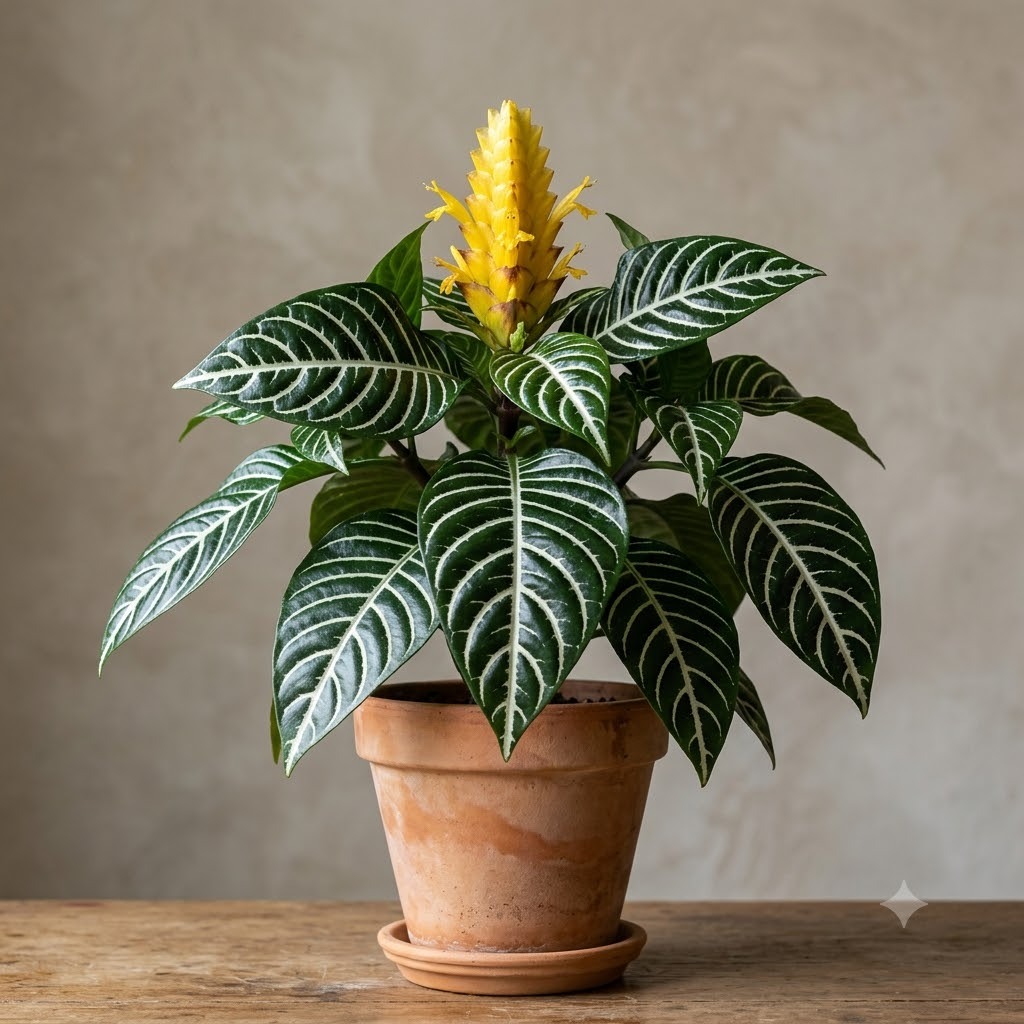
The Aphelandra squarrosa - the Zebra Plant - is one of the most striking foliage plants you can bring home, and also one of the most demanding. Its large, glossy dark green leaves are boldly striped with brilliant white veins, like the markings of a zebra, and in bloom it sends up a dramatic cone of bright golden-yellow bracts. It is a genuine showpiece. But it comes with a reputation, and an honest one: the Zebra Plant is famously fussy. It reacts to dry air, inconsistent watering, and the wrong light by dropping its leaves, sometimes dramatically. This is not a beginner's plant. It is a rewarding one for a grower who can give it steady, attentive care.
Origin & Natural Habitat
Aphelandra squarrosa is native to the warm, humid rainforests of Brazil, in tropical South America. It grows as an understory shrub beneath the forest canopy, in a world of constant warmth, high humidity, filtered light, and moist but well-drained soil rich in organic matter.
Every part of its difficult reputation traces back to this origin. Because it evolved under a humid canopy, it hates the dry air of a centrally heated home and shows its displeasure by browning and dropping leaves. Because the forest floor stays evenly moist, it dislikes both drying out and sitting wet. Because it lived in filtered light, it wants brightness without harsh direct sun. In short, the plant is not being difficult for no reason - it is simply asking for the rainforest conditions it is adapted to, and it does not compromise easily.
Appearance
The Zebra Plant is grown, first and foremost, for its foliage. The leaves are large, oval to lance-shaped, and can reach 20-30 cm long. They are deep glossy green with a striking pattern of bold, bright white or ivory veins running from the central midrib outward, creating the vivid stripes that give the plant its common name. The contrast is dramatic and unmistakable.
The plant grows upright on stems that can become woody and leggy with age. Indoors it is usually kept compact, often under 30-60 cm tall.
The flower is a second spectacle. From the top of a stem rises a tall, cone-shaped flower head made of overlapping bright yellow bracts, from which small, short-lived tubular yellow flowers emerge. This golden bract cone can last for weeks, even after the true flowers fade, and is a large part of the plant's appeal. After blooming, the plant often looks tired and may need cutting back to encourage fresh, bushy growth.
Why People Love It - Qualities & Benefits
- Bold striped foliage: the white-veined leaves are among the most graphic and eye-catching of any houseplant, a living pattern.
- Dramatic golden bloom: the tall yellow bract cone is a rare and striking flower for an indoor foliage plant, lasting for weeks.
- Compact showpiece: it stays small enough for a tabletop while delivering big visual impact.
- A rewarding challenge: for growers who enjoy attentive care, keeping a Zebra Plant thriving and blooming is a genuine achievement.
- Tropical atmosphere: its lush, glossy foliage brings a rich jungle feel to a bright, humid corner.
Care
Light
Bright, indirect light is essential - enough brightness to keep the plant healthy and encourage flowering, but never harsh direct sun, which scorches and fades the leaves. Too little light leads to weak, leggy growth and no blooms. A spot near a bright window with filtered light is the target.
Watering
Consistency is everything, and this is where most Zebra Plants are lost. Keep the soil evenly moist during active growth - never bone dry, never soggy. Water thoroughly when the surface just begins to dry, using room-temperature water, and let excess drain. Both underwatering and overwatering cause leaf drop, so steady, attentive watering is the single most important habit. Reduce watering somewhat in winter, but do not let it dry out completely.
Soil & Potting
Use a rich, well-draining potting mix with plenty of organic matter, loosened with perlite for drainage. Always use a pot with drainage holes to prevent the roots sitting in water.
Humidity & Temperature
High humidity is not optional - it is the make-or-break factor. This plant wants 60% humidity or more, and dry indoor air quickly causes brown leaf tips and dropped leaves. Use a humidifier, a pebble tray, or group it with other plants. It needs steady warmth, roughly 18-27 °C, and must be kept away from cold drafts, heat sources, and any temperature below about 13 °C.
Feeding
Feed regularly during the growing season, roughly every couple of weeks with a diluted balanced fertilizer, to support its lush growth and flowering. Stop feeding in winter.
Pruning
After the flower fades, cut the spent bloom off, and prune leggy stems back to encourage bushier, fuller growth. Regular pruning keeps the plant from becoming bare and woody at the base.
Propagation
The Zebra Plant is propagated from stem cuttings, best taken in spring. Take a cutting a few centimeters long, ideally with a couple of leaves, from a healthy side shoot or the top of a stem. Using a rooting aid can help. Insert the cutting into moist, well-draining mix, and keep it warm and very humid - covering it with a clear cover or bag to trap moisture greatly improves success. Bright indirect light and steady warmth encourage rooting over the following weeks. Propagation can be slow and is not always easy, in keeping with the plant's demanding nature.
Common Problems & Pests
- Leaf drop: the classic Zebra Plant complaint, caused by dry air, inconsistent watering, cold drafts, or sudden environmental changes. Steady humidity and steady watering are the cure.
- Brown, crispy leaf tips and edges: almost always low humidity, or letting the soil dry out too far.
- Curling or wilting leaves: underwatering, or roots damaged by overwatering. Check the soil and roots.
- Leggy, bare stems: too little light, or age - prune back to encourage bushy growth.
- No flowers: usually insufficient light or feeding.
- Pests: aphids, spider mites, mealybugs, and scale can appear, encouraged by dry air. Isolate the plant, wipe leaves, and treat with insecticidal soap.
Toxicity & Safety
Aphelandra squarrosa is generally regarded as non-toxic to cats, dogs, and humans, and it is not listed among the common plants known to poison pets. This makes it reasonably reassuring for households with animals and children. As with any houseplant, chewing on the leaves could cause mild stomach upset, so it is still wise to keep it out of reach of curious pets and small children.
Pros & Cons
Pros
- Bold, graphic white-striped foliage.
- Dramatic long-lasting golden flower cone.
- Compact enough for a tabletop.
- Generally considered non-toxic to pets.
- A rewarding project for attentive growers.
Cons
- Notoriously fussy and unforgiving.
- Drops leaves at the first sign of dry air or uneven watering.
- Demands high humidity that many homes lack.
- Gets leggy and needs regular pruning.
- Propagation can be slow and tricky.
Best Suited For
- Experienced growers who enjoy attentive, precise care.
- Bright, humid rooms such as kitchens and bathrooms.
- People willing to run a humidifier or pebble tray.
- Collectors who want a dramatic striped showpiece.
Not ideal for beginners, dry centrally heated homes without humidity help, forgetful waterers, or anyone wanting a low-maintenance plant.
FAQ
Why is my Zebra Plant dropping its leaves? This is the plant's signature reaction to stress - usually dry air, inconsistent watering, or cold drafts. Steady high humidity and even, careful watering are the fix, and the most important habits with this plant.
Is the Zebra Plant good for beginners? Honestly, no. It is one of the fussier houseplants and reacts badly to neglect or dry conditions. It suits growers who already keep humidity-loving plants happy.
How much humidity does it really need? A lot - ideally 60% or more. Dry indoor air is the number-one cause of its problems, so a humidifier, pebble tray, or humid room is close to essential.
What do I do after it flowers? Cut off the spent flower cone and prune leggy stems back. The plant often looks tired after blooming, and pruning encourages fresh, bushy growth.
Why won't it bloom? Usually not enough bright indirect light or feeding during the growing season. Give it more brightness and regular diluted fertilizer to encourage the golden bract cone.