Arrowhead Plant (Syngonium podophyllum)
The Arrowhead Plant - also sold as the "Goosefoot Plant" or simply Syngonium - is one of the most charming and adaptable houseplants you can own.
🗓️ Last reviewed: June 2026
Overview
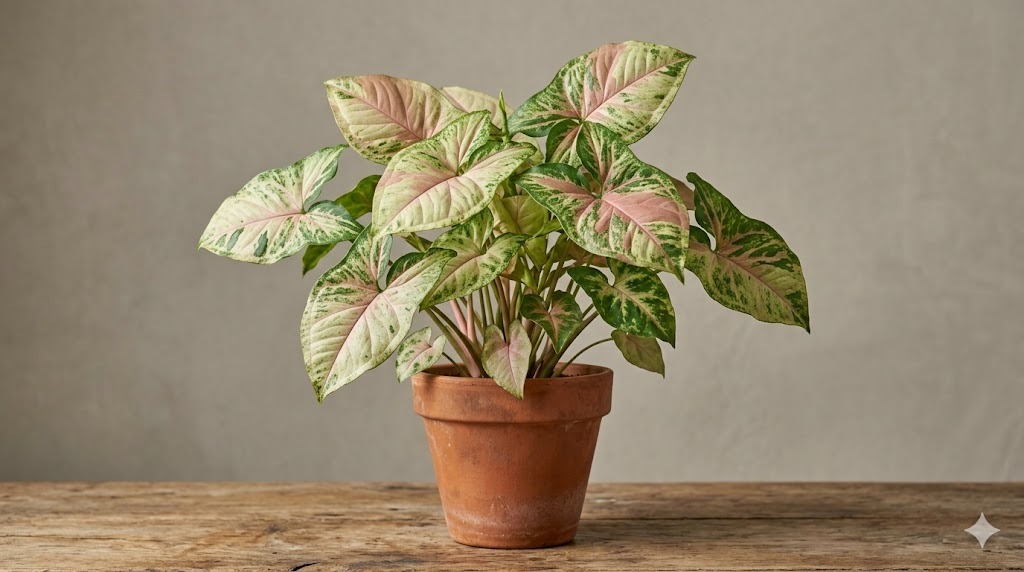
The Arrowhead Plant - also sold as the "Goosefoot Plant" or simply Syngonium - is one of the most charming and adaptable houseplants you can own. Its real magic is that it shapeshifts: the leaves literally change shape as the plant ages, and the foliage comes in a remarkable range of colors, from deep green to soft pink, cream, white, and lime. It starts life as a tidy little mound on a shelf and, given the chance, transforms into a trailing or climbing vine. Fast-growing, forgiving, and genuinely easy, it is one of the best plants you can hand to a nervous beginner - it grows quickly enough to feel rewarding, and bounces back cheerfully from the occasional mistake.
Origin & Natural Habitat
The Arrowhead Plant is native to the tropical rainforests of Central and South America and Mexico, where it grows as a climbing aroid. Like many of its relatives, it starts life on the shaded forest floor as a low, compact plant, then finds a tree and climbs upward toward the light, clinging to bark with aerial roots as it goes. In the wild it can scramble many meters up a trunk, and as it climbs its leaves change dramatically in size and shape.
The name carries its story. Syngonium comes from the Greek syn, meaning "together," and gone, meaning "reproductive" or "seed" - a reference to the plant's fused ovaries. Podophyllum roughly means "with stout-stalked leaves," a nod to its foot-like leaf. The common names follow the foliage: the young leaf is shaped like an arrowhead, and the lobed mature leaf looks a little like a goose's foot - hence "Arrowhead Plant" and "Goosefoot Plant."
Appearance
The single most distinctive thing about a Syngonium is that its leaves change shape as the plant matures - so much so that a young plant and an old one can look like two different species. Watch for these features:
- Leaf shape change: young leaves are simple, solid, arrowhead or spade shaped. As the plant ages and especially as it climbs, mature leaves become lobed, splitting into three to five distinct segments, and the whole plant shifts from a compact mound into a climbing vine.
- Colors: the species is green, but breeders have produced a huge range of variegated cultivars - pinks, whites, creams, and limes. Popular examples include 'Pink Allusion', 'Neon Robusta', 'White Butterfly', and 'Berry Allusion'.
- Growth habit: compact, bushy, and self-supporting when young; trailing and climbing once it matures and finds something to ascend.
- Aerial roots: as it climbs, it sends out small aerial roots from the stem that grip surfaces and help it cling and absorb moisture.
Indoors, an Arrowhead Plant stays modest when kept bushy - often around 30-45 cm tall and wide - but a trained climbing specimen can extend a couple of meters up a pole over time.
Why People Love It - Qualities & Benefits
- Endless variety: the range of colors and cultivars is enormous, so you can collect pinks, whites, limes, and greens and never run out of new ones to try.
- Fast and rewarding: in good conditions it grows quickly, pushing out new leaves through the warm months - deeply satisfying for an owner who wants to see progress.
- Forgiving and beginner-friendly: it tolerates the occasional missed watering and a range of light levels, and it recovers well from a bad week, making it a confidence-builder for new plant parents.
- Versatile styling: you can keep it bushy on a shelf, let it trail from a hanging pot, or train it up a moss pole as a climbing vine - it works in almost any spot.
- Effortless to propagate: few plants are easier to multiply, so one plant quickly becomes gifts for friends or a fuller pot for you.
Like most leafy tropicals, it adds a little humidity to a room and contributes to a calmer, greener space. (The famous "air-purifying" claims are real but modest in a normal home - the main benefit is psychological: greenery measurably lowers stress and lifts mood.)
Care
Light
Bright, indirect light is ideal. The variegated and pink-toned forms need more light to keep their color vivid - in dim spots their pink and cream fade back toward plain green. Solid green varieties are more relaxed and will tolerate medium or even somewhat lower light, just with slower growth. Avoid harsh, direct midday sun, which scorches and bleaches the leaves. If a colorful cultivar is looking dull and greenish, move it somewhere brighter.
Watering
Keep the soil lightly moist during the growing season, letting the top 2-3 cm dry out between waterings. The Arrowhead Plant is sensitive to both extremes - it sulks if it dries out completely and rots if it stays soggy. Soggy soil that never drains causes root rot, the most common way this plant is killed, so always tip away any water left in the saucer. Read the plant: limp, drooping leaves usually mean it is thirsty, while yellowing leaves often mean it has been overwatered. When in doubt, check the soil with a finger rather than following a fixed schedule.
Soil & Potting
Use a light, well-draining mix - a standard potting soil loosened with perlite and a little orchid bark works well, giving the roots both moisture and air. An aroid mix is ideal. Always pot into a container with drainage holes so excess water can escape.
Humidity & Temperature
The Arrowhead Plant loves higher humidity, which helps it avoid the crispy brown leaf tips it can get in dry air, but it tolerates average household humidity without complaint. It is happiest between about 18 and 27 °C. It dislikes cold drafts and chilly windowsills, and growth stalls or suffers below roughly 15 °C, so keep it away from doorways and cold glass in winter.
Feeding
Feed monthly through spring and summer with a balanced liquid houseplant fertilizer diluted to half strength. Stop feeding in autumn and winter, when growth naturally slows and the plant does not need the extra nutrients.
Repotting
Repot every 1-2 years in spring, moving up one pot size when roots begin to circle the bottom or push out the drainage holes. Because it grows fast, a healthy Arrowhead can fill its pot quickly, so you may find it needs repotting sooner rather than later.
To bush or to climb - pruning vs a moss pole
Here is the choice that shapes your plant. Left alone, a Syngonium will eventually want to vine. If you want a compact, full, bushy plant, pinch back the growing tips regularly - each pinch encourages the plant to branch and stay dense, and it keeps the juvenile arrowhead-shaped leaves. If instead you want the dramatic, lobed mature form, give it a moss pole, coir pole, or trellis and let it climb. Climbing triggers the transformation: the leaves grow larger and develop their three-to-five-lobed mature shape. There is no wrong answer - just decide whether you want a tidy mound or a climbing vine, and prune or support accordingly.
Propagation
The Arrowhead Plant is one of the easiest of all houseplants to propagate. Find a healthy stem and cut just below a node - the little bump where a leaf joins the stem - making sure your cutting includes at least one node. Place that node in a jar of water or directly into a moist, well-draining mix, and keep it somewhere bright and warm. Roots typically appear in around 2-3 weeks. Once the roots are a few centimeters long, pot the cutting up into normal aroid mix. A leaf with no node will sit there forever and never grow into a plant, so the node is the part that matters.
Common Problems & Pests
- Yellow leaves: usually overwatering or soggy soil. Let the mix dry out more between waterings and check that the pot drains freely.
- Brown crispy tips or edges: typically low humidity and dry air, or letting the plant get too dry. Water a little more consistently and raise humidity.
- Leggy, sparse growth: the plant wants more light, or it simply needs pinching - cut the tips back to encourage bushier branching.
- Fading color in variegated types: not enough light. Move pinks, whites, and limes somewhere brighter to bring the color back.
- Root rot: mushy stems and blackened roots from waterlogged soil. Unpot it, trim away the rotten roots, and repot into fresh, well-draining mix.
- Pests: watch for spider mites (fine webbing and stippled leaves), mealybugs (white fluff in leaf joints), scale, and aphids. Isolate the plant, wipe the leaves, and treat with insecticidal soap or neem oil.
Toxicity & Safety
Mildly toxic to cats, dogs, and humans if chewed. All parts contain insoluble calcium oxalate crystals, which cause mouth and throat irritation, drooling, and vomiting if eaten. The sap can also irritate sensitive skin, so it is worth washing your hands after pruning. It is not deadly, but keep it out of reach of pets and small children who like to chew on leaves.
Pros & Cons
Pros
- Huge range of colors and cultivars to collect.
- Fast-growing and rewarding, with visible new leaves.
- Forgiving and genuinely beginner-friendly.
- Versatile - bushy, trailing, or climbing.
- Extremely easy to propagate and share.
Cons
- Wants to vine and can get leggy without pinching.
- Sensitive to soggy soil - root rot if overwatered.
- Crispy tips in very dry air.
- Variegated forms lose their color in low light.
- Mildly toxic to pets and kids.
Best Suited For
- Beginners who want a fast, forgiving plant that delivers quick results.
- Collectors who love variety in color and cultivar.
- Anyone who wants flexibility - a bushy shelf plant, a trailing hanging plant, or a climbing vine.
- Plant owners who enjoy pinching, training, and propagating.
Not ideal for very dark rooms, homes with pets and toddlers who chew everything, or anyone who wants a plant that needs zero attention and never wanders.
FAQ
Why are my arrowhead's new leaves a different shape? This is completely normal and is the plant's signature trait. Young leaves are simple arrowhead or spade shapes; as the plant matures, especially when it starts to climb, the leaves become lobed with three to five segments. You are simply watching it grow up.
How do I keep my Arrowhead Plant bushy instead of vining? Pinch back the growing tips regularly. Each pinch encourages the plant to branch and stay full and compact, and it keeps the juvenile arrowhead leaves. If you would rather it climb, skip the pinching and give it a moss pole instead.
Why is my pink or variegated arrowhead turning green? Not enough light. The colorful cultivars need bright, indirect light to hold their pink, white, or cream tones. Move it to a brighter spot - while still avoiding harsh direct sun - and the color should return on new growth.
How often should I water it? Water when the top 2-3 cm of soil has dried out, keeping it lightly moist but never soggy. That often means roughly weekly in summer and less in winter, but light and pot size change everything, so check the soil rather than following a fixed schedule.
Is the Arrowhead Plant safe around pets? No, it is mildly toxic. It contains calcium oxalate crystals that irritate the mouth and stomach if chewed, and the sap can irritate skin. It is not deadly, but keep it out of reach of cats, dogs, and small children.