Polka Dot Begonia (Begonia maculata)
The Polka Dot Begonia - Begonia maculata - is a striking cane begonia grown almost entirely for its leaves.
🗓️ Last reviewed: June 2026
Overview
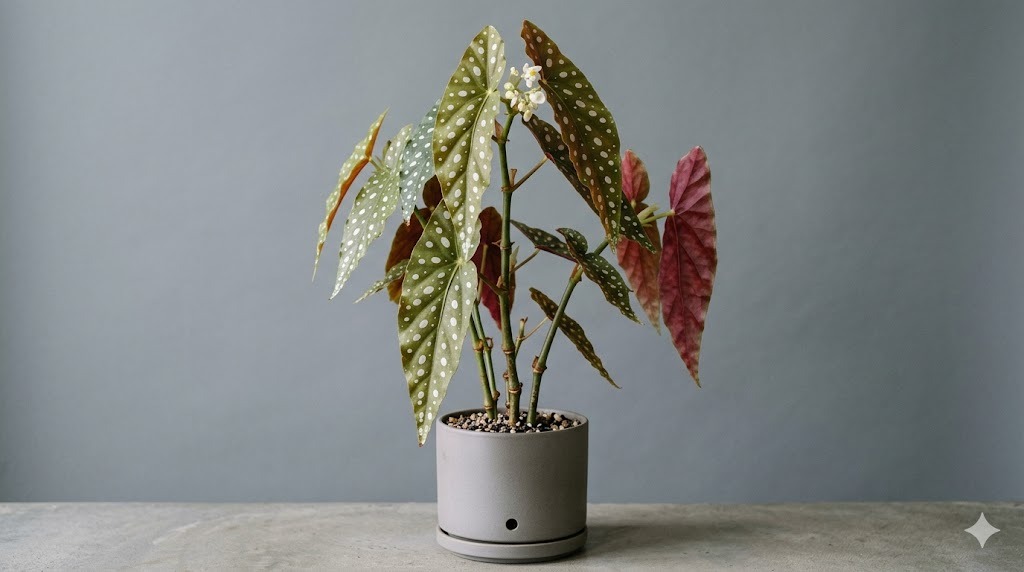
The Polka Dot Begonia - Begonia maculata - is a striking cane begonia grown almost entirely for its leaves. Each one is shaped like an angel's wing, olive-green on top and scattered with rows of neat silver-white spots, then flipped over to reveal a deep, almost blood-red underside. It is the kind of plant that stops people in a room and makes them ask what it is, which is exactly why it has become an Instagram favourite. On top of the foliage, a happy plant throws out drooping clusters of small white flowers for much of the year. It suits anyone who wants drama and pattern rather than another plain green plant. Be honest with yourself before you buy: it is not difficult, but it is fussy about two things in particular - it hates sitting in wet soil, and it sulks in dry air. Get the watering and humidity right, give it bright indirect light, and it grows fast and rewards you generously.
Origin & Natural Habitat
Begonia maculata is native to the tropical rainforests of southeastern Brazil, where it grows in the warm, humid, shaded understory beneath the canopy. In the wild it scrambles up through other vegetation on tall, jointed, bamboo-like canes, holding its wing-shaped leaves out to catch the filtered light that makes it down through the trees. It belongs to the enormous Begonia genus in the family Begoniaceae, and specifically to the cane or "angel-wing" group, named for the way the leaves are shaped like a single folded wing. The species name maculata simply means "spotted" or "speckled," a direct nod to the silver polka dots that define the plant. There is a well-loved cultivar, 'Wightii', with especially crisp, bright spots and a particularly dark red reverse, and it is the form most people picture when they think of this plant. Understanding where it comes from explains its care almost completely: a warm, humid, shaded forest floor is what you are recreating on your shelf.
Appearance
Picture tall, upright, segmented canes - jointed like bamboo - carrying large, asymmetrical leaves shaped like an angel's wing. The top surface is a deep olive-green, almost metallic, and patterned with rows of round silver-white spots, while the underside is a rich, dramatic burgundy-red. That two-tone contrast is the whole appeal of the plant. When it is happy, it adds drooping clusters of small white or pale-pink flowers, often on and off through much of the year, hanging below the foliage on slender stems.
- Leaves: large, asymmetrical, wing-shaped, olive-green on top with rows of silver-white polka dots and a deep red underside; the headline feature.
- Flowers: clusters of small white (sometimes blush-pink) blooms that droop below the leaves, appearing through much of the year on a happy plant.
- Canes: tall, upright, jointed bamboo-like stems that give the plant its height and its "cane begonia" name.
- Growth habit: fast-growing and upright, reaching for the light, and inclined to get tall and top-heavy without pruning.
Indoors a healthy plant commonly reaches around 90-120 cm tall in time, growing quickly in the right conditions.
Why People Love It - Qualities & Benefits
- Show-stopping foliage: the silver-spotted olive leaves with their red undersides are genuinely unusual and instantly recognisable - this is the headline reason to grow it.
- Flowers too: unlike many foliage plants, a happy maculata also produces drooping clusters of delicate white flowers for much of the year.
- Fast-growing and rewarding: in good conditions it grows quickly, so you see real progress and can shape a full plant in a season.
- Very easy to propagate: stem cuttings root readily, so one plant quickly becomes several for free.
- High-impact styling: its height and dramatic leaves make it a natural statement piece in a bright corner or on a plant shelf.
- Atmosphere: like most leafy tropicals it adds a little humidity and a lot of life to a room. (The popular "air-purifying" claims are real but modest in a normal home; the bigger benefit is psychological, since greenery measurably lifts mood and lowers stress.)
Care
Light
Bright, indirect light is what this plant wants, and getting it right brings out the best leaf colour and the most flowers. A spot near an east-facing window, or set back a little from a brighter south or west window, is ideal. In too little light the canes stretch, the spacing between leaves opens up, and the silver spots fade and lose their contrast. Avoid harsh direct midday sun, though, which scorches and bleaches the patterned leaves; a little gentle morning sun is fine. The aim is plenty of bright light without the leaves ever sitting in a hot, direct beam.
Watering
This is the single most important thing to get right, because Begonia maculata genuinely dislikes wet feet. Water thoroughly when the top 2-3 cm of soil has dried out, let it drain completely, and then tip away anything left in the saucer - never let it stand in water. Soggy soil leads straight to root rot and stem rot, which is the most common way this plant is killed. At the same time, do not let it bone-dry out completely between waterings either; it likes evenly, lightly moist soil, just never waterlogged. Ease off in winter, when growth slows and the plant uses far less. Check the soil with your finger before every watering rather than following a fixed schedule.
Soil & Potting
Use a light, well-draining, airy mix - a peat or coco base loosened with plenty of perlite, and some orchid bark works well too. Good drainage is non-negotiable for this plant, given how much it resents standing in water. Always plant into a container with drainage holes.
Humidity & Temperature
Coming from a Brazilian rainforest, it loves humidity - aim for 50% or more, and the higher the better. Dry, heated indoor air is one of its biggest enemies and shows up as brown, crispy leaf edges. A pebble tray, a small humidifier, or grouping it with other plants all help; many growers find a humidifier is the easiest reliable fix. It is happiest warm, around 18-26 C through the growing season, and dislikes cold drafts and sudden temperature drops near doors and windows. Note that misting, which helps some tropicals, is risky here: wet leaves can encourage powdery mildew, so raise humidity around the plant rather than wetting the foliage directly.
Feeding
Feed every 2-4 weeks through spring and summer to support its fast growth and flowering, using a balanced liquid fertilizer at half strength. Stop feeding in autumn and winter while growth has slowed and the plant is resting.
Repotting
Repot roughly every year or two, in spring, when roots fill the pot or the plant becomes top-heavy. Move up only one pot size at a time - too large a pot holds extra wet soil around the roots, which is exactly what this rot-prone plant does not want. A snug pot also helps keep the tall canes stable.
Pruning - the key to a full, bushy plant
This one deserves its own note, because without it the plant gets tall, leggy, and top-heavy fast. Begonia maculata grows quickly and will happily shoot up on bare canes if left alone. To keep it full, prune and pinch the growing tips regularly, cutting just above a leaf node. This encourages the plant to branch lower down and grow bushier rather than taller, and every healthy piece you remove can be rooted into a new plant. Prune in spring and through the growing season, and do not be shy about it - this plant responds well to a confident cut.
Propagation
Begonia maculata is easy and satisfying to propagate, which is part of its appeal. Take a stem cutting with at least one node, ideally just below a leaf joint, and root it either in a glass of water or directly in a moist, well-draining mix. In water you will usually see roots forming within a couple of weeks, after which you can pot it up. Because the plant grows so fast and roots so willingly, a single tip cutting taken during a routine prune can become a full new plant in a matter of months. For the fullest result, root several cuttings and pot them together.
Common Problems & Pests
- Powdery mildew: the classic Begonia maculata problem - a white, dusty coating on the leaves, encouraged by wet foliage, poor airflow, and damp stagnant conditions. Avoid wetting the leaves, improve air circulation, and treat affected leaves promptly.
- Root rot and stem rot: caused by overwatering and soggy soil; the most common way this plant dies. Let the top of the mix dry between waterings and never let it stand in water.
- Brown, crispy leaf edges: a sign of low humidity and dry air - raise humidity with a pebble tray or humidifier.
- Leggy stems with faded spots: too little light; move it brighter and prune to encourage a bushier shape.
- Yellowing leaves: usually overwatering, occasionally a sudden change in conditions - check the soil and let it dry more between drinks.
- Leaf drop: often a reaction to cold drafts, a sudden environmental change, or watering errors in either direction.
- Pests: watch for mealybugs, spider mites, and occasionally thrips and whitefly. Isolate the plant and treat with insecticidal soap or neem oil.
Toxicity & Safety
Toxic to pets - keep away from cats and dogs. Begonia maculata, like other begonias, is toxic to cats, dogs, and horses. The plant contains insoluble and, especially in the underground parts, soluble calcium oxalates. If a pet chews on it, the oxalate crystals cause intense irritation and burning of the mouth, lips, and tongue, along with drooling, difficulty swallowing, and vomiting; the highest concentration is in the tubers and roots. It is not generally considered deadly from a casual nibble, but it is genuinely unpleasant and best avoided. Keep this plant well out of reach of pets and small children, and if you suspect ingestion, contact your vet or a poison helpline. Its height makes it relatively easy to place on a high shelf away from curious animals.
Pros & Cons
Pros
- Striking, unmistakable silver-spotted leaves with dramatic red undersides.
- Produces clusters of white flowers for much of the year on a happy plant.
- Fast-growing and rewarding, with quick, visible progress.
- Very easy to propagate from stem cuttings.
- High-impact statement plant for a bright spot.
Cons
- Toxic to cats, dogs, and horses - not a good choice for unsupervised pet homes.
- Prone to powdery mildew, so foliage must be kept dry.
- Hates wet feet and rots easily if overwatered.
- Wants higher humidity than many homes naturally provide.
- Gets tall and leggy fast without regular pruning.
Best Suited For
- People who want a dramatic, patterned foliage plant rather than another plain green one.
- Bright spots near an east window or back from a south or west window.
- Homes that can offer higher humidity, or owners happy to run a humidifier.
- Gardeners who enjoy pruning and propagating a fast-growing plant.
Not ideal for homes with unsupervised pets that chew plants, very dry rooms, dark corners, or anyone who wants a slow, completely hands-off plant.
FAQ
Why does my Begonia maculata have white powder on its leaves? That is powdery mildew, the plant's most common problem. It is encouraged by wet leaves, damp stagnant air, and poor airflow. Avoid wetting the foliage, improve air circulation around the plant, and remove or treat affected leaves promptly.
Is the Polka Dot Begonia safe for cats and dogs? No. Begonia maculata is toxic to cats, dogs, and horses due to calcium oxalates, with the highest concentration in the roots and tubers. Chewing it causes mouth irritation, drooling, and vomiting, so keep it well out of reach of pets.
Why is my Begonia maculata getting tall and leggy? Usually too little light, made worse by a lack of pruning. Move it to a brighter indirect spot and pinch or cut the growing tips just above a leaf node to encourage it to branch and grow bushier instead of taller.
Should I mist my Polka Dot Begonia? Better not to. It loves humidity, but wet leaves encourage powdery mildew. Raise the humidity around the plant with a pebble tray or a humidifier rather than misting the foliage directly.
How often should I water it? Water when the top 2-3 cm of soil has dried out, let it drain fully, and never let it stand in water. Keep it evenly lightly moist but never soggy, and water much less in winter. Check the soil rather than following a fixed schedule.