Blue Star Fern (Phlebodium aureum)
The Blue Star Fern - Phlebodium aureum - is an epiphytic fern grown for one striking, unusual quality: its powdery blue-green fronds.
🗓️ Last reviewed: June 2026
Overview
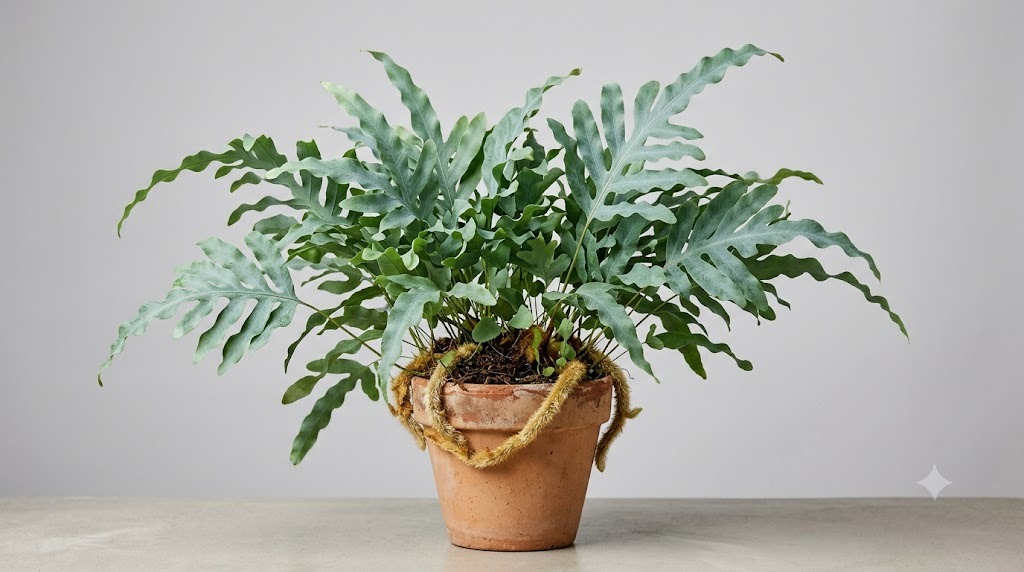
The Blue Star Fern - Phlebodium aureum - is an epiphytic fern grown for one striking, unusual quality: its powdery blue-green fronds. Where most ferns are plain green and fussy about humidity, this one sets itself apart with a cool, dusty, almost silvery cast to its leaves, deeply lobed and finger-like with gently wavy edges. Creeping across the surface of the pot are fuzzy, golden-brown rhizomes covered in soft scales, like furry paws - another feature that wins it admirers. It suits anyone who loves the look of a fern but has been burned by how demanding they can be. Be honest with yourself before you buy: it is still a fern and it likes moisture, but it is genuinely one of the more forgiving members of the family, tolerating a little less humidity and the conditions of an average room better than most. Give it bright indirect light and a soil that stays lightly moist, and it will reward you with that distinctive blue foliage for years.
Origin & Natural Habitat
Phlebodium aureum is native to the American tropics and subtropics, ranging from the southeastern United States and the Caribbean down through Central and South America. In the wild it is an epiphyte: rather than rooting in the ground, it grows perched on the trunks and branches of trees - palms are a favourite host - anchoring itself with those creeping rhizomes and gathering moisture, leaf litter, and debris from the bark around it. It belongs to the Polypodiaceae family, the polypody ferns. The botanical name is descriptive. Phlebodium comes from the Greek "phlebos," meaning vein, a nod to the prominent veining in the fronds, while the species name aureum means golden - a reference to the warm golden tone of its scaly rhizomes and the spore patches on the undersides of the leaves. You will also hear it sold under older names and common names, including Golden Polypody, Rabbit's Foot Fern, Cabbage Palm Fern, and Bear's Paw Fern.
Appearance
Picture broad fronds, deeply cut into long finger-like lobes with softly wavy or undulating edges, held up on slender stalks - and all of it washed in that signature powdery blue-green. The colour is the headline: a cool, dusty, glaucous blue that no ordinary fern offers. Running over the top of the soil are the rhizomes, thick creeping stems clad in soft golden-brown scales that genuinely resemble a furry animal's foot, which is where the "Rabbit's Foot" and "Bear's Paw" names come from. New fronds unfurl from the tips of these rhizomes as they travel.
- Fronds: large and deeply lobed into long finger-like segments with gently wavy edges, carrying the distinctive powdery blue-green colour.
- Rhizomes: thick, fuzzy, golden-brown creeping stems that crawl across and over the edge of the pot, covered in soft scales like a furry paw.
- Texture: the leaf surface has a fine matte, almost dusty bloom rather than a glossy shine, which is part of the blue effect.
- Growth habit: an epiphytic fern that spreads sideways via its rhizomes rather than growing from a tight central crown.
Indoors the fronds commonly reach around 30-60 cm, and the rhizomes slowly creep outward and over the rim, eventually spilling attractively over the side of the pot.
Why People Love It - Qualities & Benefits
- That unusual blue colour: the powdery blue-green fronds are the main reason to grow it - genuinely uncommon foliage that stands out next to ordinary green plants.
- More forgiving than most ferns: it tolerates slightly lower humidity and average-room conditions better than the notoriously fussy maidenhair and similar ferns, making it a realistic choice for normal homes.
- Charming fuzzy rhizomes: the golden, furry, creeping "paws" travelling over the pot are a feature in their own right and a talking point.
- Pet-safe and non-toxic: it is listed as non-toxic to cats and dogs, a real reassurance for homes with curious animals.
- Handsome, textured shape: the deeply lobed, wavy fronds give a soft, full, architectural look that works in many styles of room.
- Atmosphere: like most leafy tropicals it adds a little humidity and a lot of life to a room. (The popular "air-purifying" claims are real but modest in a normal home; the bigger benefit is psychological, since greenery measurably lifts mood and lowers stress.)
Care
Light
Bright, indirect light is ideal. A spot near an east window, or set back from a brighter south or west window, suits it well. As a forest epiphyte that grows under a canopy, it is used to filtered, dappled light rather than full sun, and harsh direct midday sun will scorch and bleach those powdery fronds - it can even mute the blue colour. That said, it copes with medium light better than many ferns, so a slightly shadier corner is workable, just expect slower, sparser growth. The blue tone tends to look its best in good bright indirect light.
Watering
Keep the mix lightly and evenly moist through the growing season - this is a fern and it does not want to dry out completely, but it equally must never sit soggy. Let just the very top of the soil begin to dry, then water. The two failure modes pull in opposite directions: let it dry out too far and the fronds go crispy and brown; keep it waterlogged and the rhizomes and roots rot. Aim for the steady middle ground of moist-but-not-wet. Ease back a little in winter when growth slows, but never let it bake bone-dry. Rainwater, distilled, or filtered water is gentler than hard tap water if your fronds brown at the tips.
Soil & Potting
Use a light, airy, well-draining mix that respects its epiphytic roots: a peat or coco base loosened with plenty of perlite and some orchid bark or even a touch of sphagnum works well. The roots want air and moisture together, never stagnant wet. Crucially, when you pot it, do not bury the rhizomes - those fuzzy golden stems should sit on top of the soil surface, not under it. Burying them causes them to rot. Always use a container with drainage holes.
Humidity & Temperature
Higher humidity is welcome and the plant will look its lushest above 50%, but here is its great advantage: it tolerates the moderate humidity of an average room far better than most ferns. In very dry, heated rooms a pebble tray, a nearby humidifier, or grouping it with other plants all help, especially in winter. It prefers warmth, roughly 16-24 C, and dislikes cold drafts and sudden chills near doors and windows.
Feeding
Feed lightly through spring and summer, about once a month, with a balanced liquid fertilizer diluted to half strength. Ferns are sensitive to over-feeding and salt build-up, so err on the weak side rather than the strong. Stop feeding in winter while growth has slowed.
Repotting
Repot only every couple of years, or when the rhizomes have crept right across the surface and over the edges and the pot is clearly full. A slightly snug pot is fine. Do it in spring, choose a container only one size up, and - again - lay the rhizomes on top of the fresh mix rather than burying them.
Reading the fronds - your moisture gauge
The fronds tell you almost everything about whether you are watering correctly. Crispy, browning frond edges or whole fronds going crunchy usually mean the air or the soil has been too dry. Yellowing, soft, or blackening fronds and a generally limp plant point the other way, toward overwatering and soggy rhizomes. Because this fern sits between needing consistent moisture and hating wet feet, the trick is simply to check the soil surface with a finger before every watering and aim to keep it lightly moist - not bone-dry, not swampy.
Propagation
The Blue Star Fern is propagated by rhizome division, and it is straightforward. In spring, ease the plant out of its pot and look at the creeping rhizomes: choose a healthy section that carries at least one or two fronds of its own and a few roots, and cut it cleanly from the parent with a sterilized blade. Lay that section on top of a fresh pot of the same light, airy mix - resting it on the surface, not buried - keep it warm and lightly moist with good humidity, and it will establish and push out new fronds. (Ferns can also be grown from spores, but that is a slow, advanced project; division is far quicker and the reliable way to make more plants at home.)
Common Problems & Pests
- Crispy, brown frond tips or edges: the most common complaint, usually low humidity, dry air, or letting the soil dry out too far; raise humidity and keep the mix evenly moist.
- Yellowing or blackening fronds: typically overwatering and soggy rhizomes - let the surface dry slightly more and make sure the pot drains freely.
- Faded or washed-out blue colour: often too much harsh direct sun bleaching the fronds; move it to brighter indirect light instead.
- Rotting rhizomes: caused by burying the rhizomes in the soil or keeping the mix waterlogged - they must sit on the surface and never stay wet.
- Limp, drooping fronds: a watering problem in either direction, or cold drafts; check the soil and the spot.
- Pests: watch for scale, mealybugs, and spider mites (spider mites especially in dry air). Isolate the plant and treat with insecticidal soap or neem oil, testing gently first since fern fronds can be sensitive.
Toxicity & Safety
Non-toxic and pet-safe. The Blue Star Fern (Phlebodium aureum) is listed as non-toxic to cats, dogs, and humans, which makes it a genuinely reassuring choice for homes with curious pets and small children. This is a care note rather than an invitation to eat it - it is an ornamental plant, not food - but a nibbling cat or dog will not be poisoned by it, and that peace of mind is one of its quiet strengths and a big part of why true ferns like this one are recommended for pet households.
Pros & Cons
Pros
- Unusual powdery blue-green fronds - genuinely uncommon foliage.
- More forgiving of average humidity and rooms than most ferns.
- Non-toxic and pet-safe for homes with animals and children.
- Charming fuzzy golden rhizomes that creep over the pot.
- Easy to propagate by simple rhizome division.
Cons
- Still a fern - it dislikes drying out completely and browns if neglected.
- Prefers higher humidity than some dry homes provide for its best look.
- Harsh direct sun scorches and fades the fronds.
- Rhizomes rot if buried or kept waterlogged, so potting needs care.
- Slower growing and spreads sideways rather than making a fast statement.
Best Suited For
- People who love the look of a fern but want a more forgiving one.
- Anyone drawn to unusual blue-toned foliage rather than plain green.
- Homes with curious pets, thanks to its non-toxic status.
- Bright, indirect spots, shelves, and pots where the rhizomes can creep over the edge.
Not ideal for very dry, sun-blasted windowsills, anyone who lets plants dry out for weeks, or those wanting a fast-growing, totally hands-off plant.
FAQ
Why are my Blue Star Fern's leaves turning brown and crispy? Almost always dry air or letting the soil dry out too far. Keep the mix lightly and evenly moist, raise the humidity with a pebble tray or humidifier, and move it away from heaters and drafts.
Is the Blue Star Fern safe for cats and dogs? Yes. Phlebodium aureum is listed as non-toxic to cats and dogs, so it is a safe choice for pet households - though it is still an ornamental plant, not something to be eaten.
Why is my fern losing its blue colour? Usually too much harsh direct sunlight, which bleaches and fades the powdery fronds. Move it to bright but indirect light, where the cool blue tone shows best.
Can I bury the fuzzy rhizomes when I repot? No - and this is the key mistake to avoid. The golden creeping rhizomes should rest on top of the soil surface. Burying them in the mix leads to rot. Lay them on top and let only the roots go into the soil.
How often should I water it? Keep it lightly moist, watering when just the very top of the soil starts to dry, and ease back a little in winter. Check the soil with your finger rather than following a fixed schedule - the goal is moist but never soggy.