Cat Palm (Chamaedorea cataractarum)
The Cat Palm is a lush, bushy little palm that brings a soft tropical fullness to a room without the height or the bare "trunk-and-tuft" look of taller indoor palms.
🗓️ Last reviewed: July 2026
Overview
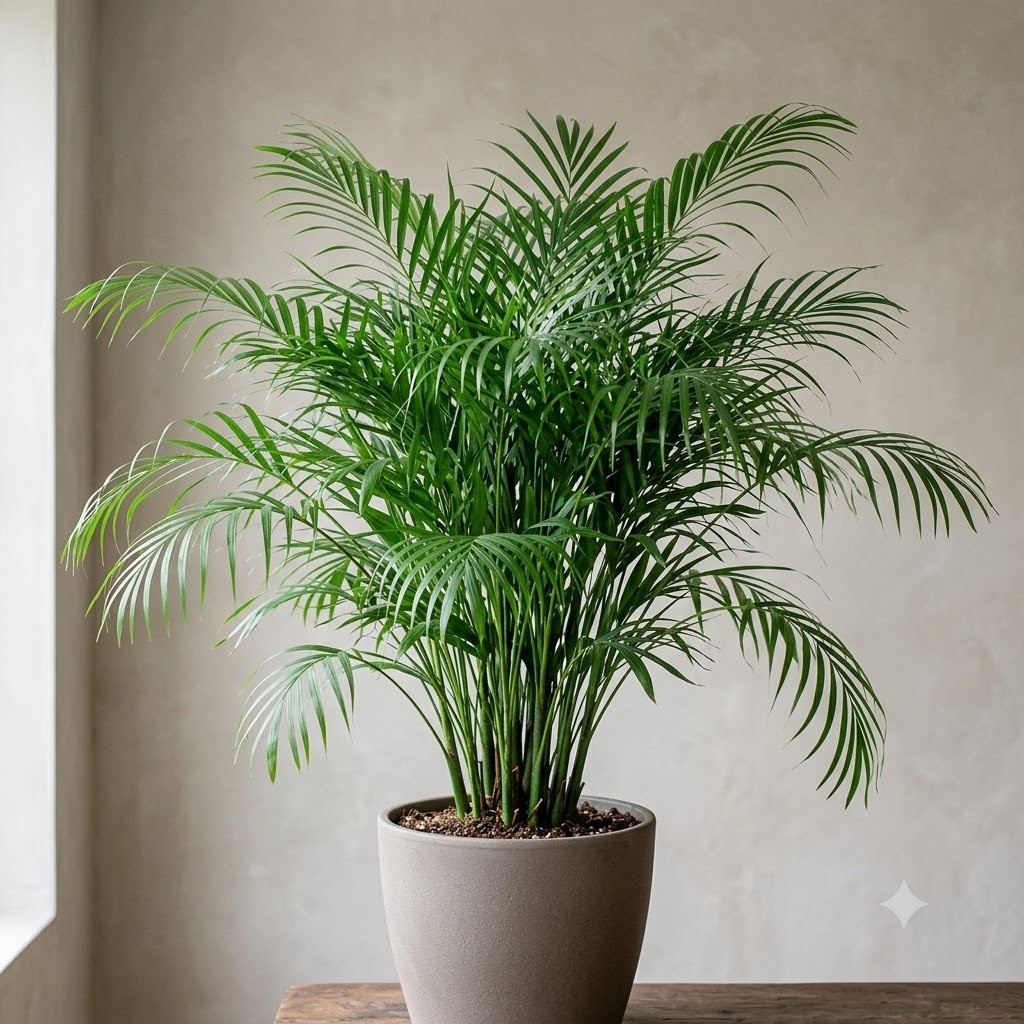
The Cat Palm is a lush, bushy little palm that brings a soft tropical fullness to a room without the height or the bare "trunk-and-tuft" look of taller indoor palms. Instead of a single stem, it grows as a dense clump of slender green canes topped with fine, arching fronds, giving a full, leafy silhouette right from the floor up. Sometimes sold as the Cascade Palm or Cataract Palm, it stays relatively compact and reads as fresh, green, and welcoming. It is a touch fussier than the tough Parlor Palm - it wants steadily moist soil and good humidity, and it will complain about dry air by browning at the tips - but for anyone who wants a genuinely bushy indoor palm, it is hard to beat.
Origin & Natural Habitat
Chamaedorea cataractarum is native to southeastern Mexico, where it grows along streams and riverbanks and near waterfalls - which is exactly what its species name "cataractarum" refers to. In the wild it often has its roots in constantly moist ground, growing in the humid, shaded understory of the forest.
That habitat is the key to understanding it at home. A plant that naturally lives beside running water in a warm, humid, shaded environment will always want more moisture and humidity, and less harsh sun, than a desert plant. It is used to damp soil and gentle filtered light, not dry conditions or blazing sunshine.
Appearance
The Cat Palm has a distinctive full, clumping form:
- Habit: a clustering, trunkless palm that grows as a dense clump of many thin green canes rather than a single stem - so it stays bushy from the base.
- Fronds: fine, feathery, arching fronds made up of many narrow green leaflets, giving a soft, delicate texture.
- Color: a rich, glossy green throughout.
- Size: indoors it typically forms a full, rounded plant of moderate height, staying more compact and bushier than tall palms like the Kentia or Areca.
The overall effect is a lush green mound - fuller and leafier at the base than most indoor palms, which makes it a popular choice for filling a corner with greenery.
Why People Love It - Qualities & Benefits
- Full and bushy: unlike leggy palms, it stays dense and leafy right down to the floor, no bare trunk.
- Soft tropical feel: the fine arching fronds bring a gentle, resort-like green softness to a room.
- Compact: it stays a manageable size for indoor spaces while still looking generous.
- Non-toxic: a safe, worry-free choice around pets and children.
- Calming greenery: as a leafy tropical it adds humidity and a soothing natural atmosphere.
Care
Light
Bright, indirect light is ideal - near a window with plenty of light but shielded from harsh direct sun, which scorches and yellows the delicate fronds. It tolerates medium light but stays fullest and healthiest in bright, filtered light. Think of the dappled shade of its forest home rather than an exposed sunny sill.
Watering
Keep the soil consistently moist but not waterlogged - this palm does not like to dry out fully. Water thoroughly when the top of the soil just begins to feel dry, letting excess drain away completely. In a warm bright spot that often means watering regularly through the week; less in winter. Both extremes cause trouble: soggy, standing-water soil leads to root rot, while repeated bone-dry soil browns the fronds. Aim for steadily damp, never sodden.
Soil & Potting
Use a rich, well-draining potting mix that holds some moisture, such as a quality peat- or coir-based mix with a little extra drainage material. Always use a pot with drainage holes so the roots stay moist but never sit in water.
Humidity & Temperature
Humidity matters. Coming from humid streamside forests, the Cat Palm loves moist air - ideally 50% or higher - and brown frond tips are its classic complaint about dry indoor air. A humidity tray, a humidifier, or grouping with other plants helps. It enjoys warm temperatures of roughly 18-27 °C and dislikes cold below about 10-13 °C and cold drafts.
Feeding
Feed monthly through spring and summer with a balanced liquid houseplant fertilizer at half strength. Palms can be sensitive to over-fertilizing and to salt buildup, which browns the tips, so keep feeding modest and flush the soil with plain water occasionally. Stop feeding in winter.
Grooming & Repotting
Trim off any fully browned fronds at the base to keep it looking fresh. Repot every couple of years in spring when roots fill the pot; palms dislike frequent disturbance, so move up only one pot size and handle the root ball gently.
Propagation
The Cat Palm is propagated by division rather than cuttings. Because it grows as a clump of many canes, a large, healthy plant can be lifted at repotting time and carefully separated into smaller clumps, each with its own canes and a good share of roots. Pot each division into fresh moist mix and keep it warm, humid, and shaded while it recovers, as division sets the plant back for a while. Growing from seed is possible but slow and impractical for most home growers.
Common Problems & Pests
- Brown frond tips: the most common issue - usually dry air, dry soil, or salt buildup from hard water or excess fertilizer.
- Yellowing fronds: often overwatering and soggy soil, or sometimes underwatering - check the soil moisture.
- Pale, scorched fronds: too much harsh direct sun.
- Overall decline, mushy base: root rot from standing water and poor drainage.
- Pests: spider mites are the biggest threat, especially in dry air - watch for fine webbing and stippled, dull fronds. Also watch for mealybugs and scale. Raise humidity, isolate the plant, rinse the foliage, and treat with insecticidal soap.
Toxicity & Safety
The Cat Palm is considered non-toxic to cats and dogs and is not known to be poisonous to humans. It is a genuinely pet-safe palm, which is one of its selling points, though as with any plant it is still best to discourage pets and children from chewing on the fronds to avoid mild stomach upset.
Pros & Cons
Pros
- Full, bushy, trunkless form - leafy right to the floor.
- Soft, feathery tropical foliage.
- Stays a manageable indoor size.
- Non-toxic and pet-safe.
- Adds humidity and a calming green atmosphere.
Cons
- Wants consistently moist soil and good humidity - not drought-tolerant.
- Browns at the tips readily in dry air or with hard water.
- Prone to spider mites when the air is dry.
- Dislikes being moved or divided and sulks afterward.
- Sensitive to overwatering and root rot if drainage is poor.
Best Suited For
- Anyone wanting a full, bushy indoor palm without a bare trunk.
- Bright rooms with some humidity, or owners willing to add it.
- Pet-owning households seeking a safe, leafy statement plant.
- Owners who can keep the soil steadily moist.
Not ideal for chronic underwaterers, very dry rooms with no humidity help, dark corners, or anyone wanting a tough, neglect-proof palm.
FAQ
Why are the tips of my Cat Palm turning brown? This is the classic complaint and almost always comes down to dry air, soil drying out too much, or salt buildup from hard water or too much fertilizer. Raise the humidity, keep the soil evenly moist, and consider using filtered water.
How is the Cat Palm different from a Parlor Palm or Areca Palm? The Cat Palm is bushier and trunkless, growing as a dense clump of canes, and it wants more moisture and humidity than the tougher Parlor Palm. It is fuller at the base than the taller, more upright Areca.
Does it really need that much water? It likes consistently moist soil because it grows beside streams in the wild - but "moist" is not "soggy." Keep it damp and well-drained; standing water still causes root rot.
Is it safe for pets? Yes, it is regarded as non-toxic to cats and dogs, which makes it a popular choice for pet homes. Still, discourage nibbling to avoid mild digestive upset.
How often should I water it? Keep the soil consistently moist - typically regularly through the week in a warm bright spot, less in winter. Water when the surface just begins to feel dry, and avoid both bone-dry soil and standing water.