Clivia (Clivia miniata - Bush Lily)
The Clivia - known as the Bush Lily or Kaffir Lily - is one of the great old-fashioned houseplants, the kind that used to sit in the windows of grandmothers and grand hotels alike.
🗓️ Last reviewed: July 2026
Overview
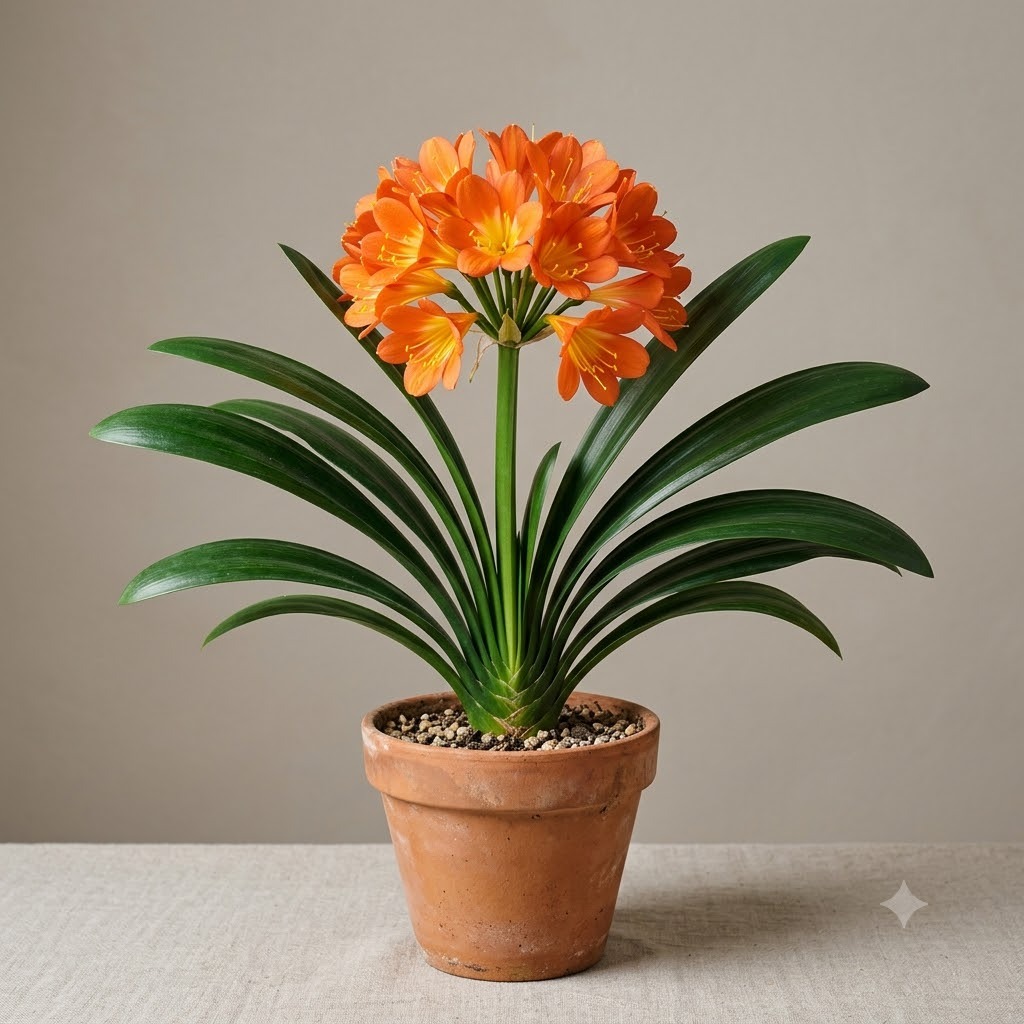
The Clivia - known as the Bush Lily or Kaffir Lily - is one of the great old-fashioned houseplants, the kind that used to sit in the windows of grandmothers and grand hotels alike. It is a clump of thick, glossy, strap-shaped leaves that looks handsome all year round, and then, once a year in late winter or spring, it throws up a stout stem topped with a cluster of trumpet-shaped flowers in warm orange, or sometimes yellow or cream. It is slow, long-lived, and remarkably tough. The one secret it keeps is simple: to flower well, it needs a cool, dry rest over winter. Give it that, and it can bloom faithfully for decades.
Origin & Natural Habitat
Clivia miniata is native to South Africa, where it grows in the dappled shade of woodland and along forest edges, often in leaf litter beneath a canopy of trees. This origin explains its whole personality. It is adapted to shade, so it does not want or need blazing sun. It grows in the cool, drier winters and warmer, wetter summers of its home, so it expects a seasonal rhythm - and a genuine winter rest is what triggers it to bloom.
The genus was named after Lady Charlotte Clive, Duchess of Northumberland, in the nineteenth century, when the plant became a prized greenhouse subject in Europe. It has been passed down and divided in families for generations, and a healthy old plant can be a genuine heirloom.
Appearance
Clivia grows from a fleshy base of overlapping leaf bases (not a true bulb, though it is often called one). Its features:
- Leaves: broad, arching, dark green straps, thick and leathery, arranged in two neat opposite ranks that fan out like a green rosette. They stay attractive all year.
- Flowers: a stout flower stem rises from the center of the clump and opens a rounded umbel of 10-20 trumpet-shaped blooms, most commonly a rich orange with a yellow throat. Yellow and cream forms exist and are prized.
- Berries: after flowering, large round berries may form and slowly ripen to red over many months, holding the seed.
- Roots: thick, fleshy roots that store water and dislike disturbance.
A mature clump reaches roughly 40-60 cm tall and spreads steadily wider over the years as it produces offsets.
Why People Love It - Qualities & Benefits
- Shade-tolerant: one of the few reliable flowering houseplants for a spot that is bright but never sunny.
- Long-lived and low-maintenance: it thrives on a little benign neglect and can outlive the person who bought it.
- Handsome year-round: even out of bloom, the glossy fan of dark leaves is architectural and clean.
- A real flowering event: the annual burst of warm color in the dead of late winter is a genuine highlight.
- Heirloom quality: it clumps up and can be divided to share with family and friends.
Care
Light
Bright, indirect light with no direct midday sun. An east or north window is ideal, or a well-lit spot back from a brighter window. It tolerates fairly low light and still looks good, though it flowers best with good bright light. Harsh direct sun scorches and bleaches the leaves.
Watering
Water moderately during the growing season (spring through early autumn), letting the top few centimeters of soil dry between waterings. The fleshy roots store water and rot easily in soggy soil, so err on the dry side. The key point is the winter rest: from roughly late autumn, water sparingly - just enough to keep the leaves from shriveling - for six to eight weeks. This dry, cool period is what sets the flower buds.
Soil & Potting
Use a well-draining, humus-rich potting mix loosened with bark or perlite. Always use a pot with drainage holes. Clivia actively likes being pot-bound, so resist the urge to move it into a large pot.
Humidity & Temperature
Normal room humidity is fine. Ordinary warm room temperatures suit it in the growing season. The winter rest works best if it is also cooler - a bright, unheated room or a spot around 10-15 °C for several weeks - which, combined with dry soil, triggers reliable flowering. Protect it from frost.
Feeding
Feed with a balanced liquid fertilizer every few weeks through spring and summer while it is growing. Stop feeding over the winter rest.
Repotting
Repot only when the clump has completely filled its pot and is pushing itself out - often only every three or four years. It resents root disturbance and flowers better when snug, so repot reluctantly and in spring, after flowering.
After flowering
Once the flowers fade you can cut the spent stem, or leave it if you want berries. Then let the plant grow through summer and give it its dry, cool rest again the following winter.
Propagation
Clivia is propagated two ways. The easy, reliable method is division: when repotting a large clump, carefully separate the offsets (young plants) that have formed at the base, each with its own roots, and pot them up individually. The slow method is seed from the ripe red berries - this works but is a patient project, as seed-grown plants can take four to six years to reach flowering size. Division is by far the quicker route to a blooming plant.
Common Problems & Pests
- No flowers: the most common complaint, and almost always because the plant did not get a cool, dry winter rest. Too much water and warmth all year keeps it leafy but bloom-shy.
- Yellowing leaves: usually overwatering or poor drainage; the fleshy roots rot easily.
- Brown scorched patches: too much direct sun.
- Limp, shriveling leaves: too dry for too long during active growth (a little shriveling is normal and desired during the deliberate winter rest).
- Pests: mealybugs (white fluff tucked in the leaf bases) and scale are the usual visitors. Wipe them off and treat with insecticidal soap.
- Short flower stem stuck in the leaves: often means the winter rest was too warm; a cooler rest lets the stem elongate properly.
Toxicity & Safety
Toxic to cats, dogs, and humans if eaten. All parts of Clivia contain lycorine and related alkaloids, with the highest concentration in the fleshy base and roots. Eating it can cause drooling, vomiting, and stomach upset, and large amounts are more serious. Keep it out of reach of pets and children, and wash your hands after dividing or handling the roots.
Pros & Cons
Pros
- Flowers reliably in a shady spot where little else will bloom.
- Extremely long-lived and forgiving of neglect.
- Handsome, glossy foliage all year round.
- Easy to divide and share as an heirloom.
- Thrives pot-bound, so needs little repotting.
Cons
- Will not flower without a deliberate cool, dry winter rest.
- Slow-growing and slow to reach flowering size from seed.
- Toxic to pets and children.
- Dislikes root disturbance.
- Only one main flush of bloom per year.
Best Suited For
- Owners with a bright but sunless spot who still want flowers.
- Patient people who value a long-lived, low-fuss plant.
- Anyone who can offer a cool, dry room in winter.
- Collectors of old-fashioned, heirloom houseplants.
Not ideal for those wanting instant or repeat blooms, homes kept uniformly warm all winter, or households with pets and toddlers who chew leaves.
FAQ
Why won't my Clivia flower? Almost always because it never got a cool, dry rest. From late autumn, keep it cool and nearly dry for six to eight weeks. That dormancy is what sets the buds.
Should I repot it every year? No - Clivia likes being pot-bound and flowers better that way. Repot only every three or four years when the clump is bursting out of its pot.
Can I put it outside in summer? Yes, in a shaded, frost-free spot it enjoys a summer outdoors, but keep it out of direct sun and bring it in before cold weather.
How long until a seed-grown plant flowers? Several years - often four to six - which is why division from an established clump is the far quicker way to get blooms.
Is the orange one the only color? No. Orange is the classic, but yellow and cream forms exist and are prized by collectors; they are just less common and usually more expensive.