Crassula Perforata (String of Buttons)
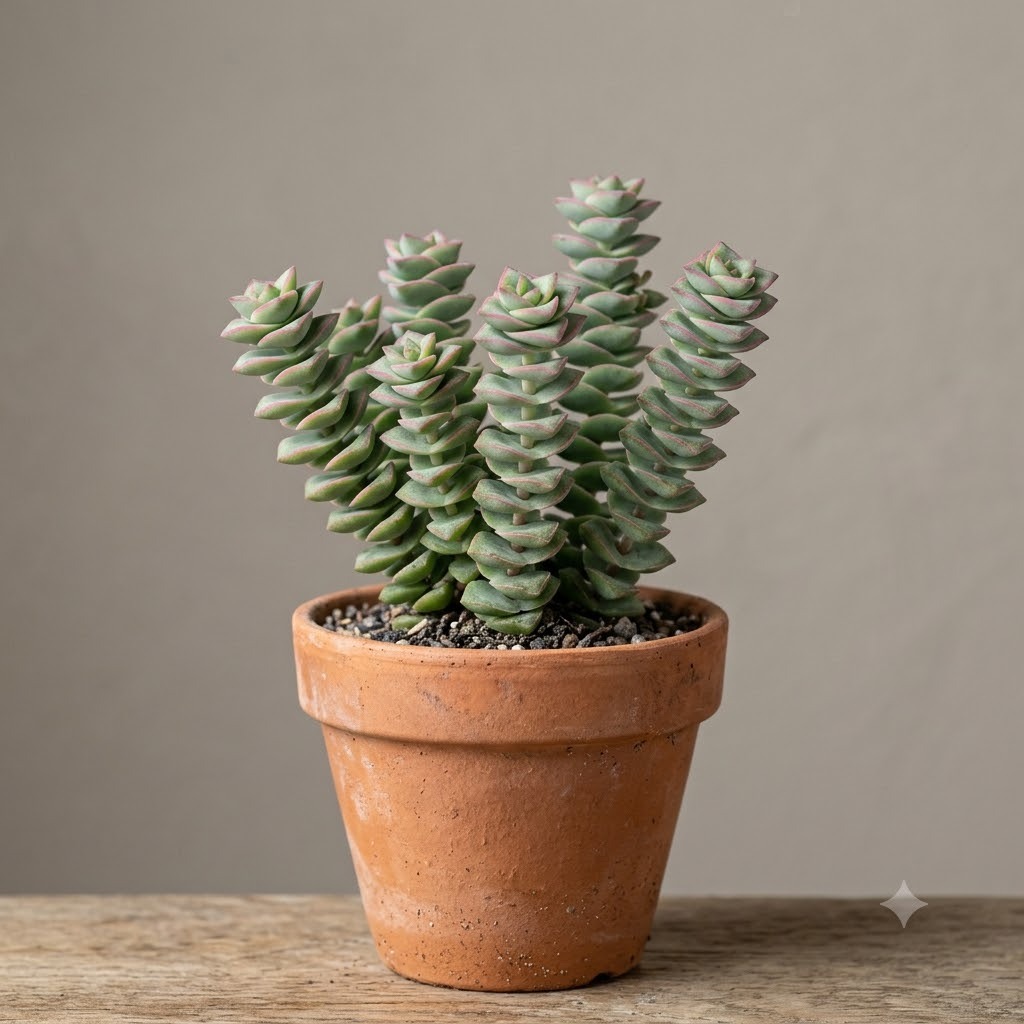
Crassula perforata - the "String of Buttons" - is a charming, easy-going succulent whose small triangular leaves stack around the stem in tidy, spiralling pairs, so the stem appears to grow right through the middle of each leaf.
🗓️ Last reviewed: July 2026
Overview
Crassula perforata - the "String of Buttons" - is a charming, easy-going succulent whose small triangular leaves stack around the stem in tidy, spiralling pairs, so the stem appears to grow right through the middle of each leaf. The effect is architectural and slightly geometric, like a string of green buttons threaded up a wire. Young plants grow neat and upright; as stems lengthen and gain weight they arch and trail, making it equally good in a small pot on a shelf or spilling over the edge of a hanging planter. It is fast, forgiving, and easy to propagate, and in bright light the leaf edges often blush pink or red - a favourite feature among succulent lovers.
Origin & Natural Habitat
Crassula perforata is native to South Africa, growing across the Eastern and Western Cape in rocky, well-drained, sunny terrain. Like many Crassulas it is adapted to dry, bright conditions with sharp drainage, often scrambling among rocks and low shrubs. The genus Crassula is large and includes the familiar jade plant (Crassula ovata), so String of Buttons is a close relative of that classic houseplant, though it looks completely different.
The species name perforata means "perforated," referring to the way the paired leaves clasp and surround the stem so that the stem seems to pierce through them. In habitat it produces small clusters of pale yellowish or whitish star-shaped flowers on the stems, usually in the cooler part of the year, though flowering is less common indoors.
Appearance
The stacked, stem-clasping leaves are the whole appeal of this plant.
- Leaves: small, thick, triangular, and grey-green, arranged in tightly stacked opposite pairs that rotate slightly as they climb the stem, forming a spiral or square-column effect.
- Stem-through look: each pair of leaves fuses around the stem, so the stem appears to pass through the centre - the origin of the "perforata" name.
- Colour: blue-green to grey-green, often edged with pink, red, or coral, especially in bright light or cooler temperatures.
- Growth habit: upright and neat when young, then arching and trailing as the stems lengthen and grow heavier.
- Size: stems commonly reach 20-30 cm or more; the plant stays compact overall and works well in small pots.
A variegated form with cream-and-green leaves also exists and is popular for its softer colouring.
Why People Love It - Qualities & Benefits
- Distinctive geometry: the stacked, spiralling, stem-through leaves are genuinely eye-catching and unlike most succulents.
- Versatile display: grows upright when young and trails as it matures, so it suits shelves, small pots, and hanging planters alike.
- Colourful edges: the pink and red leaf margins in good light add a lovely blush.
- Fast and easy: it grows readily and is very forgiving of beginner mistakes.
- Effortless propagation: stem cuttings root quickly, so one plant multiplies fast.
- Compact: stays small enough for tight spaces and windowsills.
Care
Light
Crassula perforata wants bright light, including several hours of direct or very bright indirect sun - a south or west window is ideal. Good light keeps the plant compact, keeps the leaves tightly stacked, and brings out the pink and red edge colour. In low light it stretches, the leaf pairs space out, and the neat stacked look is lost.
Watering
Water thoroughly, then let the soil dry out completely before watering again - the classic succulent "soak and dry" method. In summer that is often every 1-2 weeks; in winter much less. Overwatering is the main danger and causes soft, mushy, rotting stems. The thick leaves store water, so the plant tolerates a missed watering far better than a soggy pot. When in doubt, wait.
Soil & Potting
Use a gritty, fast-draining cactus and succulent mix with extra perlite or pumice. Sharp drainage is essential. Always use a pot with a drainage hole.
Humidity & Temperature
Normal dry room air suits it well; no misting needed. It prefers 15-27 °C, dislikes cold, and should be protected from frost and kept above about 5-10 °C in winter. Cooler nights in autumn can intensify the pink leaf colour.
Feeding
Feed lightly with a diluted succulent fertiliser once or twice through spring and summer. It does not need much. Do not feed in winter.
Repotting
Repot every couple of years or when it outgrows its pot, in spring. Trailing stems can be trimmed at the same time to keep the plant tidy, and the trimmings used as cuttings.
Propagation
String of Buttons is very easy to propagate from stem cuttings. Snip a healthy length of stem, remove the lowest pairs of leaves, and let the cut end callus (dry) for a day or two. Then lay it on or push it gently into dry, gritty succulent mix and wait a few days before watering lightly. Roots form quickly and the cutting establishes fast. Individual leaves can sometimes root too, but stem cuttings are far more reliable and quicker. Regular trimming to control the trailing habit provides a steady supply of cuttings.
Common Problems & Pests
- Stretched, spaced-out leaves: not enough light. Move it to a brighter, sunnier spot.
- Soft, mushy, blackening stems: overwatering and rot. Stop watering, cut above the rot, let the healthy top callus, and re-root it.
- Wrinkled, thin leaves: underwatering - give it a good soak.
- Loss of pink edges, all green: usually too little light or too much shade.
- Leggy, floppy stems: natural as it matures, but worsened by low light; trim and propagate to refresh the plant.
- Pests: mealybugs are the most common, hiding in the tight leaf joints; remove with a cotton bud dipped in rubbing alcohol and treat with insecticidal soap. Watch also for spider mites.
Toxicity & Safety
Crassula perforata is generally considered non-toxic to humans. However, some Crassula species - notably the jade plant, Crassula ovata - are listed as toxic to cats and dogs, and information on this particular species is limited, so it is sensible to keep it out of reach of pets that like to chew plants. Eating it is not advisable and could cause mild stomach upset, but it contains no known dangerous compounds.
Pros & Cons
Pros
- Distinctive, geometric stacked-leaf look.
- Versatile - grows upright then trails.
- Colourful pink and red leaf edges in good light.
- Fast-growing and beginner-friendly.
- Very easy to propagate from cuttings.
Cons
- Needs bright light or it stretches and loses its shape.
- Rots quickly if overwatered.
- Stems get leggy and floppy with age.
- Caution advised around chewing pets.
- Not frost-hardy.
Best Suited For
- Beginners who want an easy, distinctive succulent.
- Bright, sunny windowsills and shelves.
- Anyone who wants a plant that works both upright and trailing.
- Succulent lovers who enjoy the pink-edge colour.
Not ideal for dark rooms, chronic overwaterers, or homes with pets that chew plants without a safe out-of-reach spot.
FAQ
Why are the leaves spreading apart instead of stacking tightly? Not enough light. In bright light the leaf pairs stack tightly and the plant stays compact; in shade the stem stretches and the gaps widen. Move it to a sunnier window.
How do I get the pink and red edges? Bright light and cooler temperatures bring out the colour. In shade the plant stays plain green.
Should I grow it upright or trailing? Either works. It grows upright when young and naturally arches and trails as the stems lengthen, so a shelf edge or hanging pot suits an older plant well.
How often should I water it? Only when the soil is fully dry - roughly every 1-2 weeks in summer and much less in winter. It handles drought far better than overwatering.
Is it safe around pets? It is generally regarded as non-toxic to people, but because some Crassula relatives are toxic to cats and dogs and data on this species is limited, keep it out of reach of pets that chew plants to be safe.