Dischidia (Button Orchid / Ant Plant)
Dischidia is a genus of small, trailing epiphytes from the same family as the Hoya - and if you already love Hoyas, this is your next obsession.
🗓️ Last reviewed: July 2026
Overview
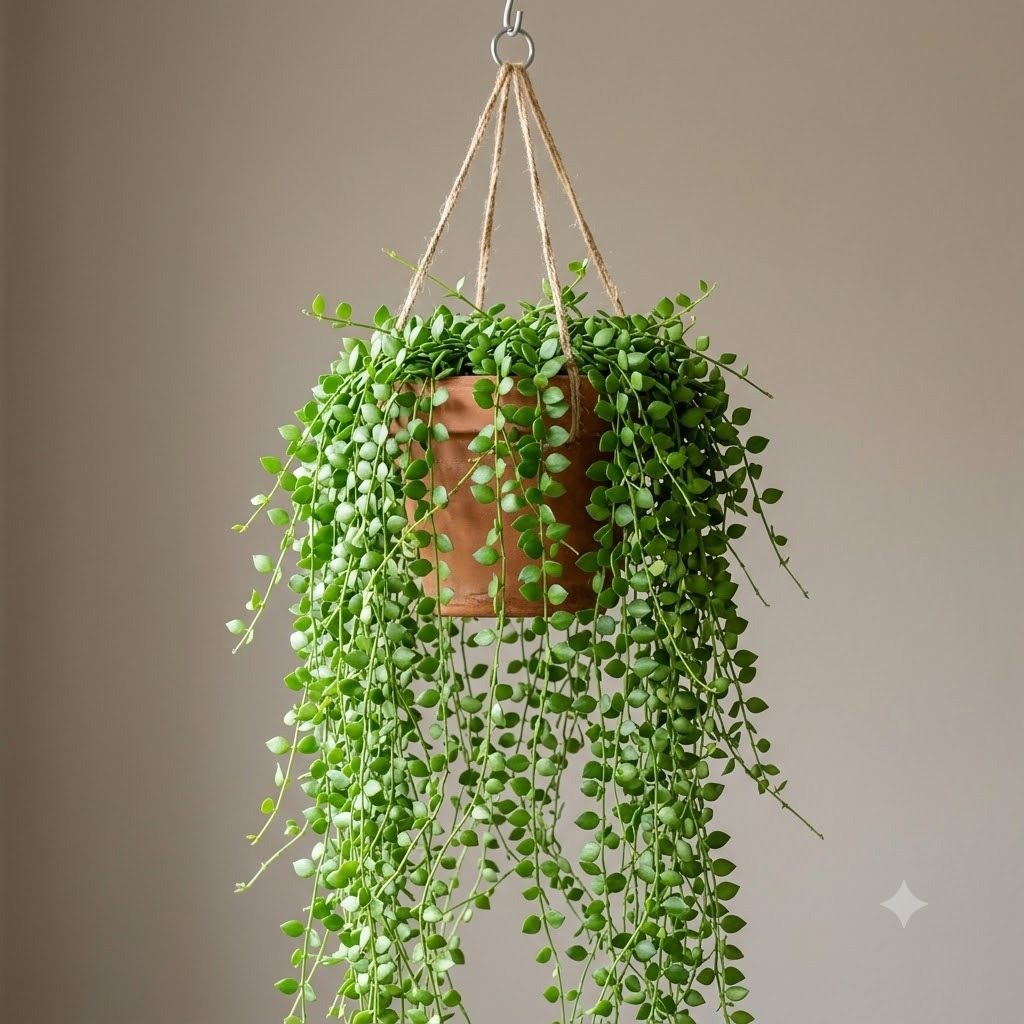
Dischidia is a genus of small, trailing epiphytes from the same family as the Hoya - and if you already love Hoyas, this is your next obsession. These are dainty, waxy-leaved vines that scramble over tree bark in the wild, often forming curtains of tiny leaves on a fine, wiry stem. Popular types include the "watermelon" Dischidia ovata with its striped leaves, the bead-like Dischidia nummularia (String of Nickels), and the fascinating "ant plants" Dischidia imbricata and Dischidia pectinoides, which grow pouch-shaped leaves that house ants in nature. None of them are difficult once you understand one thing: Dischidia is an epiphyte, not a soil plant, and it wants air, humidity, and bright indirect light far more than it wants a rich pot of dirt.
Origin & Natural Habitat
Dischidia species are native to the tropics of Southeast Asia, India, and northern Australia, where they grow as epiphytes - clinging to tree trunks and branches rather than rooting in the ground. In their humid forest homes they are constantly bathed in warm, moist air, and their roots grip bark and sip rainwater and dew rather than sitting in wet soil.
The "ant plant" species have one of the more remarkable partnerships in botany. Dischidia pectinoides and Dischidia imbricata produce specialized hollow or pouch-like leaves that ants colonize. The ants gain shelter; the plant gains nutrients from the ants' waste and protection from herbivores. Indoors you will not get the ants, but the curious swollen leaves still form.
Appearance
Dischidia are small and delicate compared with most houseplants:
- Leaves: small, thick, and waxy, from round coins (nummularia) to the striped ovals of ovata to the swollen pouches of the ant-plant species. Colors range from grey-green to fresh apple green, sometimes marked with pale veins.
- Stems: thin, wiry, and trailing, often reddish, scrambling and hanging rather than climbing tall.
- Growth habit: a cascading, curtain-forming trailer, ideal for hanging baskets, mounts, or draping off a shelf.
- Flowers: tiny, tubular, and easy to miss - usually white, cream, or pale pink, sometimes lightly fragrant.
Indoors a healthy Dischidia forms long trailing strands of many small leaves rather than a large, bushy plant. It reads as fine-textured and airy, closer to a String of Pearls or Hoya than to a leafy tropical.
Why People Love It - Qualities & Benefits
- Unusual and collectible: the ant-plant pouches and the coin-like foliage make Dischidia a conversation piece among plant people.
- Beautiful trailer: cascading strands look wonderful in a hanging pot or spilling off a high shelf.
- Compact: it stays small and light, perfect for people short on floor space.
- Mountable: because it is a true epiphyte, it can be grown on a piece of cork bark or a moss mount like an orchid, which many hobbyists find rewarding.
- Rewards attention: it responds visibly to good humidity and light, so a little care shows quickly.
Care
Light
Bright, indirect light is ideal - a spot right beside an east or north window, or a little back from a brighter one. Good light keeps the leaves compact and colorful. It tolerates some gentle morning sun but harsh direct midday sun will scorch the small leaves. Too little light and the strands grow leggy with widely spaced leaves.
Watering
Because it is epiphytic with fine roots, Dischidia dries fast and hates staying soggy. Water when the medium is nearly dry, then water thoroughly and let it drain completely. In a bright, warm spot that is often once or twice a week; less in winter. Mounted plants may need a soak or mist more often because they dry out quickly. When in doubt, wait - root rot from a constantly wet pot is the main way people kill these plants.
Soil & Potting
Do not use standard heavy potting soil. Use a very airy, fast-draining medium: an orchid bark mix, sphagnum moss, or a chunky epiphyte blend with plenty of perlite and bark. Many growers mount Dischidia on cork or grow it in a mesh or net pot so the roots get air. Always ensure drainage.
Humidity & Temperature
Humidity is the big one. Dischidia loves it high - ideally 60% or more - and can struggle in dry indoor air. It suits a bright bathroom, a terrarium, or a grouping of plants; a humidifier helps. It enjoys warmth of roughly 18-27 °C and dislikes cold below about 13 °C and cold drafts.
Feeding
Feed lightly through spring and summer with a dilute, balanced fertilizer at quarter to half strength, roughly monthly. As an epiphyte it needs little, and too much fertilizer can burn the fine roots. Stop feeding in winter.
Mounting & Support
Dischidia is happy in a hanging pot to trail, or mounted on cork bark or a moss slab like an orchid or Hoya. A mount most closely mimics its natural life and gives the best air to the roots, though it does dry faster and needs more frequent watering or misting.
Propagation
Dischidia is easy to propagate from stem cuttings. Take a cutting a few nodes long, remove the lowest leaves, and place the nodes in moist sphagnum moss or a light bark mix. Keep it warm, humid, and bright. Roots form in a few weeks. You can also pin a trailing strand down onto damp moss and let it root while still attached, then cut and separate it. High humidity greatly improves success.
Common Problems & Pests
- Shriveled, wrinkled leaves: usually underwatering or very low humidity - the thick leaves lose their plumpness.
- Yellowing, mushy leaves or stems: overwatering and a medium that stays too wet - let it dry and improve airflow.
- Leggy growth with sparse leaves: not enough light.
- Brown crispy leaves: air too dry or too much direct sun.
- Pests: mealybugs (white fluff in leaf joints) are the most common; also watch for scale and spider mites in dry air. Isolate and treat with insecticidal soap or by wiping the plant.
Toxicity & Safety
Dischidia is generally considered non-toxic to cats and dogs and is not known to be poisonous to humans. As with any plant, eating quantities may cause mild stomach upset, so it is still sensible to keep it out of reach of pets and small children who chew, but it is not among the plants of real concern.
Pros & Cons
Pros
- Unusual, collectible, and full of character - especially the ant-plant forms.
- Compact and light; a great trailer for small spaces.
- Can be mounted like an orchid for a natural look.
- Generally non-toxic to pets.
- Easy to propagate from cuttings.
Cons
- Demands high humidity and can sulk in dry rooms.
- Fine roots dry and rot easily - watering must be judged, not scheduled.
- Small flowers and small leaves; not a bold statement plant.
- Mounted plants need frequent watering or misting.
- Less common in shops, so it can be harder to find.
Best Suited For
- Hoya lovers and collectors looking for something unusual.
- People with a humid bright bathroom, terrarium, or a humidifier.
- Small spaces that suit a compact trailer or a mount.
- Homes with pets, thanks to its low-toxicity reputation.
Not ideal for very dry rooms with no humidity help, anyone wanting a big leafy statement plant, or those who prefer a plant that tolerates neglect and erratic watering.
FAQ
Is Dischidia related to Hoya? Yes - they are close cousins in the same family (Apocynaceae, subfamily Asclepiadoideae). If you can grow a Hoya, you can grow a Dischidia; the care is similar, though Dischidia generally wants even higher humidity.
Why are the leaves going wrinkly and thin? Usually thirst or very dry air. The thick leaves plump up when hydrated and shrivel when the plant is underwatered or the humidity is too low. Water and raise humidity.
Can I grow it in normal potting soil? It is much safer not to. Standard soil holds too much water for these fine epiphytic roots. Use bark, sphagnum moss, or a chunky airy mix, or mount it on cork.
What is the "ant plant" thing about? Dischidia pectinoides and imbricata form swollen pouch leaves that ants live in and fertilize in the wild. Indoors you get the curious leaves without the ants - purely a botanical talking point.
How often should I water it? When the medium is nearly dry - often once or twice a week in a warm bright spot, less in winter, and more if mounted. Always check the medium rather than following a fixed schedule.