Epiphyllum (Orchid Cactus)
The Epiphyllum - commonly called the Orchid Cactus - is a jungle cactus that breaks all the rules you think you know about cacti.
🗓️ Last reviewed: July 2026
Overview
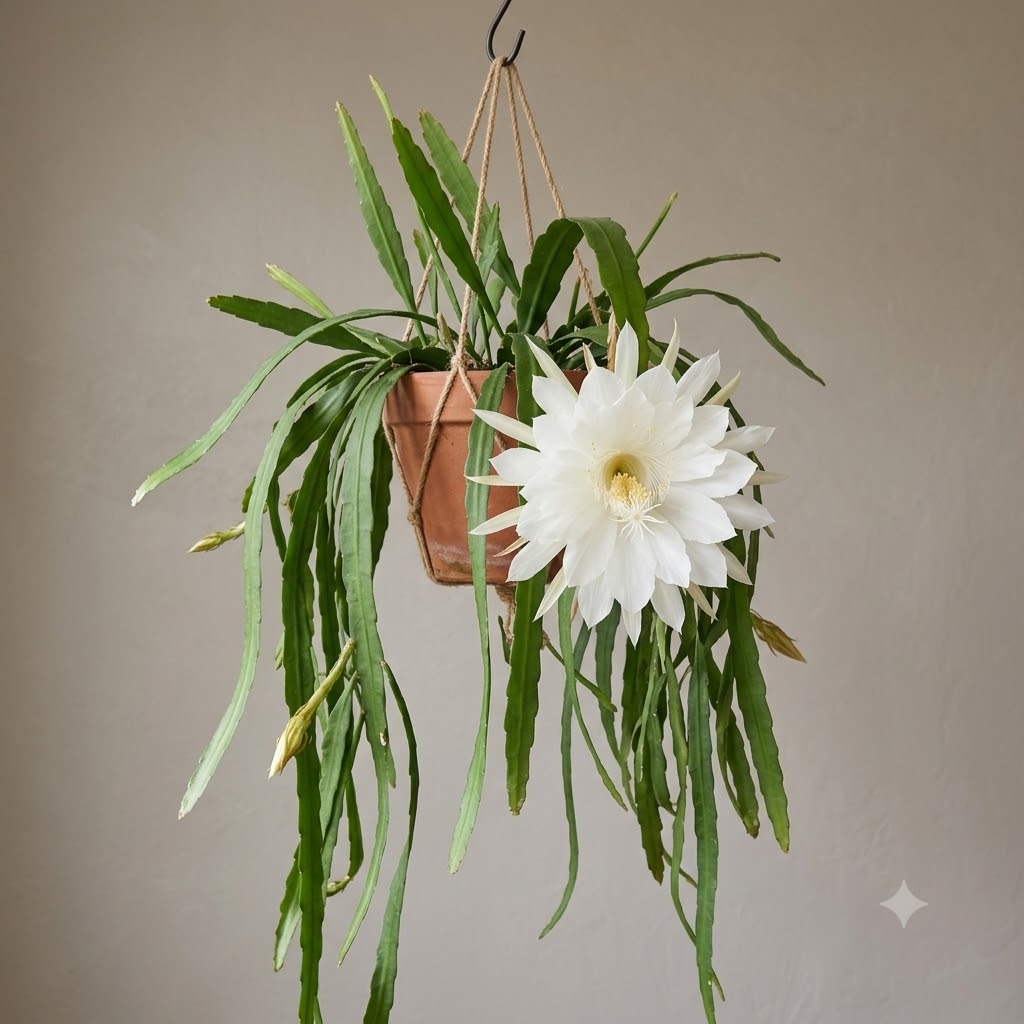
The Epiphyllum - commonly called the Orchid Cactus - is a jungle cactus that breaks all the rules you think you know about cacti. It has no fierce spines, it does not want a hot dry windowsill, and it produces some of the largest, most spectacular flowers in the entire plant world. Instead of a plump barrel body it grows long, flat, leaf-like stems that arch and trail beautifully from a hanging basket. Then, once a year, it rewards a patient owner with enormous silky blooms - some the size of a dinner plate. Once you understand that it is a rainforest plant, not a desert one, it becomes surprisingly simple to grow.
Origin & Natural Habitat
Epiphyllum species come from the tropical rainforests of Central and South America, and parts of the Caribbean and Mexico. The clue to their care is in the name: epi means "upon" and phyllon means "leaf" - a reference to how the flowers appear along the flat stems. These are epiphytes, meaning in the wild they do not grow in soil at all. Instead they perch on tree branches and in the forks of trunks, rooting into pockets of leaf litter and moss, sheltered under the canopy from harsh sun.
This habitat explains everything. Because they live in dappled shade, they want bright indirect light, not scorching sun. Because they root in loose organic debris that dries between rains, they want more water than a desert cactus but excellent drainage. Many hybrids sold today are bred for even bigger, more colorful flowers. The famous night-blooming "Queen of the Night" is closely related - a spectacular white flower that opens after dark for a single night and is often grouped with these jungle cacti.
Appearance
An Epiphyllum looks quite unlike a typical cactus. Its main feature is its stems: long, flattened, strap-like segments, usually green, with scalloped or notched edges. They can grow a meter or more long and arch outward and downward, which is why the plant is almost always grown in a hanging basket where the stems can cascade.
The stems are largely spineless, though tiny bristles may appear in the notches. New segments branch from the edges of older ones. For most of the year the plant is simply a mass of attractive green straps - handsome but understated.
Then comes the reward. The flowers emerge from the notched edges of the stems and are extraordinary: large, funnel-shaped, and often 10-20 cm or more across. Colors range across white, cream, yellow, pink, red, and orange depending on the hybrid. Some open by day, while the classic Queen of the Night type opens only after dark, releasing a strong sweet perfume, and closes by morning. Each bloom is fleeting, but a mature plant carries many.
Why People Love It - Qualities & Benefits
- Show-stopping flowers: few houseplants produce blooms this large or this beautiful. A plant in full flower is genuinely breathtaking.
- The night-bloom event: watching a Queen of the Night open after dark, perfuming the whole room for one night only, is a memorable experience that many growers plan an evening around.
- Graceful trailing form: even out of bloom, the cascading straps make a lovely hanging plant.
- Low-fuss for a flowering plant: it is more forgiving than most flowering houseplants and does not demand constant attention.
- Long-lived and easy to share: cuttings root readily, so one plant becomes many, and specimens can live for decades.
Care
Light
Bright, indirect light is ideal - an east-facing window or a spot near a bright window shielded from direct midday sun. In the wild it lives under a canopy, so harsh direct sun scorches and yellows the stems. Too little light, however, and it will grow but rarely flower. A bright, gently lit spot is the sweet spot for blooms.
Watering
This is where Epiphyllum differs most from desert cacti: it likes more water. During the growing season, water thoroughly when the top few centimeters of mix have dried, then let it drain freely. It should never sit in soggy mix, but it should not be left bone-dry for long stretches either. In winter, water more sparingly to give the plant a cooler, drier rest - this rest period actually helps trigger flowering the following season.
Soil & Potting
Use a light, airy, fast-draining mix - a cactus or orchid mix loosened with extra bark, perlite, and a little coco coir works well. Remember it is an epiphyte, so the roots want air and drainage above all. Always use a pot or basket with drainage.
Humidity & Temperature
It enjoys moderate to high humidity and comfortable warmth, roughly 15-27 °C in the growing season. A cooler winter rest, kept on the cool side but frost-free, encourages buds. Avoid cold drafts and freezing temperatures.
Feeding
Feed during spring and summer with a diluted balanced fertilizer, or one lower in nitrogen to favor flowers over leafy growth. Stop feeding in winter during the rest period.
Support & Habit
Grow it in a hanging basket so the trailing stems can cascade. A key flowering tip: once buds form, do not move or rotate the plant, as changes in light direction can make it drop its buds.
Propagation
Epiphyllum is one of the easiest plants to propagate. Take a healthy stem segment 10-15 cm long, cut it cleanly, and let the cut end dry and callus over for a few days - this prevents rotting. Then insert the calloused end into a light, well-draining mix, keep it lightly moist, and place it in bright indirect light. Roots form over the following weeks, and cuttings often flower within a couple of years. This is the simplest way to expand your collection or gift plants to friends.
Common Problems & Pests
- No flowers: the most common complaint, usually caused by too little light or the lack of a cool, drier winter rest period. Both are needed to trigger buds.
- Bud drop: buds falling off before opening, often from the plant being moved or rotated, or from inconsistent watering while in bud.
- Mushy, rotting stems: overwatering or poor drainage. Cut away the affected parts and improve the mix.
- Yellow or reddish scorched stems: too much direct sun. Move to gentler light.
- Shriveled, wrinkled stems: underwatering over a long period, or root problems.
- Pests: mealybugs (white cottony blobs), scale, and spider mites can appear. Isolate the plant, wipe off pests, and treat with insecticidal soap.
Toxicity & Safety
Epiphyllum is generally regarded as non-toxic to cats, dogs, and humans, and it is not listed among the plants known to poison pets. This makes it a reassuring choice for homes with animals and children. As with any plant, chewing large amounts could cause mild stomach upset, so it is still sensible to keep it out of reach of determined nibblers.
Pros & Cons
Pros
- Spectacular, often huge flowers, including the famous night bloom.
- Graceful trailing form even out of flower.
- Generally non-toxic and pet-friendly.
- Very easy to propagate from cuttings.
- Long-lived and relatively forgiving.
Cons
- Flowers are seasonal and often short-lived.
- Needs a cool, drier winter rest to bloom well.
- Drops buds if moved at the wrong moment.
- Trailing stems need a hanging basket and space.
- Can rot if overwatered or poorly drained.
Best Suited For
- Growers who want dramatic, rewarding flowers without high difficulty.
- Homes with a bright hanging spot out of direct sun.
- Pet owners wanting a safer flowering plant.
- Patient plant lovers happy to give a winter rest for a spectacular payoff.
Not ideal for those wanting constant year-round blooms, very dark rooms, or anyone unable to provide a hanging position and a cooler winter rest.
FAQ
Is this really a cactus? Yes. It is a true cactus, but a jungle-dwelling epiphytic one, which is why it looks and behaves so differently from spiny desert cacti and wants more water and less sun.
Why won't my Orchid Cactus flower? Almost always because it needs more bright indirect light and a cooler, drier rest through winter. Both together trigger buds. Also avoid moving it once buds appear.
How often does it bloom? Typically once a year in spring or summer when conditions are right. Individual flowers are short-lived, but a mature plant can produce many over a bloom period.
Do I water it like a normal cactus? No - give it more water than a desert cactus during the growing season, but always with excellent drainage. Ease off in winter for its rest.
Why did the buds fall off before opening? Bud drop is usually caused by moving or rotating the plant, or by inconsistent watering while it is in bud. Keep it in one position and water steadily once buds form.