Ficus Benjamina (Weeping Fig)
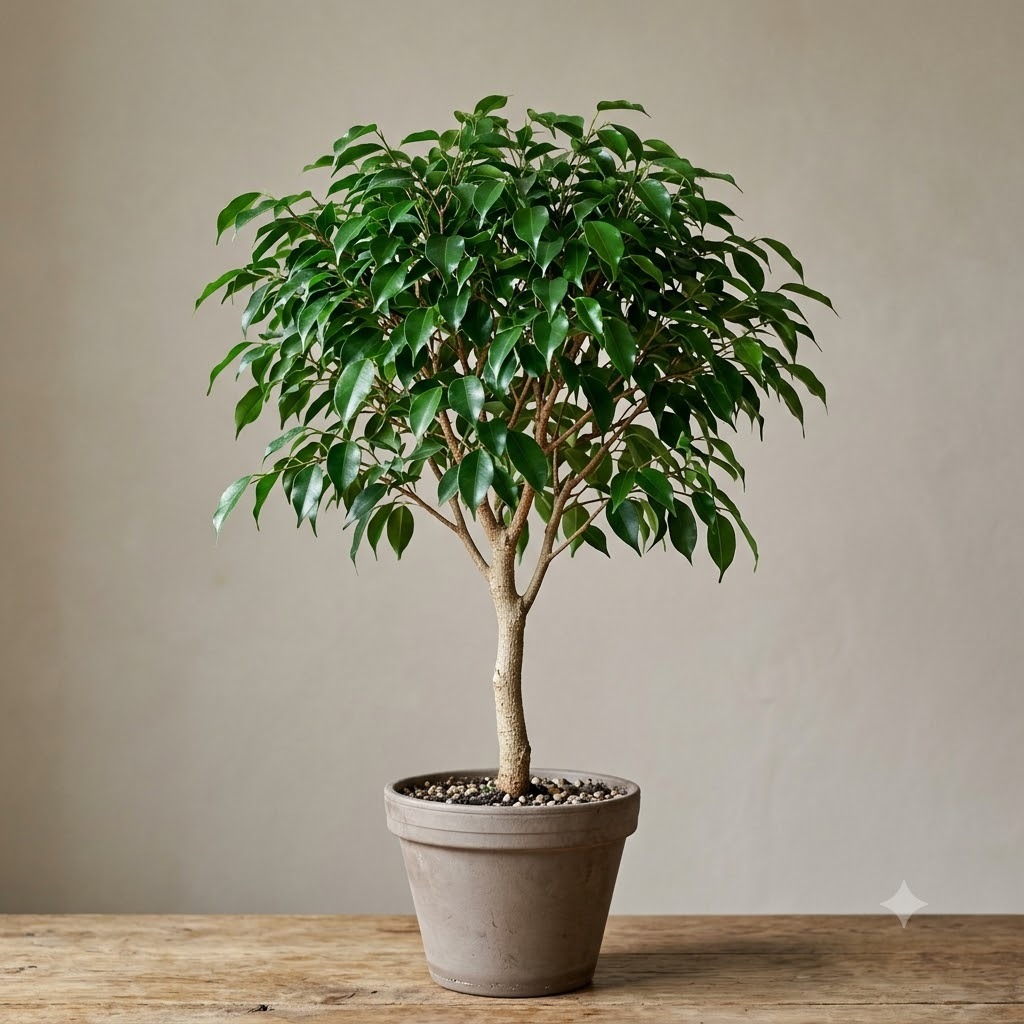
The Ficus Benjamina - the "Weeping Fig" - is one of the classic tree-form houseplants, a graceful indoor tree with a slender trunk and a cascade of small, glossy, pointed leaves.
🗓️ Last reviewed: July 2026
Overview
The Ficus Benjamina - the "Weeping Fig" - is one of the classic tree-form houseplants, a graceful indoor tree with a slender trunk and a cascade of small, glossy, pointed leaves. For decades it has been a fixture of homes, offices, and shopping-mall planters, prized for its elegant shape and its ability to grow into a real indoor tree. It has a reputation for being dramatic: move it, chill it, or change its routine and it responds by dropping leaves, sometimes alarmingly. But this is bark worse than bite. Once a Weeping Fig is settled in a bright, stable spot and left alone, it is a long-lived, handsome, and rewarding plant that can grace a room for many years.
Origin & Natural Habitat
Ficus Benjamina is native to a broad swath of tropical and subtropical Asia and Australia, from India through Southeast Asia to northern Australia. In the wild it grows into a large, spreading tree, often with elegant weeping branches and, in some conditions, dramatic aerial and buttress roots. It thrives in warm, bright, humid conditions and is used to stable tropical warmth year-round.
This background explains its indoor temperament. As a tree adapted to consistent tropical light and warmth, it dislikes sudden change - and a plant that in nature simply sheds and regrows leaves in response to seasons will do the same, more suddenly, when startled by a new location or a cold draft indoors. The lesson is stability: find it a good permanent home and resist the urge to move it around.
Appearance
The Weeping Fig is grown as a small indoor tree. It has a woody trunk - often sold braided or trained into a standard - topped with a dense, arching canopy of small, oval, pointed leaves, each 5-12 cm long, glossy and deep green (or, in variegated forms, edged and marbled with cream). The gently drooping branch tips give it its "weeping" name.
Key features:
- Tree form: a slender woody trunk with a full leafy crown, sometimes braided or trained.
- Small glossy leaves: dense, fine-textured foliage that catches the light.
- Weeping branches: softly arching, pendulous branch tips.
- Variegated forms: cultivars such as 'Starlight' with striking cream-and-green leaves.
Indoors it commonly reaches 1-2 meters and can be kept smaller with pruning or grown taller over years. It can be shaped and even trained as an indoor bonsai.
Why People Love It - Qualities & Benefits
- Elegant tree shape: it brings the architecture of a real tree indoors, filling vertical space with grace.
- Long-lived: a settled Weeping Fig can thrive for many years, becoming a lasting feature of a room.
- Handsome dense foliage: the fine, glossy leaves give a lush, refined look.
- Shapeable: it responds well to pruning and can be trained, braided, or grown as bonsai.
- Greenery benefits: as a large leafy plant it adds humidity and a calming green presence, and a mature indoor tree makes a genuine design statement.
Care
Light
Bright light is essential - the Weeping Fig wants plenty of it. A position near a bright window with some gentle direct morning sun, or bright indirect light for much of the day, keeps it full and healthy. In too little light it thins out, drops leaves, and grows leggy. Once you find a bright spot it likes, leave it there - sudden changes in light are a top cause of leaf drop.
Watering
Water thoroughly when the top 3-5 cm of soil has dried, then let excess drain away. It likes consistency - both drying out completely and sitting in soggy soil will trigger leaf drop. In a bright spot in summer this is often about weekly; in winter, less. Check the soil rather than following a fixed schedule, and avoid dramatic swings between bone dry and waterlogged.
Soil & Potting
Use a good-quality, well-draining potting mix. Always use a pot with drainage holes. A slightly snug pot is fine and helps keep the tree in scale.
Humidity & Temperature
It appreciates moderate to higher humidity and warmth of 18-27 °C. It strongly dislikes cold drafts, sudden temperature drops, and being placed near doors, drafty windows, or heating and cooling vents - all of which cause leaf drop. Keep it warm and stable, and above about 15 °C.
Feeding
Feed monthly through spring and summer with a balanced liquid houseplant fertilizer at half strength. Stop feeding in late autumn and winter when growth slows.
Repotting
Repot every 2-3 years in spring when roots fill the pot, moving up one pot size. It is fine being somewhat root-bound, which helps limit its size. To keep a plant the same size, refresh the top soil rather than potting up.
Pruning
It tolerates pruning well and can be shaped to keep it dense and in proportion. Prune in spring or summer. Note that the cut stems ooze a milky, sticky white sap - see the safety note below.
Propagation
Ficus Benjamina is propagated from stem cuttings. In spring or summer, take a healthy tip cutting about 10-15 cm long, remove the lower leaves, and root it in moist, well-draining potting mix (rooting hormone helps) kept warm and humid, or start it in water. Rooting can be slow and success is variable, so take several cuttings to improve your odds. The cut ends release milky sap, so wash your hands afterward. Once the cutting has a healthy root system and shows new growth, pot it on.
Common Problems & Pests
- Leaf drop: the signature Ficus complaint - triggered by moving the plant, changes in light, cold drafts, over- or underwatering, or general stress. Some drop after a move is normal; keep conditions stable and it recovers.
- Yellowing leaves: often overwatering or soggy soil, but also possible from underwatering or a location change.
- Sparse, leggy growth: not enough light.
- Sticky leaves or floor: often a sign of scale or another sap-sucking pest (honeydew), rather than the plant itself.
- Pests: scale, mealybugs, spider mites, and thrips can all appear. Inspect regularly, isolate the plant, wipe the leaves, and treat with insecticidal soap or neem oil.
Toxicity & Safety
Toxic to cats and dogs if ingested, and irritating to people. The milky white sap contains latex-like compounds that can irritate the mouth and digestive tract if chewed and can cause skin irritation on contact, especially for people with latex sensitivities. It is not usually life-threatening, but keep it away from pets and small children who chew leaves, and wear gloves or wash your hands when pruning or taking cuttings.
Pros & Cons
Pros
- Elegant, real indoor-tree form.
- Long-lived and rewarding once settled.
- Dense, refined, glossy foliage.
- Shapeable - prunes, braids, and bonsais well.
- A timeless, classic houseplant.
Cons
- Drops leaves when moved or stressed.
- Needs bright light and a stable spot.
- Sap is irritating and stains.
- Toxic to pets if chewed.
- Can be prone to scale and other pests.
Best Suited For
- People who want a graceful indoor tree as a lasting feature.
- Bright rooms with a stable, draft-free spot.
- Owners who can resist moving the plant around.
- Those who enjoy shaping and pruning a plant over time.
Not ideal for dark rooms, drafty or high-traffic doorways, people who like to rearrange their plants often, or homes with pets and toddlers who chew leaves.
FAQ
Why is my Ficus dropping so many leaves? Leaf drop is its stress response - usually to being moved, a change in light, a cold draft, or inconsistent watering. Give it a bright, stable, draft-free spot, keep watering even, and stop moving it. It should recover and releaf.
Is some leaf drop normal after I bring it home? Yes. A newly bought or newly moved Weeping Fig commonly drops leaves as it adjusts. Keep conditions stable and don't panic - new growth usually follows.
How much light does it need? Plenty - it is a bright-light plant. A spot near a bright window with gentle morning sun or bright indirect light keeps it full. Low light causes thinning and leaf drop.
What is the sticky white sap? It is the plant's natural latex-like sap, released from cuts. It can irritate skin and is toxic if chewed, so wash your hands after pruning and keep it away from pets and children.
Can I keep it small? Yes. Prune it to shape in spring or summer, keep it in a slightly snug pot, and refresh the top soil instead of potting up to limit its size.