Fishbone Cactus (Epiphyllum anguliger)
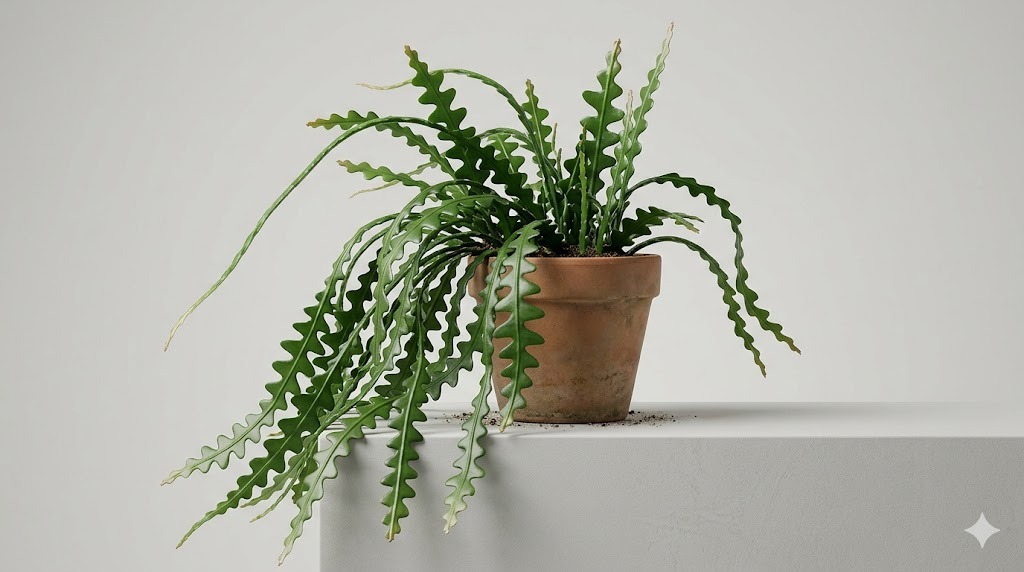
The Fishbone Cactus - Epiphyllum anguliger - is a trailing jungle cactus grown above all for its extraordinary stems: flat, leaf-like, and cut into deep zig-zags that look exactly like the backbone of a fish.
🗓️ Last reviewed: June 2026
Overview
The Fishbone Cactus - Epiphyllum anguliger - is a trailing jungle cactus grown above all for its extraordinary stems: flat, leaf-like, and cut into deep zig-zags that look exactly like the backbone of a fish. Hung in a basket, those stems cascade down in long green ribbons of zig-zag, and it is one of the most architectural, sculptural plants you can grow indoors without any flowers at all. But it does flower. On a mature plant, large, pale, intensely fragrant blooms open at night, usually in autumn, and then fade by morning - a brief, almost secret event that has earned it a small cult following. The most important thing to understand before you buy is what it is not: despite the word "cactus," this is not a desert plant that wants to bake on a sunny sill and be ignored for a month. It is a rainforest epiphyte. Treat it as a jungle plant - bright indirect light, a little more water than a desert cactus, and it is genuinely one of the easiest, most forgiving trailing plants you can own.
Origin & Natural Habitat
Epiphyllum anguliger comes from the tropical rainforests of southern Mexico. In the wild it is an epiphyte: it does not root in the ground but perches up in the trees, growing on branches and in the forks of trunks, with its flattened stems trailing down through the dappled shade of the canopy. It anchors itself in pockets of moss and decayed leaf litter that collect on the bark, and it draws moisture and nutrients from the humid air and the brief tropical rains rather than from deep soil. This is the single fact that explains all of its care. It belongs to the cactus family (Cactaceae), but it sits in the "jungle cactus" group alongside relatives like the Christmas cactus and the orchid cacti - plants that swapped the open desert for the shaded, humid life of the rainforest. The botanical name is descriptive: Epiphyllum means "upon the leaf," because the flowers appear to bloom directly from the leaf-like stems, and the species name anguliger means "angle-bearing," a nod to the deeply notched, angular zig-zag edges that give the plant its common name.
Appearance
Picture long, flat, trailing stems - not round spines like a desert cactus, but broad green ribbons - and along each edge a series of deep, rounded lobes that alternate left and right to form a clean zig-zag, exactly like a fish skeleton. That zig-zag is the whole appeal, and it is unmistakable. The stems are soft and slightly fleshy, mid to deep green, and they branch and cascade as the plant grows, spilling over the side of a pot or basket. There are no leaves in the ordinary sense; the flattened stems do the work of leaves. On a mature, well-grown plant, large flowers appear in autumn - typically white to creamy or pale yellow, several centimeters across, and strongly, sweetly scented. They open after dark and are gone by the next day, which is why so many owners never see them unless they are watching for it.
- Stems: flat, ribbon-like, and trailing, with deeply notched, alternating zig-zag edges that give the classic fishbone silhouette.
- Flowers: large, pale (white to creamy yellow), and highly fragrant, opening at night in autumn on mature plants and fading by morning.
- Texture: soft and slightly fleshy rather than rigid; it holds a little water in the stems like a semi-succulent.
- Growth habit: a trailing epiphyte rather than an upright cactus, which makes it a natural for hanging baskets and high shelves.
Indoors the trailing stems commonly reach around 60-90 cm, and can grow longer in time, hanging in dramatic zig-zag curtains over the edge of a basket.
Why People Love It - Qualities & Benefits
- Striking, sculptural stems: the zig-zag fishbone shape is genuinely unusual, and it carries the whole plant even when it isn't in flower - the headline reason to grow it.
- Fragrant night flowers: a mature plant rewards you with large, sweetly scented blooms that open at night in autumn, a quiet, special event well worth the wait.
- Pet-safe and non-toxic: it is not listed as toxic to cats and dogs, which is a real reassurance for homes with curious animals.
- Perfect for hanging baskets: the natural trailing habit does the styling work for you in a basket or a high spot, spilling down in cascading ribbons.
- Easy and forgiving: for all its drama, it is one of the more low-maintenance trailing plants, tolerating the odd missed watering thanks to its semi-succulent stems.
- Very easy to propagate: a single cutting roots readily, so one plant quickly becomes several or fills out a fuller basket - for free.
- Atmosphere: like most leafy tropicals it adds life and a little humidity to a room. (The popular "air-purifying" claims are real but modest in a normal home; the bigger benefit is psychological, since greenery measurably lifts mood and lowers stress.)
Care
Light
Bright, indirect light is what this plant wants - think of the dappled light it gets up in the canopy, not the open sun of a desert. A spot near an east window, or set back a little from a brighter south or west window, is ideal. It will tolerate medium light and still look fine, but good bright indirect light keeps the growth strong and is what makes flowering possible on a mature plant. The one thing to avoid is harsh, direct midday sun through glass: because the stems are soft and flat, they scorch and bleach in strong sun far more easily than a tough desert cactus would. A little gentle morning sun is welcome; blazing afternoon sun is not. If the stems start to look pale, yellowish, or reddish and washed-out, it is usually getting too much direct light.
Watering
This is where the "cactus" name trips people up. The Fishbone Cactus needs more water than a desert cactus - it is a jungle plant - but it still must not sit soggy. In the growing season, water thoroughly and then let the top few centimeters of the mix dry out before watering again. The flattened stems store a little water, so the plant copes well with the occasional lapse, but constant wetness around the roots is the fast route to rot. Water less often in winter, when growth slows, but do not let it bone-dry out completely the way you might a desert species. The simplest rule: keep it lightly moist and let the surface dry between drinks - wetter than a barrel cactus, drier than a fern. If the stems start to look wrinkled and limp, it is thirsty; if they yellow and go mushy at the base, you have overdone it.
Soil & Potting
Use a light, airy, fast-draining mix that respects its epiphytic roots - the roots need air around them and must never stay waterlogged. A cactus or succulent mix loosened with extra perlite and some orchid bark works very well, or a standard houseplant mix opened up the same way. Many growers add a little coco coir for gentle moisture retention. Always plant into a container with drainage holes.
Humidity & Temperature
Coming from a humid rainforest, it appreciates moderate to higher humidity - it is happy in average room humidity but does even better with a little more, so a pebble tray or a nearby humidifier helps in dry, heated rooms. It likes ordinary warm room temperatures, roughly 18-27 C through the growing season, and dislikes the cold; keep it away from frosty windows and cold drafts. A slightly cooler, drier spell in autumn and early winter (around 12-15 C) can actually help trigger flowering on a mature plant, but protect it from anything close to freezing.
Feeding
Feed every few weeks through spring and summer while it is actively growing, using a balanced liquid fertilizer (or a cactus feed) at half strength. As autumn approaches, a fertilizer slightly higher in phosphorus can encourage blooms on a mature plant. Stop feeding in winter while growth has slowed.
Repotting
Repot infrequently. Like many epiphytes it is quite happy slightly snug in its pot, and being a little root-bound can even encourage flowering, so only move it up every couple of years when it is genuinely crowded. Do it in spring, choose a pot just one size larger, and handle the soft stems gently - they snap more easily than they look. A hanging basket suits its trailing habit best.
How to make it bloom - maturity, light, and a cool autumn rest
Getting a Fishbone Cactus to flower comes down to a few things lining up, and patience is the first. The plant has to be mature - young plants simply will not bloom, no matter what you do, so give it time to grow. Beyond age, three things help. First, good bright indirect light through the year keeps it strong enough to flower. Second, give it a slightly cooler, drier rest in autumn and early winter - dropping the temperature a little and easing off the water for a few weeks mimics the seasonal shift that signals it to set buds. Third, feed it through the growing season and switch to a higher-phosphorus feed as autumn nears. Then leave it be - don't move it once buds form, as this plant can drop buds if it is suddenly relocated or its conditions change. When the flowers come, they open at night and fade by morning, so keep an eye on the buds in autumn or you may sleep through the show.
Propagation
The Fishbone Cactus is one of the easiest plants to propagate, which is a large part of its charm. Take a healthy stem cutting several inches long, then - and this is the one tip that matters - let the cut end dry and callus over for a day or two before planting, so it doesn't rot. Lay or settle the calloused cutting into a moist, well-draining mix (or root it in water if you prefer), and it will put out roots within a few weeks. Because the stems are so willing, you can root several cuttings and pot them up together in one basket to get a full, lush plant quickly rather than waiting for a single stem to fill out. Spring and summer are the best times to take cuttings.
Common Problems & Pests
- No flowers: the most common disappointment, and most often simply because the plant is still too young - it must be mature to bloom. Beyond that, give it good light and a cool, drier autumn rest.
- Wrinkled, limp stems: usually underwatering - the stems are running low on stored water. Give it a thorough drink and it should plump back up.
- Yellowing or mushy stems: typically overwatering and soggy roots; let the mix dry more between waterings and check that the pot drains freely.
- Pale, bleached, or reddish stems: too much direct sun scorching the soft stems - move it out of harsh midday light into bright indirect light.
- Bud drop: buds forming and then falling before opening usually means the plant was moved, drafted, or had its conditions change while in bud - keep it settled and stable once buds appear.
- Soft brown spots: often the result of cold damage or water sitting on the stems in cool conditions; keep it warm and avoid waterlogging.
- Pests: watch for mealybugs (often tucked into the notches of the stems), scale, and spider mites. Isolate the plant and treat with insecticidal soap or neem oil.
Toxicity & Safety
Non-toxic and pet-safe. The Fishbone Cactus (Epiphyllum anguliger) is not listed as toxic to cats, dogs, or humans, which makes it a reassuring choice for homes with curious pets and small children - and a friendly one, since unlike most cacti it has no sharp spines to worry about either. This is a care note rather than an invitation to eat it - it is an ornamental plant, not food - but a nibbling cat or dog will not be poisoned by it, and that combination of non-toxic and spineless is one of its quiet strengths.
Pros & Cons
Pros
- Striking, sculptural zig-zag stems that look good even out of bloom.
- Fragrant night-blooming flowers on a mature plant.
- Non-toxic, pet-safe, and spineless - safe around animals and children.
- Ideal trailing habit for hanging baskets and high shelves.
- Easy, forgiving, and very simple to propagate.
Cons
- Will not flower until the plant is mature, which takes patience.
- Flowers are brief - they open at night and fade by morning.
- Soft stems scorch in harsh direct sun and can snap if handled roughly.
- Can drop buds if moved or disturbed while in bud.
- The "cactus" name misleads people into underwatering or sun-baking it.
Best Suited For
- People who want an unusual, sculptural trailing plant with real personality.
- Homes with curious pets, thanks to its non-toxic, spineless nature.
- Bright spots and hanging baskets where the zig-zag stems can cascade.
- Patient growers happy to wait for, and watch for, the night flowers.
Not ideal for dark rooms, hot sunny sills treated like a desert, or anyone expecting big, constant, daytime blooms from the start.
FAQ
Why won't my fishbone cactus flower? Most often because it is still too young - this plant has to be mature before it will bloom, so it can take a few years. Once it is established, give it good bright indirect light and a slightly cooler, drier rest in autumn to encourage buds, and be patient.
How often should I water a fishbone cactus? More than a desert cactus, less than a fern. Water thoroughly, then let the top few centimeters of mix dry out before watering again, and ease off in winter. The semi-succulent stems forgive the odd missed watering, but they rot if kept constantly soggy.
Is the fishbone cactus safe for cats and dogs? Yes. Epiphyllum anguliger is not listed as toxic to cats and dogs, and it has no spines, so it is a safe and friendly choice for pet households - though it is still an ornamental plant, not something to be eaten.
Why are the stems wrinkled and limp? That is usually thirst - the stems have used up their stored water. Give the plant a good thorough drink and they should plump back up within a day or two. If they are yellow and mushy instead, that is the opposite problem, overwatering.
Does it really need a cool period to bloom? A slightly cooler, drier spell in autumn and early winter helps a mature plant set buds, mimicking the seasonal change it gets in the wild. Keep it away from anything near freezing, but a modest dip in temperature and watering for a few weeks can make the difference.