Goldfish Plant (Nematanthus / Columnea)
The Goldfish Plant earns its name the moment it flowers.
🗓️ Last reviewed: July 2026
Overview
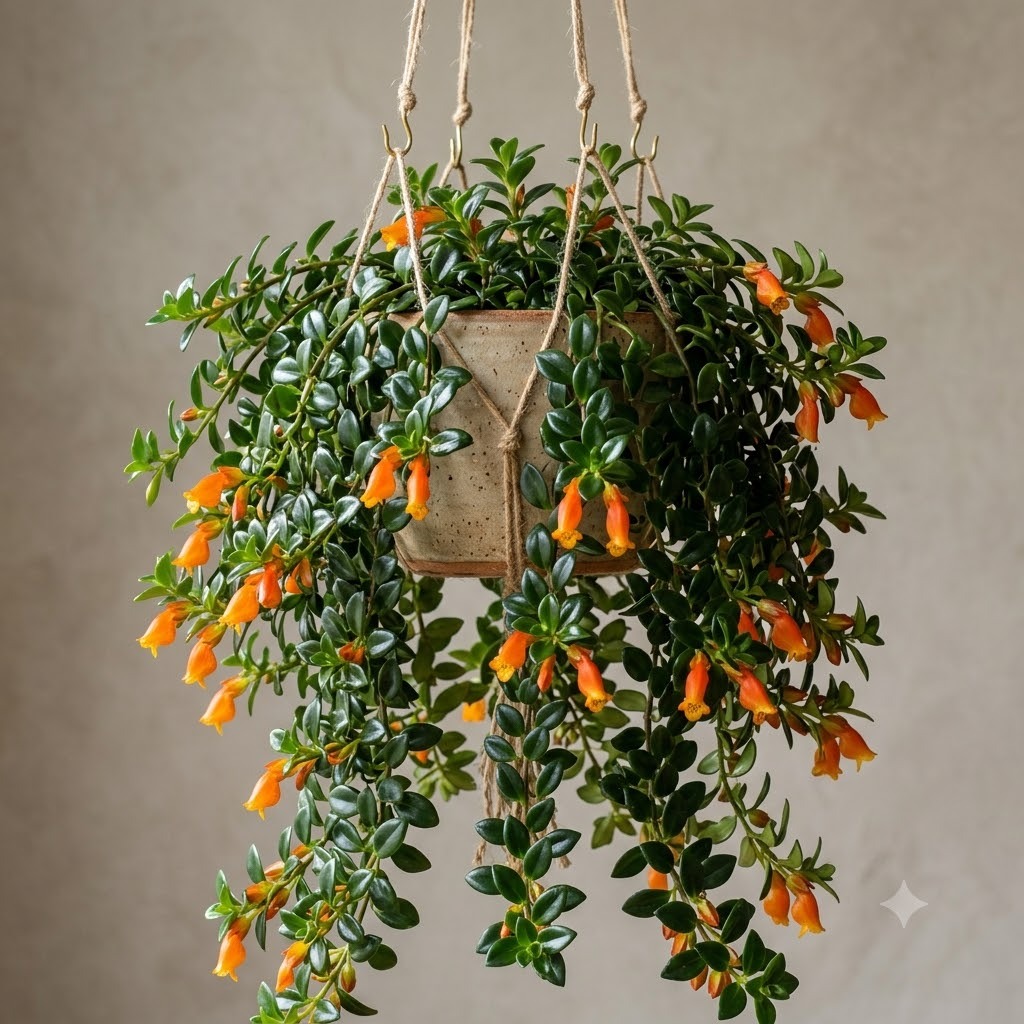
The Goldfish Plant earns its name the moment it flowers. Its small, tubular orange-red blooms pucker at the mouth into a shape that looks uncannily like a tiny leaping goldfish, scattered among cascading stems of thick, glossy green leaves. It is a trailing tropical from the same family as the African violet, and it makes a wonderful hanging or shelf plant - lush and full when happy, and generous with its cheerful flowers. It has a mild reputation for being fussy, but the truth is simpler: give it bright indirect light, steady moisture, and a bit of humidity, and it will bloom for months. This guide covers both the common Goldfish Plant genera sold under the name, Nematanthus and Columnea, which want near-identical care.
Origin & Natural Habitat
Goldfish Plants come from the tropical forests of Central and South America - Brazil and the surrounding region for many Nematanthus, and Central America and the Caribbean for many Columnea. In the wild they grow mostly as epiphytes: perched on tree branches rather than in the ground, their roots clinging to bark and moss while their stems trail down toward the light.
That lifestyle explains their care. As epiphytes they are used to bright but filtered light under the canopy, air moving around their roots, and moisture that comes and goes rather than sitting constant - roots that stay waterlogged rot, but roots that dry out completely suffer. They belong to the Gesneriad family, the same group as African violets and Streptocarpus, which is why they share a love of warmth, humidity, and gentle light.
Appearance
The Goldfish Plant is a trailing, bushy plant with slender stems that arch and cascade over the edge of a pot - ideal for hanging baskets.
- Leaves: small, thick, glossy dark green ovals, often somewhat waxy; some Columnea forms have a reddish underside or a slightly fuzzy texture.
- Flowers: the signature feature - small pouched tubular blooms in bright orange, red-orange, or gold, with a pinched "mouth" that gives the leaping-goldfish look. A well-grown plant can flower heavily and repeatedly through the year.
- Habit: trailing and cascading, growing fullest when pinched to encourage branching rather than long bare stems.
- Size: stems commonly trail 30-90 cm, making a generous, spilling display.
Why People Love It - Qualities & Benefits
- Charming, playful flowers: the goldfish-shaped blooms are a genuine talking point and delight children and guests.
- Long bloom season: in good conditions it flowers on and off for much of the year, not just a brief window.
- Beautiful trailing form: it makes an excellent hanging-basket or high-shelf plant, spilling glossy green with pops of orange.
- Compact and non-toxic: it stays a manageable size and is considered pet-safe, a real plus for animal households.
- Rewarding to shape: responds well to pinching, so you can groom it into a full, lush cascade.
Care
Light
Bright, indirect light is the sweet spot - an east window, or set back from a bright south or west window. Good light is what drives flowering: too little and you get lush leaves but few or no blooms. Avoid harsh direct midday sun, which scorches and bleaches the foliage. If it refuses to flower, more (indirect) light is usually the answer.
Watering
Keep the soil lightly and evenly moist during active growth, watering when the top 2-3 cm feels dry, then letting excess drain. It dislikes both extremes - never let it sit in water, but also never let the root ball dry out to bone. In winter, ease off and let it dry a little more between waterings. Lukewarm water is kinder than very cold water to these tropical roots.
Soil & Potting
Use a light, well-draining mix - a peat- or coir-based potting mix loosened with perlite, or an African violet mix, suits it well. It appreciates a slightly snug pot and drainage holes. Its epiphytic roots want air as much as moisture.
Humidity & Temperature
It loves humidity - aim for 50% or higher. Dry indoor air causes bud drop and leaf-tip browning, so a humidity tray, a grouping of plants, or a humid room like a bright bathroom helps. It enjoys 18-27 C and dislikes cold drafts and temperatures below about 13 C.
Feeding
Feed every 2-4 weeks through spring and summer with a balanced or bloom-supporting liquid fertilizer at half strength to fuel flowering. Stop or reduce feeding in winter.
Pinching - the secret to a full plant
Pinch back the growing tips regularly. This is the single best thing you can do for its shape: pinching forces the stems to branch, turning a few long straggly trailers into a dense, bushy cascade - and more stem tips means more flowers.
Propagation
The Goldfish Plant propagates easily from stem cuttings, and taking cuttings pairs perfectly with pinching. Snip a healthy stem tip a few centimeters long, remove the lowest leaves, and root it in a small pot of moist, light mix (or in water). Keep it warm, humid, and out of direct sun; roots usually form within a few weeks. Planting several cuttings together in one pot quickly builds a full, bushy plant.
Common Problems & Pests
- No flowers: the most common complaint - usually too little light, or missing a slightly cooler, drier winter rest that some plants need to set buds. More bright indirect light is the first fix.
- Bud or flower drop: typically low humidity, dry soil, cold drafts, or a sudden change in conditions.
- Brown leaf tips or edges: dry air or inconsistent watering.
- Leggy, bare stems: not enough light and not enough pinching - cut back hard and it will re-bush.
- Leaf drop: overwatering, cold, or shock.
- Pests: watch for aphids (often on new buds), spider mites (dry conditions), and mealybugs. Rinse or wipe the plant and treat with insecticidal soap.
Toxicity & Safety
Considered non-toxic and pet-safe. The Goldfish Plant is generally regarded as safe around cats, dogs, and children, with no known serious toxicity. As with any plant, eating large amounts could cause mild stomach upset, so it is still sensible to discourage nibbling - but it is a good choice for households with pets.
Pros & Cons
Pros
- Unique, playful goldfish-shaped flowers.
- Long, repeated blooming in good conditions.
- Beautiful trailing habit for baskets and shelves.
- Non-toxic and pet-friendly.
- Very easy to propagate and shape.
Cons
- Needs decent humidity; sulks in dry air.
- Won't flower without enough bright light.
- Goes leggy without regular pinching.
- Fussier about consistent moisture than a succulent.
- Buds can drop with sudden changes.
Best Suited For
- Plant lovers who want flowers, not just foliage.
- Hanging baskets, high shelves, and bright bathrooms.
- Homes with pets, thanks to its non-toxic status.
- Owners willing to pinch and groom for a full look.
Not ideal for very dry, low-light rooms, or anyone who wants a completely hands-off plant.
FAQ
Why won't my Goldfish Plant flower? Most often not enough bright, indirect light. Good light drives blooming. Some plants also flower better after a slightly cooler, drier winter rest, and regular feeding in the growing season helps.
Nematanthus or Columnea - which do I have? Both are sold as "Goldfish Plant" and want the same care, so it rarely matters day to day. Nematanthus typically has thicker, waxier leaves and pouched blooms; Columnea often has softer or fuzzier leaves and can have longer, more tubular flowers.
Why are the flower buds falling off? Bud drop usually points to dry air, dry soil, cold drafts, or a sudden move. Steady moisture, higher humidity, and a stable spot fix it.
How do I stop it from getting leggy? Pinch the growing tips regularly and give it enough light. Pinching forces branching, and you can root the pieces you remove.
Is it safe for my cat? Yes - the Goldfish Plant is considered non-toxic and is a good pick for pet households, though it is still best to discourage chewing.