Gynura (Purple Passion Plant)
The Purple Passion Plant (Gynura aurantiaca) is one of those houseplants that people fall for the moment they touch it.
🗓️ Last reviewed: July 2026
Overview
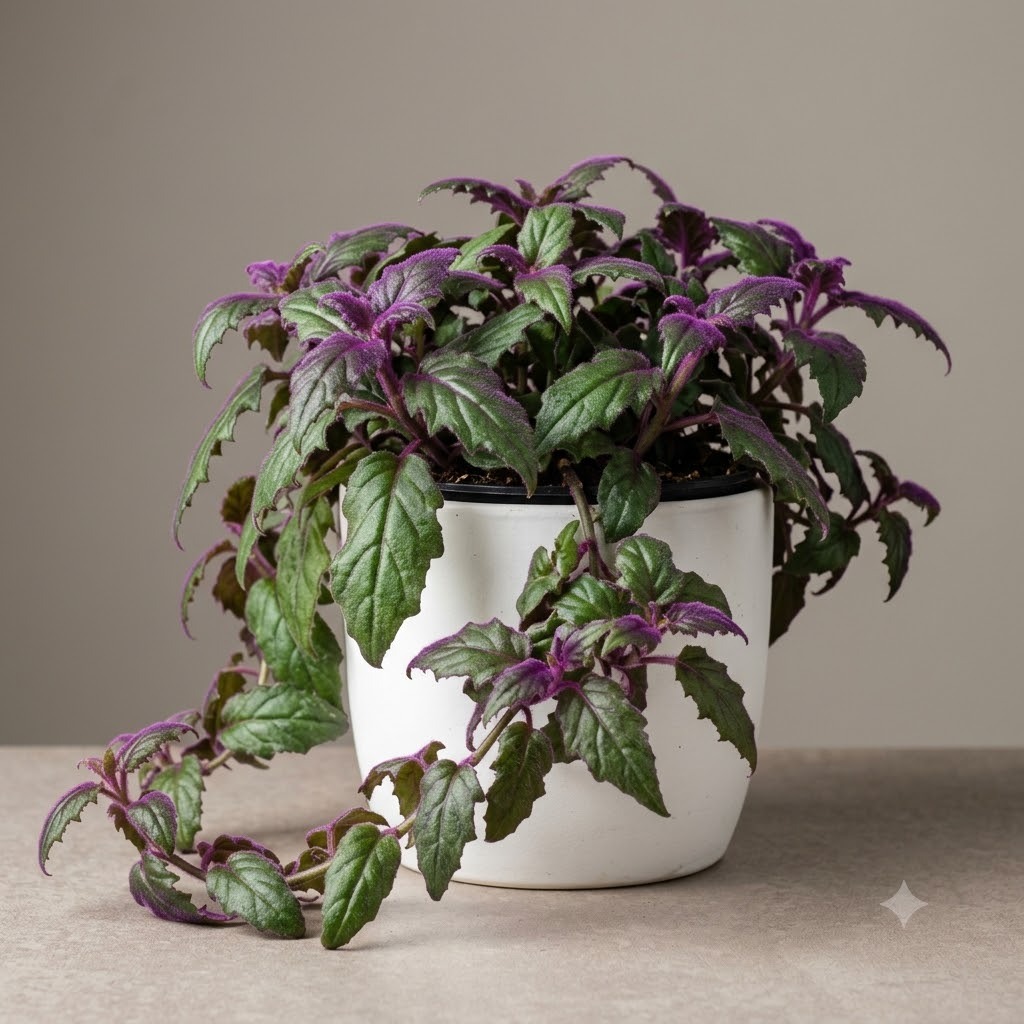
The Purple Passion Plant (Gynura aurantiaca) is one of those houseplants that people fall for the moment they touch it. Its green leaves are covered in a dense coat of fine purple hairs that catch the light and give the whole plant a soft, velvety, iridescent purple sheen - unlike almost anything else on the windowsill. It is fast-growing, easy, inexpensive, and cheerful, trailing happily from a hanging pot or shelf. It is also a bit of a fast-lived, throwaway plant compared to a slow, stately palm or orchid: it grows quickly, tends to get leggy, and is easiest to keep looking its best by regularly pinching it back and rooting fresh cuttings. If you want a lush, unusual, richly colored plant that rewards a beginner with quick results, the Purple Passion is a delight.
Origin & Natural Habitat
Gynura aurantiaca is native to the tropical regions of Southeast Asia, particularly Indonesia. There it grows as a soft-stemmed trailing and scrambling plant in warm, humid, partly shaded conditions among other tropical vegetation.
Its tropical origins explain its preferences indoors: it likes warmth, does not tolerate cold or frost, appreciates humidity, and wants bright light to develop its best purple color - but not harsh, scorching sun. The purple hairs themselves are thought to help protect the leaves and reflect intense light in its native habitat, which is why good light makes the color richer.
Appearance
The Purple Passion is all about that velvety color:
- Leaves: oval, toothed, softly quilted green leaves densely covered in fine purple-violet hairs, giving a fuzzy, shimmering purple appearance, especially on new growth and along the veins and edges.
- Habit: a soft-stemmed trailing and scrambling plant that spills over the edge of a pot or climbs a small support.
- Growth: fast and vigorous, quickly filling a hanging basket.
- Flowers: it can produce small orange-yellow flowers, but most growers pinch these off - they have an unpleasant smell and signal the plant to decline.
Young, well-lit, regularly pinched plants look full and intensely purple. Neglected ones stretch into thin, sparse, leggy stems with weaker color.
Why People Love It - Qualities & Benefits
- Unique velvety purple color: the shimmering purple sheen is genuinely unusual and eye-catching among houseplants.
- Fast and rewarding: it grows quickly, giving beginners visible, satisfying progress.
- Easy and forgiving: undemanding as long as it gets enough light and warmth.
- Great trailing plant: perfect for hanging pots, shelves, and plant stands where it can cascade.
- Effortless to propagate: cuttings root almost instantly, so it is very easy and cheap to keep fresh and share.
Care
Light
Bright, indirect light is ideal, with maybe a little gentle morning sun. Good light is what develops the rich purple color - in low light the plant grows greener, thinner, and leggier, and the velvety sheen fades. Avoid harsh, direct midday sun, which can scorch the soft leaves. If the purple is fading, give it more light.
Watering
Water thoroughly when the top 2-3 cm of soil dries, then let excess drain away. It likes to stay lightly moist but not soggy, and it will droop dramatically when thirsty - then perk back up quickly once watered. Take care when watering: it is best to water the soil rather than the leaves, because water sitting on the fuzzy foliage can cause spotting or rot. Never let the pot sit in standing water.
Soil & Potting
Use a standard well-draining potting mix with a little added perlite. Always use a pot with drainage holes.
Humidity & Temperature
As a tropical plant it enjoys moderate to high humidity, though it does fine in average room conditions. It likes warmth of 18-24 °C and dislikes cold drafts and temperatures below about 12 °C.
Feeding
Feed monthly through spring and summer with a balanced liquid houseplant fertilizer at half strength. Reduce feeding in autumn and winter.
Pinching - the key to a full, bushy plant
This is the single most important tip for keeping a Purple Passion attractive. Left alone, it grows into long, bare, leggy stems. Regularly pinch out the growing tips to force the plant to branch, staying dense, compact, and bushy. Every tip you pinch is also a free cutting. When a plant eventually gets too leggy and tired, the best move is to start fresh from cuttings rather than nurse the old one.
On flowering
The small orange flowers smell unpleasant and mark the beginning of the plant's decline. Most growers simply pinch off the flower buds as they appear to keep the plant vigorous and focused on foliage.
Propagation
The Purple Passion is one of the easiest plants of all to propagate. Take a stem cutting a few centimeters long, ideally just below a leaf node, and place it in water or directly into moist soil. Roots form within a week or two. Because the plant naturally becomes leggy over time, propagation is not just easy but the normal way to keep a fresh, full specimen going - pinch, root, repeat.
Common Problems & Pests
- Fading purple / green leggy growth: not enough light. Move to a brighter spot and pinch back.
- Leggy, sparse stems: natural with age and low light - pinch regularly, and restart from cuttings when it gets tired.
- Leaf spots or rot: often from water sitting on the fuzzy leaves. Water the soil, not the foliage.
- Drooping: usually thirst - it recovers quickly after watering, though repeated wilting stresses the plant.
- Smelly orange flowers: a sign the plant is maturing and starting to decline. Pinch off the buds and take fresh cuttings.
- Pests: watch for aphids on new growth, plus mealybugs and spider mites. Isolate and treat with insecticidal soap or neem oil, taking care with the delicate hairy leaves.
Toxicity & Safety
Gynura aurantiaca is generally regarded as non-toxic to cats, dogs, and humans, and it is not listed among the plants known to cause poisoning. This makes it a fairly safe choice for households with pets and children. As with any plant, eating a large amount of foliage could cause mild stomach upset, so it is still wise to keep curious pets and toddlers from nibbling the leaves.
Pros & Cons
Pros
- Unique, striking velvety purple foliage.
- Fast-growing and rewarding for beginners.
- Extremely easy to propagate.
- Great trailing plant for hanging pots and shelves.
- Non-toxic and reasonably pet-safe.
Cons
- Gets leggy quickly without regular pinching.
- Purple color fades in low light.
- Fuzzy leaves spot or rot if watered from above.
- Relatively short-lived - best refreshed from cuttings.
- Flowers smell unpleasant and signal decline.
Best Suited For
- Beginners who want fast, colorful, rewarding results.
- Bright spots, hanging pots, and shelves where it can trail.
- People who enjoy pinching, shaping, and propagating plants.
- Pet-owning households wanting a safe, unusual trailing plant.
Not ideal for dim rooms, hands-off growers who never prune, or anyone wanting a single long-lived permanent specimen.
FAQ
Why is my Purple Passion losing its purple color? Not enough light. The rich purple sheen only develops in bright light - move it somewhere brighter and pinch back the leggy growth.
Why is it getting so long and bare? That is the plant's natural habit. Pinch out the growing tips regularly to keep it bushy, and start fresh from cuttings when it becomes too leggy.
Should I let it flower? Most people don't. The small orange flowers smell bad and mark the start of the plant's decline, so growers usually pinch off the buds to keep the foliage vigorous.
How do I water it without ruining the leaves? Water the soil directly rather than the fuzzy leaves - water sitting on the hairs can cause spotting or rot.
How do I make more plants? Take a short stem cutting and put it in water or moist soil - it roots within a week or two. It is one of the easiest plants to propagate.