Hatiora (Easter Cactus)
The Easter Cactus (Hatiora gaertneri, sometimes sold as Rhipsalidopsis gaertneri or Schlumbergera gaertneri) is the spring-flowering cousin of the more famous Christmas Cactus.
🗓️ Last reviewed: July 2026
Overview
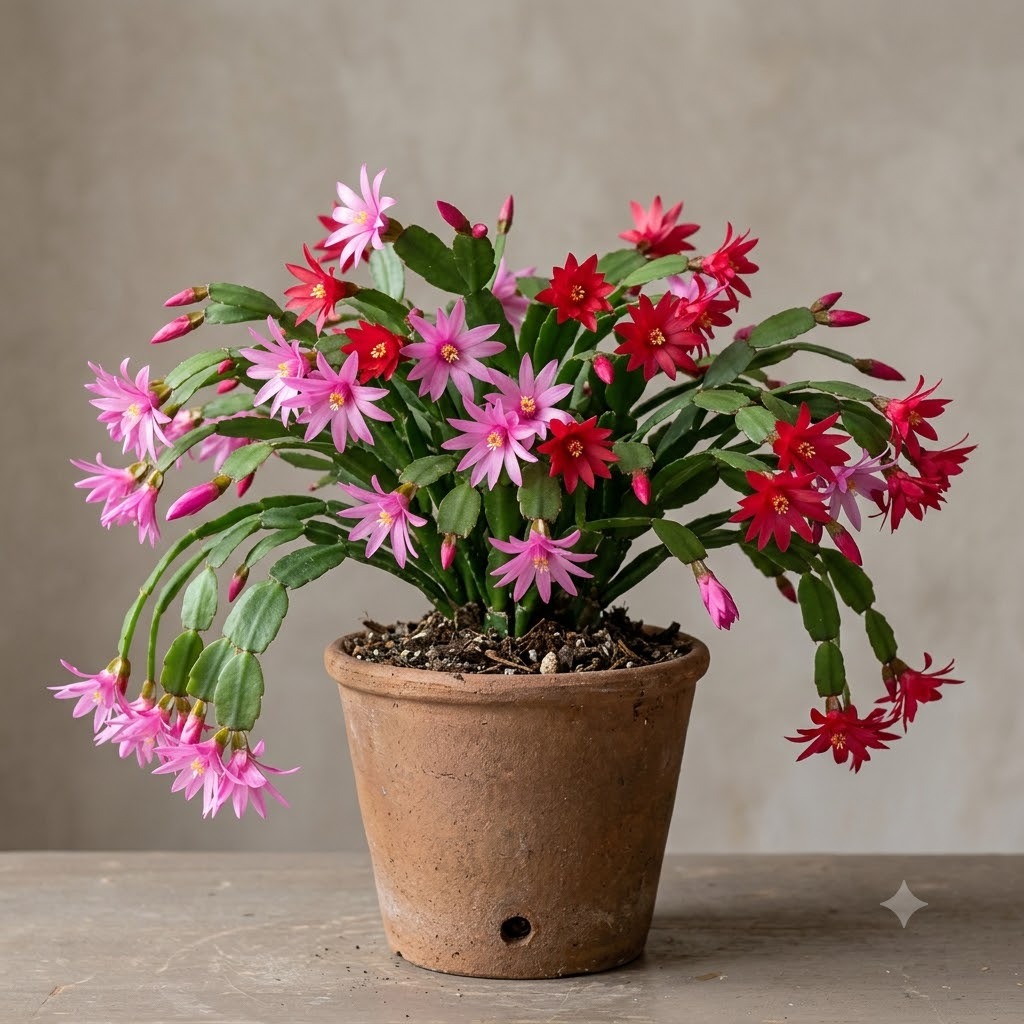
The Easter Cactus (Hatiora gaertneri, sometimes sold as Rhipsalidopsis gaertneri or Schlumbergera gaertneri) is the spring-flowering cousin of the more famous Christmas Cactus. It is a jungle cactus, not a desert one - a soft, arching plant made of flat, segmented green stems that erupt each spring into a crown of vivid star-shaped flowers. Where the Christmas Cactus blooms in midwinter with drooping tubular flowers, the Easter Cactus waits until early spring and opens neat, symmetrical, many-petalled stars. It is a rewarding, non-toxic houseplant that asks for a little patience around bloom time but is otherwise easygoing.
Origin & Natural Habitat
Hatiora comes from the coastal mountain rainforests of southeastern Brazil, where it grows as an epiphyte - perched on tree branches and in the crooks of mossy trunks rather than rooted in the ground. Up in the canopy it lives in filtered, dappled light, high humidity, and constant air movement, with its roots in a thin, fast-draining pocket of leaf litter rather than heavy soil.
That habitat explains everything about its care. This is not a plant that wants baking sun and bone-dry soil like a desert cactus. It wants bright but gentle light, moisture that drains quickly, and humidity in the air. Understanding it as a "jungle cactus" is the key to keeping it happy.
Appearance
The body of the plant is made of flattened, fleshy stem segments joined end to end, forming arching, trailing chains. Each segment is a soft green paddle with slightly scalloped or bristly edges - unlike the pointed, clawed segments of a Christmas Cactus, the Easter Cactus segments are more rounded and even, often with tiny brownish bristles at the joints.
- Flowers: the main event. In spring the tips of the segments produce star-shaped, multi-petalled blooms that open flat and symmetrical, most often in shades of red, pink, orange, coral, salmon, and white.
- Growth habit: arching and then trailing as it matures, which makes it a natural choice for a raised pot, shelf, or hanging basket.
- Size: indoors it typically forms a mounding, cascading plant around 30 cm across over several years, growing slowly.
Why People Love It - Qualities & Benefits
- Spring color: it flowers when many other houseplants are just waking up, bringing a burst of bright stars in early spring.
- Non-toxic: safe around cats, dogs, and children, which sets it apart from many popular houseplants.
- Long-lived: a well-treated Easter Cactus can live and rebloom for decades, often passed between family members.
- Compact and tidy: it stays small and gentle, suited to shelves and smaller homes.
- Distinctive flowers: the flat, geometric star shape is genuinely different from most flowering houseplants.
Care
Light
Bright, indirect light is ideal - the dappled light it would get in the forest canopy. An east-facing window or a spot near a bright window shielded from direct rays is perfect. Avoid harsh direct summer sun, which bleaches and reddens the segments and can scorch them. Too little light and the plant survives but is reluctant to flower.
Watering
Keep the soil lightly and evenly moist during active growth and flowering, letting the top of the soil dry slightly between waterings - but never let it dry out completely the way a desert cactus would, and never leave it standing in water. It stores water in its segments, so overwatering and soggy soil cause rot at the base. Reduce watering after flowering finishes and again in the cool rest period.
Soil & Potting
Use a light, fast-draining mix - a cactus or orchid-type blend loosened with extra bark, perlite, and a little coco coir suits its epiphytic roots. Always use a pot with drainage holes. It likes to be slightly pot-bound and flowers better when its roots are a little snug.
Humidity & Temperature
As a rainforest plant it enjoys humidity above average room levels; occasional misting or a spot in a naturally humid room helps. Normal warm room temperatures suit it in summer. The cool rest period is important (see below).
Feeding
Feed with a diluted balanced houseplant fertilizer every few weeks during active growth after flowering. Stop feeding during the cool resting period before bloom.
Getting it to rebloom - the key step
Like the Christmas Cactus, the Easter Cactus is triggered to set buds by a stretch of cool temperatures and long, uninterrupted nights in late winter. To encourage spring flowering, give it several weeks of cooler conditions with reduced watering and long dark nights, keeping it away from artificial light in the evening. Once buds form, move it back to normal conditions - and then leave it alone. A budding Easter Cactus is notorious for dropping its buds if it is moved, rotated, or shifted between very different light or temperature. Choose its bloom spot and do not disturb it.
Propagation
Propagation is easy and reliable. Gently twist off a section two or three segments long, let the cut end dry and callus for a day or two, then push it upright into slightly moist, well-draining soil. Roots form over a few weeks and the cutting establishes into a new plant. Spring and early summer, after flowering, is the best time to take cuttings.
Common Problems & Pests
- Bud drop: the classic complaint - caused by moving the plant, temperature swings, drafts, or letting it dry out while budding. Keep it stable.
- Shriveled, limp segments: usually underwatering, or root rot from overwatering - check which by feeling the soil and inspecting the base.
- Mushy base or blackened segments: rot from soggy soil - repot into fresh dry mix and cut away affected parts.
- No flowers: not enough of a cool, dark rest period, too little light during growth, or the plant is being disturbed.
- Reddish or bleached segments: too much direct sun; move to gentler light.
- Pests: mealybugs (white fluff in the joints) and occasionally scale or spider mites. Isolate, wipe, and treat with insecticidal soap.
Toxicity & Safety
The Easter Cactus is non-toxic to cats, dogs, and humans. It is one of the safer flowering houseplants to keep around curious pets and children. As with any plant, eating large amounts could cause mild stomach upset simply from the fibrous material, but it contains no known toxic compounds.
Pros & Cons
Pros
- Bright, star-shaped spring flowers when little else is blooming.
- Non-toxic and pet-safe.
- Compact, tidy, and long-lived.
- Easy to propagate.
- Undemanding outside of bloom time.
Cons
- Drops buds easily if disturbed while flowering.
- Needs a deliberate cool, dark rest period to rebloom.
- Slow-growing.
- Sensitive to overwatering and rot.
- Can be confused with the Christmas Cactus at the store.
Best Suited For
- Owners who want a safe, pet-friendly flowering plant.
- People who enjoy a seasonal bloom event and don't mind a little timing effort.
- Bright rooms with indirect light and a stable, undisturbed spot.
- Small spaces and shelves.
Not ideal for anyone who wants year-round flowers with no effort, or a plant they can move around freely while it is budding.
FAQ
How is this different from a Christmas Cactus? Same jungle-cactus family, different timing and flower shape. The Christmas Cactus blooms in winter with drooping tubular flowers and pointed, clawed segments; the Easter Cactus blooms in spring with flat, symmetrical star flowers and rounder segments.
Why won't mine flower again? It almost always needs a proper cool, dark rest period in late winter - cool temperatures, long uninterrupted nights, and reduced water - to trigger buds.
Why are the buds falling off? Bud drop is usually caused by moving or rotating the plant, drafts, temperature swings, or letting it dry out while budding. Pick a spot and leave it undisturbed.
Is it safe for my cat? Yes - it is non-toxic to cats and dogs.
How often should I water it? Keep it lightly moist during growth, letting the top of the soil dry slightly between waterings, and cut back during the cool rest period. Never let it sit in water.