Homalomena (Queen of Hearts)
The Homalomena - sometimes sold as "Queen of Hearts" - is one of those quietly excellent houseplants that deserves far more attention than it gets.
🗓️ Last reviewed: July 2026
Overview
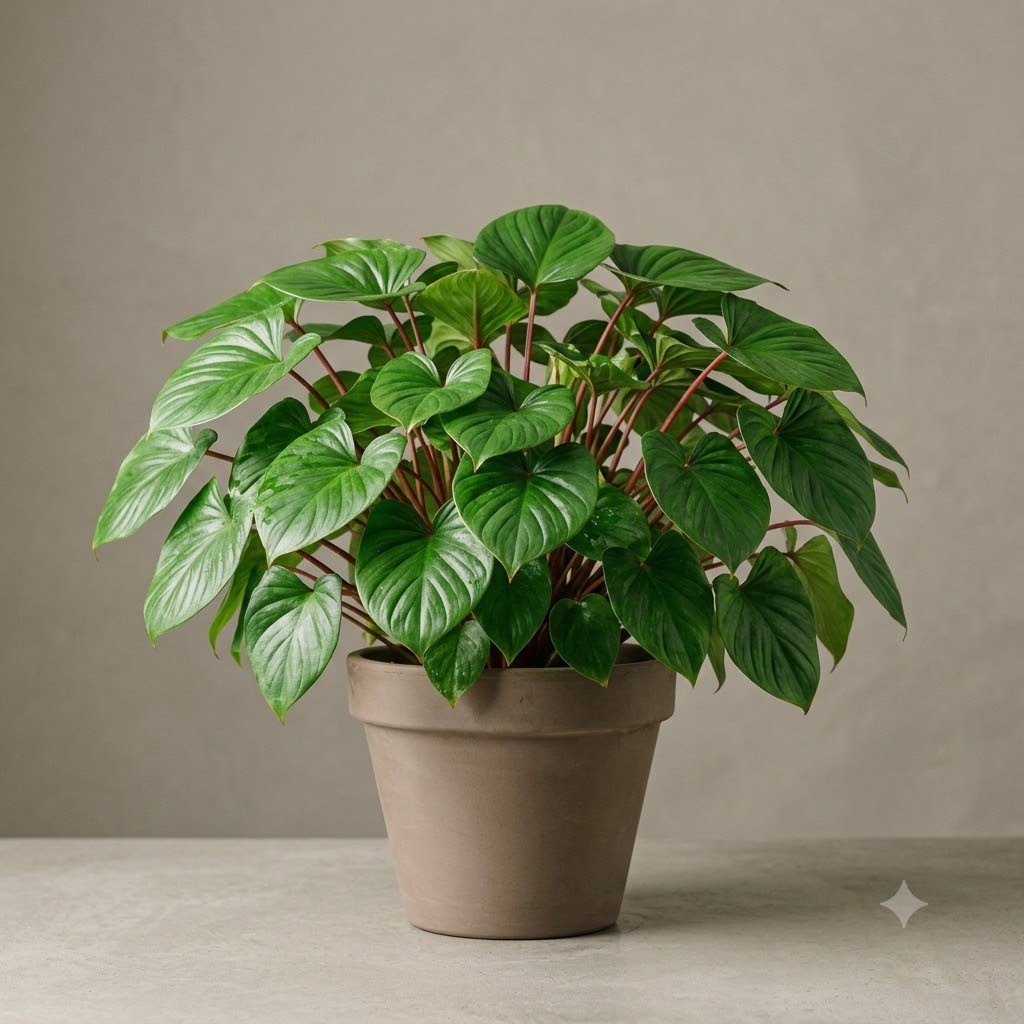
The Homalomena - sometimes sold as "Queen of Hearts" - is one of those quietly excellent houseplants that deserves far more attention than it gets. It is a lush, leafy aroid with glossy, heart-shaped leaves that form a full, rounded clump of foliage. Some varieties, like the popular Homalomena rubescens, add rich red-tinged stems for extra warmth. Best of all, it is genuinely easy to grow: it tolerates lower light, forgives the occasional missed watering, and behaves much like a well-mannered Philodendron. For anyone who loves the tropical, glossy-leaved look but wants something a little less common and refreshingly low-maintenance, Homalomena is a smart, rewarding choice.
Origin & Natural Habitat
Homalomena is a genus of tropical aroids native to the humid rainforests of Southeast Asia and parts of tropical South America. Like its relatives the Philodendrons, Anthuriums, and Aglaonemas, it grows on the shaded forest floor and lower levels of the jungle, in warm, humid conditions with filtered light and moist, rich, well-draining soil.
This background shapes its care and explains why it is so easy indoors. Because it lived in the dappled shade of the understory, it copes well with lower light in the home. Because it is used to steady warmth and humidity, it thrives in normal room conditions and appreciates a little extra moisture in the air. And because it belongs to the aroid family, its overall care closely mirrors that of a Philodendron - a familiar, forgiving routine for most plant owners.
Appearance
The appeal of Homalomena is its foliage. The leaves are glossy, thick, and heart-shaped or arrow-shaped, held on upright to arching stems that rise from the base to form a dense, bushy clump. In the most common green varieties the leaves are a deep, healthy green with a satiny sheen. In Homalomena rubescens and similar types, the leaf stems and undersides carry a warm reddish or burgundy flush, giving the plant a richer, more colorful look.
The plant grows in a clumping, mounding habit rather than climbing or trailing, which keeps it neat and self-contained. Indoors it typically forms a rounded mound, often around 30-60 cm tall and wide, making it a good medium-sized plant for a floor spot or a large tabletop.
Like other aroids it can produce a flower - a small spathe-and-spadix bloom typical of the family - but this is inconspicuous and rarely the reason anyone grows it. The lush, glossy leaves are the whole point.
Why People Love It - Qualities & Benefits
- Lush, glossy foliage: the full clump of heart-shaped leaves gives an instant tropical, jungle-like richness.
- Easy and forgiving: it tolerates lower light and a slightly irregular watering routine, making it low-stress to own.
- Warm color options: red-stemmed varieties like rubescens add a cozy burgundy tone many plant lovers prize.
- Neat clumping shape: it mounds rather than sprawls, staying tidy without staking or training.
- Something a little different: it delivers the popular aroid look while being less common than a Philodendron or Pothos.
- Air and atmosphere: like most large-leaved tropicals, it adds greenery and a calmer feel to a room.
Care
Light
Medium to bright indirect light is ideal, and it tolerates lower light better than many houseplants, which is a big part of its easygoing charm. Avoid harsh direct sun, which can scorch the leaves. In very low light it survives but grows more slowly, so a bright, gently lit spot keeps it looking its fullest.
Watering
Water thoroughly when the top few centimeters of soil have dried, then let the excess drain away completely. It likes to stay lightly moist but never soggy, and like all aroids it is prone to root rot if left sitting in water. When in doubt, wait a day - it forgives a slightly late watering far better than a waterlogged pot. Reduce watering in winter as growth slows.
Soil & Potting
Use a light, well-draining aroid mix: standard potting soil loosened with orchid bark, perlite, and a little coco coir or charcoal so the roots get air. Always use a pot with drainage holes.
Humidity & Temperature
It enjoys average to high humidity and does best above 50%, rewarding extra moisture with fuller, healthier leaves - though it copes with normal room humidity. It likes steady warmth, roughly 18-27 °C, and dislikes cold drafts and temperatures below about 13 °C.
Feeding
Feed monthly through spring and summer with a balanced liquid houseplant fertilizer at half strength. Stop feeding in late autumn and winter when growth slows.
Repotting
Repot every year or two in spring when the clump fills the pot or roots push out the drainage holes. Dividing the clump at repotting time is an easy way to keep it manageable and make new plants.
Propagation
Homalomena is easily propagated by division, which is the simplest and most reliable method. At repotting time, gently remove the plant, and separate the clump into sections, making sure each division has its own roots and several leaves. Pot each section into fresh aroid mix, keep it warm and lightly moist, and it will establish quickly. Because the plant naturally grows as a clump from the base rather than on long vines, division is far more practical than trying to root single-leaf cuttings.
Common Problems & Pests
- Yellowing leaves: usually overwatering or poor drainage. Let the soil dry more between waterings and check the roots.
- Brown crispy leaf edges: low humidity or letting the plant dry out too much.
- Drooping leaves: often thirst, but can also signal soggy, rotting roots - check the soil before assuming.
- Faded or scorched patches: too much direct sun. Move to gentler indirect light.
- Slow, sparse growth: too little light or a need for feeding in the growing season.
- Pests: spider mites, mealybugs, and scale can appear. Isolate the plant, wipe the leaves, and treat with insecticidal soap or neem oil.
Toxicity & Safety
Mildly toxic to cats, dogs, and humans if chewed. Like other aroids, Homalomena contains insoluble calcium oxalate crystals, which cause mouth and throat irritation, drooling, and vomiting if the leaves or stems are eaten. It is not usually life-threatening, but it is best kept out of reach of pets and small children who might chew on the foliage.
Pros & Cons
Pros
- Lush, glossy, heart-shaped foliage.
- Easy, forgiving, and low-maintenance.
- Tolerates lower light well.
- Warm red-stemmed varieties available.
- Neat clumping shape that needs no staking.
- Simple to propagate by division.
Cons
- Mildly toxic to pets and children.
- Prone to root rot if overwatered.
- Prefers extra humidity to look its fullest.
- Flowers are insignificant.
- Less widely available than common aroids.
Best Suited For
- Plant lovers who want an easy, lush aroid that is a little different.
- Rooms with medium or lower indirect light.
- Beginners looking for a forgiving, good-looking foliage plant.
- Anyone who likes the Philodendron style but wants a neat clumping shape.
Not ideal for homes with pets and toddlers who chew everything, very dark rooms, or anyone prone to overwatering.
FAQ
Is Homalomena hard to care for? No - it is one of the easier aroids. It tolerates lower light, forgives an occasional missed watering, and follows the same simple routine as a Philodendron.
Why is it called "Queen of Hearts"? The name refers to its glossy, heart-shaped leaves. Certain varieties, especially the red-stemmed Homalomena rubescens, are commonly sold under that trade name.
How do I propagate it? By division. When repotting, separate the clump into sections, each with its own roots and leaves, and pot them up individually. This is much easier than trying to root cuttings.
Why are the leaves turning yellow? Most often overwatering or poor drainage. Let the top few centimeters of soil dry before watering again, and make sure the pot drains freely.
Is it safe around pets? No, it is mildly toxic. Being an aroid, it contains calcium oxalate crystals that irritate the mouth if chewed, so keep it away from pets and small children.