Majesty Palm (Ravenea rivularis)
The Majesty Palm is one of the most widely sold indoor palms in the world - you have almost certainly seen it stacked in tall pots at garden centers and big-box stores, looking lush, feathery, and impossibly elegant for the price.
🗓️ Last reviewed: July 2026
Overview
The Majesty Palm is one of the most widely sold indoor palms in the world - you have almost certainly seen it stacked in tall pots at garden centers and big-box stores, looking lush, feathery, and impossibly elegant for the price. It is genuinely beautiful: a soft, arching fountain of bright green fronds that instantly softens a room and brings a tropical, resort-like feel. But here is the honest truth that the price tag never tells you - the Majesty Palm is not an easy houseplant. It is a light-hungry, moisture-hungry, humidity-loving swamp palm sold as an easygoing decor plant, and that mismatch is why so many end up brown and crispy within months. Grow it with the demands it actually has, and it can thrive for years. Treat it like a low-light "set and forget" plant, and it will slowly decline. This guide is about giving it what it really wants.
Origin & Natural Habitat
Majesty Palm is native to the island of Madagascar, where it grows along the banks of rivers and streams and in seasonally flooded swampy ground. This origin explains everything about its care. In the wild it grows with its roots in consistently moist, rich soil, under strong tropical sun once it clears the canopy, in warm and very humid air. It is essentially a wetland palm.
The plant sold as a houseplant is almost always a young, fast-grown nursery specimen. In its native habitat Ravenea rivularis can eventually become a tall tree reaching 10 meters or more, but indoors it stays a modest floor plant. The gap between its watery, sun-drenched homeland and the dry, dim living room it usually ends up in is the single biggest reason people struggle with it.
Appearance
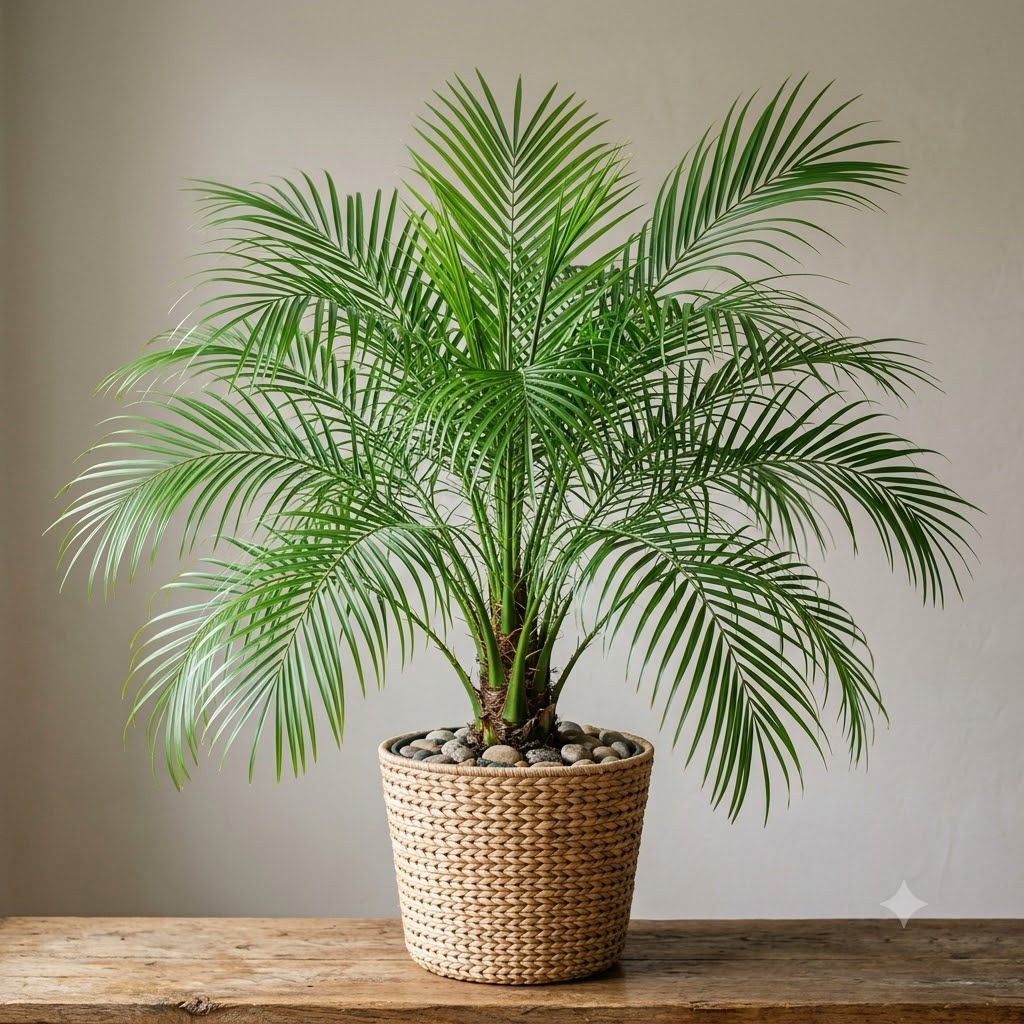
The Majesty Palm has a classic feather-palm silhouette:
- Fronds: long, gracefully arching pinnate fronds made up of many narrow, soft leaflets, giving a fine, feathery texture in a fresh bright green.
- Habit: fronds emerge from a central base and fountain outward and upward, so a healthy plant looks full and symmetrical.
- Multiple stems: garden-center plants are usually several seedlings potted together to look bushy, rather than one thick trunk.
- Size indoors: typically 1.2-2 meters tall over time, growing slowly to moderately depending on light.
A thriving Majesty Palm looks soft, upright, and evenly green. A struggling one shows its stress clearly and quickly: browning frond tips, yellowing lower fronds, and a thin, sparse look.
Why People Love It - Qualities & Benefits
- Instant tropical elegance: few plants bring a lush, airy, resort atmosphere to a room as effectively as a full palm.
- Soft, non-spiky form: unlike some architectural plants, its fronds are gentle and pet-and-child-friendly to brush against.
- Non-toxic: a genuine advantage in homes with cats, dogs, or small children.
- Affordable and available: it is cheap and easy to find, so a big statement plant costs very little upfront.
- Air and atmosphere: like most large-leaved tropicals it adds humidity to a room and contributes to a calmer, greener space. Its main proven benefit is psychological - greenery lowers stress and lifts mood.
Care
Light
This is where most people go wrong. The Majesty Palm wants lots of bright light, including some gentle direct sun. Place it in the brightest spot you have - right beside a bright east or west window, or near a south window with a little softening. In low or medium light it survives for a while but slowly thins, stops pushing new fronds, and declines. If you can only offer a dim corner, this is not the palm for you.
Watering
Coming from riverbanks, it likes consistently moist (not soggy) soil. Water thoroughly when the top 2-3 cm of soil begins to dry, and never let the root ball dry out completely - a bone-dry Majesty Palm browns fast and rarely fully recovers. At the same time, it must not sit in standing water, which rots the roots. The balance is "evenly moist, well drained." Always empty the saucer after watering.
Soil & Potting
Use a rich but free-draining mix: quality potting soil with added perlite and a little bark for aeration. It likes to hold moisture yet drain excess. Always use a pot with drainage holes.
Humidity & Temperature
Humidity is critical and routinely underestimated. Dry indoor air, especially from winter heating, causes the constant brown, crispy frond tips this palm is infamous for. Aim for humidity above 50%, ideally higher - group it with other plants, use a humidifier, or place it in a naturally humid room. It enjoys warm temperatures of 18-27 °C and dislikes cold drafts and anything below about 12 °C.
Feeding
Feed monthly through spring and summer with a balanced liquid fertilizer at half strength. Palms are also prone to magnesium and potassium deficiencies, which show as yellowing fronds - a fertilizer formulated for palms helps. Stop feeding in winter.
Repotting
Repot every 1-2 years in spring, moving up one pot size when roots fill the container. Palms dislike heavy root disturbance, so be gentle and avoid teasing the roots apart.
Grooming
Trim only fully brown fronds at the base. If a frond is partly brown, you can snip the crispy tips following the frond's natural shape, but leave green tissue in place - the plant still uses it.
Propagation
Realistically, the Majesty Palm is not a houseplant you propagate at home. It grows from seed, which is slow, requires warmth and patience, and is impractical for most owners. It cannot be propagated from cuttings, and the multiple stems in a pot are separate seedlings that do not tolerate division well. If you want more palms, buy another plant rather than trying to multiply this one.
Common Problems & Pests
- Brown, crispy frond tips: the classic complaint - almost always low humidity, and sometimes underwatering. Raise humidity and keep the soil evenly moist.
- Yellowing fronds: can be underwatering, nutrient deficiency (magnesium/potassium), or too little light. Lower fronds yellowing with age is normal in small numbers.
- Overall browning and collapse: usually the root ball dried out completely, or the plant is stuck in a dim spot.
- Root rot: from soggy, poorly drained soil - the fronds droop and the base softens.
- Pests: spider mites love the dry air this plant is often kept in (look for fine webbing and stippled, dusty-looking fronds). Also watch for mealybugs and scale. Rinse the fronds, isolate the plant, and treat with insecticidal soap or neem oil.
Toxicity & Safety
The Majesty Palm is non-toxic to cats, dogs, and humans, which makes it a safe choice for households with curious pets and small children. As with any plant, eating large amounts of foliage may cause mild stomach upset simply from the fiber, so it is still sensible to discourage chewing, but there are no dangerous toxins to worry about.
Pros & Cons
Pros
- Beautiful, soft, tropical foliage that fills a room.
- Non-toxic and safe around pets and children.
- Inexpensive and easy to find.
- Adds a lush, resort-like atmosphere.
- Gentle, non-spiky fronds.
Cons
- Demanding despite being sold as easy - not a true beginner plant.
- Needs bright light plus high humidity or the tips brown.
- Prone to spider mites in dry indoor air.
- Cannot be propagated at home.
- Declines fairly quickly when its needs are not met.
Best Suited For
- Bright, sunny rooms with high or manageable humidity.
- Owners willing to run a humidifier or mist routine and water attentively.
- Pet and child-friendly households wanting a large, safe plant.
- Bathrooms or kitchens with good light, where humidity is naturally higher.
Not ideal for dim rooms, very dry heated homes, forgetful waterers, or anyone expecting a low-maintenance "green statue."
FAQ
Why do my Majesty Palm's tips keep turning brown? Almost always low humidity, often combined with the soil drying out too much. Raise the humidity, keep the soil evenly moist, and trim only the crispy tips.
Is the Majesty Palm really that hard? It is not difficult so much as demanding - it needs bright light, consistent moisture, and humid air, all at once. Meet those three and it thrives; skimp on any one and it slowly declines.
How much light does it need? As much bright light as you can give it, including some gentle direct sun. A dim corner will not work for this plant.
Can I put it in my bathroom? Yes, if the bathroom has good light. The extra humidity there is exactly what this palm wants.
Why is my whole plant thinning out? Usually not enough light. Move it to your brightest spot and make sure it is fed during the growing season.