Heatwave Plant Care
How to keep plants alive in a heatwave - shade cloth options, deep watering technique, mulch as a thermal buffer, and the species that need urgent help first.
A three-day heatwave can undo a year of garden growth. Tomato plants wilt and never quite recover. Lettuces bolt to seed overnight. Lawn turns straw-brown in patches. Pots dry to dust between morning and afternoon. The damage isn’t always reversible - bolted lettuce stays bolted, scorched leaves stay scorched, and tender shoots that died back in 40°C don’t always grow back.
But most heatwave damage is avoidable. The principles are simple: reduce direct heat reaching the plant (shade cloth), reduce water loss from soil (mulch), and water deeply at the right time of day. Apply all three before a heatwave hits and your garden glides through unscathed.
This guide covers the practical playbook - when to deploy what, the species most at risk, the watering technique that actually penetrates baked soil, and the few things you must absolutely not do in extreme heat.
Why Heat Hurts Plants
Heat stress damages plants through three mechanisms:
- Transpiration outpaces water uptake. In high heat, leaves lose water through their stomata faster than roots can replace it. The plant wilts even with damp soil.
- Photosynthesis shuts down above 35°C. Most plants stop growing entirely; some stop and never restart that season.
- Soil dries from the top down. Surface soil bakes; roots in the top few centimetres die first.
The visible signs vary by species:
- Wilting, then leaf curl - most leafy plants.
- Sunscald - pale or papery patches on leaves and fruit.
- Bolting - annuals (lettuce, spinach, coriander) prematurely flower and become bitter.
- Flower drop - tomatoes, peppers stop setting fruit above 35°C.
- Browning leaf edges - heat-burned tissue, especially on the windward side.
Tactic 1: Shade Cloth
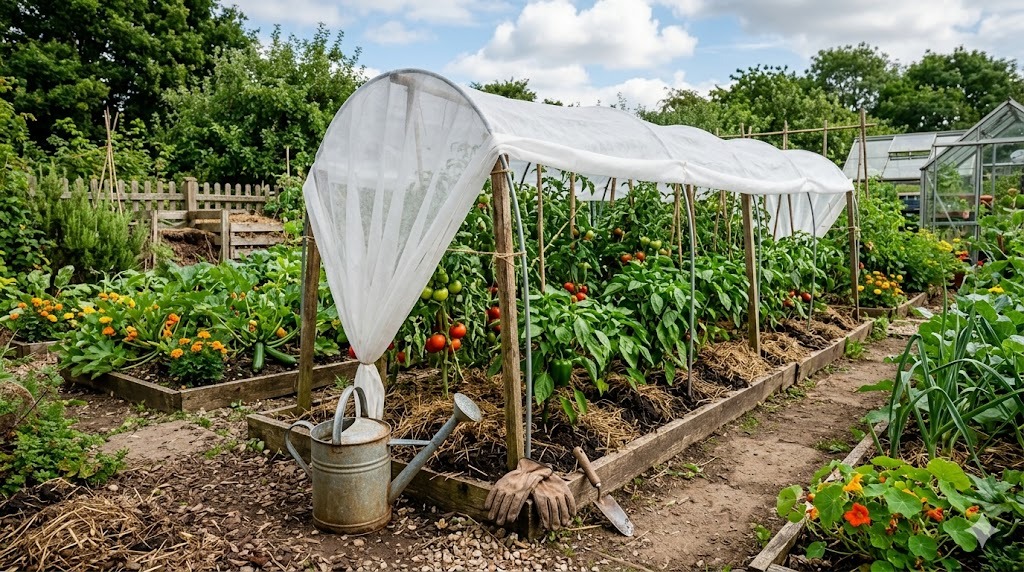
The single most effective intervention. A shade cloth blocks 30-70% of incoming sunlight and lowers leaf surface temperature by 5-10°C.
Types
- 30% shade cloth - light filtering; for sun-loving plants (tomatoes, peppers) that need protection only in extreme heat.
- 50% shade cloth - moderate; for most vegetables, lettuces, herbs in heatwaves.
- 70% shade cloth - heavy; for delicate shade-loving plants (ferns, hostas) and seedlings.
How to deploy
- Drape over a frame, not directly on plants. Direct contact transmits heat.
- PVC hoops or wooden stakes make a quick frame over a raised bed.
- Anchor with clips, bungee cords, or rope to prevent wind movement.
- Leave the east and west sides open for morning and evening light if possible.
- Remove after the heatwave - leaving permanent shade cloth reduces yield long-term.
Cost
A 3 m × 6 m roll of 50% shade cloth costs £20-40 and lasts several seasons.
Tactic 2: Mulch as a Thermal Buffer
A 5-10 cm layer of organic mulch reduces soil temperature by 5-8°C and cuts evaporation by 50-70%.
Best heatwave mulches
- Straw - cheap, effective, easy to spread. Best all-rounder.
- Bark chips - durable, attractive, slower to break down.
- Grass clippings (dried) - free, fast to break down. Don’t pile thick when fresh and green (heats up).
- Leaf mould - best soil conditioner but limited supply.
- Living mulch (low ground cover) - reduces evaporation; competes for water in extreme drought.
Apply
- Before the heatwave, not during. Apply mulch on already-moist soil.
- 5-10 cm depth across the root zone.
- Keep mulch 2-3 cm clear of plant stems to prevent rot.
What not to mulch with
- Black plastic sheeting in summer - heats soil massively, opposite effect.
- Stones / gravel - reflects and retains heat. Fine in winter; bad in summer.
- Fresh manure - adds heat as it breaks down.
Tactic 3: Deep, Early-Morning Watering
The wrong watering technique wastes water and harms plants. The right one keeps them alive through extreme heat.
When
Early morning (5-8 AM) is best. Water reaches roots before the heat of the day; foliage dries before nightfall (reducing fungal disease).
Evening (7-9 PM) is acceptable. Water has time to soak in before morning. Risk: wet foliage overnight encourages mildew.
Midday is wasteful. Most water evaporates before reaching roots, and the rapid temperature change can shock plants.
How much
- Deep watering - soak until water penetrates 15-20 cm down. Test with a finger or screwdriver after watering; should slide in easily.
- Less often, more thorough - one deep weekly watering is better than seven shallow daily ones. Deep watering encourages roots to go down where soil stays cool; shallow encourages roots near the hot surface. If you want a starting figure for how much to give each bed, our watering calculator estimates it from your plants and pot sizes.
How
- Drip irrigation or soaker hoses - water goes directly to roots, virtually no evaporation. Best for vegetables and borders.
- Watering can on the soil, not the leaves. Aim at the base of each plant.
- Avoid sprinklers in heatwaves - most water evaporates; what hits leaves scorches them through the magnifying-droplet effect at midday.
Pots
Container plants dry far faster than ground plants in heat:
- Water once or even twice a day for terracotta and small pots.
- Sit pots in a shallow tray of water for 15 minutes if they’ve dried out completely (rewetting from below).
- Move pots into morning sun / afternoon shade during the heatwave.
Species Most at Risk
Bolts immediately
- Lettuce, spinach, rocket, coriander, dill, mizuna.
- Cover with shade cloth or accept they’ll bolt and replant in autumn.
Stops fruiting
- Tomatoes (flowers drop above 35°C).
- Peppers (sets less fruit above 32°C).
- Cucumbers (flower abortion in extreme heat).
- Beans (drop blossoms).
Wilts dramatically
- Hydrangeas - characteristic afternoon wilt; water deeply each morning.
- Hostas - leaves crisp at edges in direct sun above 32°C.
- Astilbe, ligularia - designed for shade; struggle visibly.
Sunscald
- Newly planted shrubs and trees with thin bark.
- Tomato and pepper fruit exposed by leaf-loss (water with shade cloth).
Lawn
- Cool-season grasses (fescue, ryegrass) go dormant brown.
- Don’t panic - they regrow with autumn rain.
- Don’t fertilise or mow during a heatwave.
What NOT to Do in a Heatwave
- Don’t fertilise. Plants in heat stress can’t process nutrients; fertiliser concentrates in the soil and burns roots.
- Don’t prune. Removing leaves exposes more of the plant to heat. Wait until conditions cool.
- Don’t transplant. Move plants only if absolutely necessary; even then, do it in early morning and water deeply.
- Don’t mow short. Cut grass at the highest setting; longer blades shade the soil and reduce drying.
- Don’t water leaves at midday. Droplets focus sun like tiny lenses and scorch foliage.
Indoor Plants in Heatwaves
Houseplants suffer too, especially in poorly ventilated rooms:
- Move plants away from south-facing windows temporarily. Direct sun behind glass intensifies dramatically.
- Increase humidity with a humidifier or pebble tray.
- Water more often - pots in warm rooms dry faster.
- Don’t shut all windows; some airflow prevents heat building up.
- Cool the room itself if possible. A 30°C room with no airflow stresses any plant.
A Heatwave Action Plan (Forecast Says 35°C+ for 3+ Days)
48 hours before
- Apply mulch over vegetable beds and around shrubs.
- Set up shade cloth frames over delicate crops.
- Deep water everything.
Morning of day 1
- Water deeply again, early. Add a slow-soak with a soaker hose if possible.
- Check shade cloth is secured.
- Move all potted tender plants into morning sun / afternoon shade.
Day 1 evening
- Check pots - water any that have dried significantly.
- Skip the leaf misting; focus on root-zone moisture.
Days 2-3
- Water deeply in early morning.
- Spot-water any wilting plants with a hose at the base.
- Don’t panic at midday wilt - many plants recover by evening once heat drops.
Day after the heatwave
- Inspect for damage.
- Don’t prune scorched leaves until cooler conditions; they shade the rest of the plant.
- Resume normal feeding only after temperatures stabilise.
Frequently Asked Questions
Should I water plants more in a heatwave?
Deeper, not more often. One long deep soak in the early morning beats five quick splashes. Deep watering drives roots downward where soil stays cooler; shallow watering keeps roots near the hot surface.
Is it bad to water plants in the middle of the day in summer?
Yes, mostly. Midday water evaporates before reaching roots, and any water sitting on leaves can scorch them through droplet-magnification. Water early morning or early evening instead.
Do I need shade cloth even for sun-loving plants?
In extreme heatwaves (35°C+), yes. Tomatoes and peppers stop fruiting above those temperatures; a 30% shade cloth brings leaf temperature down enough to keep them productive. Remove the cloth when the heat passes.
Why are my hydrangeas wilting every afternoon even though I water them?
Most hydrangeas are designed for cooler weather and naturally wilt in afternoon heat regardless of soil moisture. As long as they recover overnight, they’re fine. If they’re still wilted in the morning, water deeply and consider afternoon shade.
Can I save scorched leaves?
Browned leaf tissue is dead and won’t recover. But leaving scorched leaves on the plant temporarily protects underlying tissue from further damage. Trim only after the heatwave is over and the plant has stabilised.
🛒 Recommended Gear on Amazon
- Garden shade cloth - browse current options and reviews on Amazon.
- Bagged garden mulch - browse current options and reviews on Amazon.
- Soaker hose - browse current options and reviews on Amazon.
As an Amazon Associate, we earn from qualifying purchases - at no extra cost to you. This helps us keep producing free, in-depth guides.