18 Pet-Safe Indoor Plants
Eighteen indoor plants confirmed non-toxic to cats and dogs - grouped by room, style, and care difficulty, with placement tips to keep curious pets safe.
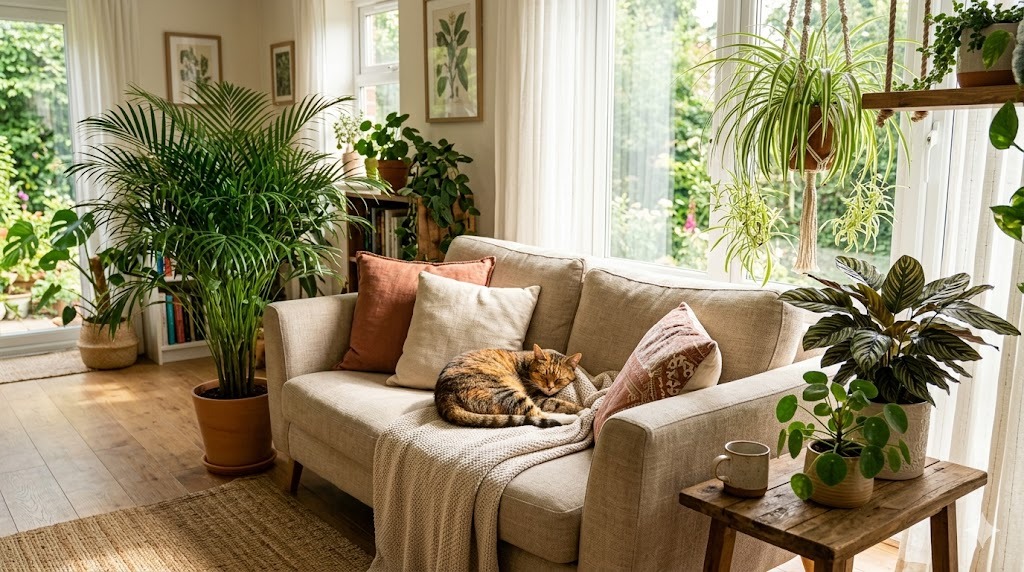
If a cat patrols every shelf in your home or a puppy investigates every leaf at floor level, your plant collection has to pass a stricter test than aesthetic. It has to be non-toxic. The good news: the list of beautiful, low-fuss houseplants that are completely safe around cats and dogs is much longer than most people realise.
Below are 18 indoor plants confirmed non-toxic to dogs and cats by the ASPCA poison-control database. We’ve organised them by category - trailing, statement, flowering, low-light - so you can match a safe plant to the spot you actually need to fill. We’ve also included a short list of popular plants to avoid in a pet household, plus practical placement tips so curious pets and curious leaves can share a home. If you’d rather narrow things down interactively, the plant finder tool can filter by pet-safety and light.
A quick clarification on “non-toxic”: it means a pet who nibbles the plant won’t be poisoned. It does not mean a pet should eat the plant. Any plant material, eaten in quantity, can cause mild vomiting or diarrhoea. Non-toxic just means the leaf chemistry isn’t actively harmful.
Why “Pet-Safe” Matters More Than You Think
Cats are obligate plant chewers - even well-fed indoor cats nibble greenery, partly to aid digestion. Dogs are less interested in foliage but will chomp anything during the puppy phase. A plant labelled “mildly toxic” can mean a vomiting cat, an expensive vet visit, or - in rare cases with lilies - a fatal poisoning. Choosing non-toxic plants from the start removes the risk entirely.
Trailing & Hanging (4)
- Spider Plant (Chlorophytum comosum) - the classic. Bright, forgiving, produces dangling babies cats love to bat. Best in a hanging pot above swat range.
- String of Hearts (Ceropegia woodii) - delicate trailing vine with heart-shaped leaves. Non-toxic but extremely chewable; keep it tall.
- Hoya carnosa (Wax Plant) - thick leathery leaves, eventually fragrant star flowers. Safe and slow-growing.
- Burro’s Tail (Sedum morganianum) - succulent ropes of plump leaves; safe but leaves drop easily if pets bump it.
Statement & Floor Plants (4)
- Areca Palm (Dypsis lutescens) - tall, soft, tropical. One of the few real palms that’s pet-safe.
- Parlour Palm (Chamaedorea elegans) - slow, elegant, tolerates low light.
- Money Tree (Pachira aquatica) - braided trunk, easy care, safe around all pets.
- Ponytail Palm (Beaucarnea recurvata) - sculptural, drought-tolerant, completely non-toxic.
Foliage & Pattern (4)
- Calathea (any variety) - striking patterned leaves; needs humidity but worth the effort.
- Prayer Plant (Maranta leuconeura) - folds leaves up at night, beautiful red veins.
- Peperomia (any species) - compact, varied leaf shapes, very forgiving.
- Polka Dot Plant (Hypoestes phyllostachya) - pink-speckled leaves, low-growing, totally safe.
Ferns (2)
- Boston Fern (Nephrolepis exaltata) - classic lush fronds, loves humidity. Pet-safe.
- Bird’s Nest Fern (Asplenium nidus) - upright wavy fronds, tolerates lower light than Boston.
Flowering (3)
- African Violet (Saintpaulia) - small, blooms year-round in bright indirect light. Safe.
- Phalaenopsis Orchid - long-lasting blooms; non-toxic and elegant.
- Christmas Cactus (Schlumbergera) - winter flowers, pet-safe and easy.
Sculptural / Unusual (1)
- Friendship Plant (Pilea involucrata) - textured leaves with bronze tones; small, safe, charming.
The Pet-Toxic Plants to Avoid
Before you head to the garden centre, memorise this short list - these are the worst offenders and they’re everywhere:
- True lilies (Lilium, Hemerocallis) - fatal to cats even via pollen or vase water.
- Sago palm - severe liver toxicity, often fatal.
- Pothos, philodendron, monstera, dieffenbachia - calcium oxalate crystals, painful mouth irritation.
- Peace lily - same calcium oxalates as the above.
- ZZ plant, snake plant - mildly toxic if chewed.
- Aloe vera - toxic to dogs and cats despite being human-safe.
- English ivy - vomiting and stomach upset.
- Jade plant - moderately toxic to both species.
If you already own one of these, keep it genuinely out of reach - a closed room or a high shelf a cat cannot jump to.
Placement Tips for Pet Homes
- Hang the chewable ones. Spider plant, string of hearts, and any trailing vine belong in ceiling hooks or wall-mounted brackets.
- Anchor floor plants in heavy pots. A determined dog will tip a lightweight ceramic pot; a terracotta or concrete one stays put.
- Top-dress soil with large pebbles. Stops cats from using the pot as a litter tray and discourages digging puppies.
- Offer cats their own greens. A tray of cat grass or oat grass satisfies the urge to chew and redirects them away from your real collection.
- Keep the ASPCA hotline saved. Their plant-poison number is 1-888-426-4435; charge applies, available 24/7.
Light Cheat Sheet for Pet-Safe Plants
| Light | Best Picks |
|---|---|
| Bright direct | Ponytail palm, hoya |
| Bright indirect | Spider, areca, money tree, African violet, orchid |
| Medium | Calathea, prayer plant, peperomia, friendship plant |
| Low-medium | Parlour palm, bird’s nest fern |
| Humid (bathroom) | Boston fern, bird’s nest fern, calathea |
Frequently Asked Questions
What is the safest plant to keep around cats?
The spider plant is the most universally recommended - non-toxic, easy to grow, and (when hung high) tolerates curious cats well. The Boston fern and parlour palm are close runners-up.
Are succulents safe for pets?
Some are, most aren’t. Haworthia, echeveria, and the ponytail palm are non-toxic. Aloe vera, jade plant, kalanchoe, and string of pearls are all toxic. Always check the specific species.
My dog ate a leaf from a non-toxic plant. Should I worry?
Probably not. Watch for vomiting or lethargy over the next few hours - non-toxic plants can still cause mild stomach upset in quantity. Call your vet if symptoms persist beyond a day.
Can I keep a peace lily if my cat ignores plants?
Risky. A peace lily is far less deadly than a true lily, but the calcium oxalate crystals cause severe mouth pain on contact. If a curious moment happens once, the consequences are unpleasant. Better choices exist.
Do air-purifying plants exist that are pet-safe?
Yes - the spider plant, areca palm, Boston fern, and bamboo palm all appear on NASA’s clean-air list and are non-toxic to pets. You don’t have to choose between air quality and pet safety.
🛒 Recommended Gear on Amazon
- Areca palm (live) - browse current options and reviews on Amazon.
- Peperomia (live) - browse current options and reviews on Amazon.
- Spider plant (live) - browse current options and reviews on Amazon.
As an Amazon Associate, we earn from qualifying purchases - at no extra cost to you. This helps us keep producing free, in-depth guides.
