Plant Pot Materials Compared
Compare plant pot materials - terracotta, glazed ceramic, plastic, fabric, concrete - on drainage, weight, looks, cost, and which suits which plant.
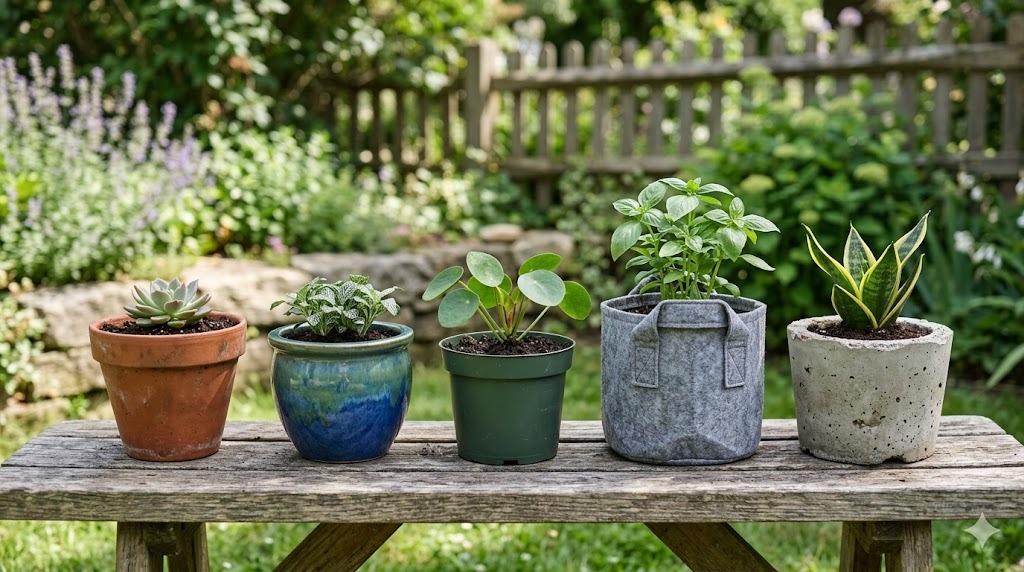
The pot a plant lives in changes more than most people realise. Two identical plants potted in two different materials - terracotta versus glazed ceramic, say - will need different watering frequencies, develop different root systems, and survive different climates. The pot isn’t just decoration. It’s part of the plant’s life-support system.
This guide compares the five most common pot materials honestly - terracotta, glazed ceramic, plastic (nursery and decorative), fabric grow bags, and concrete - on the things that actually matter to plants and to you: drainage, weight, breathability, cost, durability, and which plants thrive in each.
Quick Comparison Chart
| Material | Breathable | Water-wicking | Weight | Cost | Best For |
|---|---|---|---|---|---|
| Terracotta | Yes | High | Medium | Low | Cacti, succulents, herbs |
| Glazed ceramic | No | None | Heavy | Medium-High | Most houseplants |
| Plastic (nursery) | No | None | Light | Very low | Anything; outer pot recommended |
| Plastic (decorative) | No | None | Light | Low-Medium | Indoor display, balconies |
| Fabric grow bag | Very high | High | Light | Low | Outdoor vegetables, big tomatoes |
| Concrete | Slightly | Slight | Very heavy | Medium-High | Large outdoor specimens |
Terracotta (Unglazed Clay)
The original plant pot. Porous, breathable, water-wicking - moisture moves through the walls of the pot, drying the soil faster than any other material.
Strengths
- Breathable walls keep roots oxygenated.
- Wicks moisture out of soil → prevents overwatering for most species.
- Cheap, widely available, classic appearance.
- Develops a beautiful patina over time.
- Heavy enough to anchor top-heavy plants without being unmanageable.
Weaknesses
- Plants dry out fast - bad in summer or for thirsty species.
- Can crack in freezing temperatures (unless rated frost-proof).
- Stains form on walls over time (calcium from tap water).
- Heavy compared to plastic if you have many plants.
Best for Cacti, succulents, Mediterranean herbs (rosemary, thyme, sage), orchids in slotted versions, any plant that prefers to dry between waterings.
Avoid for Ferns, calathea, prayer plants, anything that wants consistently moist soil - they’ll dry too fast.
Glazed Ceramic
Same clay as terracotta, with a non-porous glaze applied. The glaze seals the walls - no breathability, no water wicking.
Strengths
- Beautiful - patterns, colours, finishes.
- Doesn’t dry out as fast as terracotta - good for moisture-lovers.
- Heavy and stable for tall plants.
- Doesn’t stain like terracotta.
Weaknesses
- No breathability - overwatering risk increases.
- Heavy. A large ceramic pot is hard to move.
- Often expensive.
- Many decorative ceramics ship with no drainage hole - drainage is non-negotiable.
- Cracks if dropped or frozen.
Best for Most houseplants when display matters - pothos, monstera, philodendron, calathea, ferns. Any plant that doesn’t want to dry out fast.
Avoid for Cacti and succulents (too much water retention), unless paired with an aggressively gritty soil mix.
Plastic (Nursery and Decorative)
The most common pot in modern indoor growing. Lightweight, cheap, available in any colour or shape.
Nursery plastic (the brown or green pots plants are sold in)
Strengths
- Extremely cheap.
- Light - easy to move large plants.
- Sturdy and crack-resistant.
- Always has drainage holes (often many).
- Easy to drill or modify.
Weaknesses
- Ugly. Most are designed to be hidden in an outer pot.
- Don’t breathe; can overheat in direct sun (black plastic in summer).
- UV degrades them outdoors over years.
Best for Almost anything - slip the nursery pot inside a decorative outer pot (“cache pot” or “planter”) and you have the benefits of plastic with the looks of ceramic.
Decorative plastic (modern self-watering and designer pots)
Strengths
- Lighter than ceramic equivalents.
- Self-watering versions exist (built-in reservoir).
- Won’t crack if knocked over.
- Cheaper than ceramic for the same size.
Weaknesses
- Looks plastic, however hard manufacturers try.
- No breathability.
- Heats up in direct sun.
Best for Balconies (light, won’t crack in storms), nursery setups, anyone wanting self-watering features.
Fabric Grow Bags
Pots made from woven fabric or felt. Breathable, drain-everywhere, lightweight when empty.
Strengths
- Air-prune roots - roots that hit the fabric edge stop growing and branch instead, creating a denser, healthier root system.
- Excellent drainage - water drains through the entire pot.
- Light, foldable, easy to store.
- Cheap for the size - large 50 L fabric pots cost under £15.
- Don’t overheat as much as plastic in sun.
Weaknesses
- Dry out fast (good for vegetables, bad for delicate houseplants).
- Look casual - not a living-room pot.
- Get tatty over 2-3 years of outdoor use.
- Need to sit on a saucer or tray indoors (drain everywhere).
Best for Outdoor vegetables, especially tomatoes and peppers; potatoes (specialised potato-grow bags); fruit trees in temporary positions; any container where root health matters more than aesthetics.
Avoid for Indoor display (functional, not pretty), houseplants on furniture (the bags weep moisture).
Concrete / Stone
Heavy, permanent, slightly breathable. The premium outdoor planter.
Strengths
- Visually striking - modern, brutalist, or classical depending on the design.
- Very stable for tall plants in wind.
- Slightly breathable - wicks a little moisture, helpful in wet climates.
- Holds thermal mass - buffers temperature swings.
Weaknesses
- Heavy. Once filled, it’s nearly impossible to move alone.
- Expensive.
- Can leach lime into the soil, raising soil pH - fine for most plants, bad for ericaceous (acid-loving) species.
- Cracks in deep freezing weather unless rated frost-proof.
Best for Large outdoor specimens - small trees, dwarf evergreens, statement plants in courtyards.
Drainage: The Non-Negotiable
Regardless of material, every pot needs drainage. Decorative ceramics often ship without holes - solve this in one of three ways:
- Drill a hole - diamond drill bit for ceramic, 8-12 mm. Slow and careful.
- Pot-in-pot - keep the plant in its plastic nursery pot inside the decorative pot. Lift out to water, drain, return.
- Add a deep drainage layer - pebbles at the base, charcoal, gritty mix. Riskier and not foolproof, but workable for low-water plants.
The “drainage layer in a holed pot does nothing useful” claim is overstated for indoor use - a 2 cm pebble layer above a drainage hole does reduce the risk of soil falling out and creates an air gap. It’s not magical, but it doesn’t hurt.
Sizing: One Size Up, Always
When repotting, increase pot diameter by 2-4 cm only. A pot that’s hugely larger than the root ball holds too much wet soil around the small root mass - and stays soggy. The plant rots. Our repotting size calculator does this maths for you.
The exception is fabric grow bags and very fast-growing annual vegetables, where root-binding limits production and bigger is fine.
Frequently Asked Questions
Is terracotta really better than plastic?
Better for cacti, succulents, and Mediterranean herbs because of the wicking effect. Worse for moisture-loving plants because it dries too fast. Match the pot to the plant.
Do I need a saucer under my plant pots?
Indoors, yes - otherwise water stains your furniture or floors. The saucer collects drained water, which you should empty after 15 minutes so the plant doesn’t sit in standing water and rot.
Are self-watering pots worth it?
For plants that genuinely want consistently moist soil - peace lilies, ferns, herbs - yes. For plants that prefer to dry between waterings - most succulents, cacti, snake plants - no, self-watering pots will rot them.
Why is my plant in a decorative pot dying?
Most often, no drainage hole - water collects at the bottom and rots the roots. Always either drill the pot, use the pot-in-pot method, or restrict it to plants that genuinely tolerate constant moisture.
Can I leave a plant in its plastic nursery pot forever?
You can, especially with a nicer outer pot to hide it. Eventually it gets root-bound and needs upsizing - every 1-3 years for most plants. Nursery plastic is functional, not permanent.
🛒 Recommended Gear on Amazon
- Terracotta pots with drainage - browse current options and reviews on Amazon.
- Ceramic pots with drainage (set) - browse current options and reviews on Amazon.
- Fabric grow bags - browse current options and reviews on Amazon.
As an Amazon Associate, we earn from qualifying purchases - at no extra cost to you. This helps us keep producing free, in-depth guides.