Spring Garden Start Guide
A step-by-step spring start guide - when to sow seedlings, how to harden off properly, when your last frost actually is, and how to avoid the classic early-spring losses.
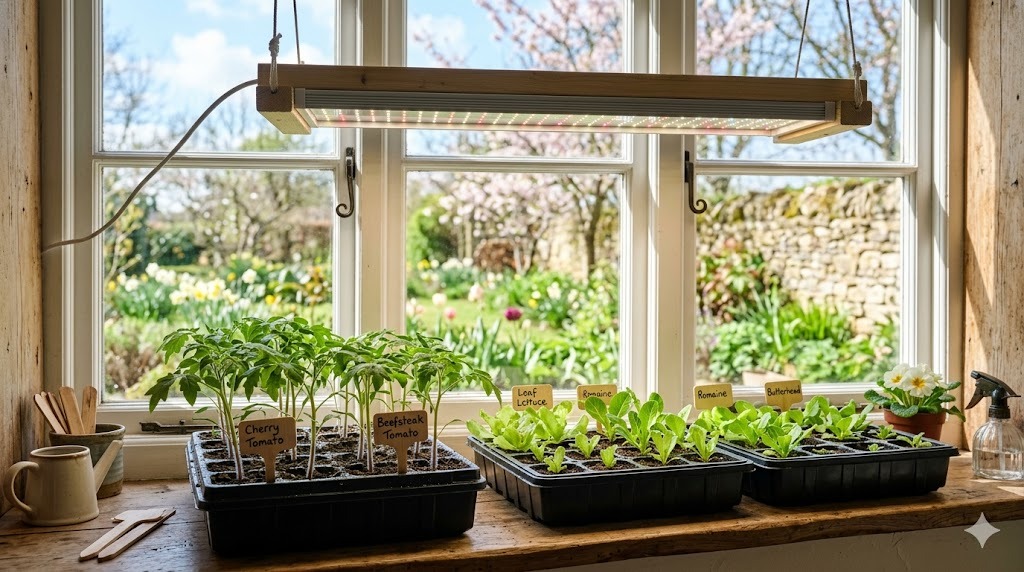
Spring kills more seedlings than every winter frost combined. Two weeks of mild weather in mid-March, the urge to “get on with it,” a tray of tomatoes carried straight from a warm kitchen to a cold garden - and a week later, every plant is slumped, bleached, or rotting. The failure isn’t gardening skill; it’s bad timing and skipped acclimation.
This guide walks through the spring start the way professional growers do it - knowing your real last frost date, sowing on the right dates indoors and out, hardening off properly, and planting out when the soil is actually warm enough. It’s not glamorous, but it’s the difference between a productive summer and starting from seed twice.
Step 1: Find Your Real Last Frost Date
Every spring task is anchored to your local last frost date - the date after which frost is statistically unlikely. Get this wrong and the rest doesn’t matter. Once you know your date, our planting calendar tool can tell you what to sow when.
How to find it
- UK: Met Office regional averages; most of England’s last frost is mid-April to early May.
- US: NOAA or Old Farmer’s Almanac by zip code.
- Canada / Australia / NZ: Government meteorological service by region.
- Local rule of thumb: Ask three experienced gardeners in your neighbourhood. They know within a week.
The “last frost” caveat
“Last frost date” is statistical, meaning there’s a 50% chance of frost after it. To be safe, wait an extra 2 weeks. To be safe with tender crops (tomatoes, peppers, basil, courgette), wait 3 weeks after the listed date.
Step 2: Plan Your Sowing Calendar Backwards
Work backwards from your last frost date.
10-12 weeks before last frost (mid-February in temperate UK)
- Sow indoors: chilli peppers, aubergines, leeks, onions from seed.
- These need a long head start because they grow slowly.
8-10 weeks before last frost (late February)
- Sow indoors: tomatoes, peppers, broccoli, cabbage, brussels sprouts.
- Chit potatoes (sit them in egg cartons to sprout in light).
6-8 weeks before last frost (mid-March)
- Sow indoors: courgette, pumpkin, squash, melons, cucumber.
- Sow direct outdoors under cloches: broad beans, peas, hardy salads, radishes.
- Plant garlic if you didn’t in autumn (late variety).
- Plant onion sets, shallots, first early potatoes.
4-6 weeks before last frost (early April)
- Sow indoors: basil, more lettuces, calendula.
- Sow direct: carrots, parsnips, beetroot, spinach, more peas, more salads.
- Plant second early potatoes.
2-4 weeks before last frost (mid-late April)
- Begin hardening off anything you’ve raised indoors that will go out after the last frost.
- Direct sow: more carrots, salads, beans (early varieties).
- Plant maincrop potatoes.
After last frost (mid-late May)
- Plant out hardened-off tender crops: tomatoes, peppers, courgette, basil, sweetcorn, French beans, runner beans.
Step 3: Sow Seeds Indoors Properly
Equipment
- Seed trays or pots - cell trays for individual plugs, larger pots for transplant later.
- Seed compost - finer texture than regular compost; lower nutrients.
- Heat mat (optional) - speeds germination of warmth-loving crops (peppers, tomatoes).
- Bright light - south-facing windowsill or, much better, a grow light.
Process
- Fill trays with seed compost; firm gently.
- Water from below by setting the tray in 2 cm of water for 15 minutes.
- Sow seeds at the recommended depth (often twice the seed’s diameter).
- Label every variety. (You won’t remember; trust me.)
- Cover with a clear lid or plastic to maintain humidity.
- Place on a heat mat or warm windowsill.
- Once germinated, remove the cover and move to the brightest available light.
The leggy seedling problem
Seedlings that stretch tall, pale, and floppy aren’t getting enough light. Window light isn’t usually enough - a small grow light fixed 15 cm above the tray for 14-16 hours/day produces compact, strong plants. A windowsill alone often produces fragile candidates that snap in the first breeze outdoors.
Step 4: Pot On
Once seedlings have their first true leaves (the second set, different from the seed leaves), pot them on into individual 9 cm pots if they were in cell trays. Use general-purpose compost; fertilise weekly with weak liquid feed.
Step 5: Hardening Off - The Step Everyone Underestimates
A seedling raised indoors has never felt wind, direct sun, or temperature fluctuation. Move it straight to the garden and it goes into shock - leaves bleach, plant wilts, sometimes dies.
Hardening off is a 7-10-day gradual acclimation:
Day 1-2
Set seedlings outside in a sheltered, shaded spot for 1-2 hours. Bring back indoors.
Day 3-4
Increase outdoor time to 3-4 hours. Introduce gentle morning sunlight.
Day 5-6
Half-day outside, including direct sun. Bring in for the night.
Day 7-9
Full day outside; bring in only if night temperatures drop below 5°C.
Day 10
Plant out. The seedlings are now resilient to wind, sun, and temperature changes.
If forecast turns cold during the process, pause and bring everything in until the weather settles.
Step 6: Plant Out at the Right Time
For every tender crop (tomato, pepper, courgette, basil, sweetcorn, French bean):
- Air temperature - overnight lows reliably above 8°C.
- Soil temperature - at least 12°C measured 10 cm deep (use a cheap soil thermometer). 15°C+ is even better.
- Frost risk - none in the 7-day forecast.
Tomatoes planted in cold soil sulk for weeks; tomatoes planted in 15°C soil grow visibly within days. Our complete guide to growing tomatoes covers the rest of the season once they’re in the ground.
For hardy crops, you can plant out 2-4 weeks earlier - peas, salads, brassicas all tolerate light frost once established.
Step 7: Protect Against Late Frosts
Even after the average last frost date, freak late frosts happen. Have ready:
- Horticultural fleece to drape over crops.
- Cloches for individual tender plants.
- Newspaper as an emergency cover.
If a late frost is forecast, water plants in the afternoon (damp soil holds heat) and cover before dusk. Uncover by mid-morning.
Common Spring Mistakes
- Sowing too early indoors. Seedlings sown in January will be huge and leggy by April, with no garden space ready. Stick to the calendar.
- Skipping hardening off. The single biggest cause of spring planting losses.
- Planting tomatoes before night temperatures stabilise. They survive but don’t thrive; cold-shocked tomatoes underproduce all season.
- Buying everything as seedlings from the garden centre instead of growing from seed. Fine if you only want a few plants - but the variety is narrow and the cost adds up fast.
- Forgetting to water seedlings. Indoor seed trays dry shockingly fast. Check daily.
A Realistic Beginner Spring Plan
If this is overwhelming, start small:
- Buy one growing tray, one bag of seed compost, one packet of tomato seed, one packet of lettuce seed, one packet of basil seed.
- Sow tomatoes 8 weeks before your last frost, lettuce and basil 4 weeks before.
- Pot on tomatoes; eat lettuce; harden off basil and tomatoes 2 weeks before planting out.
- Plant out after the last frost.
That single tray teaches you the whole rhythm and produces enough to be worth it. Scale up next year.
Frequently Asked Questions
When should I start tomato seeds indoors?
8-10 weeks before your last frost date. For most of the UK, that’s late February to early March. They’ll be ready to plant out late May after hardening off.
How long does hardening off take?
7-10 days minimum. Skip it and you lose seedlings to shock; rush it and you lose them to wind or sun burn. Patience pays back many times over.
What temperature can tomatoes go outside?
Soil at least 12°C and overnight lows reliably above 8°C. Tomatoes planted in cold soil sulk for weeks before recovering. A few extra weeks of waiting often produces earlier ripe fruit than impatient planting.
Do I need a grow light to start seeds indoors?
A south-facing window can work for some crops (lettuce, basil), but most beginners’ seedlings come out leggy and weak from window light alone. A small £30 grow light dramatically improves results.
Can I sow vegetable seeds directly outside instead?
Many crops prefer it - carrots, parsnips, beetroot, radishes, salads, peas, broad beans all do better sown direct. Indoor starts are for crops that need a head start in cold climates (tomatoes, peppers, cucurbits).
🛒 Recommended Gear on Amazon
- Seed starting tray kit - browse current options and reviews on Amazon.
- Seedling heat mat - browse current options and reviews on Amazon.
- Garden tool set - browse current options and reviews on Amazon.
As an Amazon Associate, we earn from qualifying purchases - at no extra cost to you. This helps us keep producing free, in-depth guides.