Grow a living willow den.
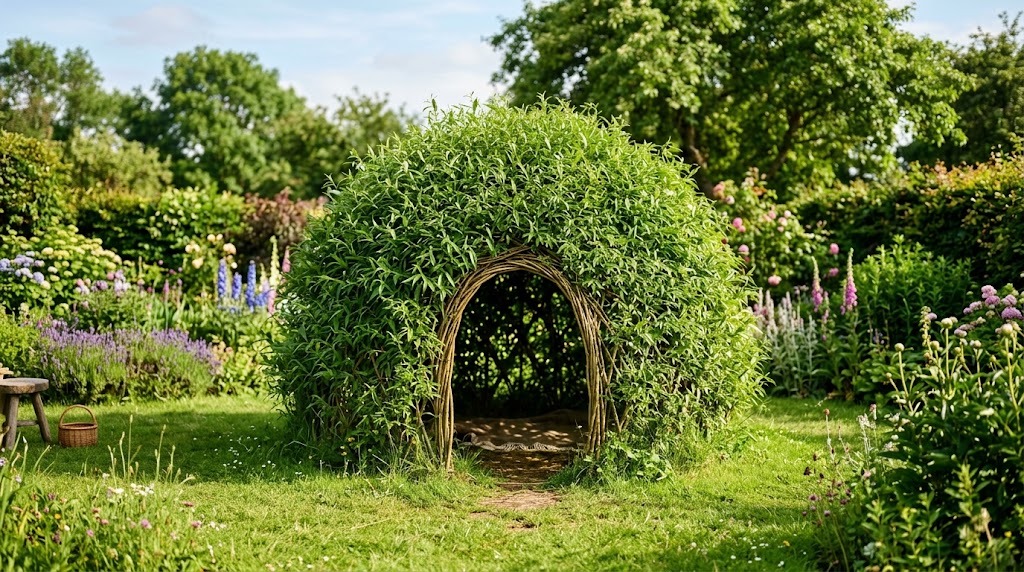
Basketry's strange and wonderful cousin: instead of cutting the willow and weaving it dry, you plant the rods where they stand and weave them alive. The structure roots, leafs out, and every year the walls get thicker - a den, arch or fence that is also a growing tree.
It is the rare garden build where patience does the joinery: crossings tied together in year one have often grafted into solid living joints by year three. The work is one planting weekend and then a haircut or two each summer.
What you need
🌳 Materials
- Willow whips or setts. Long unrooted rods of a vigorous basket willow - Salix viminalis is the workhorse. For a child-sized dome: 30-40 whips of 8-10 ft; a fedge takes 3-4 whips per metre.
- Mulch and membrane. A woodchip mulch strip or a mulch mat along the planting line - the single biggest factor in first-year survival is grass not strangling the whips.
- Soft ties. Rubber tree ties or strips of old inner tube where rods cross. Never wire - it bites in as the wood thickens.
🧰 Tools
- A spike or crowbar. Planting is a hole punched 30 cm deep, not a dug pit.
- Secateurs. For the endless summer trims that keep the shape a shape.
The build, step by step
1Pick the spot honestly
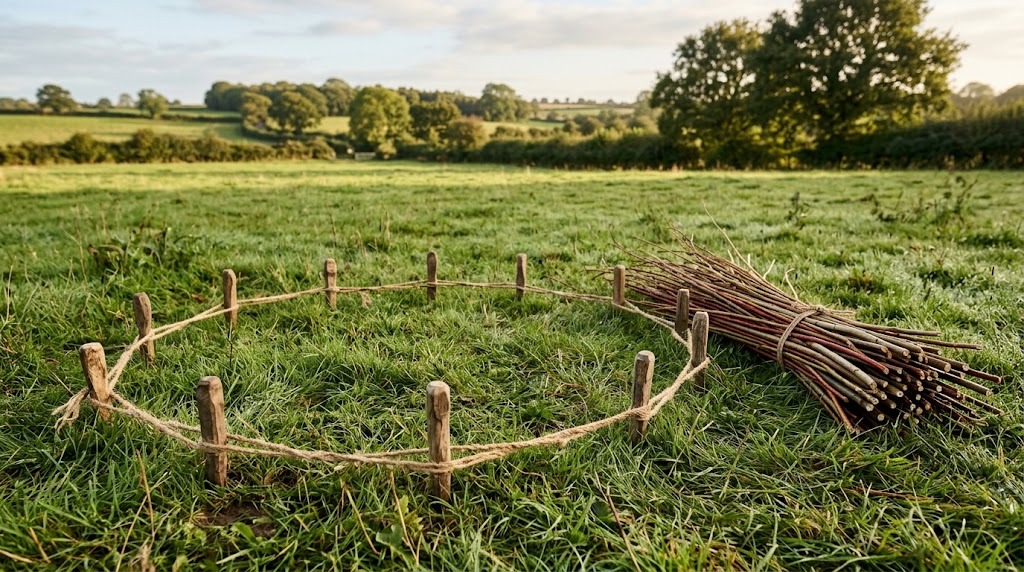
Living willow needs three things and will not negotiate: full sun, real moisture and distance from anything with pipes or foundations. Willow roots hunt water; the accepted caution is to keep structures at least 10 m from drains, septic fields and house walls - a willow dome is a meadow-and-lawn feature, not a patio one. Damp corners where nothing else thrives are exactly where willow is happiest. Mark the footprint - a 2-2.5 m circle makes a generous child dome - and clear a half-metre strip of turf around the whole line, because grass competition kills more first-year willow than anything else.
2Plant in the dormant season
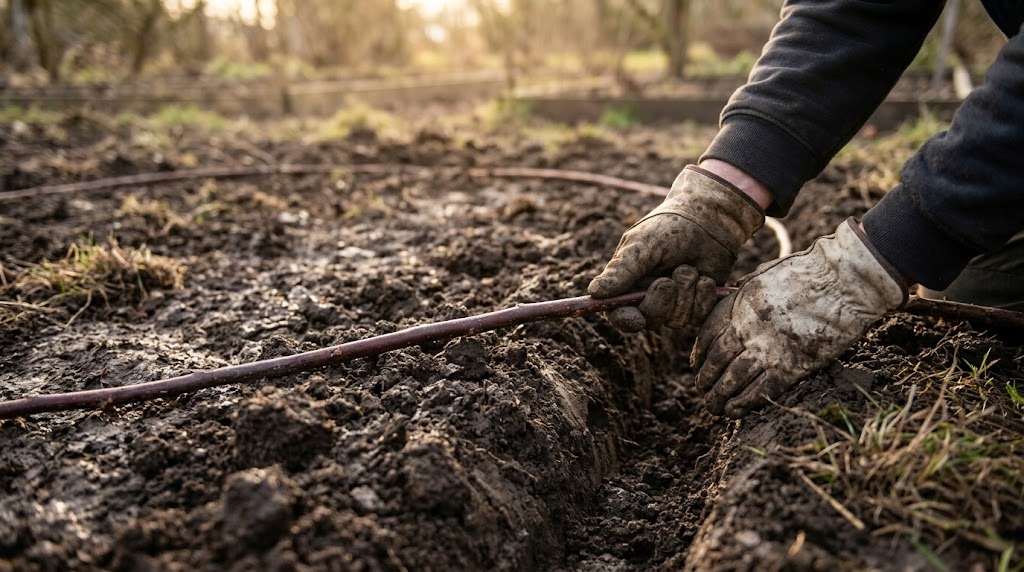
Whips go in while the willow sleeps - roughly leaf-fall to bud-burst, with late winter the sweet spot. A whip is just a long cutting: punch a hole 30 cm deep with the spike, slide the thick end in, firm the soil around it. That is the entire horticulture; willow roots from bare wood so willingly that the challenge is stopping it, not starting it. Space uprights every 25-30 cm around your circle, leaving a doorway gap. If a whip fails you push in another next winter - the design is forgiving by nature.
3Weave the structure
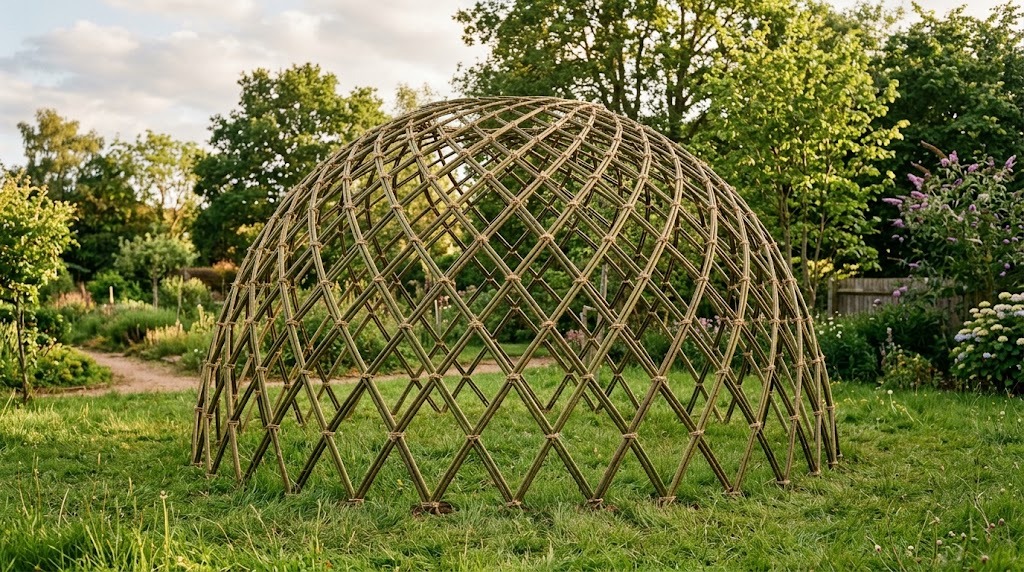
The classic dome is planted as pairs of rods leaning toward each other in a diamond lattice: each whip goes in at roughly 45 degrees, crossing its neighbours, and where rods cross you tie them snugly with a soft tie. Over a season or two, something quietly wonderful happens at those crossings - pressed together, the rods often graft into one another (the old word is pleaching), and the lattice becomes a single living net. Pull the tops together over the centre and tie them off to close the roof. A fedge - fence-hedge - is the same diamond lattice run in a straight line, and an arch is two short fedges bent to meet over a path.
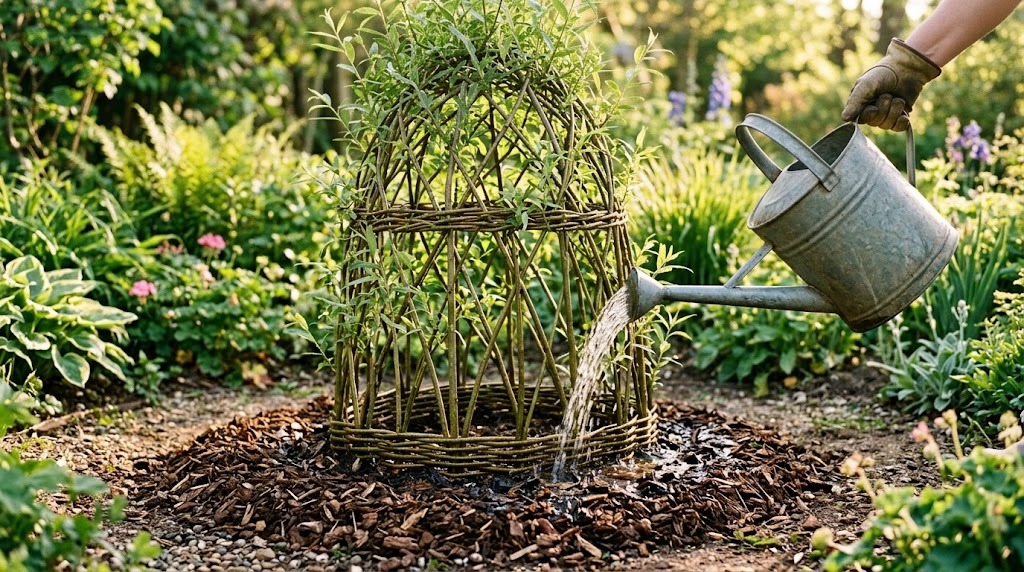
4The first year is watering
An unrooted whip has to build a root system while feeding shoots, and it does that on water. In a dry first summer, water generously - a proper soak once or twice a week beats a daily sprinkle - and keep the mulch strip weed-free. Expect a small percentage of failures and do not mourn them; note the gaps for winter replanting. From year two the roots are down and the structure looks after itself in all but drought.
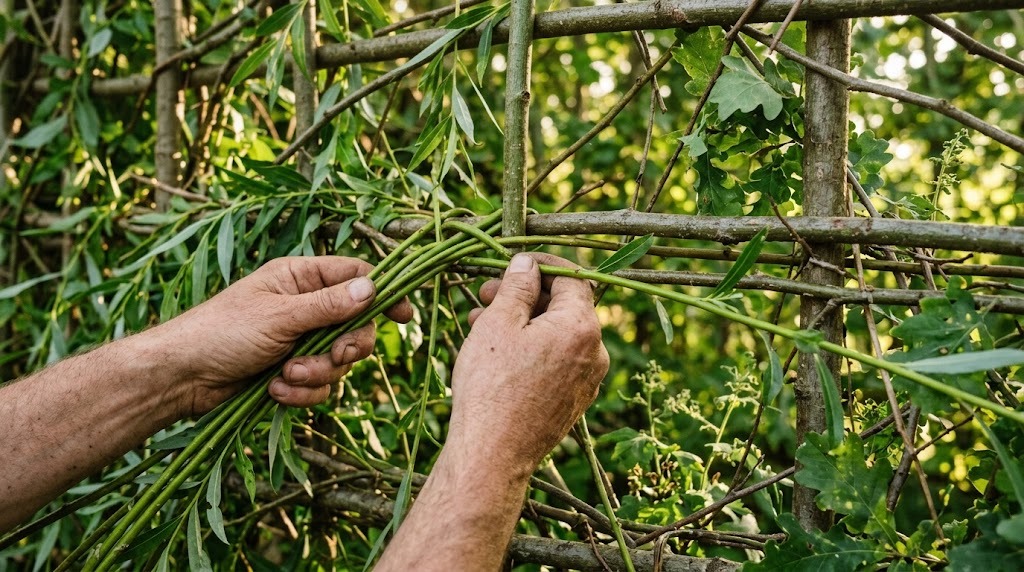
5Trim it like a haircut
From the first summer the structure will throw long soft shoots in every direction, and this is where a dome either stays a dome or becomes a bush with delusions. The routine: shoots growing along the structure get woven in - every one you weave thickens the wall for free; shoots pointing outward get cut, or bent back in while green. Give it a real trim once or twice each summer and a hard tidy in winter when the shape is bare and easy to read. The winter prunings, note, are next year's weaving rods and even planting whips - the structure supplies its own repairs.
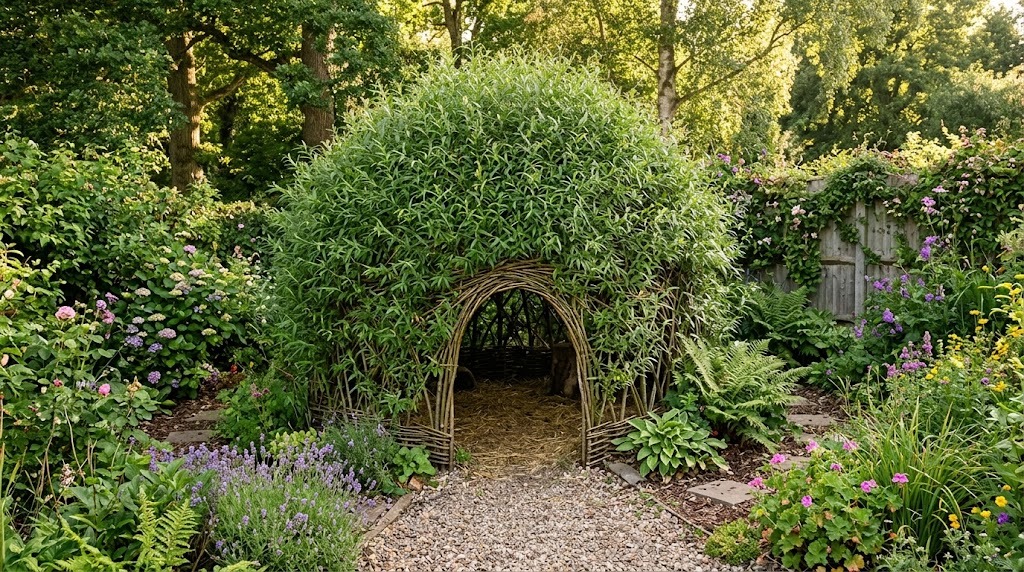
6Years two to twenty
By year three the walls knit into a green room that casts real shade and hums with insects; a well-kept dome or arbour then simply persists for decades, thickening at every grafted crossing. Ties can come off once the grafts have taken - check yearly that nothing is biting into swelling wood. If the whole thing ever gets away from you, willow's answer is the most forgiving in gardening: cut it hard, almost anywhere, and it regrows. There are living willow churches in Europe older than the people maintaining them.