Monstera Siltepecana (Silver Monstera)
Monstera siltepecana - the "Silver Monstera" - is one of the most rewarding aroids for someone who wants fast, easy, and beautiful.
🗓️ Last reviewed: July 2026
Overview
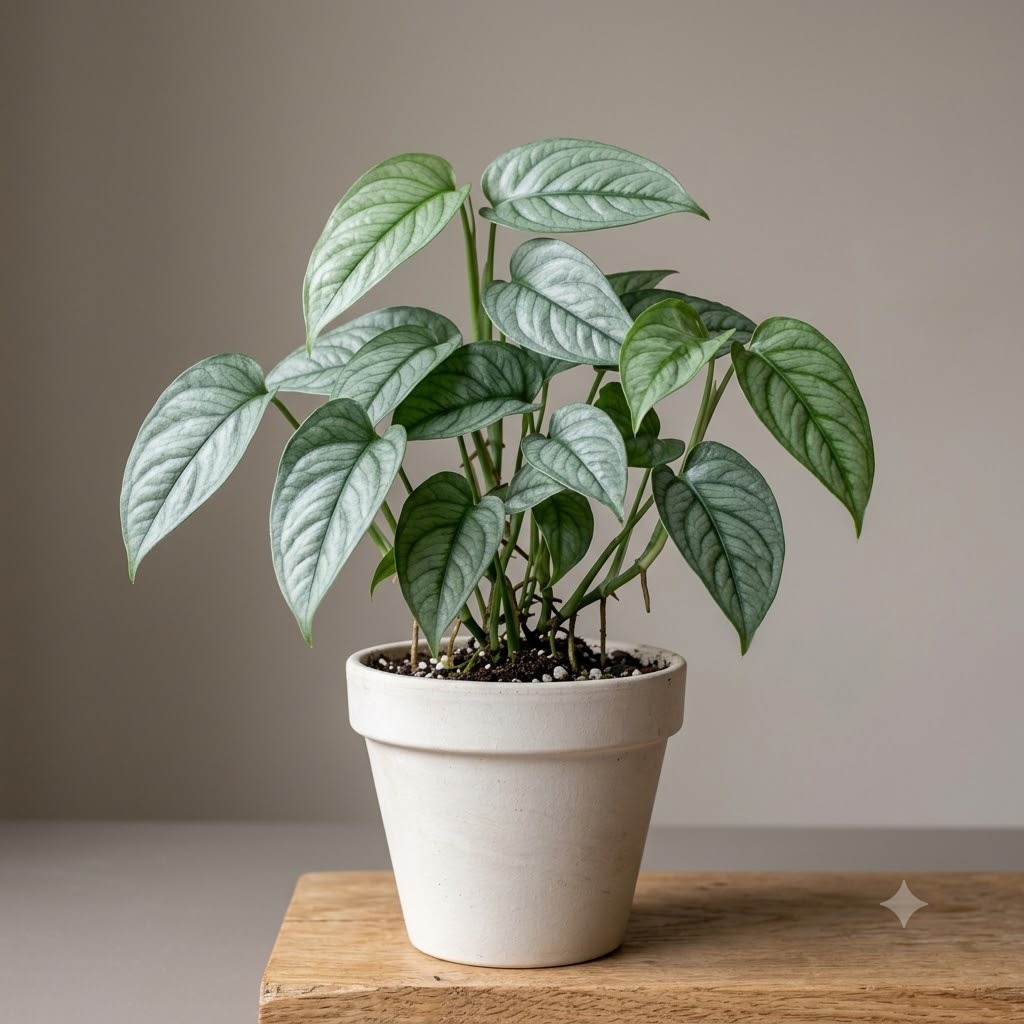
Monstera siltepecana - the "Silver Monstera" - is one of the most rewarding aroids for someone who wants fast, easy, and beautiful. Its young leaves are its calling card: silvery-grey lance-shaped blades laced with darker green veins, giving the whole plant a shimmering, almost metallic look. Left to trail it stays in this pretty juvenile form; given a pole to climb, it transforms - the leaves grow larger, lose the silver, and develop the fenestrations (holes) that mark it as a true Monstera. It grows quickly, roots almost instantly, and forgives beginners, making it a favourite among aroid collectors and newcomers alike.
Origin & Natural Habitat
Monstera siltepecana is native to the tropical forests of Mexico and Central America, where, like other Monstera species, it lives as a hemiepiphyte. It begins on the forest floor trailing across the ground, then finds a tree trunk and climbs toward the light, switching from its silvery juvenile form to a much larger, plainer, fenestrated adult form as it ascends.
This two-stage life explains why the same plant can look so different. The silvery leaves people fall in love with are the juvenile, ground-and-early-climbing phase. As it climbs high and matures, it "grows up" into big green leaves with holes. Indoors most people keep it in its silvery juvenile form or coax a bit of climbing for larger leaves.
Appearance
- Juvenile leaves: narrow, lance- or spear-shaped, silvery grey-green with a network of darker green veins and a subtle sheen - the trait it is grown for.
- Adult leaves: when the plant climbs and matures, leaves become larger, greener, broader, and develop fenestrations (small holes near the midrib), losing much of the silver.
- Growth habit: a vigorous vining aroid that trails happily from a pot or basket and climbs readily up a pole.
- Aerial roots: thin aerial roots emerge along the vine, used to grip supports and take up moisture.
- Size: vines can grow long quickly in good conditions; kept as a trailer it cascades attractively, and on a pole it grows upward and larger.
Why People Love It - Qualities & Benefits
- Silver foliage: the shimmering silvery juvenile leaves are unusual and eye-catching.
- Fast and easy: it is one of the quicker-growing, more forgiving Monsteras - great for building confidence.
- Two looks in one: trail it for the silvery form, or climb it for large fenestrated leaves.
- Extremely easy to propagate: cuttings root fast and reliably.
- Flexible display: works as a hanging trailer, a shelf plant, or a climber on a pole.
Care
Light
Bright, indirect light brings out the best silver and the fastest growth. A spot near an east or north window, or set back from a brighter window, is ideal. It tolerates medium light but grows slower and the silvery pattern is less pronounced. Avoid harsh direct midday sun, which can scorch the leaves.
Watering
Water thoroughly when the top few centimeters of soil have dried, then let it drain completely - never leave it standing in water. As a fast-growing aroid it drinks steadily in warm bright conditions, but soggy soil causes root rot. In a bright spot in summer this is often around weekly; less in winter. Always check the soil rather than following a fixed schedule.
Soil & Potting
Use a chunky, airy, well-draining aroid mix - potting soil loosened with orchid bark, perlite, and a little coco coir or charcoal. The roots need air. Always use a pot with drainage holes.
Humidity & Temperature
Comfortable at normal room humidity but happier with higher humidity, which supports larger, healthier leaves. It enjoys warm room temperatures and dislikes cold drafts and chilly conditions.
Feeding
Feed monthly through spring and summer with a balanced liquid houseplant fertilizer at half strength. Stop or reduce feeding in autumn and winter when growth slows.
Support - for bigger leaves
Given a moss pole or trellis to climb, it grows larger, greener, more mature leaves that begin to fenestrate. Left to trail, it keeps its compact silvery juvenile form. Both are attractive - decide the look you want and support the plant accordingly.
Propagation
This is one of the easiest aroids to propagate. Cut a stem section just below a node (the point where a leaf and aerial root emerge), making sure the cutting has at least one node. Root it in water, moist sphagnum moss, or straight into soil. Roots appear quickly, often within a couple of weeks, and the cutting establishes fast. A leaf without a node will not grow into a plant.
Common Problems & Pests
- Yellow leaves: usually overwatering or poor drainage - let the soil dry more and check the roots.
- Brown crispy edges or tips: low humidity or underwatering.
- Leggy vine, faded silver: not enough light - move it brighter.
- Mushy stem, black roots: root rot from soggy soil - repot into fresh dry mix and remove rotten roots.
- Loss of silver on maturing leaves: natural - it happens as the plant climbs and matures into its adult form.
- Pests: spider mites (fine webbing), mealybugs (white fluff in leaf joints), and scale. Isolate, wipe leaves, and treat with insecticidal soap or neem oil.
Toxicity & Safety
Toxic to cats, dogs, and humans if chewed. Like other Monstera species, all parts contain insoluble calcium oxalate crystals, which cause mouth and throat irritation, drooling, and vomiting if eaten. It is not usually deadly, but keep it out of reach of pets and small children who chew leaves, and wash your hands after handling cuttings.
Pros & Cons
Pros
- Distinctive shimmering silver juvenile foliage.
- Fast-growing and forgiving.
- Extremely easy to propagate.
- Flexible - trails or climbs.
- Great confidence-builder for new aroid keepers.
Cons
- Toxic to pets and children if chewed.
- Silver fades as leaves mature and climb.
- Vigorous - needs occasional pruning or training.
- Prone to root rot if overwatered.
- Prefers higher humidity for best results.
Best Suited For
- Beginners and collectors who want fast, satisfying growth.
- People who like silvery, patterned foliage.
- Anyone wanting a flexible plant to trail or climb.
- Bright rooms with indirect light.
Not ideal for homes with pets or toddlers that chew plants, or very dark rooms where the silver pattern fades.
FAQ
Why is my Silver Monstera losing its silver? It is maturing. As the plant climbs and grows up, leaves turn greener, larger, and start to fenestrate - the adult form. Keeping it trailing preserves more of the silvery juvenile look.
Should I let it trail or climb? Both work. Trail it for the compact silvery juvenile form; give it a pole to climb for larger, greener, fenestrated adult leaves.
How fast does it grow? Quickly in bright, warm, humid conditions - it is one of the faster-growing Monsteras, which is part of its appeal.
How do I propagate it? Cut just below a node so the cutting includes at least one node, then root it in water, moss, or soil. It roots fast and easily.
Is it safe for pets? No - it contains calcium oxalate crystals and is toxic if chewed. Keep it away from cats, dogs, and small children.