Philodendron Brasil (Philodendron hederaceum 'Brasil')
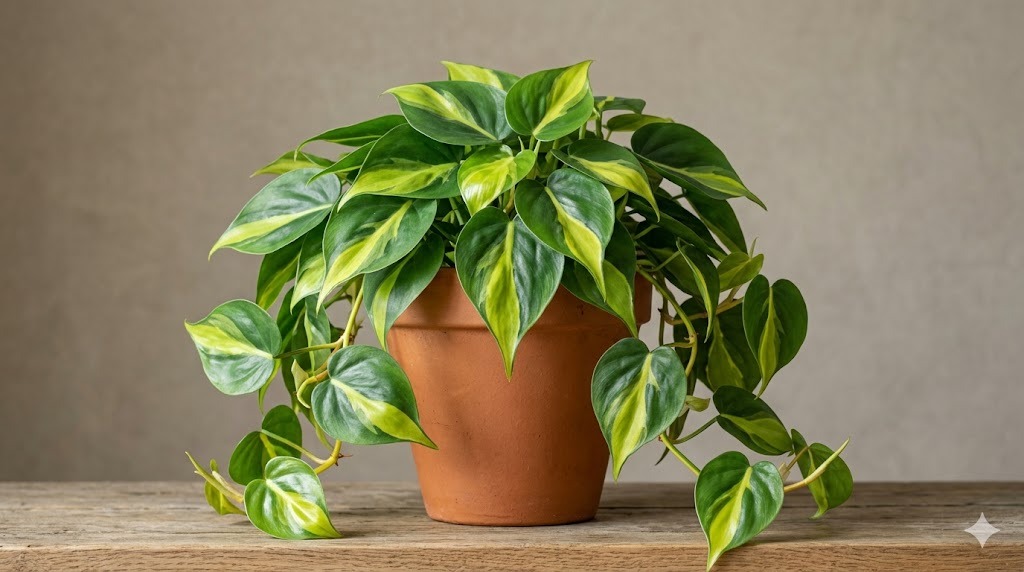
The Philodendron Brasil is a trailing heartleaf philodendron whose glossy green leaves come splashed down the center with bright streaks of lime-green and golden-yellow.
🗓️ Last reviewed: June 2026
Overview
The Philodendron Brasil is a trailing heartleaf philodendron whose glossy green leaves come splashed down the center with bright streaks of lime-green and golden-yellow. It is named for those colors, which echo the green and yellow of the Brazilian flag. Behind the eye-catching variegation is one of the easiest, fastest, most forgiving trailing plants you can own: it grows quickly, shrugs off a missed watering, and looks just as good cascading off a high shelf as it does climbing a pole. If you want a colorful vining plant that rewards beginners and rarely complains, this is one of the best places to start.
Origin & Natural Habitat
The species behind this cultivar, Philodendron hederaceum, is native to the tropical rainforests of Central and South America and the Caribbean, where it grows as a climbing and trailing aroid. On the forest floor it scrambles along the ground, then climbs up tree trunks toward the light, gripping the bark with thick aerial roots as it ascends. The 'Brasil' itself is not a wild plant - it is a cultivated, selected and named variety, propagated for its distinctive flag-like coloring rather than collected from the jungle.
The name tells its story. Philodendron comes from the Greek philo, meaning "love," and dendron, meaning "tree" - literally "tree-loving," a nod to the way the plant climbs and clings to trees in the wild. Hederaceum means "ivy-like," describing its trailing, ivy-style growth.
Appearance
Every Philodendron Brasil leaf is a little different - that is the whole charm of it. The glossy, heart-shaped blades are painted with random bands of color down the middle, so no two leaves ever look quite the same:
- Variegation: irregular central streaks of lime-green and golden-yellow, sometimes with a pinkish-cream midrib; each leaf is unique, and the pattern can revert to plain green if conditions are not bright enough.
- Leaf shape: classic heart shape, smooth and glossy, coming to a soft point.
- Stems: the vining stems often show a reddish or pinkish hue, especially on new growth.
- Aerial roots / growth habit: a trailing or climbing vine that puts out small aerial roots at the nodes, ready to grip a pole or dangle from a shelf.
Indoors the vines trail or climb to 1-2 meters and beyond over time, easily long enough to spill down a bookcase or wrap a moss pole.
Why People Love It - Qualities & Benefits
- Colorful foliage: the lime-and-gold variegation stays bright and cheerful all year, adding warmth that plain green plants can't.
- Fast, rewarding growth: in good light it puts out new leaves quickly through the growing season, so progress is easy to see.
- Extremely forgiving: it tolerates a missed watering, average rooms, and a range of light far better than most variegated plants - genuinely beginner-friendly.
- Versatile styling: hang it in a basket, trail it off a high shelf, or train it up a pole - it looks great every way.
- Very easy to propagate: a single cutting roots almost effortlessly, so one plant quickly becomes many.
Like most leafy tropicals it adds a little humidity to a room and contributes to a greener, calmer space. (The famous "air-purifying" claims are real but modest in a normal home - the main benefit is psychological: greenery measurably lowers stress and lifts mood.)
Care
Light
Bright, indirect light is what keeps the variegation vivid - a spot near an east or north window, or set back from a brighter south or west window. The plant will tolerate medium and even lower light, but in the shade the new leaves come out greener and greener as the variegation fades, and growth slows right down. Avoid harsh, direct midday sun, which can scorch and bleach the leaves. If your Brasil is losing its color, more light is almost always the answer.
Watering
Let the top 2-3 cm of soil dry out before you water again, then water thoroughly and let the excess drain away completely. This plant is forgiving and somewhat drought-tolerant - it would rather be a little dry than soggy. Sitting in wet soil is the main risk, because that is what causes root rot, the number-one killer. Reading the plant helps: limp, drooping leaves usually mean it is thirsty, while yellowing leaves usually mean it has been overwatered.
Soil & Potting
Use a chunky, well-draining aroid mix: regular potting soil loosened with orchid bark, perlite, and a little coco coir. The roots need air around them. Always plant it in a pot with drainage holes so water can escape.
Humidity & Temperature
The Philodendron Brasil is happy at average room humidity but happier above about 50% - a bit of extra moisture in the air keeps leaf tips from crisping. It enjoys temperatures of roughly 18-27 °C and dislikes cold drafts and anything below about 12-15 °C, so keep it away from chilly windows and doorways in winter.
Feeding
Feed with a balanced liquid houseplant fertilizer, diluted, about once a month through the growing season of spring and summer. Stop feeding in autumn and winter when growth naturally slows down.
Repotting
Repot every 1-2 years in spring, moving up just one pot size when the roots start to circle the bottom or push out of the drainage holes. A slightly snug pot is fine; an oversized pot just holds too much wet soil.
Keeping the variegation bright - light and managing reversion
This is the one tip that makes or breaks a Brasil. The lime-and-gold color only holds up in good light. In a dim corner the plant "gives up" on variegation and starts pushing out all-green leaves - a process called reverting. The fix is twofold: give it bright, indirect light so new growth comes out colorful, and prune back any reverted, all-green or leggy stems to encourage fresh variegated growth from lower down. Cutting just above a node redirects the plant's energy into bushier, more colorful vines. A moss or coir pole is an optional bonus - climbing tends to give larger leaves - but the real key is simply enough light.
Propagation
Philodendron Brasil is one of the easiest plants to propagate. Cut a stem section just below a node (the little bump where a leaf and aerial root emerge) - the cutting must include at least one node. Place the node in a glass of water or directly into a moist, chunky mix. Put it somewhere bright and roots will usually appear in about 2-3 weeks. Once those roots are a few centimeters long, pot the cutting up in normal aroid mix. Tucking several rooted cuttings back into the parent pot is the easiest way to make the plant fuller. A leaf with no node will never grow into a plant.
Common Problems & Pests
- Yellow leaves: usually overwatering or soggy soil. Let the mix dry more between waterings and check the drainage.
- Brown crispy edges: low humidity or underwatering - raise humidity and keep watering more consistent.
- Loss of variegation / all-green leaves: too little light. Move it brighter and prune back the reverted growth to encourage colorful new leaves.
- Leggy, sparse vines: also low light. Pinch back the stems to encourage the plant to branch and bush up.
- Root rot: mushy stems and black roots from waterlogged soil - unpot, cut away the rotten roots, and repot in fresh, dry, chunky mix.
- Pests: watch for spider mites (fine webbing, stippled leaves), mealybugs (white fluff in the leaf joints), scale, and aphids. Isolate the plant, wipe the leaves, and treat with insecticidal soap or neem oil.
Toxicity & Safety
Mildly toxic to cats, dogs, and humans if chewed. All parts contain insoluble calcium oxalate crystals, which cause mouth and throat irritation, drooling, and vomiting if eaten. It is not deadly, but keep it out of reach of pets and small children who like to chew on leaves.
Pros & Cons
Pros
- Bright, colorful variegated foliage that stays cheerful year-round.
- Fast and rewarding - visible new growth.
- Extremely forgiving and beginner-friendly.
- Versatile - hang, trail, or climb it.
- Very easy to propagate and share.
Cons
- Loses its color in low light and reverts to plain green.
- Vines can get leggy if neglected or under-lit.
- Mildly toxic to pets and kids.
- Needs occasional pruning to stay full and colorful.
- Trailing habit means it eventually needs a hanging spot, shelf, or pole.
Best Suited For
- Anyone who wants a colorful, low-effort trailing plant.
- Beginners looking for a forgiving first vining plant.
- Bright rooms with a shelf, hanging spot, or pole to show it off.
- Plant owners who enjoy easy propagation and making plants fuller.
Not ideal for very dark rooms where it will lose its variegation, or homes with pets and toddlers who chew everything in sight.
FAQ
Why is my Philodendron Brasil turning all green / losing its variegation? It needs more light. In dim conditions the plant reverts to plain green leaves to survive. Move it to a brighter, indirect spot and prune back the all-green, reverted stems to encourage colorful new growth.
How is it different from a regular heartleaf philodendron? It is the same species, Philodendron hederaceum - the 'Brasil' is simply a variegated cultivar of it. The care is essentially identical; the difference is the lime-and-gold streaking, which a plain heartleaf philodendron lacks.
How often should I water it? When the top 2-3 cm of soil is dry - often about once a week in summer and less in winter. It tolerates a little drought far better than soggy soil, so always check the soil rather than following a fixed schedule.
Can I make my plant fuller and bushier? Yes. Pinch or prune back leggy vines just above a node, and tuck the cuttings (once rooted) back into the same pot. Regular trimming and good light keep it dense and colorful.
Should I let it trail or climb it up a pole? Either works. Trailing from a shelf or basket looks lovely and is the most common way to grow it; climbing a moss or coir pole tends to give slightly larger leaves. Choose whichever suits your space.