Philodendron Micans (Philodendron hederaceum var. hederaceum)
The Philodendron Micans - Philodendron hederaceum var.
🗓️ Last reviewed: June 2026
Overview
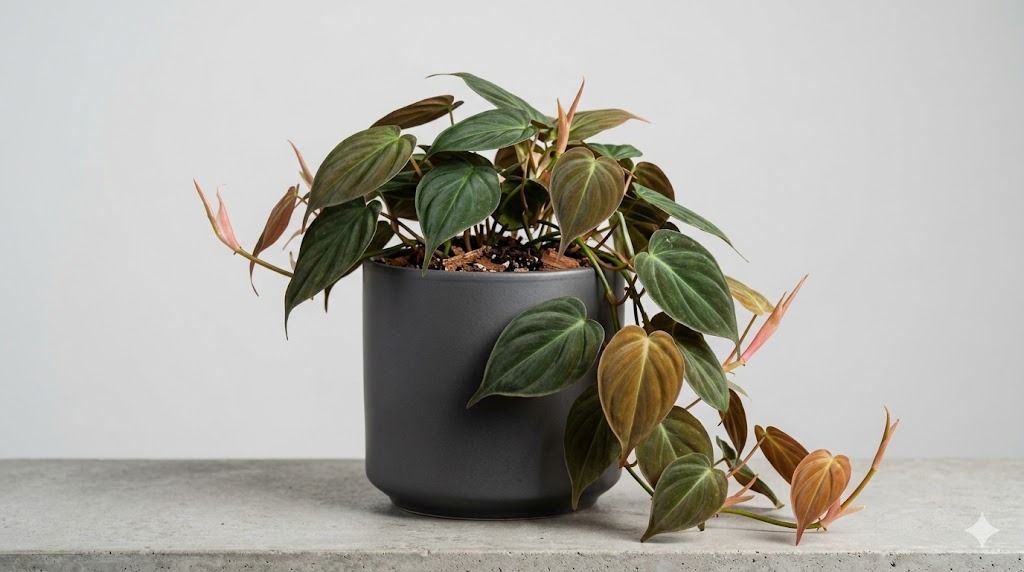
The Philodendron Micans - Philodendron hederaceum var. hederaceum - is the velvet-leaf form of the common heartleaf philodendron, and it is grown for one thing above all: its foliage. Where the classic heartleaf is glossy, micans is soft and matte, with heart-shaped leaves covered in a fine velvety nap that catches the light and shifts from deep bronze and rich chocolate to dark emerald green, often with a faint pink or copper edge on new growth. That iridescent, almost suede-like surface is what people fall for. It is also one of the genuinely easy trailing plants: it asks for very little, forgives the occasional missed watering, and grows fast enough to feel rewarding without taking over your home. It suits beginners who want something that looks far more exotic than it is to care for, and it suits collectors who simply want that velvet texture on a shelf. Be honest about one thing before you buy: it is gorgeous and forgiving, but it is toxic if chewed, so it is not the right pick for a home where pets or toddlers treat plants as snacks.
Origin & Natural Habitat
Philodendron hederaceum is native to the tropical forests of Central America, the Caribbean, and northern South America, where it grows as a vining climber. In the wild it is a hemiepiphyte: it usually starts life on the forest floor, then sends its stems scrambling up tree trunks toward the light, clinging on with aerial roots as it climbs, and trailing where there is nothing to grab. It belongs to the Araceae family - the aroids - which makes it a relative of the pothos, the monstera, and the peace lily, and like its cousins it carries calcium oxalate crystals in its tissue. The botanical name tells you what it is. Philodendron comes from the Greek "philo," meaning love, and "dendron," meaning tree - the "tree-lover," for its habit of climbing trees. The species name hederaceum means "ivy-like," a nod to its trailing, climbing habit, and the common name "micans" is simply Latin for "glittering" or "shimmering," which is exactly what that velvety surface does in the light.
Appearance
Picture slender trailing stems lined with soft, heart-shaped leaves that are not glossy but velvety - matte and faintly fuzzy to the touch, with a surface that seems to glow rather than shine. New leaves emerge a warm bronze, copper, or deep chocolate, often flushed with pink along the edges, and they deepen to a rich dark green with a slight iridescent sheen as they mature. The undersides are typically a soft burgundy or wine-red, a lovely detail when the stems trail and the backs of the leaves show. It is a smaller-leaved, daintier plant than many philodendrons, which is part of its charm.
- Leaves: heart-shaped and velvety, matte rather than glossy, shifting from bronze and chocolate on new growth to iridescent dark green as they age, with burgundy undersides.
- Texture: a fine, soft, suede-like nap over the leaf surface - the defining feature, and the reason for the name "micans" (shimmering).
- Stems: slender and trailing, putting out small aerial roots at the nodes that let it climb a support or root where it touches a surface.
- Growth habit: a fast-growing trailing and climbing vine, equally happy spilling from a hanging basket or scrambling up a moss pole.
Indoors the trailing stems commonly reach around 60-120 cm or more, and the leaves stay smaller (often 5-8 cm) when trailing, growing noticeably larger if you let the plant climb.
Why People Love It - Qualities & Benefits
- That velvet texture: the soft, matte, shimmering foliage is unlike most common houseplants, and it is the headline reason to grow it - it looks exotic but behaves like an easy beginner plant.
- Genuinely easy and forgiving: it tolerates a range of light, bounces back from the odd missed watering, and grows fast, which makes it deeply satisfying for new plant owners.
- Beautiful colour shifts: new growth in bronze, copper, and pink maturing to iridescent green gives the plant a quiet, changing display all on its own.
- Versatile habit: trail it from a shelf or basket, or train it up a moss pole for bigger leaves - it does whichever job you want.
- Very easy to propagate: stem cuttings root readily, so one plant quickly becomes several, or a much fuller pot, for free.
- Atmosphere: like most leafy tropicals it adds a little humidity and a lot of life to a room. (The popular "air-purifying" claims are real but modest in a normal home; the bigger benefit is psychological, since greenery measurably lifts mood and lowers stress.)
Care
Light
Bright, indirect light is ideal and brings out the best colour and the densest, most velvety leaves. A spot near an east window, or set back from a brighter south or west window, suits it perfectly. It will tolerate medium and even somewhat lower light better than most plants - one reason it is so beginner-friendly - but in dim conditions the growth turns leggy, the gaps between leaves stretch out, and the rich colour fades toward plain green. Avoid harsh direct midday sun, which scorches the soft velvety surface and bleaches the leaves; gentle morning sun is fine. If your micans is sparse and stretching, it is reaching for more light.
Watering
Let the top 2-3 cm of the mix dry out between waterings, then water thoroughly until it drains through. Micans likes its soil to dry out a little on top but not to go bone dry through the whole pot for long stretches. The fast route to trouble, as with nearly every houseplant, is overwatering - leaving it sitting in soggy soil rots the roots. Ease off in winter, when growth slows and the plant uses far less. Drooping, limp stems usually mean it is thirsty and perk up within hours of a drink, while yellowing lower leaves more often point to overwatering, so check the soil before you decide which way to go.
Soil & Potting
Use a light, airy, well-draining aroid-style mix: a normal peat or coco-based potting mix loosened with plenty of perlite, and ideally a handful of orchid bark, gives the roots the air they want. The roots must never stay waterlogged. Always plant into a container with drainage holes.
Humidity & Temperature
As a tropical plant it appreciates higher humidity - aim for around 50% or more for the lushest growth - but it is tolerant and will cope with average household air better than fussier velvet-leaved philodendrons. Misting, a pebble tray, or a small humidifier all help in dry, heated rooms, and grouping it with other plants raises local humidity too. It is happiest warm, around 18-27 C, and dislikes cold drafts and temperatures below about 13 C, which can stall it and cause leaf damage.
Feeding
Feed every 2-4 weeks through spring and summer with a balanced liquid houseplant fertilizer at half strength to support its fast growth. Stop or reduce feeding in autumn and winter while growth has slowed, and flush the soil occasionally to avoid a build-up of fertilizer salts.
Repotting
Repot every 1-2 years, or when you see roots circling the pot or poking out of the drainage holes. Move up just one pot size - too large a pot holds excess wet soil around the roots - and refresh the mix at the same time. Spring or early summer, when the plant is in active growth, is the best time.
How to keep it full and trailing - pinch, train, and turn
Micans rewards a little shaping. Pinch or prune the stem tips regularly, especially if the plant starts to look thin or leggy: cutting just above a leaf node pushes the plant to branch and grow bushier instead of producing one long bare runner. Save those cuttings to root and tuck back into the same pot for a fuller look. Decide early whether you want it to trail or climb - a moss pole or trellis encourages bigger, more dramatic leaves, while a basket gives you long cascading stems with smaller foliage. And turn the pot every week or two so it grows evenly toward the light rather than leaning to one side.
Propagation
The Philodendron Micans is one of the easiest plants to propagate, which makes it a great first attempt. Take a stem cutting with at least one or two nodes - the little bumps on the stem where leaves and aerial roots emerge - and snip just below a node. Strip the lowest leaf, then root the cutting in a glass of water or directly in a moist, well-draining mix. The node is the part that matters: that is where new roots form. You will usually see roots within a couple of weeks in water, and once they are an inch or two long you can pot the cutting up. For the fullest result, root several cuttings and plant them back into the parent pot to thicken it up.
Common Problems & Pests
- Leggy growth with big gaps between leaves: the most common complaint, and almost always a sign of too little light - move it brighter and pinch the tips to encourage bushier growth.
- Yellowing leaves: usually overwatering and soggy roots; let the top of the mix dry more between waterings and check that the pot drains freely.
- Brown, crispy leaf tips or edges: typically low humidity and dry air, or occasionally a build-up of fertilizer salts - raise humidity and flush the soil.
- Drooping, limp stems: most often underwatering; the plant usually recovers quickly after a thorough drink.
- Fading colour and small pale leaves: not enough light, which washes out the bronze-and-green iridescence; give it a brighter (but still indirect) spot.
- Pests: watch for spider mites (encouraged by dry air), mealybugs, aphids, and scale. Inspect new leaves and leaf undersides regularly, isolate an affected plant, and treat with insecticidal soap or neem oil.
Toxicity & Safety
Toxic if ingested - keep away from pets and small children. Like other philodendrons and aroids, Philodendron Micans (Philodendron hederaceum) contains insoluble calcium oxalate crystals throughout its leaves and stems. If a cat, dog, or child chews or swallows part of the plant, those crystals cause intense burning and irritation of the mouth, lips, and tongue, drooling, and difficulty swallowing, and can lead to vomiting. The sap can also irritate skin and eyes on contact. It is rarely life-threatening, but it is genuinely unpleasant and distressing, so this plant is not a good fit for homes where animals or toddlers are likely to nibble it. Place it well out of reach - a high shelf or a hanging basket suits both its trailing habit and your peace of mind - wash your hands after pruning, and if ingestion does happen, contact a vet, doctor, or poison control line for advice.
Pros & Cons
Pros
- Striking velvety, iridescent foliage that looks exotic but is easy to grow.
- Genuinely beginner-friendly, forgiving, and fast-growing.
- Tolerates a range of light, including medium light, better than many plants.
- Versatile - trails from a basket or climbs a pole for bigger leaves.
- Extremely easy to propagate from cuttings.
Cons
- Toxic to pets and humans if chewed, due to calcium oxalate.
- Loses colour and goes leggy in low light.
- Needs occasional pinching and shaping to stay full rather than bare.
- Prefers higher humidity for its very best, lushest growth.
- The soft velvety leaves scorch easily in harsh direct sun.
Best Suited For
- Beginners who want a plant that looks far more demanding than it actually is.
- Collectors after that distinctive velvet, colour-shifting foliage.
- Bright, indirect spots, hanging baskets, and high shelves where it can trail safely out of reach.
- Anyone who enjoys propagating and shaping a fast-growing trailing plant.
Not ideal for homes where pets or small children chew on plants, very dark corners, or anyone who wants a plant that never needs pinching or a glossy rather than matte leaf.
FAQ
Why is my philodendron micans leggy with big gaps between the leaves? Almost always too little light. Move it to a brighter spot with bright indirect light, and pinch the stem tips just above a leaf node to encourage it to branch and grow fuller.
Is the philodendron micans toxic to cats and dogs? Yes. Like all philodendrons it contains calcium oxalate crystals and is toxic if chewed or swallowed, causing painful mouth irritation, drooling, and vomiting. Keep it out of reach of pets and small children, and call a vet or poison line if ingestion happens.
Why are the leaves losing their bronze and purple colour? Usually not enough light. The rich iridescent bronze-to-green colour and burgundy undersides show best in bright indirect light; in dim conditions the leaves fade toward plain green and grow smaller.
Should I let it trail or climb? Either works. Trailing from a basket gives long cascading stems with smaller leaves; training it up a moss pole or trellis encourages noticeably larger, more dramatic foliage. Choose based on the look you want.
How often should I water it? Let the top 2-3 cm of soil dry out, then water thoroughly until it drains through, and water less in winter. Check the soil with your finger rather than following a fixed schedule - limp stems mean thirsty, yellowing lower leaves usually mean too wet.