Philodendron Pink Princess (Philodendron erubescens 'Pink Princess')
The Philodendron Pink Princess - Philodendron erubescens 'Pink Princess' - is one of the most sought-after collector houseplants in the world, and it earns the hype almost entirely on looks.
🗓️ Last reviewed: June 2026
Overview
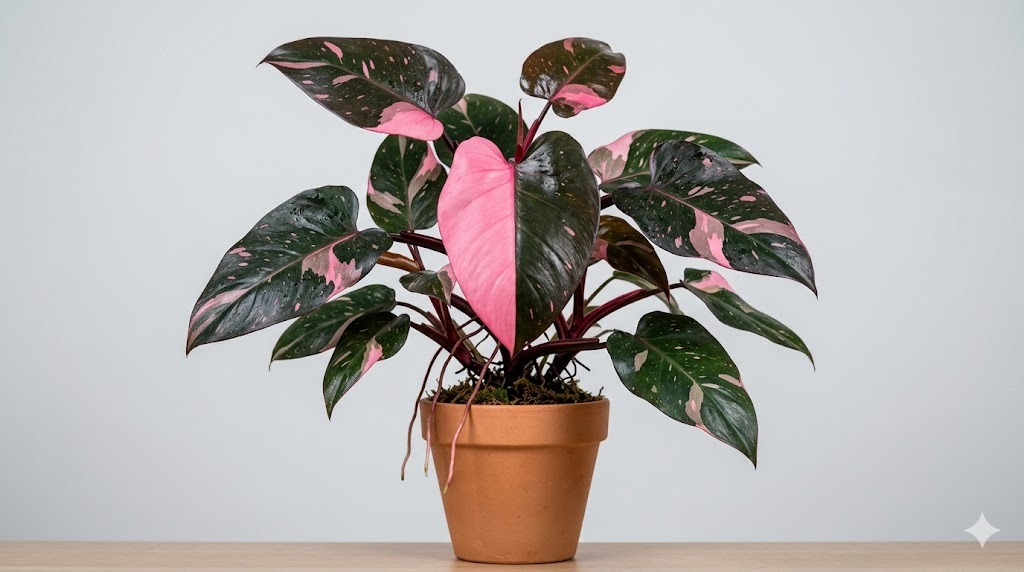
The Philodendron Pink Princess - Philodendron erubescens 'Pink Princess' - is one of the most sought-after collector houseplants in the world, and it earns the hype almost entirely on looks. The draw is its variegation: deep green, almost black leaves splashed and streaked with bubblegum pink, so that no two leaves are ever quite the same. It is a climbing philodendron at heart, happiest scrambling up a support, and with the right light it produces leaf after leaf marbled in pink. Be honest with yourself before you buy, though: this is an expensive plant with a couple of genuine quirks. The pink is not guaranteed - it depends heavily on light - and the plant is toxic if chewed. Give it bright indirect light, a pole to climb, and a little patience, and it rewards you with some of the most striking foliage you can grow indoors.
Origin & Natural Habitat
Philodendron erubescens is native to the tropical rainforests of South America, in Colombia and the surrounding region. In the wild the species is a hemiepiphyte and a climber: it sends roots into the ground but uses aerial roots to haul itself up tree trunks toward brighter light in the canopy, climbing rather than trailing. It belongs to the Araceae family, the aroids, which makes it a relative of the Monstera, the Pothos, and the Peace Lily - and like those relatives it carries calcium oxalate in its tissues. The 'Pink Princess' itself is not a wild plant; it is a cultivated variety of the species, selected and propagated for its pink variegation. That is worth knowing, because the pink is an unstable trait that has to be maintained through careful propagation - it does not breed true from seed, and it is the reason the plant has historically been scarce and pricey. The species name erubescens means "blushing" or "reddening," a nod to the reddish tones in the stems and new growth that run right through the whole species.
Appearance
Picture a climbing plant with glossy, heart-to-arrow-shaped leaves in a deep, dark green - so dark it can look almost black - and then, scattered across that backdrop, irregular splashes, streaks, and half-moons of vivid bubblegum pink. The variegation is what people fall for, and its sheer unpredictability is part of the appeal: one leaf might carry a single pink fleck, the next a dramatic half-pink, half-green split. New leaves and the stems often emerge with a reddish or wine-coloured blush, true to the "erubescens" name. It is important to understand that the pink is not painted on evenly - it is genuinely random, leaf by leaf, and that is normal.
- Leaves: glossy, heart- to arrow-shaped, in a very dark green that can read almost black, marbled and splashed with irregular bubblegum-pink variegation.
- Variegation: unstable and random - it varies leaf to leaf, and the balance of pink to green shifts with the light the plant gets.
- Stems: climbing, often flushed reddish or wine-coloured, putting out aerial roots that grip a support.
- Growth habit: a climber rather than a trailer - it naturally wants to ascend a pole or trunk, and grows larger leaves as it climbs.
Indoors, given a support to climb, it commonly reaches around 60-120 cm or more over time, with the leaves getting bigger as the plant matures and gains height.
Why People Love It - Qualities & Benefits
- Striking, unique variegation: the dark green and bubblegum pink is genuinely eye-catching, and because no two leaves match, every new leaf is a small event - this is the headline reason to grow it.
- Collector and status appeal: it is one of the most coveted houseplants around, and growing a healthy, well-variegated specimen is a real point of pride for plant people.
- Climbing architecture: trained up a moss pole it makes a dramatic vertical feature rather than just another pot of leaves.
- Rewarding to grow on: with the right light it keeps pushing out new pink growth, and watching the variegation develop is part of the fun.
- Investment plant: these plants hold real value, and a strong, well-grown specimen can be propagated and shared with other enthusiasts.
- Atmosphere: like most leafy tropicals it adds a little humidity and a lot of life to a room. (The popular "air-purifying" claims are real but modest in a normal home; the bigger benefit is psychological, since greenery measurably lifts mood and lowers stress.)
Care
Light
Bright, indirect light is essential, and it is the single biggest factor in whether your plant keeps its pink. A spot near an east window, or back from a bright south or west window, is ideal. This is the crucial point with this plant: the pink variegation has no chlorophyll, so it cannot photosynthesise, and in low light the plant compensates by producing greener leaves with far less pink - it will quietly revert to mostly green. Too little light means lost variegation. At the other extreme, harsh direct midday sun will scorch the leaves, and the pale pink areas burn especially easily because they have no protective green pigment. The sweet spot is plenty of bright, indirect light - enough to keep the pink coming, but without direct blazing sun on the leaves.
Watering
Let the top of the soil dry out before you water again - roughly the top 3-5 cm. Then water thoroughly until it runs from the drainage holes, and tip away whatever collects in the saucer. Like most aroids, this plant hates sitting in soggy soil; consistently wet roots are the fast route to root rot, which is one of the most common ways people lose it. Cut watering back in winter, when growth slows. Learn to read it rather than watering on a fixed schedule: drooping or yellowing lower leaves often mean you have overwatered, while crispy edges and limp leaves can mean it has gone too dry, so check the soil with your finger before you reach for the can.
Soil & Potting
Use a light, chunky, well-draining aroid mix rather than dense, water-retaining potting soil. A blend based on potting mix loosened with plenty of perlite and orchid bark - some growers add a little coco coir or charcoal - gives the roots the air they need and lets excess water escape. The roots must never stay waterlogged. Always plant into a container with drainage holes.
Humidity & Temperature
Coming from a rainforest, it appreciates higher humidity - aim for 50-60% or more. Regular misting, a pebble tray, or a small humidifier all help, especially in dry, heated rooms, and good humidity supports lush new growth. It is happiest warm, around 18-27 C, and dislikes cold drafts and sudden chills near doors and windows. Keep it away from cold glass in winter and out of the path of heating and cooling vents.
Feeding
Feed roughly every 4 weeks through spring and summer with a balanced liquid houseplant fertilizer at half strength to support steady new growth. Do not overfeed - more fertilizer does not mean more pink, and salt build-up can damage the roots. Stop or cut right back in winter while growth has slowed.
Support & Climbing
This is a climber, so give it something to climb. A moss pole, coir pole, or wooden support encourages it to grow upward the way it would in the wild, and climbing plants tend to produce larger, healthier leaves than ones left to flop. Train the stem gently against the pole and let the aerial roots grip; keeping a moss pole lightly moist gives those roots something to grab. A supported plant is both better-looking and, often, better-variegated.
Repotting
Repot every couple of years, or when roots are clearly filling the pot and circling the drainage holes, moving up just one pot size in spring. Don't jump to a much larger container - an oversized pot holds too much wet soil around the roots and invites rot. Refresh the chunky aroid mix when you repot.
How to keep the pink - light and smart pruning
This deserves its own section, because keeping the variegation is the whole point of the plant and the part people struggle with. The pink is unstable and entirely light-dependent: give the plant abundant bright indirect light and it produces more pink; let it sit in a dim corner and it reverts toward plain green. So light comes first. Second, understand the two failure modes. If a stem starts producing only solid green leaves, you can prune back to just above a node that still carries some pink, which encourages the next growth to come back variegated. The opposite problem is an all-pink leaf or stem: it looks spectacular, but a fully pink leaf has no chlorophyll, cannot feed itself, and will eventually brown and die - and too much all-pink growth can weaken or even kill the plant, so it is usually wise to prune back to growth that has a healthy mix of pink and green. The goal you are aiming for is balance: leaves that are mostly green with generous pink, which keep the plant both beautiful and able to feed itself.
Propagation
The Pink Princess propagates readily from stem cuttings, and propagation is also how the variegation is preserved. Take a cutting with at least one node - the little bump on the stem where leaves and aerial roots emerge - and, crucially, choose a section that carries both pink and green, because a cutting from an all-green stem tends to root into an all-green plant, while an all-pink cutting has no chlorophyll and cannot survive on its own. Root the cutting in water or directly in a moist, well-draining mix; you will usually see roots within a few weeks, after which you can pot it up. Keep it warm and humid while it establishes. Because each variegated cutting is a slice of an expensive plant, this is also how growers multiply and share them.
Common Problems & Pests
- Reverting to all green: the most common disappointment, almost always caused by too little light - move it brighter, and prune back to a node with pink to encourage variegated growth.
- All-pink leaves dying: fully pink leaves have no chlorophyll, cannot photosynthesise, and will brown and die; too much all-pink growth weakens the plant, so prune back to mixed pink-and-green growth.
- Brown or crispy pink patches: the pale areas scorch easily in direct sun or very dry air - move it out of harsh light and raise humidity.
- Yellowing leaves: most often a sign of overwatering and soggy roots - let the mix dry more between waterings and check drainage.
- Root rot: the big killer, caused by dense soil and constant wetness; use a chunky aroid mix and a pot with drainage, and let the top of the soil dry out.
- Small leaves or leggy growth: usually low light or no support - give it more bright indirect light and a pole to climb.
- Pests: watch for spider mites, mealybugs, aphids, and scale. Isolate the plant and treat with insecticidal soap or neem oil.
Toxicity & Safety
Toxic to pets and people. Like other philodendrons and aroids, Philodendron erubescens 'Pink Princess' contains insoluble calcium oxalate crystals throughout its leaves and stems, and it is considered toxic to cats, dogs, and humans if chewed or swallowed. Biting into the plant releases these needle-like crystals, which can cause intense oral irritation and burning, drooling, swelling of the mouth and tongue, vomiting, and difficulty swallowing; the sap can also irritate skin and eyes on contact. It is not usually life-threatening, but it is genuinely unpleasant and a real reason for caution. Keep it well out of reach of curious pets and small children, wash your hands after pruning or taking cuttings, and consider wearing gloves if your skin is sensitive. If a person or animal chews part of the plant, rinse the mouth, offer water, and contact a doctor, a vet, or a poison-control line for advice.
Pros & Cons
Pros
- Striking, unique pink-and-green variegation that differs on every leaf.
- A genuine collector's plant with real status and value.
- Climbs a moss pole into a dramatic vertical feature.
- Rewarding to grow on, with new pink leaves to look forward to.
- Propagates readily from cuttings to multiply or share.
Cons
- Toxic to pets and people if chewed - calcium oxalate.
- The pink is unstable and easily lost in low light.
- Expensive, and prices can be high for a well-variegated plant.
- All-pink growth cannot feed itself and needs managing.
- Prone to root rot if overwatered or in heavy, soggy soil.
Best Suited For
- Collectors and enthusiasts who want a standout, high-impact variegated plant.
- Bright spots with plenty of indirect light to keep the pink coming.
- People happy to give it a moss pole and train it to climb.
- Pet-free or carefully managed homes where a toxic plant can be kept out of reach.
Not ideal for dark rooms, homes with pets or small children that can reach it, or anyone wanting a cheap, foolproof plant with guaranteed colour.
FAQ
Why is my Pink Princess losing its pink and turning all green? Almost always not enough light. The pink has no chlorophyll, so in dim conditions the plant produces greener leaves to survive. Move it to a brighter spot with plenty of indirect light, and prune back to a node that still has pink to encourage variegated new growth.
My Pink Princess put out a completely pink leaf - is that good? It looks spectacular, but a fully pink leaf has no chlorophyll and cannot feed itself, so it will eventually brown and die. Too much all-pink growth can weaken the whole plant, so it is usually best to prune back to a section with a healthy mix of pink and green.
Is the Pink Princess toxic to cats and dogs? Yes. It contains calcium oxalate crystals and is toxic to cats, dogs, and humans if chewed, causing mouth irritation, drooling, and stomach upset. Keep it out of reach of pets and children, and wash your hands after handling it.
Does it need a moss pole? It strongly benefits from one. This is a climbing plant, and given a moss pole or support it grows upward with larger, healthier, often better-variegated leaves than it makes when left to sprawl.
How often should I water it? Let the top 3-5 cm of soil dry out, then water thoroughly and let it drain - and water less in winter. Use a chunky, well-draining aroid mix, and check the soil with your finger rather than following a fixed schedule, since soggy roots cause rot.