Portulacaria Afra (Dwarf Jade / Elephant Bush)
Portulacaria afra - known as Dwarf Jade or Elephant Bush - is a fast-growing, bushy succulent shrub from South Africa that looks a lot like the classic jade plant but is quicker, tougher, and far easier to shape.
🗓️ Last reviewed: July 2026
Overview
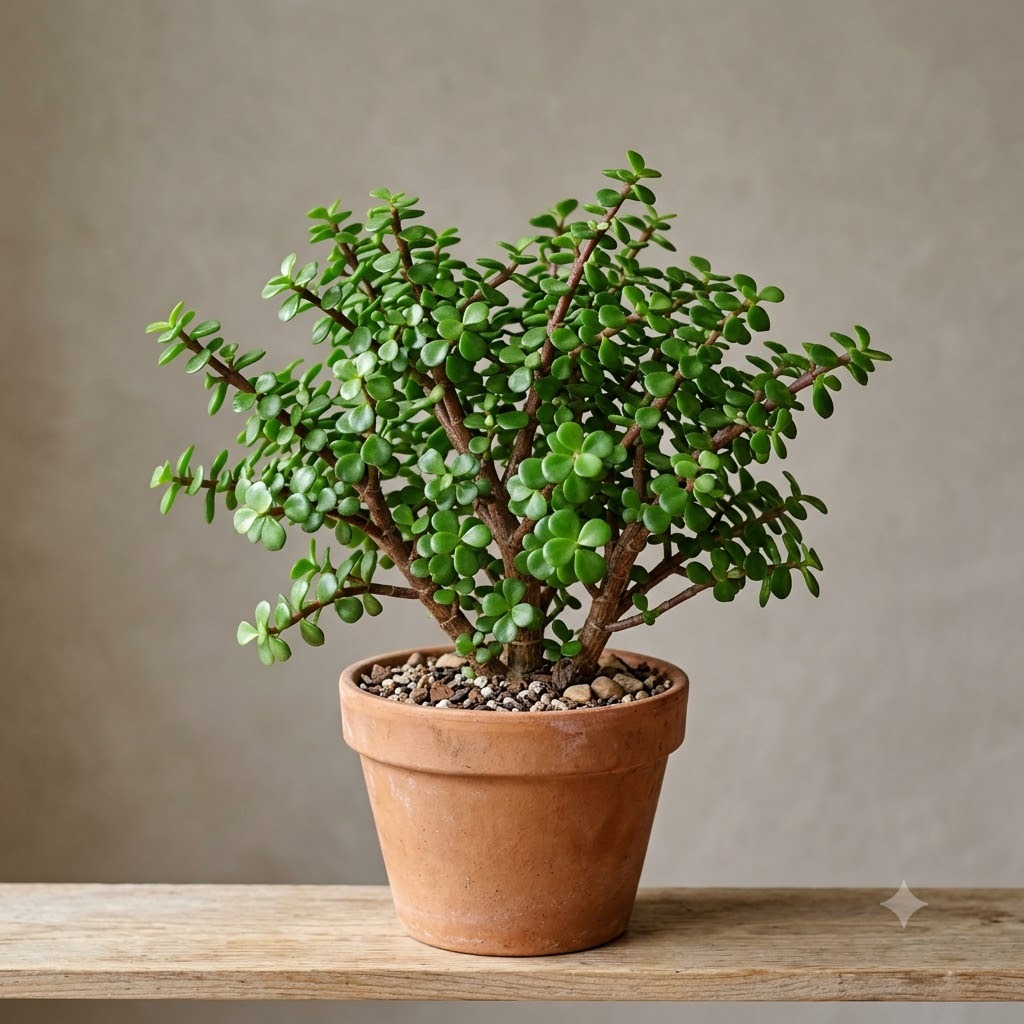
Portulacaria afra - known as Dwarf Jade or Elephant Bush - is a fast-growing, bushy succulent shrub from South Africa that looks a lot like the classic jade plant but is quicker, tougher, and far easier to shape. It has slim reddish-brown stems lined with small, round, glossy leaves, and it grows so obligingly from cuttings that it has become one of the most popular beginner bonsai subjects in the world. In its homeland it is serious ecological business - vast thickets of it feed elephants and lock away carbon - but on a sunny windowsill it is simply a cheerful, forgiving, fast-filling plant that is almost impossible to kill. It is also genuinely edible, with a crisp, tangy, lemony bite.
Origin & Natural Habitat
Portulacaria afra is native to the arid and semi-arid regions of the Eastern Cape and surrounding areas of South Africa, where it forms dense thickets known locally as "spekboom." In the wild it can grow into a substantial shrub or small tree several metres tall. It is a keystone food plant for elephants - hence "Elephant Bush" - as well as tortoises, kudu, and other browsers, all of which eat the succulent leaves.
The species has drawn real scientific and environmental attention for its remarkable ability to store carbon and its use in restoring degraded thicket landscapes. It can switch between two different photosynthesis modes depending on conditions, which helps it thrive in heat and drought. None of this is essential to growing it indoors, but it explains the plant's toughness: it evolved to endure hard, dry, sunny conditions and to bounce back fast.
Appearance
At a glance Portulacaria afra resembles a jade plant, but there are clear differences once you know them.
- Stems: slender, flexible, and reddish-brown to mahogany, quite different from the thick grey-green trunk of a true jade (Crassula ovata).
- Leaves: small, round to oval, flat, glossy, and bright green - noticeably smaller and more numerous than jade leaves, and arranged in opposite pairs.
- Growth habit: fast, bushy, and branching, with an almost weeping tendency in older plants. It fills out quickly and can be pruned into dense, tree-like shapes.
- Size: kept as a houseplant it can stay small in a pot or grow into a bushy shrub 60-120 cm or more over time; as bonsai it is trained much smaller.
- Variegated forms: a popular cream-and-green variegated cultivar exists, along with a low, cascading form ("Prostrata") that trails.
The reddish stems and small paired round leaves are the quickest way to tell it apart from a true jade.
Why People Love It - Qualities & Benefits
- Fast and rewarding: unlike the slow true jade, it grows quickly and fills out fast, so you see real progress.
- Effortless bonsai: it back-buds readily and tolerates hard pruning, making it the go-to succulent for beginner bonsai.
- Almost foolproof: it handles drought, neglect, and rough handling with ease.
- Ridiculously easy to propagate: cuttings root so reliably it is hard to fail.
- Edible and tangy: the leaves are safe to nibble, with a crisp, sour, lemony flavour used in salads in its native region.
- Air and atmosphere: as a fast-growing, sun-loving plant it is an efficient carbon fixer, a fun talking point on a windowsill.
Care
Light
Portulacaria afra loves bright light and does best with several hours of direct sun - a south or west window is ideal. The more light it gets, the more compact, colourful, and vigorous it stays; the reddish stem colour deepens in strong light. In too little light it stretches, the gaps between leaves lengthen, and growth becomes leggy and weak.
Watering
Water thoroughly, then let the soil dry out completely before watering again. In a bright spot in summer that may be every 1-2 weeks; in winter far less. It stores water in its leaves and stems and copes very well with drought, so underwatering is rarely fatal while overwatering causes soft, dropping leaves and root rot. When leaves feel soft and start falling, cut back on water.
Soil & Potting
Use a gritty, free-draining cactus and succulent mix with added perlite or pumice. Good drainage is essential; always use a pot with a drainage hole.
Humidity & Temperature
Normal dry room air is perfect - no humidity needed. It enjoys warmth, 18-27 °C, and dislikes cold. Keep it above about 5-10 °C and protect it from frost.
Feeding
Feed lightly with a diluted succulent fertiliser once or twice through spring and summer. It grows fast but does not need heavy feeding. Skip feeding in winter.
Repotting
Repot every 1-2 years, or when it fills its pot, moving up one size. For bonsai, root pruning and shallow trays are part of the training. Spring is best.
Pruning
This is where Portulacaria shines. It tolerates and responds beautifully to pruning - cut it back to shape and it branches out denser and bushier. Pruned tips can be used directly as cuttings.
Propagation
Propagation could hardly be easier. Cut a healthy stem section a few centimetres long, remove the lower leaves, and let the cut end callus (dry) for a day or two. Then push it into dry, gritty succulent mix and wait a few days before watering lightly. Roots form quickly and reliably, often within a couple of weeks. You can even root cuttings in a jar of water, though soil-rooting gives a stronger plant. Because it roots so readily, every prune produces a supply of new plants to pot up or give away.
Common Problems & Pests
- Leggy, stretched growth with wide gaps: not enough light. Move it to a sunnier spot and prune it back.
- Soft, wrinkled, or dropping leaves: usually overwatering (soft and mushy) or, less often, severe drought (wrinkled and thin). Check the soil and adjust.
- Sudden leaf drop: often a response to a shock - a big change in light, temperature, or watering. It usually recovers.
- Root rot: from soggy soil. Unpot, cut away rotten roots, and repot in dry gritty mix.
- Pests: mealybugs and spider mites are the main ones; wipe them off and treat with insecticidal soap or neem oil. Whitefly can appear on stressed plants.
Toxicity & Safety
Portulacaria afra is non-toxic and is in fact edible - the leaves are eaten raw in its native South Africa and have a crisp, tangy, lemony taste. It is considered safe around cats and dogs. As always, moderation matters, and any plant eaten in quantity can upset a stomach, but this is one of the few houseplants you can safely taste yourself.
Pros & Cons
Pros
- Fast-growing and rewarding, unlike slow true jade.
- Outstanding, forgiving beginner bonsai plant.
- Extremely easy to propagate from cuttings.
- Non-toxic and edible, with a tangy flavour.
- Tough and drought-hardy.
Cons
- Needs lots of bright light to stay compact.
- Gets leggy quickly in low light.
- Can drop leaves after a shock or overwatering.
- Stems are somewhat brittle and can snap.
- Not frost-hardy.
Best Suited For
- Beginners who want a fast, forgiving succulent.
- Anyone curious about trying easy bonsai.
- Bright, sunny windowsills.
- Pet owners and the plant-curious who like an edible, safe plant.
Not ideal for dark rooms, chronic overwaterers, or anyone wanting a plant that needs no pruning at all.
FAQ
Is Portulacaria afra the same as a jade plant? No. It looks similar but is a different plant from the true jade, Crassula ovata. Portulacaria has slimmer reddish stems, smaller round leaves, and grows much faster - which is why it makes better bonsai.
Can I really eat the leaves? Yes, in moderation. The leaves are edible and have a crisp, sour, lemony flavour, and are used in salads in South Africa. Only eat plants you are sure are Portulacaria afra and that are grown without chemicals.
Why is my plant getting tall and leggy? Not enough light. Move it to a sunnier window and prune it back hard - it will branch out bushier.
How do I make it bushier? Prune it. Cutting the tips encourages branching, and the cuttings root easily to make more plants.
How often should I water it? Only when the soil is completely dry - roughly every 1-2 weeks in summer, much less in winter. It tolerates drought far better than overwatering.