Rabbit's Foot Fern (Davallia fejeensis)
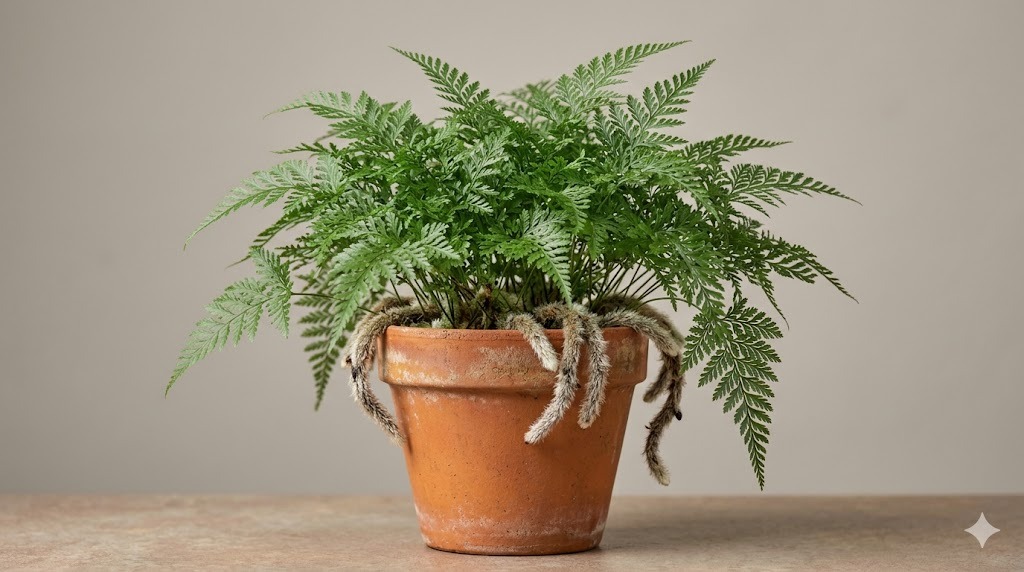
The Rabbit's Foot Fern - Davallia fejeensis - is a delicate, lacy fern grown for two things: its airy, finely divided fronds, and above all those famous furry, silvery-brown rhizomes that creep over the rim of the pot and dangle down the sides, looking uncannily like a row of little rabbit's feet.
🗓️ Last reviewed: June 2026
Overview
The Rabbit's Foot Fern - Davallia fejeensis - is a delicate, lacy fern grown for two things: its airy, finely divided fronds, and above all those famous furry, silvery-brown rhizomes that creep over the rim of the pot and dangle down the sides, looking uncannily like a row of little rabbit's feet. Those fuzzy "paws" are the reason the plant has such a devoted following, and they make it one of the most characterful ferns you can keep on a shelf or in a hanging basket. It suits anyone who wants something soft, green, and a little quirky rather than another stiff, upright foliage plant. Be honest with yourself before you buy: it is a forgiving fern by fern standards, but it is still a fern, and it has a couple of firm preferences. Give it bright indirect light, steady moisture, and reasonably humid air, and it will reward you with fresh fronds and ever-creeping feet for years.
Origin & Natural Habitat
Davallia fejeensis is native to Fiji and the surrounding islands of the South Pacific, where it grows in warm, humid, frost-free forests. In the wild it is largely an epiphyte: rather than rooting down into soil, it perches on tree trunks, branches, and mossy rocks, sending those creeping rhizomes across the bark and anchoring itself as it goes while catching moisture and leaf litter where it sits. It belongs to the Davalliaceae family, a group of ferns collectively known for exactly this trait - the furry, surface-creeping rhizomes - which is why several relatives share nicknames like hare's foot fern and squirrel's foot fern. The botanical name carries a little history of its own. Davallia honours the eighteenth-century Swiss botanist Edmund Davall, while the species name fejeensis simply means "of Fiji," pinning down where the plant comes from. The takeaway from its origins is straightforward: this is a warm-growing, humidity-loving epiphyte that lives in dappled forest light, and that is exactly how it likes to be treated indoors.
Appearance
Picture a low, spreading mound of finely cut, lacy, almost feathery fronds in a fresh mid-green, rising out of a tangle of fuzzy, silvery-brown rhizomes that crawl over the edge of the pot and trail down its sides. Those rhizomes are the whole show: they are covered in soft, pale, hair-like scales, and as they grow they branch and creep across any surface, dangling in furry "feet" that genuinely do resemble a rabbit's paw. The fronds themselves are delicate and intricately divided, giving the plant a light, soft, almost ferny-cloud texture that contrasts beautifully with the chunky rhizomes below.
- Rhizomes: furry, silvery-brown, surface-creeping stems covered in soft hair-like scales - the signature "rabbit's feet" that crawl over the pot rim and dangle down.
- Fronds: finely divided, lacy, feathery, and fresh mid-green, rising from the rhizomes in a soft, airy mound.
- Growth habit: a creeping epiphyte that spreads sideways across the surface rather than growing tall and upright.
- Texture: delicate and intricate up top, soft and fuzzy down below - the contrast is a big part of the appeal.
Indoors the fronds commonly reach around 20-40 cm tall, while the furry rhizomes slowly creep outward and over the edges, spreading wider than the pot over time.
Why People Love It - Qualities & Benefits
- The furry "rabbit's feet": the silvery, fuzzy creeping rhizomes are the headline reason to grow it - genuinely unusual, endlessly tactile, and a great talking point.
- Soft, lacy foliage: the finely divided fronds bring a delicate, airy green texture that softens a shelf or a corner.
- Pet-safe and non-toxic: it is listed as non-toxic to cats and dogs, which is a real selling point for homes with curious animals.
- Forgiving for a fern: the rhizomes hold a little reserve, so it copes with the occasional missed watering better than many fussier ferns.
- Great in baskets and on shelves: the creeping, trailing habit means it does the styling work for you, spilling its feet over the edge of a basket or high pot.
- Atmosphere: like most leafy tropicals it adds a little humidity and a lot of life to a room. (The popular "air-purifying" claims are real but modest in a normal home; the bigger benefit is psychological, since greenery measurably lifts mood and lowers stress.)
Care
Light
Bright, indirect light is what this fern wants, mirroring the dappled light of the forest floor and understory it comes from. A spot near an east or north window, or set back a little from a brighter south or west window, is ideal. It tolerates medium light reasonably well, but in deep shade it grows thin and sparse. The one thing to avoid is harsh, direct midday sun, which scorches the delicate fronds and leaves them crispy and bleached. Think "bright room, no sunbeam landing on the leaves," and you have it about right.
Watering
Keep the mix evenly and lightly moist - this is the single most important habit with this fern. It likes consistent moisture and dislikes drying out completely, but it equally dislikes sitting in a soggy, waterlogged pot, which rots the rhizomes. The reliable approach is to water when the top centimetre or two of the mix feels just barely dry, and then water thoroughly until it drains through. Take particular care with the rhizomes: water the soil, not the furry feet, and never let those rhizomes sit in standing water. Ease off a little in winter when growth slows, but never let it bake bone-dry. Lukewarm water is kinder than cold straight from the tap.
Soil & Potting
Use a light, airy, well-draining mix that respects its epiphytic roots: a peat or coco base loosened with plenty of perlite and some orchid bark or fine wood pieces works well. The roots and rhizomes need air around them and must never stay waterlogged. Wide, shallow pots suit it better than deep ones, because it spreads sideways rather than rooting down, and a shallow pot leaves room for the rhizomes to creep across the surface. Always plant into a container with drainage holes.
Humidity & Temperature
Coming from humid Pacific forests, it likes higher humidity - aim for 50% or more, and the more the better. Regular misting, a pebble tray, grouping it with other plants, or a small humidifier all help, especially in dry, heated rooms in winter. It is happiest warm, around 18-27 C, and dislikes cold drafts and sudden chills. It is not frost-hardy, so keep it away from cold windowpanes and drafty doors. Dry, heated air is the most common reason the frond tips go brown indoors.
Feeding
Feed lightly through spring and summer, roughly once a month, using a balanced liquid fertilizer diluted to half strength or weaker - ferns are sensitive to overfeeding and can show burnt tips if you are heavy-handed. Stop feeding in winter while growth has slowed and the plant is resting.
Repotting
Repot infrequently, only every couple of years and only when it is genuinely crowded - though in practice the trigger is usually the rhizomes spilling over the edges rather than roots filling the pot. Do it in spring. When you repot, set the plant in gently and resist the urge to bury the rhizomes (more on that below) - they are meant to sit on top. A wide, shallow pot is the natural choice given how it grows.
Don't bury the rhizomes - the one mistake to avoid
This deserves its own section, because it is the single most common way people accidentally kill a healthy plant. The furry rhizomes are designed to creep across the surface in open air, exactly as they do on bark in the wild. If you bury them under soil when potting or repotting, they tend to rot, and the plant can decline fast. So when you plant or repot, let the rhizomes rest on top of the mix, only anchoring the actual roots below the surface. If a creeping foot lifts away from the pot, that is completely normal - leave it to dangle and wander; do not press it down into the soil. Keeping those feet on the surface, and the surface lightly moist rather than soaked, is most of the battle.
Propagation
The Rabbit's Foot Fern is easy and satisfying to propagate by rhizome division, which plays directly to how it grows. The simplest method is to cut a healthy section of rhizome a few inches long that has at least one or two fronds attached, then pin or lay it onto the surface of a moist, well-draining mix in its own small pot, keeping the rhizome on top rather than buried. Hold it in light contact with the mix (a small staple, hairpin, or even a little stone works to keep it snug), keep the surface humid and lightly moist, and in a few weeks new roots grip down and fresh fronds begin to push up. Warmth and humidity speed everything along. It is a slow, gentle process compared with a fast-rooting cutting, but it is reliable and a lovely way to make more plants - or to share those famous feet with a friend.
Common Problems & Pests
- Brown, crispy frond tips or edges: the most common complaint, almost always low humidity and dry air; mist more, add a pebble tray or humidifier, and keep it away from heating vents.
- Yellowing or browning fronds: often a watering imbalance - either too dry, or too wet and soggy at the roots; aim for steady, even moisture and check the mix before watering.
- Rotting or mushy rhizomes: usually from rhizomes being buried or from a constantly waterlogged pot; keep the feet on the surface and never let the plant stand in water.
- Pale, sparse, thin growth: typically too little light (or, less often, too much harsh sun); move it to bright indirect light, out of direct sunbeams.
- Crispy, scorched fronds: direct midday sun burning the delicate foliage; shift it back from the window.
- Shrivelling rhizomes: the air is too dry or the plant has been left bone-dry for too long; raise humidity and keep moisture steady.
- Pests: watch for scale, mealybugs, and spider mites, which are more likely in dry air. Isolate the plant and treat carefully with insecticidal soap or neem oil - ferns can be sensitive, so spot-test first and avoid harsh chemical sprays.
Toxicity & Safety
Non-toxic and pet-safe. The Rabbit's Foot Fern (Davallia fejeensis) is listed as non-toxic to cats, dogs, and humans, which makes it a genuinely reassuring choice for homes with curious pets and small children. This is a care note rather than an invitation to eat it - it is an ornamental plant, not food - but a nibbling cat or dog will not be poisoned by it, and that peace of mind is one of its quiet strengths. As a bonus, those furry rhizomes are so eye-catching that pets and children tend to want to touch them, so it is genuinely good to know they are harmless.
Pros & Cons
Pros
- The famous furry, creeping "rabbit's feet" rhizomes - genuinely unusual and tactile.
- Non-toxic and pet-safe for homes with animals and children.
- Soft, lacy, airy foliage that brings delicate green texture.
- More forgiving than many fussier ferns.
- Ideal trailing habit for hanging baskets and shelves.
Cons
- Likes higher humidity than many homes naturally provide.
- Browns at the frond tips quickly in dry, heated air.
- Rhizomes rot if buried or kept waterlogged.
- Dislikes cold drafts and direct midday sun.
- Propagation by division is slow compared with a fast-rooting cutting.
Best Suited For
- People who want a soft, characterful fern with an unusual party trick rather than another upright green plant.
- Homes with curious pets, thanks to its non-toxic status.
- Bright, indirect spots, hanging baskets, and shelves where the feet can creep and dangle.
- Anyone able to keep humidity up and moisture steady, especially in winter.
Not ideal for very dry homes with no humidity help, dark rooms, hot sunny windowsills, or anyone who wants a completely no-effort, drought-proof plant.
FAQ
Why are the tips of my rabbit's foot fern turning brown? Almost always dry air and low humidity, which ferns hate. Mist it regularly, stand it on a pebble tray or near a humidifier, and keep it away from radiators and heating vents. Steady moisture at the roots helps too.
Should I bury the furry rhizomes when I pot it? No - this is the key mistake to avoid. The fuzzy rhizomes are meant to sit on top of the soil in open air. Bury them and they tend to rot. Only the roots go below the surface; let the feet creep across the top and dangle over the edge.
Is the rabbit's foot fern safe for cats and dogs? Yes. Davallia fejeensis is listed as non-toxic to cats and dogs, so it is a safe choice for pet households - though it is still an ornamental plant, not something to be eaten.
How do I propagate it? By rhizome division. Cut a section of rhizome a few inches long with one or two fronds attached, lay it on top of a moist, well-draining mix (do not bury it), keep it warm and humid, and new roots and fronds will form over a few weeks.
How often should I water it? Keep the mix evenly and lightly moist, watering when the top centimetre or two feels barely dry, and water a little less in winter. Never let it dry out completely, but never let it sit soggy either - check the soil rather than following a fixed schedule.