Rhaphidophora Tetrasperma (Mini Monstera)
The Rhaphidophora Tetrasperma - almost always sold as the "Mini Monstera" - is one of the most popular climbing houseplants of the last few years, and for good reason.
🗓️ Last reviewed: July 2026
Overview
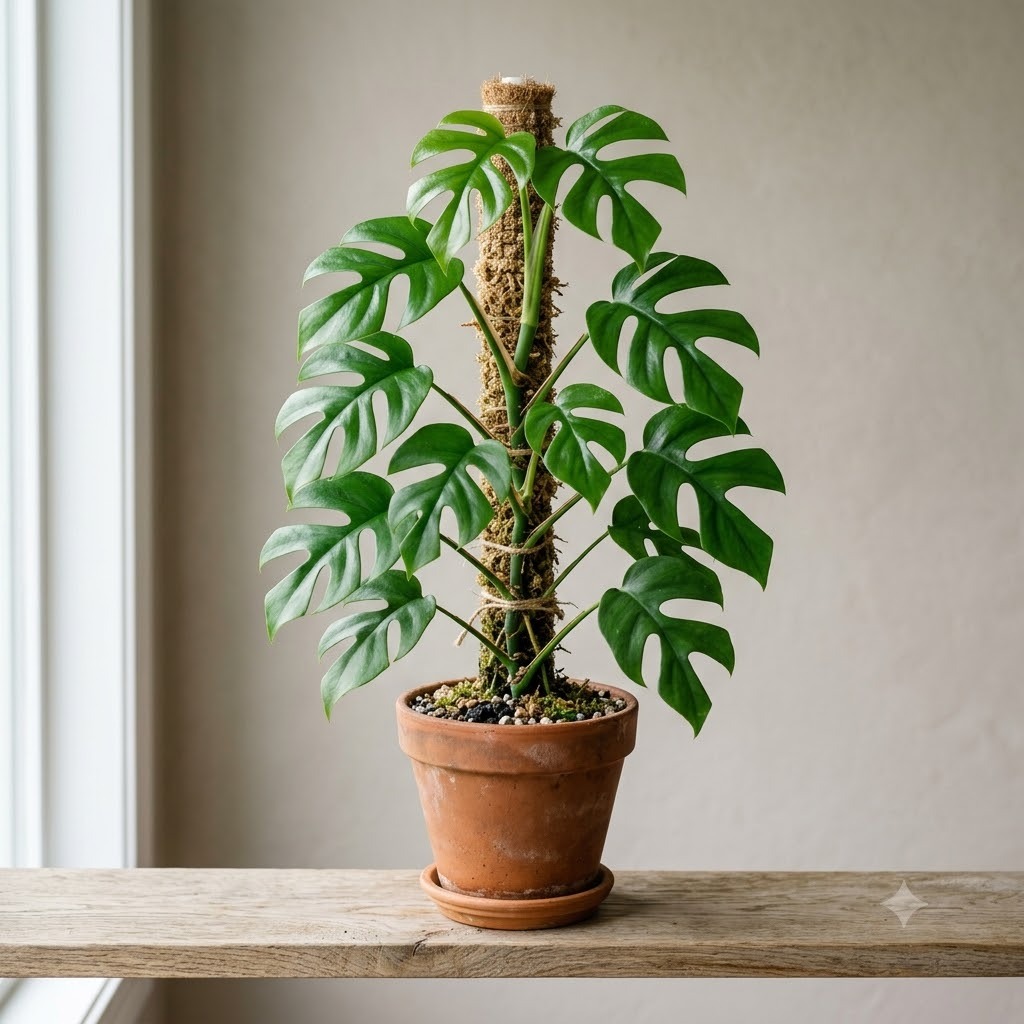
The Rhaphidophora Tetrasperma - almost always sold as the "Mini Monstera" - is one of the most popular climbing houseplants of the last few years, and for good reason. It has the look everyone wants: neat, glossy leaves with the same fenestrated splits you see on a Monstera, but on a smaller, faster, more manageable plant. Despite the nickname it is neither a Monstera nor a Philodendron - it is its own genus, Rhaphidophora. Give it a moss pole and bright indirect light and it grows with genuine enthusiasm, climbing quickly and pushing out one attractive leaf after another. It is a fantastic plant for people who love the Monstera look but do not have the floor space for a two-meter monster.
Origin & Natural Habitat
Rhaphidophora Tetrasperma is native to the tropical regions of southern Thailand and Malaysia, where it grows in humid, forested lowlands. Like a true Monstera, it is a root-climber: it starts near the forest floor and uses aerial roots to grip tree trunks and haul itself upward toward brighter light. In habitat it can climb several meters into the canopy.
For years the plant was quite rare in cultivation and rumored to be endangered, which drove prices sky-high. Today it is widely propagated and has become a common, affordable houseplant - but the "special" reputation stuck, and it remains a collector favorite. Understanding its habit as a fast, light-seeking climber is the key to keeping it happy indoors.
Appearance
The Mini Monstera has slender, trailing-then-climbing stems and heart-shaped green leaves that develop deep, clean splits as the plant matures. The fenestrations run inward from the leaf edge, giving that unmistakable "Swiss cheese" look at a fraction of the size - individual leaves usually reach around 10-25 cm indoors.
Key features:
- Fenestration: young leaves are small and solid; mature, well-lit, climbing leaves develop the signature splits.
- Fast climbing habit: thin flexible stems that vine and grip, growing quickly upward when supported.
- Aerial roots: small roots emerge along the stem to cling to a pole or surface.
- Compact scale: far tidier than a full Monstera, making it suited to shelves, corners, and smaller rooms.
Given a pole, an indoor plant can climb 1.5 meters or more in a couple of seasons. Left to trail, it will cascade instead, though the leaves tend to stay smaller and less split.
Why People Love It - Qualities & Benefits
- The Monstera look, downsized: all the fenestrated drama without the enormous footprint.
- Genuinely fast: in good light it is one of the quickest-growing houseplants you can own, giving constant, satisfying new growth.
- Flexible styling: it can climb a pole as a vertical feature or trail from a shelf.
- Easy to propagate: cuttings root readily, so one plant quickly becomes several.
- Greenery benefits: like most leafy tropicals it adds humidity and a calming green presence to a room, and caring for a plant that grows this visibly is simply rewarding.
Care
Light
Bright, indirect light is ideal - near an east window, or set back from a bright south or west window. Good light is what drives the splits and fast growth. In low light the plant survives but becomes leggy, with long gaps between small, solid leaves. Avoid harsh direct midday sun, which can scorch the foliage.
Watering
Water thoroughly when the top 3-5 cm of soil has dried, then let it drain completely. Because it grows fast, it can drink more than you expect in summer - often roughly weekly - but it still hates sitting in soggy soil, which causes root rot. In winter, when growth slows, water less. Check the soil with a finger rather than following a fixed schedule.
Soil & Potting
Use a chunky, airy aroid mix - potting soil loosened with orchid bark, perlite, and a little coco coir. The roots need oxygen and good drainage. Always use a pot with drainage holes.
Humidity & Temperature
It is reasonably tolerant of normal room humidity (around 40-50%) but grows lusher above 60%. It enjoys warmth of 18-27 °C and dislikes cold drafts and temperatures below about 12 °C.
Feeding
Feed every 2-4 weeks through spring and summer with a balanced liquid houseplant fertilizer at half strength. A fast grower appreciates regular feeding. Stop in late autumn and winter.
Repotting
Because it grows quickly, it can need repotting every year in spring. Move up one pot size when roots fill the pot or push out the drainage holes.
Support - the key to a good Mini Monstera
This is the single most important tip, just as with a real Monstera. Rhaphidophora Tetrasperma is a climber. Give it a moss pole, coir pole, or trellis and tie the growing stems to it. A supported, climbing plant produces larger, better-split leaves and grows upward as a tidy feature; an unsupported one flops and stays juvenile-looking. A lightly damp moss pole works best, as the aerial roots grip into it.
Propagation
This is one of the easiest plants to propagate. Cut a stem section just below a node - the small bump where a leaf and aerial root emerge. The cutting must include at least one node. Place the node in water, moist sphagnum moss, or straight into moist soil. Roots usually appear within 2-4 weeks, and given its speed the cutting establishes fast. Once roots are several centimeters long, pot it up in normal aroid mix. A leaf without a node will never grow into a plant.
Common Problems & Pests
- Leggy growth, small solid leaves: not enough light, or no support to climb. Move it brighter and add a pole.
- Yellow leaves: usually overwatering or poor drainage - let the soil dry more between waterings.
- Brown crispy edges or tips: low humidity or underwatering.
- Mushy stems, black roots: root rot from soggy soil - repot into fresh dry mix and cut away rotten roots.
- Pests: spider mites (fine webbing, stippled leaves), mealybugs (white fluff in leaf joints), and scale. Isolate the plant, wipe the leaves, and treat with insecticidal soap or neem oil.
Toxicity & Safety
Toxic to cats, dogs, and humans if ingested. Like other aroids, it contains insoluble calcium oxalate crystals, which cause mouth and throat irritation, drooling, and vomiting if chewed. It is not usually life-threatening, but keep it out of reach of pets and small children who chew on plants, and wash your hands after taking cuttings if you have sensitive skin.
Pros & Cons
Pros
- The Monstera look in a compact, space-friendly size.
- Very fast-growing and rewarding.
- Flexible - climbs or trails.
- Easy to propagate and share.
- Now widely available and affordable.
Cons
- Needs a pole and regular training to look its best.
- Grows so fast it may need frequent repotting and pruning.
- Goes leggy quickly in low light.
- Toxic to pets and kids if chewed.
- Thin stems can flop without support.
Best Suited For
- People who love the Monstera look but lack floor space.
- Owners who enjoy training a plant up a moss pole.
- Bright rooms and shelves or corners near a window.
- Anyone who wants fast, visible growth and easy propagation.
Not ideal for very dark rooms, people who want a hands-off plant that never needs training, or homes with pets and toddlers who chew everything.
FAQ
Is the Mini Monstera actually a Monstera? No. Despite the name it is not a Monstera or a Philodendron - it is Rhaphidophora Tetrasperma, its own genus. It just happens to have a similar fenestrated look, which is where the nickname comes from.
Why isn't my plant splitting? Usually not enough light, or nothing to climb. Move it to brighter indirect light and give it a moss pole - both encourage bigger, better-split leaves.
How often should I water it? When the top 3-5 cm of soil is dry - often about weekly in summer, less in winter. Because it grows fast it can drink more than expected, but always check the soil rather than watering on a fixed schedule.
Can I let it trail instead of climb? Yes, it will happily trail from a shelf or hanging pot, though the leaves tend to stay smaller and less fenestrated than on a climbing plant.
Why is my plant so leggy? Long gaps between leaves mean it is stretching for light. Give it brighter indirect light and support to climb, and prune leggy stems to encourage bushier growth.